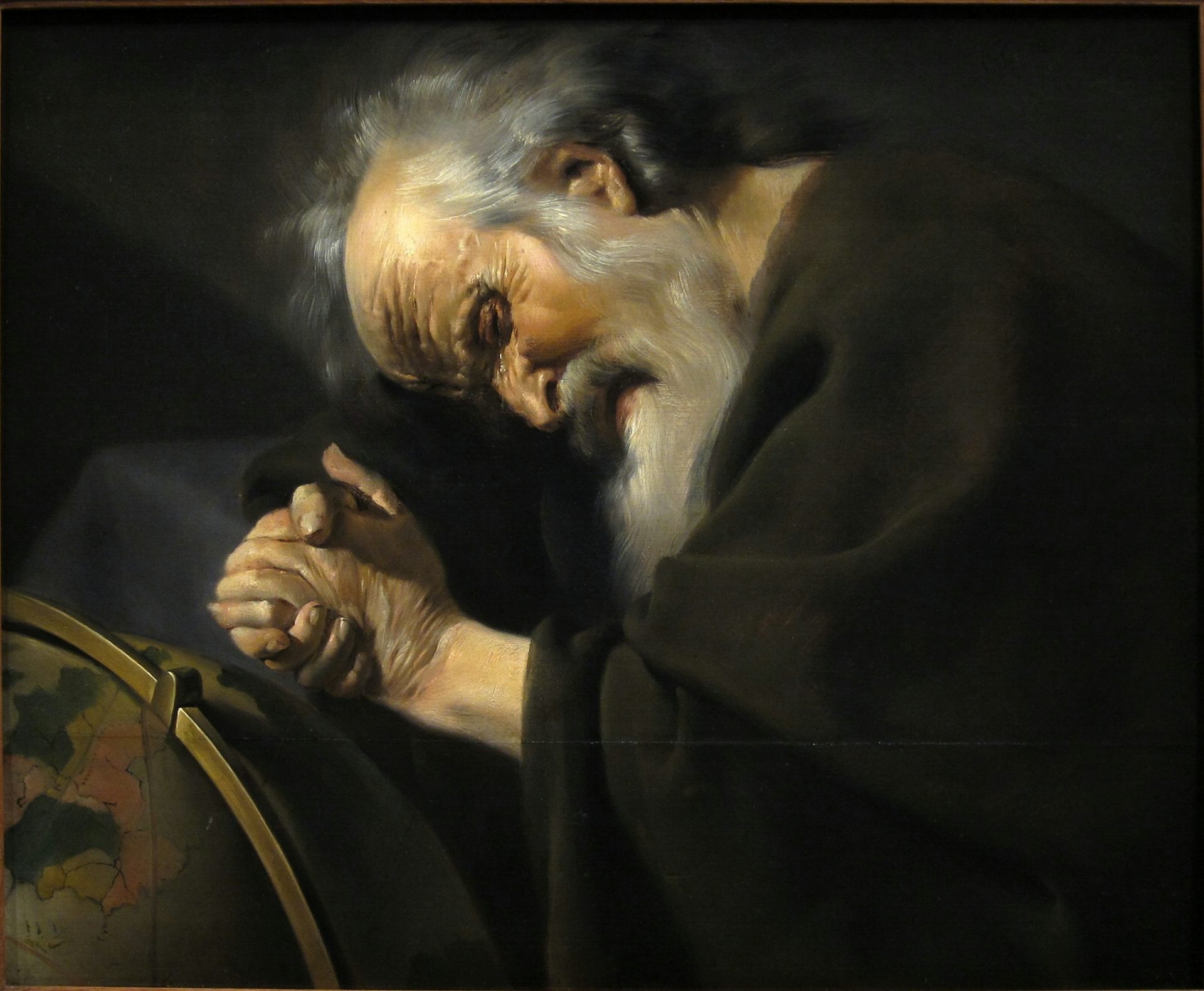
¿Desesperado por el estado del mundo? Los antiguos griegos y romanos conocían ese sentimiento
Despairing at the state of the world? The ancient Greeks and Romans knew the feeling
Withdraw, endure, or laugh? The ancients have some advice about facing disillusionment.
¿Retirarse, aguantar o reír? Los antiguos tienen algunos consejos sobre cómo enfrentar la desilusión.
If you’re feeling fed up with the way things are in the world, then, no matter your politics, you are experiencing an emotion people have felt for millennia.
Si te sientes harto de la forma en que están las cosas en el mundo, entonces, sin importar tu política, estás experimentando una emoción que la gente ha sentido durante milenios.
Perhaps you feel helpless. Maybe you feel like the character in the Roman dramatist Terence’s play The Brothers (160 BCE) , who exclaims:
Quizás te sientes indefenso. Tal vez te sientes como el personaje de la obra de teatro del dramaturgo romano Terencio, Los Hermanos (160 a.C.) , quien exclama:
we’re enclosed by so many things from which there’s no escape: violence, poverty, injustice, loneliness, disgrace. What an age we live in!
estamos rodeados de tantas cosas de las que no hay escape: violencia, pobreza, injusticia, soledad, deshonra. ¡Qué época vivimos!
What can you do? As we will see, ancient people had different ideas about how to act.
¿Qué puedes hacer? Como veremos, la gente antigua tenía diferentes ideas sobre cómo actuar.
One popular option was to retreat – or try to retreat – from the world, renouncing involvement and avoiding society. A less common option was to try to sort things out in the world by yourself, as one person facing all its woes.
Una opción popular era retirarse —o intentar retirarse— del mundo, renunciando a la participación y evitando la sociedad. Una opción menos común era intentar resolver las cosas en el mundo por uno mismo, como una persona que enfrenta todas sus tribulaciones.
Heraclitus’ escape
El escape de Heráclito
Heraclitus of Ephesus (c.540-480 BCE) is one of the most prominent Greek philosophers known for becoming disillusioned with worldly affairs.
Heráclito de Éfeso (c.540-480 a.C.) es uno de los filósofos griegos más destacados, conocido por desilusionarse con los asuntos mundanos.
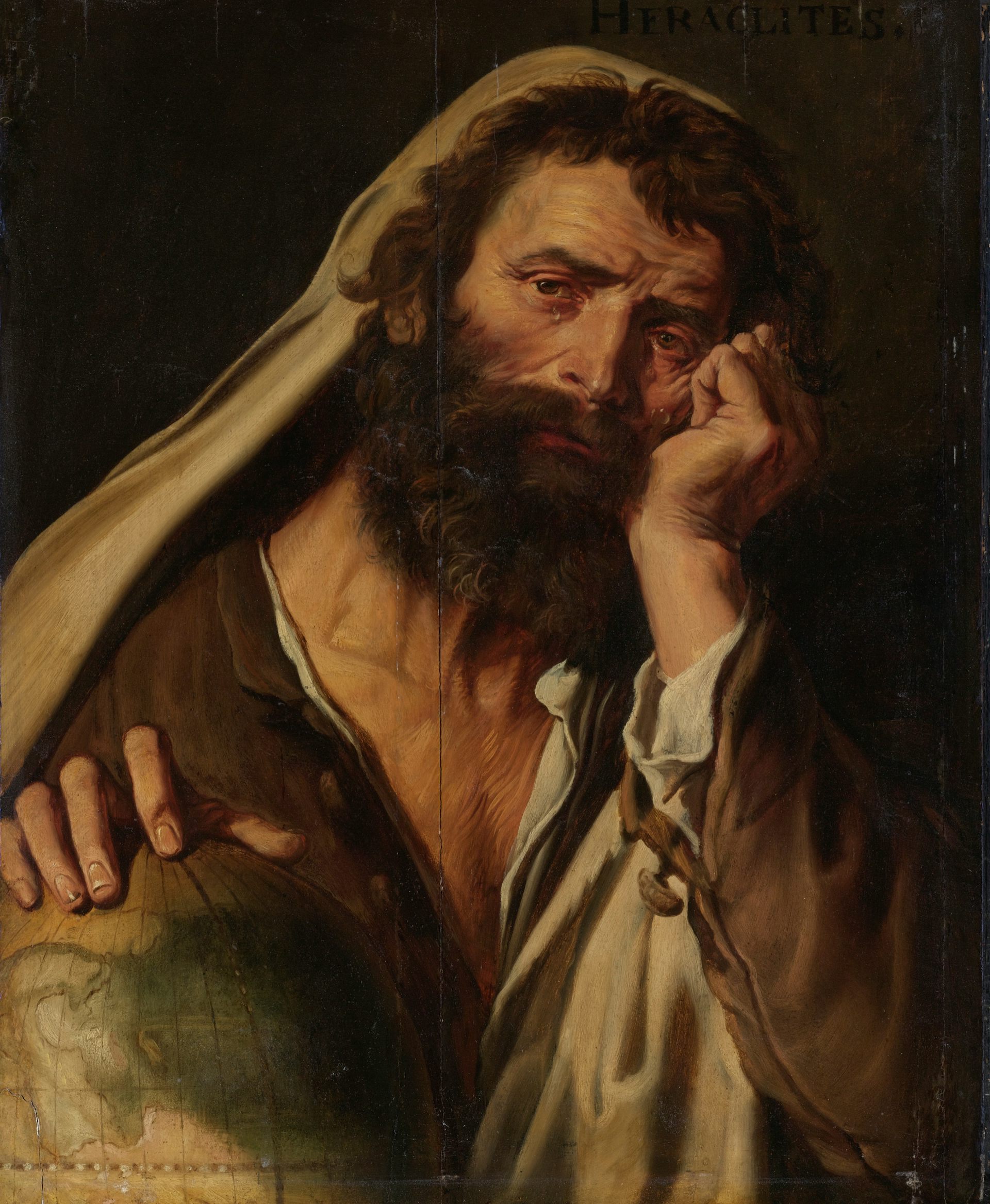
His main gripe was with politics. He disliked the insolence and stupidity of politicians and the laws they created. He was also tired of the foolishness of the people, who didn’t defend their laws and constitutions: “the people,” he said, “must fight for the law as for city-walls”.
Su principal queja era la política. Le desagradaba la insolencia y la estupidez de los políticos y las leyes que creaban. También estaba cansado de la necedad de la gente, que no defendía sus leyes y constituciones: «el pueblo», dijo, «debe luchar por la ley como por las murallas de la ciudad.»
When his friend Hermodorus was banished from Ephesus, Heraclitus condemned the city for elevating foolish men and destroying good men. As the historian Diogenes Laertius informs us, Heraclitus told the leaders of Ephesus that they were so worthless they should kill themselves:
Cuando su amigo Hermodoro fue desterrado de Éfeso, Heráclito condenó la ciudad por elevar a hombres necios y destruir a los buenos. Como nos informa el historiador Diógenes Laertio, Heráclito dijo a los líderes de Éfeso que eran tan inútiles que deberían suicidarse:
The Ephesians would do well to end their lives, every grown man of them, and leave the city to beardless boys, for that they have driven out Hermodorus, the worthiest man among them, saying, “We will have none who is worthiest among us; or if there be any such, let him go elsewhere and consort with others.”
Los efesios harían bien en acabar con sus vidas, cada hombre adulto de ellos, y dejar la ciudad a muchachos sin barba, pues han expulsado a Hermodoro, el hombre más digno entre ellos, diciendo: «No tendremos a nadie que sea el más digno entre nosotros; o si hay alguno así, que se vaya a otro lugar y conviva con otros.»
When the people of Ephesus asked why an intelligent man like Heraclitus ignored politics and preferred instead to play games of knuckle-bones with children, he apparently said civil life was no longer worth an intelligent man’s time:
Cuando la gente de Éfeso preguntó por qué un hombre inteligente como Heráclito ignoraba la política y prefería en su lugar jugar a los huesos con niños, aparentemente dijo que la vida civil ya no valía el tiempo de un hombre inteligente:
Are you astonished? Is it not better to do this than to take part in your civil life?
¿Estáis asombrados? ¿No es mejor hacer esto que participar en vuestra vida civil?
Eventually, Heraclitus couldn’t bear it any more. As Diogenes Laertius continues the story, Heraclitus “became a hater of his kind”. He took to wandering in the mountains, living on grass and herbs, but “when this gave him dropsy, he made his way back to the city and put this riddle to the physicians, whether they were competent to create a drought after heavy rain”. He then tried to cure himself by repairing to a cowshed and burying himself in manure.
Finalmente, Heráclito no pudo soportarlo más. Como Diógenes Laertio continúa la historia, Heráclito «se convirtió en un detractor de su propia especie.» Empezó a vagar por las montañas, viviendo de hierba y hierbas, pero «cuando esto le dio edema, regresó a la ciudad y planteó este acertijo a los médicos, si eran competentes para crear una sequía después de una fuerte lluvia.» Luego intentó curarse reparando en un establo y enterrándose en estiércol.
Living his life in the mountains away from society, Heraclitus’ health quickly deteriorated. He died soon after at the age of 60.
Viviendo su vida en las montañas, lejos de la sociedad, la salud de Heráclito se deterioró rápidamente. Murió poco después a la edad de 60 años.
Sertorius’ dream of escape
El sueño de escape de Sertorio
Quintus Sertorius (123-72 BCE) was a Roman statesman who distinguished himself by his rhetorical skill and his military victories as a commander against tribes in Gaul.
Quintus Sertorius (123-72 a.C.) fue un estadista romano que se distinguió por su habilidad retórica y sus victorias militares como comandante contra tribus en la Galia.
During the political unrest in Rome in the 90s BCE, Sertorius was sent to command the empire’s Spanish provinces. While there, he became an enemy of the ruling faction at Rome and effectively established his own independent rule of Spain for eight years.
Durante el malestar político en Roma en los años 90 a.C., Sertorio fue enviado a gobernar las provincias españolas del imperio. Allí, se convirtió en enemigo de la facción gobernante de Roma y estableció efectivamente su propio gobierno independiente de España durante ocho años.
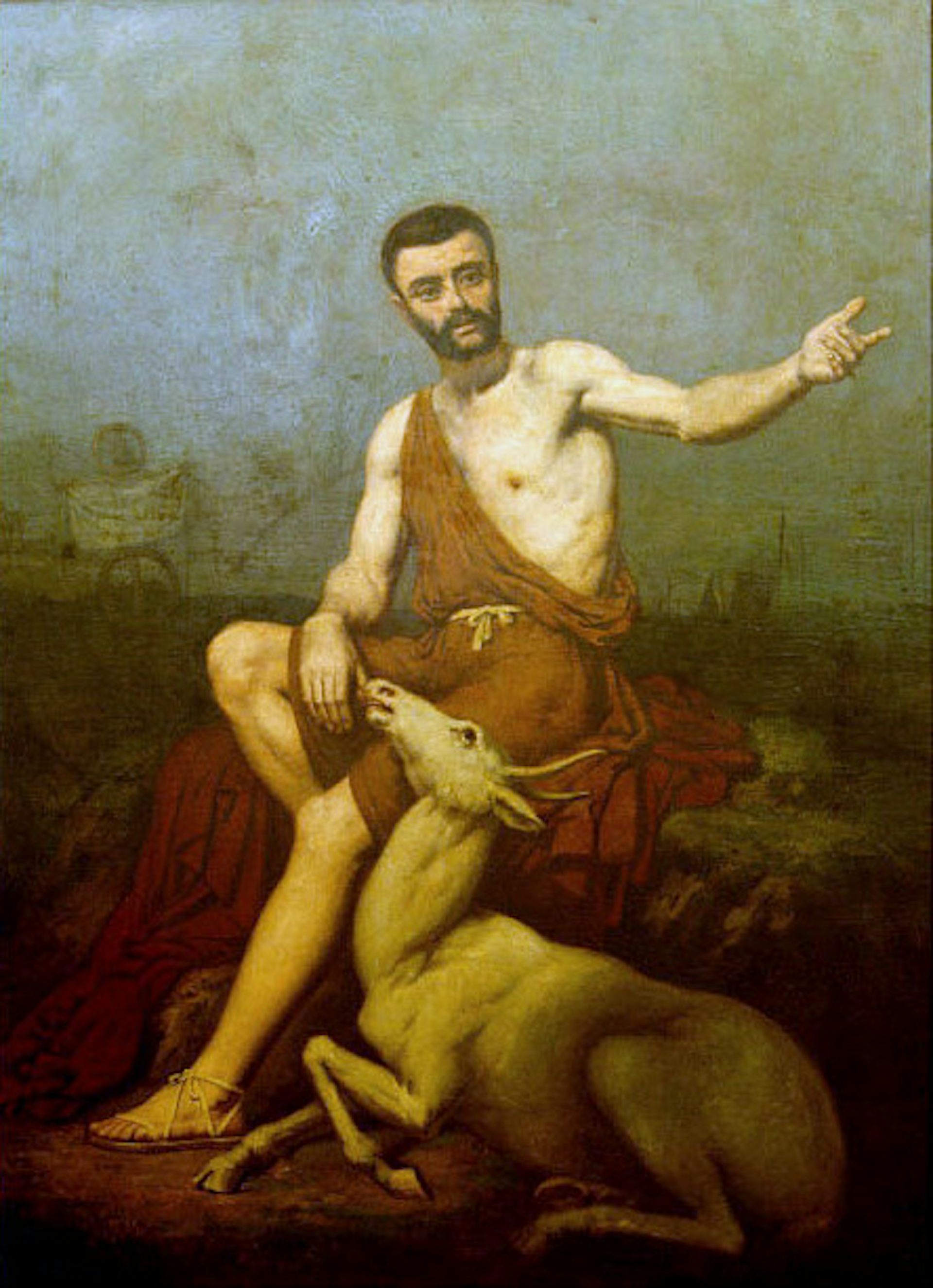
Sertorius’ enemies at Rome sent armies to Spain to defeat him, but were unsuccessful in dislodging him. Sertorius set up his own senate of 300 members. This included a mix of Romans and members of Spanish tribes. He consolidated his popularity by appealing to local superstitions – he went everywhere accompanied by a white fawn, a symbol of divine power.
Los enemigos de Sertorio en Roma enviaron ejércitos a España para derrotarlo, pero no tuvieron éxito en desalojarlo. Sertorio estableció su propio senado de 300 miembros. Esto incluía una mezcla de romanos y miembros de tribus españolas. Consolidó su popularidad apelando a supersticiones locales: iba por todas partes acompañado de un cervatillo blanco, símbolo de poder divino.
After years of threats and toil, Sertorius became sick of it all. According to the Greek historian Plutarch (c.46-119 CE) , Sertorius met some sailors “who had recently come back from the Atlantic Islands”. The sailors spoke of a land off the coast of Africa with a warm climate and plentiful food and water. Most importantly, it was far away from all the political and military turmoil.
Después de años de amenazas y penurias, Sertorio se hartó de todo. Según el historiador griego Plutarco (c.46-119 d.C.) , Sertorio se encontró con unos marineros «que acababan de regresar de las islas del Atlántico.» Los marineros hablaron de una tierra frente a la costa de África con un clima cálido y abundante comida y agua. Lo más importante, estaba lejos de todo el tumulto político y militar.
Plutarch tells us that the words of the sailors made an impression:
Plutarco nos cuenta que las palabras de los marineros causaron una impresión:
When Sertorius heard this tale, he was seized with an amazing desire to dwell in the islands and live in quiet, freed from tyranny and wars that would never end.
Cuando Sertorio escuchó este relato, se apoderó de un deseo asombroso de vivir en las islas y vivir en paz, libre de la tiranía y las guerras que nunca terminarían.
Nobody today knows for sure what islands these sailors were referring to. Some possibilities are Madeira, Porto Santo or the Canary Islands.
Nadie sabe hoy con certeza a qué islas se referían estos marineros. Algunas posibilidades son Madeira, Porto Santo o las Islas Canarias.
Unfortunately for Sertorius, he never found his “escape”. He endured many more years of political and social strife, until he was murdered by conspirators in 72 BCE.
Desafortunadamente para Sertorio, nunca encontró su «escape.» Soportó muchos más años de conflictos políticos y sociales, hasta que fue asesinado por conspiradores en el 72 a.C.
Can happiness come from disengagement?
¿Puede la felicidad venir del desapego?
Many people living in ancient Greece and Rome appear to have recognised that happiness can come from removing oneself from worldly affairs. The Greek philosopher Epicurus (c.341-270 BCE) advised people to seek obscurity and avoid the world. His famous saying is two words: “live unknown”.
Muchas personas que vivieron en la antigua Grecia y Roma parecen haber reconocido que la felicidad puede venir de desvincularse de los asuntos mundanos. El filósofo griego Epicuro (c.341-270 a.C.) aconsejaba a la gente que buscara la oscuridad y evitara el mundo. Su famoso dicho son dos palabras: «vivir desconocido.»
Some disagreed, of course. Plutarch, for example, thought Epicurus’ idea was a mark of defeat and a waste of the potential of living:
Algunos no estuvieron de acuerdo, por supuesto. Plutarco, por ejemplo, pensó que la idea de Epicuro era una señal de derrota y un desperdicio del potencial de vivir:
he who casts himself into the unknown state and wraps himself in darkness and buries his life in an empty tomb would appear to be aggrieved at his very birth and to renounce the effort of being.
aquel que se arroja al estado desconocido y se envuelve en la oscuridad y entierra su vida en una tumba vacía parecería estar agraviado desde su nacimiento y renunciar al esfuerzo de existir.
Others, however, seemed to favour the idea that disappearing into a a quiet and hidden life, ignorant of the world’s affairs, could bring happiness. The Roman poet Horace (65-8 BCE) , for example, wrote:
Otros, sin embargo, parecían favorecer la idea de que desaparecer en una vida tranquila y oculta, ignorante de los asuntos del mundo, podría traer felicidad. El poeta romano Horacio (65-8 a.C.) , por ejemplo, escribió:
Happy the man who, far from business concerns, works his ancestral acres with his oxen like the men of old, free from every kind of debt; he is not wakened, like a soldier, by the harsh bray of the bugle, and has no fear of the angry sea; he avoids both the city centre and the lofty doorways of powerful citizens.
Feliz el hombre que, lejos de los asuntos comerciales, trabaja sus tierras ancestrales con sus bueyes como los hombres de antaño, libre de todo tipo de deuda; no es despertado, como un soldado, por el fuerte bramido de la corneta, y no teme al mar enojado; evita tanto el centro de la ciudad como los altos portales de los poderosos ciudadanos.
For Horace, someone who is happy is far from cities and armies, living simply on his ancestral farm with animals and loved ones – with no debt.
Para Horacio, alguien que es feliz está lejos de las ciudades y los ejércitos, viviendo simplemente en su granja ancestral con animales y seres queridos, sin deudas.
Taking matters into your own hands
Tomar cartas en el asunto
Some, of course, don’t want to retreat from things. They want to solve problems and make the world around them better. But how can you do this if you’re just an ordinary person?
Algunos, por supuesto, no quieren retirarse de las cosas. Quieren resolver problemas y mejorar el mundo que les rodea. Pero, ¿cómo puedes hacer esto si eres solo una persona común?
The Athenian playwright Aristophanes (450-388 BCE) had a comical, tongue-in-cheek solution. In his play Acharnians, first performed in 425 BCE, he depicts a man called Dicaeopolis who is fed up with politics.
El dramaturgo ateniense Aristófanes (450-388 a.C.) tuvo una solución cómica y burlona. En su obra Acarnianos, representada por primera vez en el 425 a.C., representa a un hombre llamado Dicaeópolis que está harto de la política.
Dicaeopolis is not only tired of politicians lying and starting endless wars; he is also tired of people voting selfishly for handouts and for harmful policies. The people, he says, “can be bought and sold”.
Dicaeópolis no solo está cansado de que los políticos mientan y desaten guerras interminables; también está cansado de que la gente vote egoístamente por limosnas y por políticas dañinas. El pueblo, dice, «puede ser comprado y vendido.»
So Dicaeopolis comes up with a personal solution. He will “make a treaty with the Spartans for me alone and my children and the missus” so his family can live in peace.
Así que Dicaeópolis se inventa una solución personal. Hará «un tratado con los espartanos solo para mí, mis hijos y la señora» para que su familia pueda vivir en paz.
His efforts are a triumph. He successfully negotiates the treaty and lives freely, enjoying privileges other citizens cannot, like farming, trading with other states and drinking.
Sus esfuerzos son un triunfo. Negocia el tratado con éxito y vive libremente, disfrutando de privilegios que otros ciudadanos no pueden, como la agricultura, el comercio con otros estados y el beber.
The play is not meant to be taken seriously – it is a comedy, after all, and no private individual would really be able to negotiate a treaty with another city. But its plot reveals something about the political frustration ordinary citizens can often feel.
La obra no debe tomarse en serio: después de todo, es una comedia, y ningún particular podría negociar realmente un tratado con otra ciudad. Pero su trama revela algo sobre la frustración política que los ciudadanos comunes a menudo pueden sentir.
So what can you do if you are fed up with politics?
Entonces, ¿qué puedes hacer si estás harto de la política?
Two thousand years later, the options haven’t improved much. The ancient advice is clear: you can withdraw, endure, or laugh. Preferably the last option. It seems to have the best survival rate.
Dos mil años después, las opciones no han mejorado mucho. El consejo antiguo es claro: puedes retirarte, aguantar o reír. Preferiblemente la última opción. Parece tener la mejor tasa de supervivencia.
Konstantine Panegyres does not work for, consult, own shares in or receive funding from any company or organisation that would benefit from this article, and has disclosed no relevant affiliations beyond their academic appointment.
Konstantine Panegyres no trabaja, asesora, posee acciones ni recibe financiación de ninguna empresa u organización que se beneficie de este artículo, y no ha revelado afiliaciones relevantes más allá de su nombramiento académico.
Read more
-

Cómo la historia de Israel ha moldeado la forma en que libra la guerra
How Israel’s history has shaped the way it wages war
-

La sequía podría estar empeorando la resistencia a los antibióticos, dicen científicos
Drought could be making antibiotic resistance worse, scientists say