¿Por qué Israel sigue atacando Líbano, a pesar del alto el fuego? Preguntas y Respuestas de Expertos
Why is Israel continuing to attack Lebanon, despite the ceasefire? Expert Q&A
Israel has upped the intensity of its campaign in Lebanon, despite the signing of a ceasefire in the Middle East.
Israel ha aumentado la intensidad de su campaña en Líbano, a pesar de la firma de un alto el fuego en Oriente Medio.
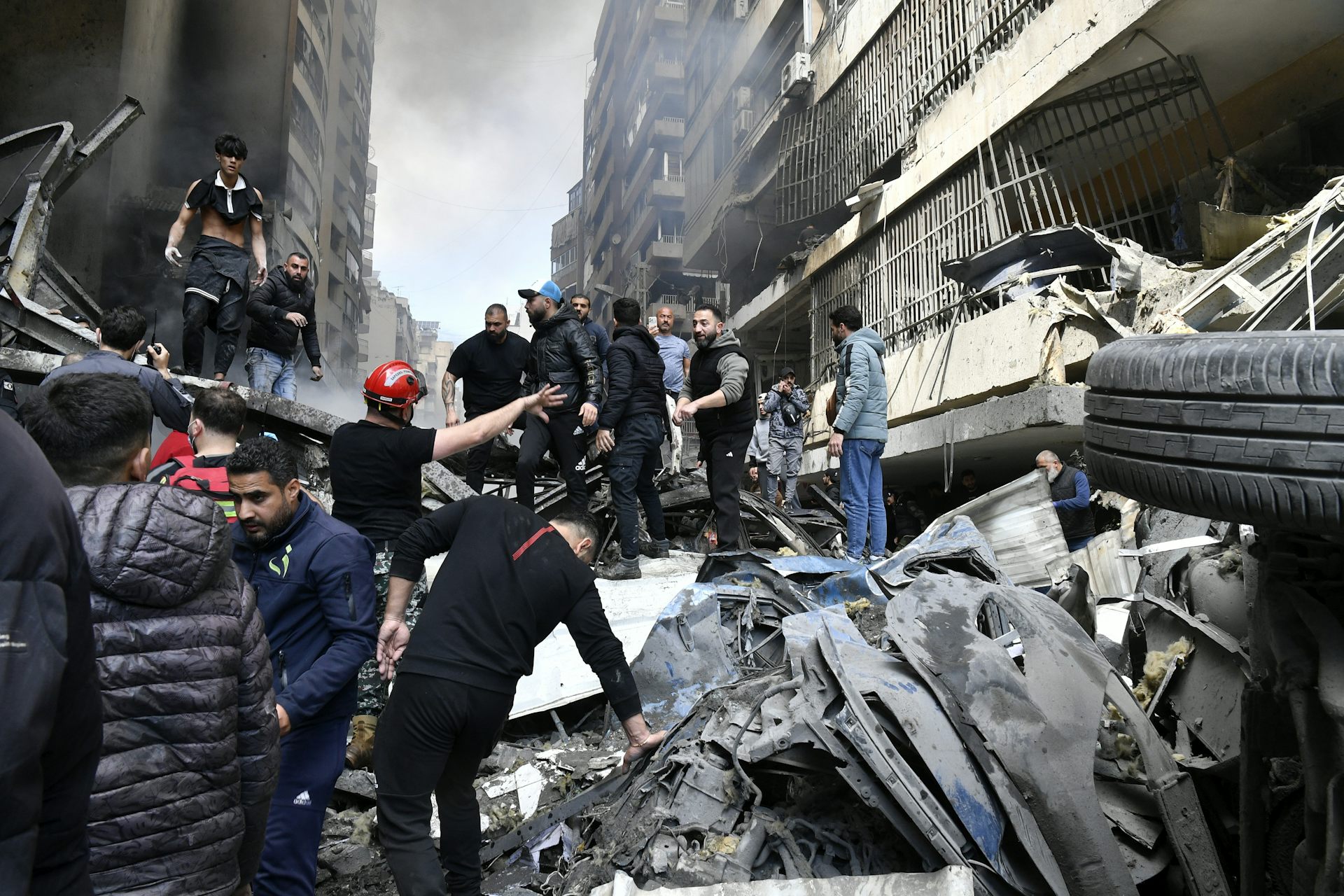
The ceasefire in the Middle East is on shaky ground. Israel continued its bombardment of Lebanon on Wednesday, claiming its activities there are not part of the deal with Iran. These attacks killed at least 254 people across Lebanon and injured over 800 more in what was Israel’s largest offensive of the war so far.
El alto el fuego en Oriente Medio está en terreno inestable. Israel continuó su bombardeo de Líbano el miércoles, afirmando que sus actividades allí no forman parte del acuerdo con Irán. Estos ataques mataron al menos a 254 personas en todo Líbano e hirieron a más de 800 personas más en lo que fue la ofensiva más grande de Israel en la guerra hasta ahora.
Iran responded by closing the Strait of Hormuz again and threatened a “regret-inducing response” if the strikes continue. Donald Trump subsequently warned that US strikes on Iran would resume if it did not comply with the ceasefire. We spoke to Scott Lucas, an expert in Middle East politics at University College Dublin, who addresses several key issues.
Irán respondió cerrando de nuevo el Estrecho de Ormuz y amenazó con una «respuesta que causaría arrepentimiento» si los ataques continuaban. Donald Trump advirtió posteriormente que los ataques estadounidenses contra Irán se reanudarían si este no cumplía con el alto el fuego. Hablamos con Scott Lucas, un experto en política de Oriente Medio del University College Dublin, quien aborda varios temas clave.
Why is there confusion about whether Lebanon was included in the ceasefire?
¿Por qué hay confusión sobre si Líbano fue incluido en el alto el fuego?
Part of the problem is the nature of diplomacy in 2026. The Trump camp and Pakistan’s prime minister, Shahbaz Sharif, who has been a key mediator between the US and Iran since the start of the war, both issued statements on social media instead of coordinating the release of an agreed text.
Parte del problema es la naturaleza de la diplomacia en 2026. El campamento de Trump y el primer ministro de Pakistán, Shahbaz Sharif, quien ha sido un mediador clave entre EE. UU. e Irán desde el inicio de la guerra, emitieron declaraciones en redes sociales en lugar de coordinar la publicación de un texto acordado.
That said, there should be no confusion. Sharif’s social media post made clear that the ceasefire also applies to Israel’s campaign in Lebanon. He wrote: “I am pleased to announce that the Islamic Republic of Iran and the United States of America, along with their allies, have agreed to an immediate ceasefire everywhere including Lebanon and elsewhere, EFFECTIVE IMMEDIATELY.”
Dicho esto, no debería haber confusión. La publicación de Sharif en redes sociales dejó claro que el alto el fuego también se aplica a la campaña de Israel en Líbano. Escribió: «Me complace anunciar que la República Islámica de Irán y los Estados Unidos de América, junto con sus aliados, han acordado un alto el fuego inmediato en todas partes, incluido Líbano y otros lugares, EFECTIVO INMEDIATAMENTE.»
Trump also accepted that later peace talks in Pakistan would be based on Iran’s ten-point plan, which he described as a “workable basis on which to negotiate”. One of Iran’s demands is for “an end to attacks on Iran and its allies”. This includes the Israeli strikes against Hezbollah in Lebanon.
Trump también aceptó que las futuras conversaciones de paz en Pakistán se basarían en el plan de diez puntos de Irán, que describió como una «base viable para negociar.» Una de las demandas de Irán es «el fin de los ataques contra Irán y sus aliados.» Esto incluye los ataques israelíes contra Hezbolá en Líbano.
Why then is Israel still attacking Lebanon?
¿Por qué Israel sigue atacando Líbano entonces?
Israel’s prime minister, Benjamin Netanyahu, does not have an interest in ending the war until he establishes something he can claim as a “victory”. Israel’s objective in Iran is regime change. At the start of the war, Netanyahu announced that the “goal of the operation is to put an end to the threat from the Ayatollah regime in Iran”.
El primer ministro de Israel, Benjamin Netanyahu, no tiene interés en poner fin a la guerra hasta que establezca algo que pueda reclamar como una «victoria.» El objetivo de Israel en Irán es el cambio de régimen. Al comienzo de la guerra, Netanyahu anunció que «el objetivo de la operación es poner fin a la amenaza del régimen del Ayatolá en Irán.»
Trump’s goals in Iran are less clear. He entered the war pledging to prevent Iran from obtaining a nuclear weapon, destroy its missile capability, break its regional proxies, eliminate its navy and create an opening for regime change. But Iran’s regime is still in place and the Trump camp now appears willing to enter into negotiations with it.
Los objetivos de Trump en Irán son menos claros. Entró en la guerra prometiendo evitar que Irán obtuviera un arma nuclear, destruir su capacidad de misiles, romper sus intermediarios regionales, eliminar su armada y crear una apertura para el cambio de régimen. Pero el régimen de Irán sigue en pie y el campamento de Trump ahora parece dispuesto a entrar en negociaciones con él.
So Netanyahu’s focus shifts to Lebanon and expansion of the Israeli occupation in the south of the country. Attacks will continue until that is achieved. The situation is similar to Gaza, where Israel now occupies 53% of the territory after its two years of attacks.
Así, el enfoque de Netanyahu se desplaza hacia Líbano y la expansión de la ocupación israelí en el sur del país. Los ataques continuarán hasta que se logre esto. La situación es similar a Gaza, donde Israel ocupa ahora el 53% del territorio después de sus dos años de ataques.
By presenting a victory over the threat of Hezbollah, pushing the group further from the Israeli border, Netanyahu can try to bolster his support at home despite any disappointment over the inconclusive outcome of the war in Iran.
Al presentar una victoria sobre la amenaza de Hezbolá, empujando al grupo más lejos de la frontera israelí, Netanyahu puede intentar reforzar su apoyo en casa a pesar de cualquier decepción por el resultado inconcluso de la guerra en Irán.
Will Israel’s actions push the Gulf states closer to Iran?
¿Empujarán las acciones de Israel a los estados del Golfo más cerca de Irán?
For the first time since the start of the US and Israel’s war on February 28, the Iranian and Saudi Arabian foreign ministers have spoken by phone. In a statement following the call on April 9, the Saudi foreign ministry said the two men “reviewed the latest developments and discussed ways to reduce tensions to restore security and stability in the region”.
Por primera vez desde el inicio de la guerra entre EE. UU. e Israel el 28 de febrero, los ministros de Asuntos Exteriores de Irán y Arabia Saudita hablaron por teléfono. En un comunicado posterior a la llamada del 9 de abril, el ministerio de asuntos exteriores saudí dijo que los dos hombres «revisaron los últimos acontecimientos y discutieron formas de reducir las tensiones para restaurar la seguridad y la estabilidad en la región».
However, this is only a tentative beginning to repair the damage of the past six weeks. Gulf states are unhappy that the US exposed them to Iran’s retaliation by embarking upon the war, but that does not erase their anger with Tehran over the extent of the damage Iranian attacks have caused to energy infrastructure in the region.
Sin embargo, este es solo un comienzo tentativo para reparar el daño de las últimas seis semanas. Los estados del Golfo no están contentos de que EE. UU. los expusiera a la represalia de Irán al embarcarse en la guerra, pero eso no borra su enfado con Teherán por la magnitud del daño que los ataques iraníes han causado a la infraestructura energética de la región.
Reports suggest that Saudi Arabia and the United Arab Emirates have in recent weeks even been pressing the Trump camp to “finish the job” in Iran with ground operations to vanquish the regime. That option appears to have been paused for now. However, it is not off the table if the US-Iran negotiations collapse.
Informes sugieren que Arabia Saudita y los Emiratos Árabes Unidos han estado presionando incluso al campamento de Trump en las últimas semanas para que «terminen el trabajo» en Irán con operaciones terrestres para vencer al régimen. Esa opción parece haber sido pausada por ahora. Sin embargo, no está descartada si las negociaciones entre EE. UU. e Irán colapsan.
Where does all of this leave Donald Trump?
¿Qué le queda a Donald Trump con todo esto?
Angry, frustrated and uncertain what to do next. Trump’s bluster on April 7, in which he said “a whole civilization will die tonight” unless Iran reached a deal, was always an expression of weakness rather than strength. The plan A for regime surrender, with the killing of the Iranian supreme leader Ali Khamenei and dozens of commanders and officials, did not have a plan B for when the remaining leaders refused to concede and instead struck back.
Enojado, frustrado e incierto sobre qué hacer a continuación. La bravuconería de Trump el 7 de abril, en la que dijo que «toda una civilización morirá esta noche» a menos que Irán llegara a un acuerdo, siempre fue una expresión de debilidad más que de fuerza. El plan A para la rendición del régimen, con el asesinato del líder supremo iraní Ali Khamenei y docenas de comandantes y funcionarios, no tenía un plan B para cuando los líderes restantes se negaron a ceder y, en cambio, contraatacaron.
With Iran controlling the Strait of Hormuz and choking off Gulf shipping, including of oil and gas, the Trump camp was reduced to either ground operations or talks. Trump snatched at the latter amid military advice of the difficulties of a ground assault and domestic opinion that is largely opposed to further escalation.
Con Irán controlando el Estrecho de Ormuz y estrangulando el tráfico marítimo del Golfo, incluido el de petróleo y gas, el campamento de Trump se redujo a operaciones terrestres o a negociaciones. Trump se inclinó por estas últimas en medio de consejos militares sobre las dificultades de un asalto terrestre y una opinión interna que se opone en gran medida a una mayor escalada.
But he did so by handing Iran the diplomatic initiative. Now the White House is trying to pull it back, including by giving Israel the green light to continue its assault in Lebanon. The US is now denying that Lebanon was ever included in the ceasefire deal, with Trump calling it a “separate skirmish”.
Pero lo hizo cediendo la iniciativa diplomática a Irán. Ahora la Casa Blanca está tratando de recuperarla, incluido dar luz verde a Israel para que continúe su asalto en Líbano. EE. UU. niega ahora que Líbano haya estado alguna vez incluido en el acuerdo de alto el fuego, y Trump lo ha llamado una «escaramuza separada».
The situation in the Middle East thus remains extremely volatile as delegates from the US and Iran head to the Pakistani capital of Islamabad for crunch talks on April 10.
La situación en Oriente Medio sigue siendo, por lo tanto, extremadamente volátil, ya que delegados de EE. UU. e Irán se dirigen a la capital pakistaní de Islamabad para negociaciones cruciales el 10 de abril.
Scott Lucas does not work for, consult, own shares in or receive funding from any company or organisation that would benefit from this article, and has disclosed no relevant affiliations beyond their academic appointment.
Scott Lucas no trabaja para, asesora, posee acciones de, ni recibe financiación de ninguna empresa u organización que se beneficiaría de este artículo, y no ha revelado afiliaciones relevantes más allá de su nombramiento académico.
Read more
-
Diseñamos el césped para la Copa Mundial de fútbol más grande de la historia: así creamos la misma experiencia de juego en 3 países
We designed the turf for soccer’s biggest World Cup ever – here’s how we created the same playing experience across 3 countries
-
Guerra en Ucrania: la campaña aérea se intensifica mientras Rusia y Ucrania intercambian ataques masivos con drones y misiles
Ukraine war: air campaign intensifies as Russia and Ukraine trade massive drone and missile attacks