我们在撒哈拉沙漠中发现了数百座巨大的古代大规模墓。
We found hundreds of huge ancient mass graves hidden in…
The circular mass graves were filled with the bones of people and animals, often carefully arranged around a key person at the centre.
这些圆形墓穴里填满了人与动物的骨头,它们通常被精心安排在中心的一个关键人物周围。
We have been on a years-long campaign of satellite remote sensing of the vast desert landscapes in Eastern Sudan.
我们进行了一场长达数年的卫星遥感活动,对苏丹东部的广阔沙漠景观进行监测。
This involved using satellite aerial imagery to systematically and painstakingly search for archaeological features in Atbai Desert of Eastern Sudan, a small part of the much larger Sahara.
这涉及使用卫星航空影像,系统而细致地在苏丹东部的阿特拜沙漠中搜索考古遗迹,该地区是更大撒哈拉沙漠的一部分。
Our team – which includes archaeologists from Macquarie University, France’s HiSoMA research unit, and the Polish Academy of Sciences – wanted to tell the story of this desert region between the Nile and the Red Sea, without having to excavate.
我们的团队——其中包括来自麦考瑞大学、法国HiSoMA研究单位以及波兰科学院的考古学家们——希望在尼罗河和红海之间的沙漠地区讲述这个故事,而无需进行发掘。
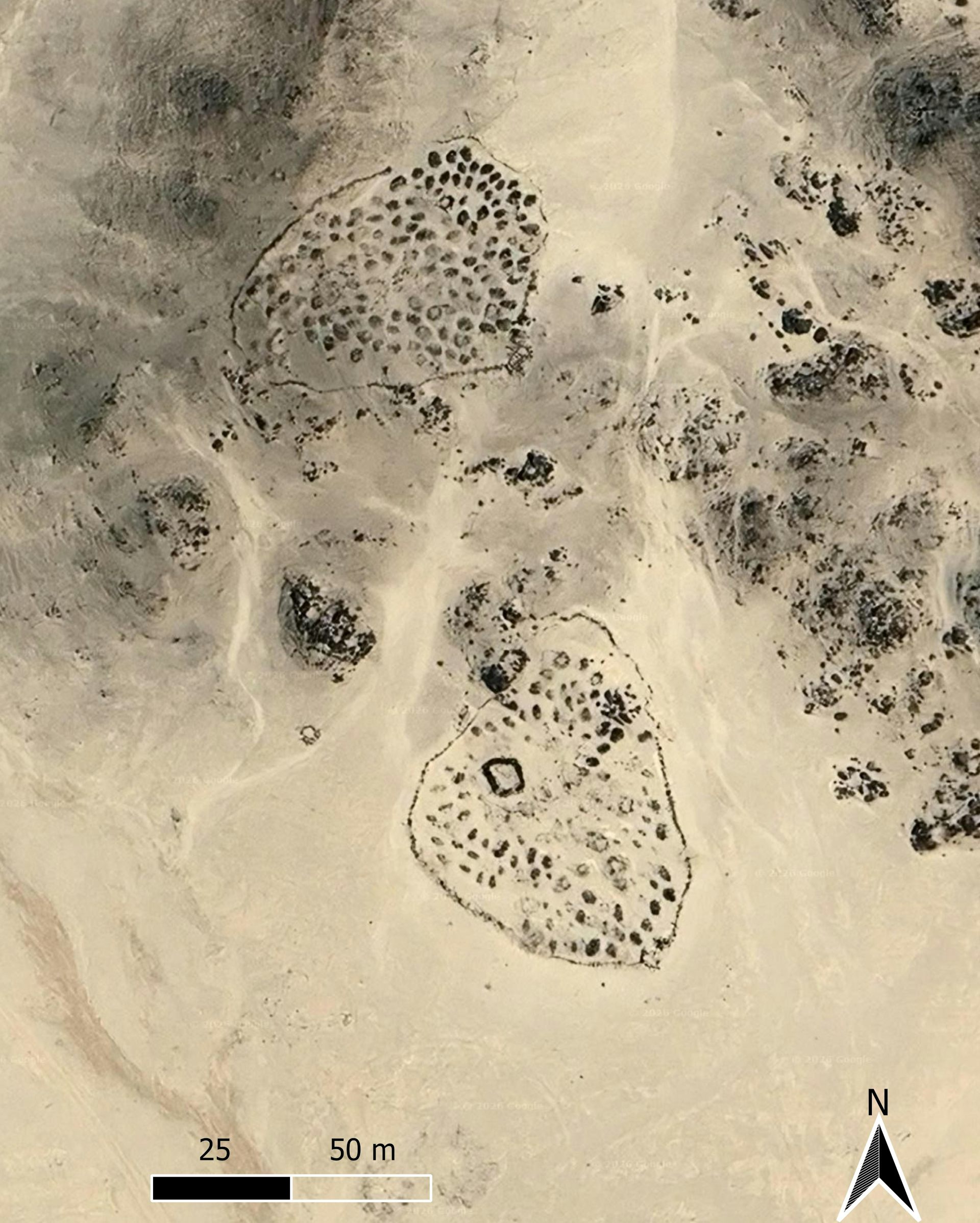
One mysterious archaeological feature stood out. We kept finding large, circular mass graves filled with the bones of people and animals, often carefully arranged around a key person at the centre.
一个神秘的考古特征脱颖而出。我们不断发现大型的圆形集体墓葬,里面填满了人与动物的骨骸,这些骨骸通常被精心安排在中心的一个人物周围。
Likely built around the fourth and third millennia BCE, all these “enclosure burial” monuments have a large round enclosure wall, some up to 80 metres in diameter, with humans and their cattle, sheep and goats buried inside.
这些“围墙墓葬”很可能建于公元前第四和第三千年,它们都有一个大型的圆形围墙,直径可达80米,里面埋葬着人类及其牛、羊和山羊。
Our new research, published in the journal African Archaeological Review, reveals how we found 260 previously unknown enclosure burials east of the Nile River, across almost 1,000km of desert.
我们的新研究发表在《非洲考古学评论》杂志上,揭示了我们如何在尼罗河以东的沙漠中,跨越近1000公里的区域发现了260个先前未知的围墙墓葬。
Who built them?
他们是谁建造的?
Already known from a few excavated examples in the Egyptian and Sudanese deserts, these large circular burial monuments have long puzzled scholars.
这些大型圆形墓葬纪念碑在埃及和苏丹沙漠中已从少数发掘的样本中为人所知,长期以来一直困扰着学者们。
What seemed once isolated examples emerge now as a consistent pattern. It is suggestive of a common nomadic culture stretching across a vast stretch of desert.
曾经看似孤立的样本现在出现成一个一致的模式。这暗示着一种横跨广阔沙漠的共同游牧文化。
Most are within the borders of modern Sudan on the slopes of the Red Sea Hills. Unfortunately, satellite imagery alone cannot communicate the whole story of these enclosure burial builders.
大多数位于现代苏丹的红海山脉斜坡内。不幸的是,仅凭卫星图像无法传达这些围墙墓葬建造者的全部故事。
The carbon dates and pottery from the few excavated monuments tell us these people lived roughly 4000–3000 BCE, just before Egyptians formed a territorial kingdom we know of as Pharaonic Egypt.
少数发掘的纪念碑上的碳日期和陶器告诉我们,这些人大约生活在公元前4000年至3000年之间,就在埃及人形成我们所知的法老王朝之前。
But these “enclosure burial” nomads had little to do with urbane and farming Egyptians.
但这些“围墙墓葬”游牧民族与那些文明和耕种的埃及人关系不大。
Living in the desert and raising herds, these were Saharan desert nomads through and through.
他们生活在沙漠中,放牧着牲畜,他们是撒哈拉沙漠的游牧民族。
A new elite?
一个新精英?
Some enclosures show “secondary” burials arranged around a “primary” burial of a person at the centre – perhaps a chief or other important member of the community.
一些墓地显示,围绕一个人的“主要”墓葬排列着“次要”的墓葬——这个人可能是一位酋长或其他社区的重要成员。
For archaeologists, this is important data for discerning class and hierarchy in prehistoric societies.
对于考古学家来说,这是辨别史前社会中的阶级和等级的重要数据。
The question of when Saharan nomads became less egalitarian has plagued archaeologists for decades, but most agree it was around this time of the fourth millennium BCE that a distinctive “elite” class emerged.
关于撒哈拉游牧民族何时变得不那么平等的问题困扰着考古学家几十年来,但大多数人同意,大约在公元前四千年的这个时期,出现了一个独特的“精英”阶层。
This is still a far cry from the sort of huge divisions between ruler and ruled as seen in societies such as Egypt, with its pharaohs and farmers. However, it ushers in the first traces of inequality.
这与埃及等社会中统治者和被统治者之间巨大的分歧仍然相去甚远。然而,它标志着不平等的第一道痕迹的出现。
Animals held in high esteem
动物受到高度尊敬
Cattle seem very important to these prehistoric nomads (a theory also supported by ancient local rock art in the area) .
这些史前游牧民族似乎非常重视牛(这一理论也得到了该地区古代岩画的支持)。
Burying themselves alongside their herd, these nomads show they held their animals in esteem.
这些游牧民族将自己埋葬在它们的牛群旁边,这表明他们非常重视自己的牲畜。
Thousands of years later, local nomads chose to reuse these now “ancient” enclosures for their burial plots – sometimes almost 4,000 years after they were first built.
数千年之后,当地游牧民族选择将这些如今被称为“古老”的围栏重新用作他们的墓地——有时是在它们最初建造后近4000年。
In other words, the prehistoric nomads created cemetery spaces that lasted for millennia.
换句话说,史前游牧民族创造了持续了数千年的墓地空间。
What happened to these people?
这些人的命运如何?
No one can say for sure.
没有人能确定。
The few dates we have for these monuments cluster between 4000–3000 BCE, nearing the end of a period when the once-greener Sahara was drying, a phase scientists call the “African Humid Period”.
我们对这些纪念碑的日期只有几个,它们集中在公元前4000年至3000年之间,接近一个曾经更绿的撒哈拉沙漠正在干涸的时期,科学家称之为“非洲湿润期”。
From north to south, the summer monsoon gradually retreated, reducing rainfall and shrinking pastures. This led nomads to abandon thirsty cattle, increase the mobility of their herds, migrate to the south or flee to the Nile.
从北向南,夏季季风逐渐退去,减少了降雨,缩小了牧场。这导致游牧民族放弃了渴求的牛群,增加了它们的迁徙能力,向南迁移或逃往尼罗河。
The monuments are overwhelmingly located near what were then favourable watering spots; near rocky pools in valley floors, lakebeds and ephemeral rivers.
这些纪念碑绝大多数位于当时有利的饮水地点附近;靠近山谷中的岩石水潭、湖床和季节性河流。
This tells us that when the monuments were being built, the desert was already quite challenging and dry.
这告诉我们,当这些纪念碑建造时,沙漠已经相当艰苦和干燥。
At some point, as grass and bush made way for sand and rocks, keeping their prized cattle became unsustainable.
在某个时候,当草和灌木让位于沙子和岩石时,饲养他们珍贵的牛群变得不可持续。
Having large herds of cattle in this desert, at this period, may have been a way of showing off an expensive and rare possession – a prehistoric nomad’s equivalent to having a Ferrari. This may help explain why cattle were frequently buried alongside their owners in enclosure burial monuments.
在这个时期,在沙漠中拥有大量的牛群可能是一种炫耀昂贵而稀有财产的方式——这是史前游牧民族拥有法拉利(Ferrari)的等同。这可能有助于解释为什么牛经常与它们的牧民一起埋葬在围墙墓碑中。
A bigger story
一个更大的故事
These enclosure burials are only one part of the greater story of human adaptation to climate change across North Africa.
这些围葬是人类适应北非气候变化过程中的宏大故事中的一个部分。
From the Central Sahara, to Kenya and Arabia, keeping cattle, goats and sheep transformed societies. It changed the food they ate, the way they moved around, and community hierarchies.
从撒哈拉中部,到肯尼亚和阿拉伯,饲养牛、山羊和绵羊改变了社会。它改变了他们吃的食物、他们的迁徙方式以及社区的等级制度。
It’s no coincidence communities changed how they buried their dead at the same time as they adopted herding lifestyles.
社区在采纳放牧生活方式的同时改变了他们埋葬死者的方式,这并非巧合。
These burial enclosures tell us even scattered nomads were extremely well-organised people, and expert adapters.
这些墓葬围栏告诉我们,即使是分散的游牧民族也是极其有组织的、优秀的适应者。
Our discovery reshapes the story of the Sahara deserts and the prehistory of the Nile.
我们的发现重塑了撒哈拉沙漠的故事和尼罗河的前史。
They provide a prologue for the monumentalism of the kingdoms of Egypt and Nubia, and an image of this region as more than pharaohs, pyramids and temples.
它们为埃及和努比亚王国的纪念碑性提供了序言,并描绘了该地区不仅仅是法老、金字塔和神庙的形象。
Sadly, many of these enclosure monuments are currently being destroyed or vandalised as a result of unregulated mining in the region. These unique burials have survived for millennia, but can disappear in less than a week.
遗憾的是,由于该地区的无管制采矿,许多这些围葬纪念碑目前正在被破坏或破坏。这些独特的墓葬已经存续了数千年,但可能在一周内就消失。
Maria Gatto (Polish Academy of Sciences) was an author on our paper. We also want to acknowledge Alexander Carter, Tung Cheung, Kahn Emerson, Jessica Larkin, Stuart Hamilton and Ethan Simpson from Macquarie University for their contribution. We are also grateful to the National Corporation of Antiquities and Museums (Sudan) .
玛丽亚·加托(波兰科学院)是我们论文的作者之一。我们还要感谢麦考瑞大学的亚历山大·卡特、曾忠、康·埃默森、杰西卡·拉金、斯图尔特·汉密尔顿和伊桑·辛普森的贡献。我们还要感谢苏丹国家文物与博物馆(National Corporation of Antiquities and Museums)。
Julien Cooper receives funding from the Australian Research Council, (Future Fellowship, FT230100067) .
朱利安·库珀获得了澳大利亚研究理事会(Australian Research Council)的资助(未来奖学金,FT230100067)。
Maël Crépy receives funding from the CNRS (HiSoMA) and the Ifao (NOMADES research program) .
马埃尔·克雷皮获得了联合国教科文组织(CNRS)(HiSoMA)和国际粮食组织(Ifao)(NOMADES研究计划)的资助。
Marie Bourgeois receives funding from Ifao (NOMADES research program) .
玛丽·布尔茹瓦获得了国际粮食组织(Ifao)(NOMADES研究计划)的资助。