如果我们在新规则上无法达成一致,今天的太空竞赛可能会变得致命。
Today’s space race could turn fatal if we don’t agree o…
Only by fostering a deeper sense of ‘space citizenship’ will everyone benefit from our journeys to the Moon – and beyond.
只有培养更深层次的“太空公民意识”,每个人才能从我们前往月球乃至更远处的旅程中受益。
Canadian astronaut Jeremy Hansen had an emotional message before he and three colleagues set off for the Moon earlier this year on the Artemis II mission: “We go for all humanity”.
加拿大宇航员杰里米·汉森在今年早些时候搭乘“阿尔忒弥斯二号”任务前往月球之前,留下了一段充满感情的留言:“我们是为了全人类而出发。”
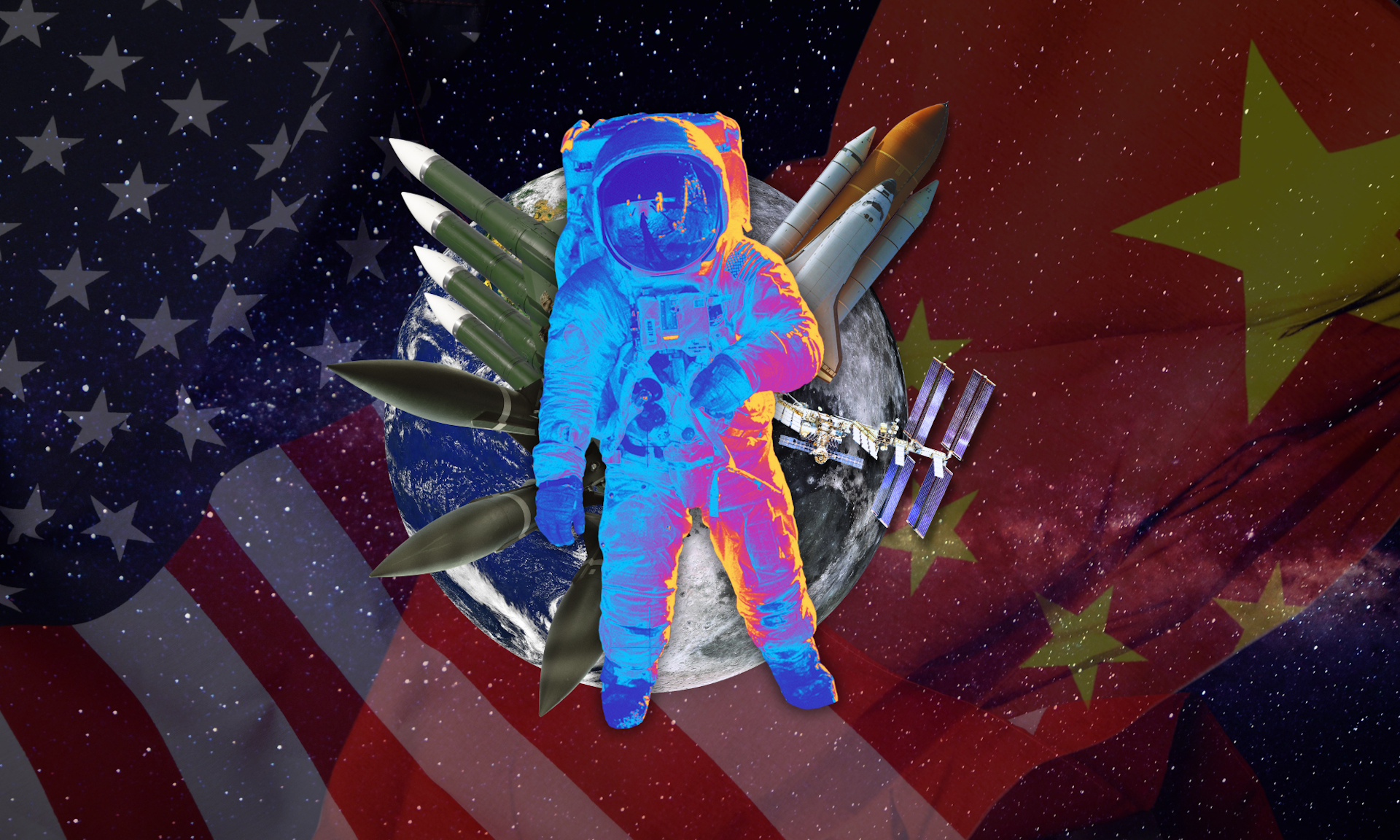
The successful ten-day lunar flyby mission was an impressive scientific feat. But its importance may not have been for all humanity: it was primarily geopolitical. Because, just like the 20th century space race between the Soviets and Americans, the new race to return to the Moon is highly politically charged.
这次成功的为期十天的月球飞掠任务是一项令人印象深刻的科学壮举。但其重要性可能并非为了全人类:它主要具有地缘政治意义。因为,就像20世纪苏联和美国之间的太空竞赛一样,重返月球的新竞赛也充满了高度的政治色彩。
To stop this race from morphing into a future catastrophe – one that could have debilitating consequences for life on Earth – there’s an urgent need to strengthen how space is governed. Only by fostering a deeper sense of “space citizenship” will all of humanity benefit from our journeys to the Moon – and beyond.
为了防止这场竞赛演变成未来的灾难——这种灾难可能会对地球生命造成严重后果——迫切需要加强太空治理的方式。只有培养更深层次的“太空公民意识”,全人类才能从我们前往月球乃至更远处的旅程中受益。
The race to the Moon and beyond is accelerating. Some say it’s for the benefit of all humanity. But is it really? In this seven-part series, we explore what our future in space will look like, how we might travel and survive out there, and what’s needed to stop a catastrophe from happening.
奔向月球乃至更远处的竞赛正在加速。有人说这是为了全人类的利益。但这真的是这样吗?在这系列七篇文章中,我们将探讨我们在太空的未来会是什么样子,我们如何才能在那里旅行和生存,以及需要采取什么措施来阻止灾难的发生。
From space race to space war
从太空竞赛到太空战争
The new space race involves many more players than the first one. It includes Canada, China, Europe, India, Japan, Russia, the United Arab Emirates and, of course, the US. It also includes private companies such as SpaceX, Blue Origin, Boeing, Space Machines, Intuitive Machines, iSpace, and many others.
新一轮的太空竞赛涉及的参与者比第一轮多得多。它包括加拿大、中国、欧洲、印度、日本、俄罗斯、阿拉伯联合酋长国,当然还有美国。它还包括像SpaceX、蓝色起源(Blue Origin)、波音(Boeing)、Space Machines、Intuitive Machines、iSpace等私营公司以及许多其他参与者。
And why do they all want to reach the Moon? Because it contains resources – water and possibly helium-3 – which can be used as fuel. Whoever has access to, and domination over, these resources, will have a major strategic advantage.
他们为什么都想到达月球?因为它含有资源——水和可能的海利姆-3——这些可以作为燃料使用。谁能够获取并主导这些资源,谁就会获得巨大的战略优势。
All of this matters for very pragmatic reasons for those of us on Earth.
所有这一切对于我们地球上的普通人来说,都是非常实际的考量。
You have probably already used space at least 20 times today – for example, to check the weather on an app or buy a coffee with your phone. The satellites that orbit Earth enable all of this. They also provide crucial information about climate change, farming and fisheries, drinking water, and responses to natural disasters.
您今天可能已经至少使用了20次太空服务了——例如,通过应用程序查看天气或用手机买杯咖啡。环绕地球运行的卫星使得这一切成为可能。它们还提供了关于气候变化、农业和渔业、饮用水以及自然灾害应对等关键信息。
But too many satellites and too much space debris could lead to catastrophic collisions and therefore outages of critical satellite connectivity.
但是过多的卫星和过度的空间碎片可能会导致灾难性的碰撞,从而造成关键卫星连接的中断。
Today’s militaries are also highly dependent on satellites for navigation, intelligence, communications and targeting. As a result, military operations regularly interfere with and target satellites in order to compromise adversaries. There’s a possibility this could lead to an all-out war in space. This would potentially involve destroying satellites, creating uncontrollable debris, which in turn would lead to unusable orbits and a greater loss of critical connectivity.
当今的军事力量也高度依赖卫星进行导航、情报、通信和瞄准。因此,军事行动经常干扰并攻击卫星,以削弱对手的能力。这有可能引发一场全面的太空战争。这将可能涉及摧毁卫星、制造无法控制的碎片,进而导致轨道不可用化,造成关键连接的更大损失。
Current space governance and space law mechanisms do a lot to safeguard against these doomsday scenarios. But just as with any system that depends upon international agreement, there are limitations to these mechanisms – especially given how international relations have ruptured recently.
当前的太空治理和空间法律机制在很大程度上旨在防止这些末日场景发生。但正如任何依赖国际协议的系统一样,这些机制也存在局限性——尤其考虑到近期国际关系所经历的动荡。
A lesson from the Cold War
冷战时期的教训
Signed at the height of the Cold War, the 1967 Outer Space Treaty states:
《外层空间条约》是在冷战高峰期签署的,其中规定:
space is the province of all humankind
外层空间属于全人类
there shall be no appropriation or claims of sovereignty
不得进行任何占有或主权声称
weapons of mass destruction are prohibited
禁止大规模杀伤性武器
space shall be used for peaceful purposes.
外层空间应用于和平目的。
Some argue the treaty is outdated or not fit for purpose in the 21st century. But the best way to view it is as a constitution.
一些人认为该条约已经过时,不适用于21世纪。但最好的看法是将其视为一部宪法。
Like national constitutions, it provides broad, enduring values and organising principles designed to withstand the test of time. Just as in domestic legal systems, any specific technical and or behavioural rules need to be addressed by lower-level regulations that can be changed over time without disrupting the constitution.
像国家宪法一样,它提供了广泛、持久的价值和组织原则,旨在经受时间的考验。就像在国内法律体系中,任何特定的技术或行为规则都需要由较低级别的法规来处理,这些法规可以在不破坏宪法的前提下随着时间进行修改。
The challenge today is how to get to those lower-level rules. If we leave it solely up to international relations between countries, there are so many politically unstable relationships we are likely to get nowhere. If we leave it solely up to the private sector, the rules will probably be based on self-interest rather than the common good.
今天的挑战是如何制定这些较低级别的规则。如果我们完全将其留给国家之间的国际关系,那么由于存在太多政治不稳定的关系,我们很可能无功而返。如果我们完全将其留给私营部门,那么规则可能会基于自身利益而非共同利益。
We need to include as many different actors and interests as possible. This is not simple. But it’s the only way forward.
我们需要纳入尽可能多的不同行为主体和利益方。这并非易事。但这是唯一的出路。
A combined effort
综合努力
There are several initiatives under way to tackle space governance challenges which don’t rely only on states, and which include non-binding principles or guidelines.
目前正在进行多项旨在应对空间治理挑战的举措,这些举措不完全依赖国家,并且包含非约束性的原则或指南。
Some of these are led by the private sector. They are therefore more likely to be flexible enough to adapt to changes in technology, and to gain support from commercial actors.
其中一些由私营部门主导。因此,它们更有可能足够灵活以适应技术变化,并获得商业参与者的支持。
Some are traditionally multilateral through the United Nations. They are very slow moving and subject to politicisation, but at least they work towards political agreement.
有些传统上是通过联合国等多边机制进行的。这些进程非常缓慢,容易受到政治化影响,但至少它们朝着达成政治协议努力。
Others are “minilateral” through smaller groups such as the Association of Southeast Asian Nations, the Quad (a diplomatic partnership between Australia, India, Japan, and the United States) , NATO, the African Union, the European Space Agency. These are more likely to come up with agreed norms because these groups already operate closely together.
另一些则是通过较小的群体实现的“最小多边”合作,例如东盟、四方安全对话(澳大利亚、印度、日本和美国之间的外交伙伴关系)、北约、非洲联盟和欧洲空间局。由于这些团体已经密切协作,因此更有可能制定出共识规范。
Others still are based on agreement of basic principles, like the Artemis Accords, which are a non-binding set of guidelines about activities on the Moon.
还有一些仍然基于基本原则的协议,例如《阿尔忒弥斯协定》,这是一套关于月球活动非约束性的指南。
Securing our future in space
在太空中保障我们的未来
We are at a crossroads in modern history. We can either allow Earth to suffocate under a blanket of space debris and space warfare, leaving humanity to flounder without access to all the things satellites make possible. Or we can shift our very relationship to space.
我们正处于现代历史的十字路口。我们要么让地球被太空碎片和太空战争的阴影笼罩,使人类在无法利用卫星所能实现的一切事物时陷入困境。要么改变我们与太空的关系本身。
We inhabit space, we depend on space, and space is part of who we are. We are already space citizens. Just as individuals and civil society have a growing role to play in the global governance of artificial intelligence, big tech, social media, climate response, and education, so too we have a role to play in how we use or abuse space.
我们栖居于太空,我们依赖太空,太空是我们的一部分。我们已经是太空公民了。正如个人和民间社会在全球人工智能、大型科技公司、社交媒体、气候应对和教育治理中扮演着越来越重要的角色一样,我们在如何使用或滥用太空方面也肩负着相应的责任。
By understanding that space is part of our life on Earth, we can close the gap between ourselves (individually and societally) and those who currently have a say in global space governance mechanisms.
通过理解太空是我们地球生活的一部分,我们可以缩小我们自身(无论是个人还是社会层面)与目前在全球空间治理机制中拥有发言权的人群之间的差距。
Approaching this shared responsibility as space citizens is the only way forward in the 21st century. Our current and future generations depend upon it.
作为太空公民来承担这种共同责任,是21世纪唯一的出路。我们当前和未来的世代都依赖于此。
Cassandra Steer has received funding from the Canadian Department of Defence, the Australian Department of Defence, the Australian Space Agency, DFAT, Geoscience Australia, and Home Affairs. She has received research funding from the Canadian Social Sciences and Humanities Research Council, the Australian Research Council, and the UN Institute for Disarmament Research. She is Currently CEO of the not-for-profit Australasian Centre for Space Governance.
Cassandra Steer获得了加拿大国防部、澳大利亚国防部、澳大利亚空间局、外交贸易部(DFAT)、澳大利亚地球科学和内政部的资助。她还获得了加拿大社会科学与人文研究理事会、澳大利亚研究理事会以及联合国裁军研究所的研究资金。她目前是非营利性澳亚太空治理中心的首席执行官。