从地球上看到日食令人敬畏——对于从太空中看到日食的宇航员来说,景象更加壮观。
Seeing an eclipse from Earth is awe-inspiring – for ast…
Astronauts report feeling profoundly awestruck when they go to space, an anthropologist reports. This experience shapes their perspectives even back on Earth.
一位人类学家报告说,宇航员们在进入太空时会感到无比震撼。这种经历甚至会影响他们在地球上的视角。
The astronauts on Artemis II’s trip to the Moon in April 2026 didn’t just have an amazing journey through space. They also saw something extraordinary. They were the first humans to see a total solar eclipse from space.
2026年4月,阿耳忒弥斯二号(Artemis II)宇航员前往月球的旅程,不仅是一次令人惊叹的太空之旅。他们还看到了一些非凡的东西。他们是第一批从太空中目睹日全食的人类。
A solar eclipse happens when the Moon moves in front of the Sun. In a total eclipse, the Sun’s central disc is covered completely.
日食的发生是月球移动到太阳前方。在日全食时,太阳的中央圆盘会被完全遮盖。
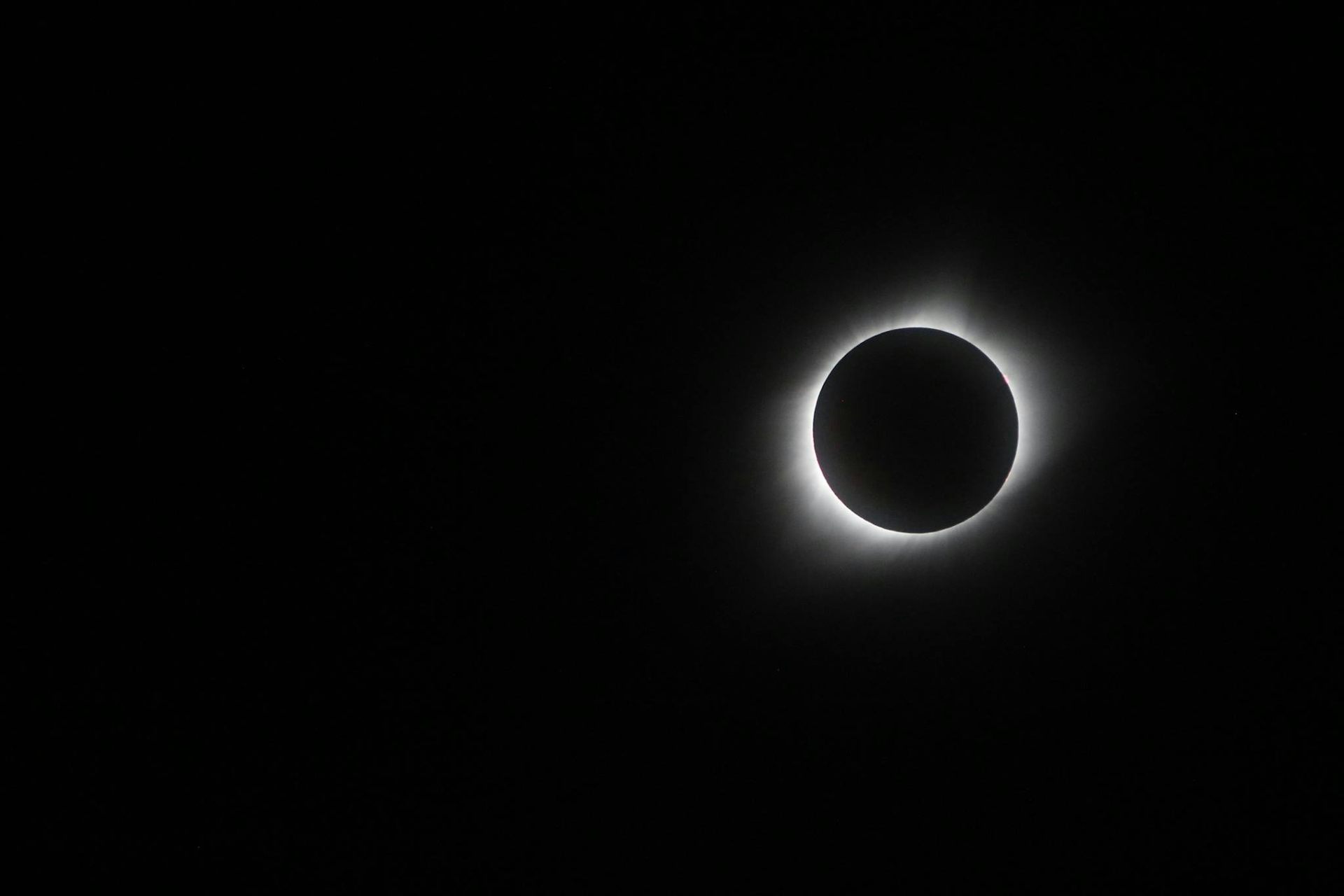
From Earth, the circle of the Sun is about the same size as the circle of the Moon. With the bright circle blocked, you can see the undulating rays of the Sun’s corona, or outer atmosphere, that are normally too dim to be observed.
从地球上看,太阳的圆盘大小与月球的圆盘大小差不多。当明亮的圆盘被遮挡后,人们可以看到太阳冠(corona)——即太阳的外层大气——那些通常太暗而无法观测的起伏光芒。

I’m a cultural anthropologist who studies awe-inspiring aspects of space exploration. I have been lucky enough to have seen two total solar eclipses. The first one was in Nebraska in 2017, the second in Indiana in 2024.
我是一名研究太空探索令人敬畏方面的文化人类学家。我很幸运地目睹了两次日全食。第一次是在2017年的内布拉斯加州,第二次是在2024年的印第安纳州。
During my second total eclipse, the period of totality – that short span when you can remove your protective glasses and look directly at the eclipse – lasted close to 4 minutes. I saw waves of diffuse light snaking around an ink-black hole in the sky. It looked very wrong – almost alien.
在第二次日全食期间,全食期——即可以摘下防护眼镜直接观看日食的短暂时间——持续了将近4分钟。我看到弥散的光波在天空中一个墨黑色的“洞”周围蜿蜒游动。它看起来非常不自然——几乎是外星的。
On Aug. 12, 2026, there will be another total solar eclipse, visible only from Greenland, Iceland, Spain and the Balearic Islands of the Mediterranean. Some fortunate viewers in Spain and nearby islands may see the eclipse just before sunset, low on the horizon. The Moon illusion, a phenomenon where the Moon looks bigger when it’s near the horizon, might make this eclipse look unusually large.
2026年8月12日,还将发生另一次日全食,只能从格陵兰、冰岛、西班牙和地中海的巴利阿里群岛看到。西班牙和附近岛屿的一些幸运观众可能会在日落前,在低地平线上看到日食。月亮错觉(Moon illusion)是一种当月亮靠近地平线时看起来会更大的现象,可能会让这次日食看起来异常巨大。
Unusual eclipse perspectives
罕见的日食视角
Astronauts will occasionally also have less common eclipse experiences. I interviewed one I call by the pseudonym “Jackie” in my research about astronauts’ experiences of awe. She was part of an astronaut training group that did a flight exercise during a total solar eclipse.
宇航员偶尔也会经历一些不常见的日食体验。在我关于宇航员敬畏体验的研究中,我采访了一位化名为“杰基”的女士。她曾参加过一个宇航员训练小组,并在一次日全食期间进行了飞行演习。
Jackie and her squad flew their jets in the shadow of the Moon. This lengthened their time in totality because they could follow and stay within the shadow. Jackie was most impressed with how the Sun’s corona seemed to shift and ripple.
杰基和她的队员在月球的阴影中飞越了他们的喷气式飞机。这延长了他们在全食状态下的时间,因为他们可以跟随并停留在阴影内。杰基对太阳冠似乎在移动和起伏的样子印象最为深刻。
“It’s not static … it’s alive,” she told me.
“它不是静止的……它是活的,”她告诉我。
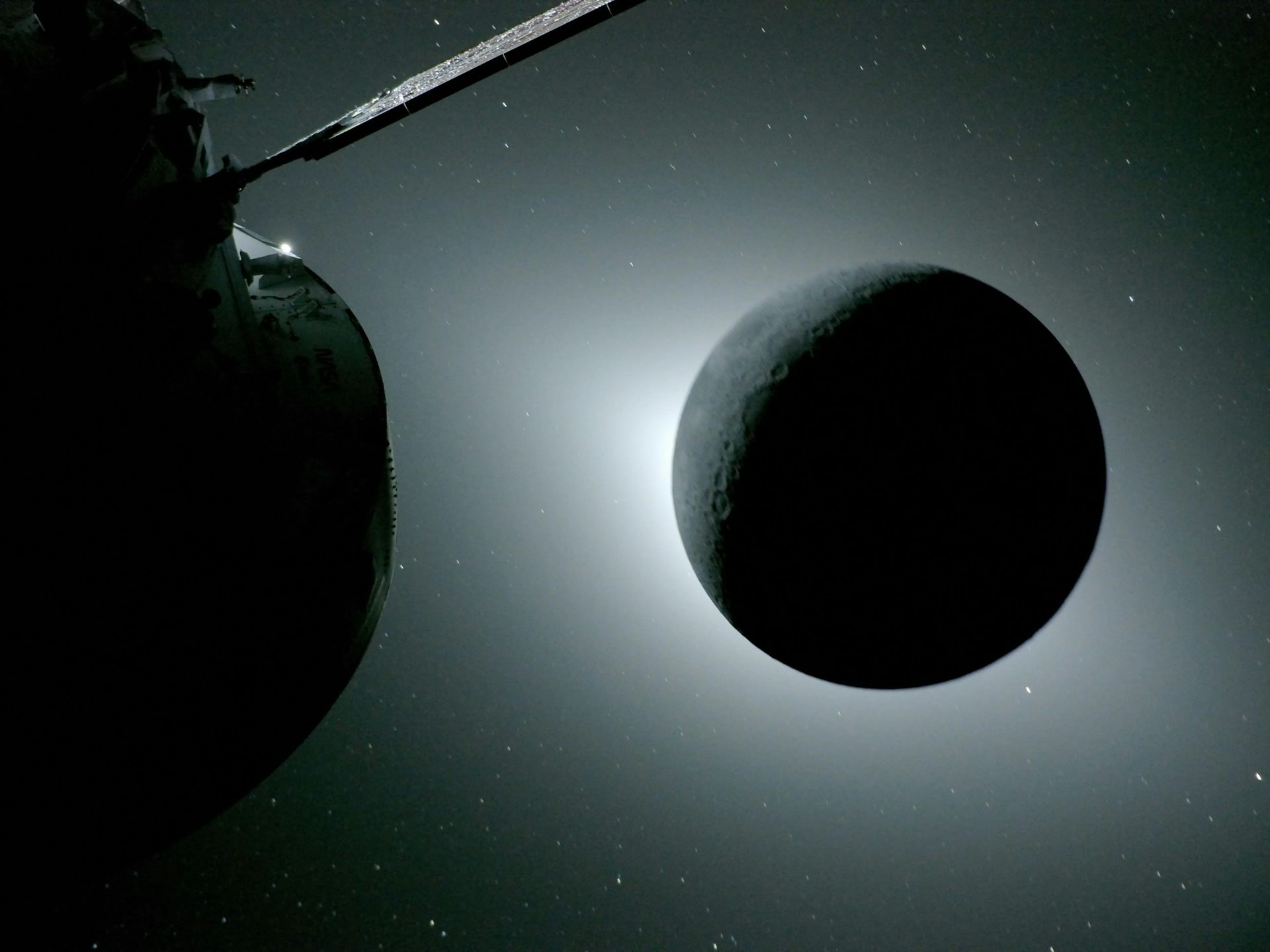
On April 6, 2026, the astronauts of NASA’s Artemis II mission saw another kind of unusual eclipse as they flew around the Moon. At one point during their flight, the Moon and the spacecraft aligned so that the Moon was directly between them and the Sun, blocking the Sun’s disk in a way that looks very different from what we see on Earth.
2026年4月6日,美国国家航空航天局(NASA)“阿尔忒弥斯二号”(Artemis II)任务的宇航员在飞越月球时,目睹了另一种不寻常的日食。在飞行过程中,月球和航天器对齐了,月球正好位于它们和太阳之间,遮挡了太阳的圆盘,呈现出与我们在地球上看到的截然不同的景象。
Astronaut Victor Glover said it felt like they “just went sci-fi.”
宇航员维克多·格洛弗说,感觉就像是“进入了科幻片”。
The astronauts were so close to the Moon that the Moon looked bigger than the Sun and hid more of its bright circle. Earth was also in view, and sunlight reflected from the Earth onto the Moon in a phenomenon NASA calls “earthshine.” This dim light is very similar to the moonlight that shines on the Earth at night.
宇航员们离月球非常近,以至于月球看起来比太阳还大,遮挡了更多明亮的圆盘。地球也处于视野内,阳光从地球反射到月球上,这种现象被称为“地球辉光”(earthshine)。这种微弱的光芒与夜间照耀地球的月光非常相似。
Imagine the Sun hidden behind the Moon, creating a hazy halo around the Moon’s edges. At the same time, faint light reflected from Earth softly illuminates the Moon, revealing mountains and craters in a dim twilight. Now imagine this striking scene lasting 54 minutes.
想象一下,太阳被月球遮挡,在月球边缘形成一层朦胧的光晕。与此同时,从地球反射的微弱光芒柔和地照亮了月球,在昏暗的黄昏中显露出山脉和陨石坑。现在,想象一下这种壮观的景象持续了54分钟。
This sight was, without a doubt, one of the most unusual eclipses ever seen by human eyes.
毫无疑问,这是人类眼睛所见过的最不寻常的日食之一。
Although Artemis’ astronauts are trained to think scientifically, this experience propelled them into a state of awe. They talked openly about how their brains were “not processing” what they observed. While NASA kept them busy with a variety of tasks, the sound of emotion and excitement in their voices as they broadcast live from their lunar flyby was unmistakable.
尽管阿尔忒弥斯宇航员接受了科学思维的训练,但这次经历却让他们进入了一种敬畏的状态。他们公开谈论着他们的大脑“无法处理”所观察到的景象。虽然NASA让他们忙于各种任务,但他们在进行月球飞掠直播时,声音中流露出的情感和兴奋是显而易见的。
The psychology of awe
敬畏的心理学
Researchers have studied the effects of awe on the human brain, including awe felt during solar eclipses. Moments of wonder like these can transform how you feel and even how you think, making you more thoughtful and open-minded.
研究人员研究了敬畏感对人脑的影响,包括在日食期间感受到的敬畏感。这种奇妙的时刻可以改变你的感受,甚至你的思维方式,让你更加深思和开明。
In my own work I’ve found these experiences can change how astronauts understand their own place in the universe.
在我自己的工作中,我发现这些经历可以改变宇航员们对自身在宇宙中位置的理解。
One astronaut said she gained an awareness of the fragility of our planet that now shapes everything she does, while another described becoming more curious after returning to Earth. A third said the awe he experienced in lunar orbit changed his understanding of time and infinity.
一位宇航员说,她意识到我们星球的脆弱性,这现在影响着她所做的一切;另一位描述了返回地球后变得更加好奇。还有一位说,他在月球轨道上经历的敬畏感改变了他对时间和无限的理解。
Space travel creates many opportunities for awe, but a solar eclipse from behind the Moon, as Mission Commander Reid Wiseman put it, required “20 new superlatives.”
太空旅行创造了许多体验敬畏的机会,但任务指挥官里德·威斯曼(Reid Wiseman)说,月球背后的日食需要“20个新的最高级形容词”。
It’s an experience most of the earthbound eclipse-chasers heading to Greenland or Iceland or Spain this summer will only dream about. Whether eclipses happen in space or on Earth, though, close encounters with the grandeur of our universe can make you feel profoundly human.
对于今年夏天前往格陵兰、冰岛或西班牙的地球日食追逐者来说,这只是一种梦想。不过,无论日食发生在太空中还是地球上,与我们宇宙的宏伟近距离接触都能让你感到深刻地人性化。
Deana L. Weibel is currently working on a project with funding from the National Air and Space Museum’s Aviation Space Writers Foundation Award. She has published a book, The Ultraview Effect: What We Can Learn from Astronauts about Awe, Humility, and Exploring the Unknown, with the University of California Press.
迪安娜·L·魏贝尔(Deana L. Weibel)目前正在一个由国家航空航天博物馆航空航天作家基金会资助的项目上工作。她与加州大学出版社合作出版了一本书,书名为《超视效应:从宇航员身上学到的敬畏、谦逊与探索未知》。
Read more
-
票价飙升可能帮助国际足联在本届世界杯周期内筹集150亿美元——这些钱从何而来,又将流向何方?
Soaring ticket prices could help FIFA pull in $15B this…