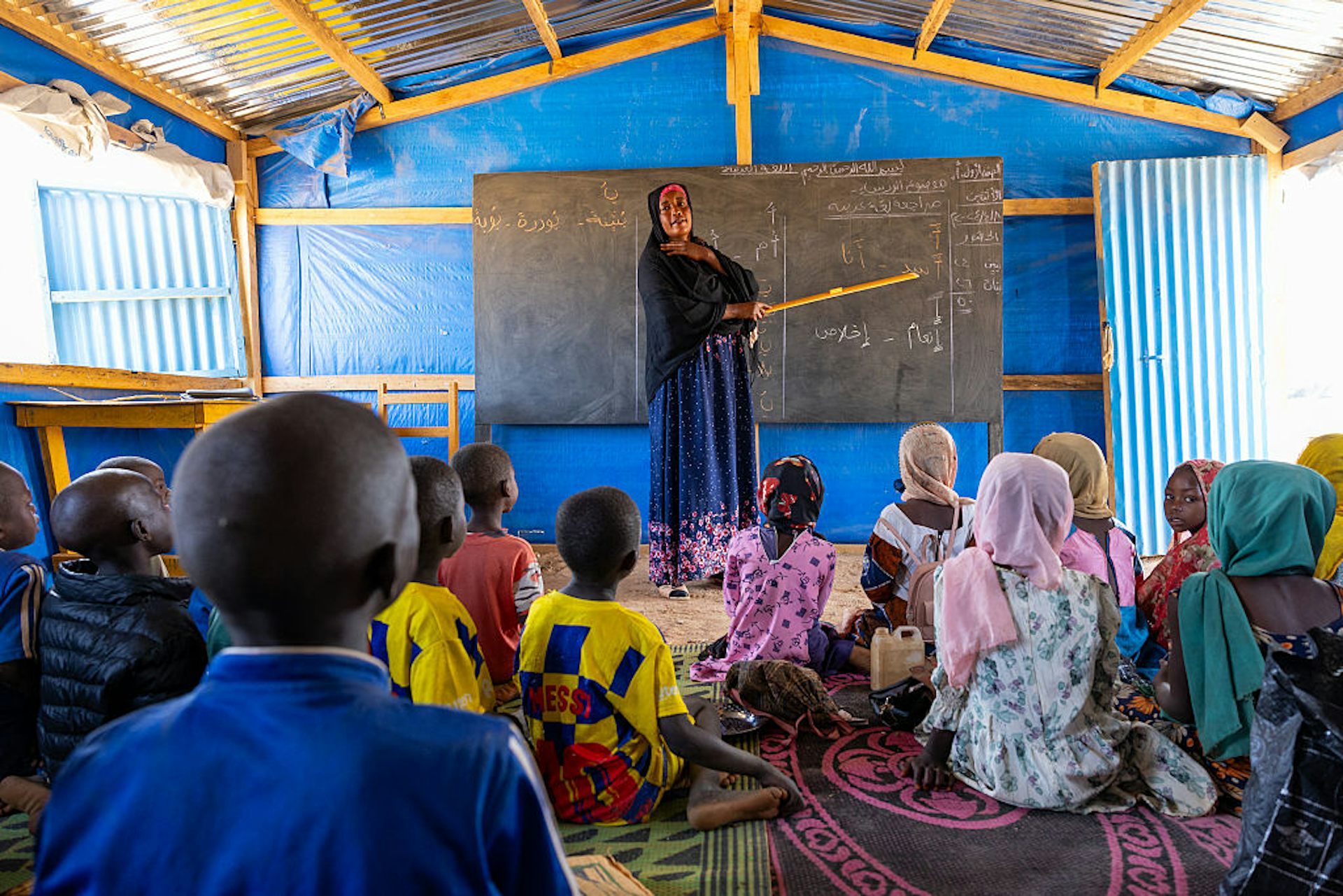
1 亿非洲儿童没有上学。驱动这一趋势的原因以及如何扭转局面
100 million African children are not in school. What’s …
Eroding the gains made in education has severe consequences, especially for girls.
教育成果的侵蚀带来了严重的后果,尤其是对女孩。
Many countries across Africa have embraced universal basic education policies in recent decades. But recent data has revealed that more than 100 million children and adolescents remain out of school, out of a total potential population of 469 million. The latest statistics suggest that after some years of progress, the situation is deteriorating. Education and youth empowerment scholar Moses Ngware and his co-researchers recently carried out an analysis of trends going back 25 years. Their main findings are set out below.
非洲的许多国家在最近几十年里推行了全民基础教育政策。但最近的数据显示,在总潜在人口4.69亿中,仍有超过1亿儿童和青少年未上学。最新的统计数据表明,经过一些进步,情况正在恶化。教育与青年赋权学者Moses Ngware及其合作研究人员最近对过去25年的趋势进行了分析。他们的主要发现如下。
What are the school attendance trends in Africa across all age groups?
非洲所有年龄组的入学趋势如何?
In 2000, the number of out-of-school children in primary school, lower secondary and upper secondary was above 100 million. It was down to about 90 million in 2014, and then up again to 100 million by 2025.
2000年,小学、初中和高中辍学儿童的数量超过了1亿。到2014年,这一数字降至约9000万,到2025年又回升至1亿。
Viewed against Africa’s high population growth of above 2.5%, these absolute numbers suggest that school participation is not keeping pace.
与非洲超过2.5%的高人口增长相比,这些绝对数字表明,学校参与度并未跟上增长步伐。
Nevertheless, between 2000 and 2024, the proportion of out-of-school children and adolescents declined at all education levels. It fell from 37% to 20% for primary schools; from 47% to 35% for lower secondary and from 56% to 47% for upper secondary school-age children. This is despite the absolute numbers of out-of-school children remaining high.
尽管如此,在2000年至2024年期间,所有教育水平的辍学儿童和青少年的比例都下降了。小学辍学比例从37%降至20%;初中辍学比例从47%降至35%;高中年龄儿童辍学比例从56%降至47%。尽管辍学儿童的绝对数量仍然很高,但这一趋势依然存在。
Countries that showed greatest improvement included Côte d’Ivoire, Ethiopia, Guinea, Madagascar and Mozambique. Improvements were driven by at least two main factors. First, targeted policy responses that enabled them to achieve good coverage in a short time. Second, a strong political will combined with a multi-sectoral approach. The approaches included combining conditional cash transfers for households, food supplies, expanding access to schools and implementing universal education policies that reduce cost of schooling for households.
表现出最大改善的国家包括科特迪瓦、埃塞俄比亚、几内亚、马达加斯加和莫桑比克。改善是由至少两个主要因素驱动的。首先是有针对性的政策响应,使它们能够在短时间内实现良好的覆盖。其次是强烈的政治意愿与多部门方法相结合。这些方法包括为家庭提供有条件的现金转移、食品供应、扩大学校入学机会以及实施降低家庭就学成本的普及教育政策。
On the other hand, there are countries that made little or no progress. They include Angola, Cape Verde, Lesotho, South Sudan and Zimbabwe. The main drivers of the low progress are:
另一方面,也有一些国家进展甚微或没有进展。它们包括安哥拉、喀麦隆、莱索托、南苏丹和津巴布韦。低进展的主要驱动因素是:
political instability, as seen in South Sudan
南苏丹的政治不稳定;
poor economic performance, as witnessed in Zimbabwe
津巴布韦所见到的较差的经济表现;
the high opportunity cost of schooling, as seen in Lesotho, where boys drop out due to poverty related coping mechanisms, including herding cattle, with only one in every five boys completing grade 12.
莱索托所见到的就学的高机会成本,其中男孩因与放牧牛相关的贫困应对机制而辍学,每五名男孩中只有一人完成12年级。
What are the notable changes in recent years?
近年来发生了哪些显著变化?
In the past five years, we have seen a steady increase in absolute numbers of out-of-school children and adolescents from 95 million to 100 million, with an average of about 1 million children either not transitioning from primary to secondary school or leaving school or not joining school at all.
在过去的五年里,我们看到无学儿童和青少年的绝对数量从9500万增加到1亿,平均有大约100万儿童没有从小学过渡到中学,或者辍学,或者完全没有上学。
There are two main drivers of such a trend. First, finance – the fizzling effect of the universal basic education subsidies of the early 2000s. These subsidies made basic education affordable to many households. Of the 42 African countries with free education in their policies, only three were in a position to offer free schooling in 2025. Donor funding of education by multilateral organisations has also been reduced, with education aid in Africa declining by 7% in 2024. Second, the negative impact of COVID-19, with about 10 million who left school due to the lockdowns never to return, for various reasons, including forced marriages among girls and child labour for boys.
这种趋势有两个主要驱动力。首先是财政——21世纪初的普遍基础教育补贴的消退效应。这些补贴使许多家庭能够负担得起基础教育。在政策中实行免费教育的42个非洲国家中,只有三个国家有能力在2025年提供免费教育。多边组织的教育捐款也减少了,2024年非洲的教育援助下降了7%。其次是COVID-19的负面影响,约有1000万人在封锁期间辍学,出于各种原因,包括女孩的强迫婚姻和男孩的童工,他们从未回来。
Across all the schooling levels, higher than before rates of out-of-school children and adolescents were observed in the Sahel region, in Central African Republic, Chad, Mauritania and northern Nigeria. These countries or regions are characterised by politically motivated violence, harsh climatic changes and a history of low school participation.
在所有教育阶段,在萨赫勒地区、中非共和国、乍得、毛里塔尼亚和尼日利亚北部观察到了比以前更高的无学儿童和青少年的比例。这些国家或地区的特点是政治动机的暴力、严酷的气候变化以及低学校参与的历史。
Why is school completion important for societies?
学校完成对社会有什么重要性?
The main benefits to societies of school completion include transition to decent work, girls’ empowerment, and improved health outcomes. An additional year of schooling increases an individual’s lifetime earnings by about 10% on average, with a potential to increase an individual’s purchasing power. Such benefits can also trickle down to households through providing household financial stability and enhanced family support.
学校完成对社会的主要益处包括过渡到体面工作、女权赋权以及改善的健康结果。增加一年的教育平均能使个人的终身收入提高约10%,并有增加个人购买力的潜力。这些益处还可以通过提供家庭经济稳定和增强的家庭支持,向下流传到家庭。
For girls, school completion is critical for participation in decision making at societal level. Research shows that a woman’s power to make decisions, such as education for her children or where to invest, increases with education attainment. This has a bearing on economic independence and gender equity within the society.
对于女孩来说,完成学业对于参与社会层面的决策至关重要。研究表明,女性的决策能力,例如为孩子教育或投资方向,随着教育水平的提高而增加。这影响着社会中的经济独立性和性别平等。
Furthermore, and related to these two benefits, children of mothers who have completed secondary education have a 45% lower under-3 mortality rate. This implies that such children have about half the risk of death before age 3 compared to those born to mothers with no education.
此外,与这两种益处相关,完成中学教育的母亲的子女的3岁以下死亡率低45%。这意味着与没有受教育的母亲所生的孩子相比,这些孩子在3岁前死亡的风险大约只有一半。
What are the gender dynamics?
性别动态是什么?
By 2025, the proportion of males that were out of school, at 51%, was only slightly higher than that of females. However, the out-of-school female rate was on the rise – up by two percentage points in 10 years.
到2025年,脱离学校的男性比例为51%,仅略高于女性。然而,脱离学校的女性比例正在上升——在十年间增加了两个百分点。
If this growth continues, then the proportion of out-of-school females will overtake that of males in the coming years. This will compound the vulnerabilities disadvantaged girls face in their schooling journey and transition to work.
如果这种增长持续下去,那么在未来几年,脱离学校的女性比例将超过男性的比例。这将加剧弱势女孩在求学和过渡到工作的过程中所面临的脆弱性。
In addition, the gains made in the last three decades in closing gender gaps in education will be eroded. Eroding the gains made in education has severe consequences, especially for girls. For instance, we are likely to see an increase in females getting married much earlier, and child bearing among adolescents may also increase.
此外,在过去三十年中缩小教育性别差距所取得的进展将会被侵蚀。削弱教育方面的进步会带来严重后果,尤其是对女孩而言。例如,我们可能会看到女性更早结婚,并且青少年中的生育率也可能会增加。
What lessons can we learn from the better-placed countries?
我们能从那些发展更好的国家中学到什么经验?
There are a number of important lessons to be learnt from countries that have lowered the number of out-of-school children and adolescents.
从那些降低了就学儿童和青少年的数量的国家,我们可以吸取一些重要的教训。
First, Algeria, Ghana, Kenya and Rwanda have relied on a strong national policy framework backed by political good will, high-level central coordination and donor-partner support.
首先,阿尔及利亚、加纳、肯尼亚和卢旺达依靠强大的国家政策框架,获得了政治意愿的支持、高层中央协调以及捐助者和伙伴的支持。
Second is the importance of targeted social support such as school feeding and conditional cash transfers. Close evaluations using hard data are needed.
其次是目标性社会支持的重要性,例如学校供餐和有条件的现金转移。需要使用硬数据进行密切评估。
Third is the elimination of significant direct fees or levies at basic education level, with timely financial disbursements and school supplies.
第三是消除基础教育阶段的重大直接费用或税费,并及时拨付资金和学校用品。
Fourth is the lesson that affirmative action for vulnerable populations is an invaluable investment. These populations include disadvantaged girls, children from remote rural areas, children with disabilities, and children from poor households.
第四是积极行动(affirmative action)对弱势群体的投资是无价的。这些群体包括处于不利地位的女孩、来自偏远农村地区的儿童、残疾儿童以及来自贫困家庭的儿童。
Finally, there are other interventions that can add value depending on the context. These include reducing travel distance through expanding infrastructure, and flexible school entry, such as late entry to improve participation. Another is catch-up programmes, which means accelerating progression to recover lost time and learning.
最后,根据具体情况,还有其他可以增加价值的干预措施。这些包括通过扩大基础设施来减少旅行距离,以及灵活的入学方式,例如晚入学以提高参与度。另一种是追赶计划,即加速进展以挽回失去的时间和学习。
Moses Ngware receives funding from. African Population and Health Research Center (APHRC)
Moses Ngware 从非洲人口与健康研究中心(APHRC)获得资金。