海湾国家在霍尔木兹海峡之外有什么替代方案?
What alternatives do Gulf states have to the Strait of …
While the UAE and Saudi Arabia can at least partly circumvent the Strait of Hormuz, other Gulf states are less fortunate.
虽然阿联酋和沙特阿拉伯至少可以部分绕过霍尔木兹海峡,但其他海湾国家则不那么幸运。
Two months into the Iran war and the Strait of Hormuz is still mostly shut. Vessel traffic is running at a fraction of pre-war levels, with the patchwork of ceasefires, blockades and re-closures since February 28 not restoring confidence on the bridge of any tanker.
伊朗战争进入第二个月,霍尔木兹海峡仍大部分处于关闭状态。船只流量远低于战前水平,自2月28日以来,零星的停火、封锁和重新开放未能让任何油轮船员恢复信心。
Hormuz has long been understood as one of the world’s central trade chokepoints. It normally carries around 20 million barrels of crude and oil products each day, as well as roughly a fifth of global liquefied natural gas (LNG) exports. A third of the world’s helium and a similar amount of the urea that ends up as fertiliser also pass through the strait.
霍尔木兹海峡长期以来被认为是全球重要的贸易瓶颈之一。它每天通常运载约2000万桶原油和石油产品,以及全球约五分之一的液化天然气(LNG)出口。全球三分之一的氦气以及等量的最终用作肥料的尿素也通过该海峡。
Plans and projects to diversify away from Hormuz have been on drawing boards for decades, and those workarounds are now being stress-tested as never before. The bypass infrastructure is doing roughly what architects had hoped, providing around 3.5 million barrels to 5.5 million barrels a day of crude capacity.
旨在实现从霍尔木兹海峡多元化的计划和项目数十年来一直在图纸上,而这些替代方案现在正接受前所未有的压力测试。绕行基础设施提供的原油运载能力约为每天350万桶至550万桶,大致符合建筑师们的预期。
But this is still nowhere near enough.
但这仍然远远不够。
Hormuz workarounds
霍尔木兹绕行方案
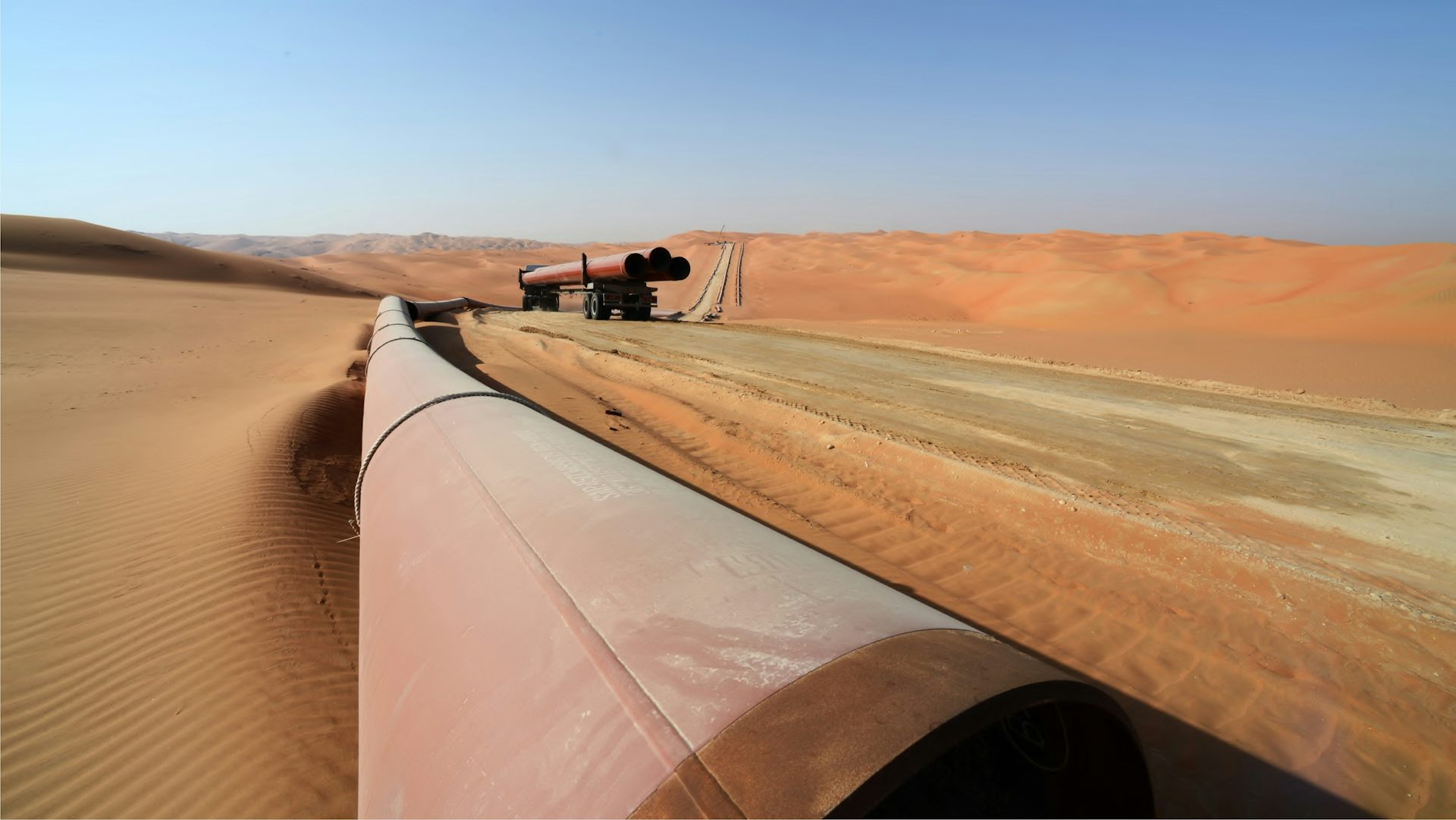
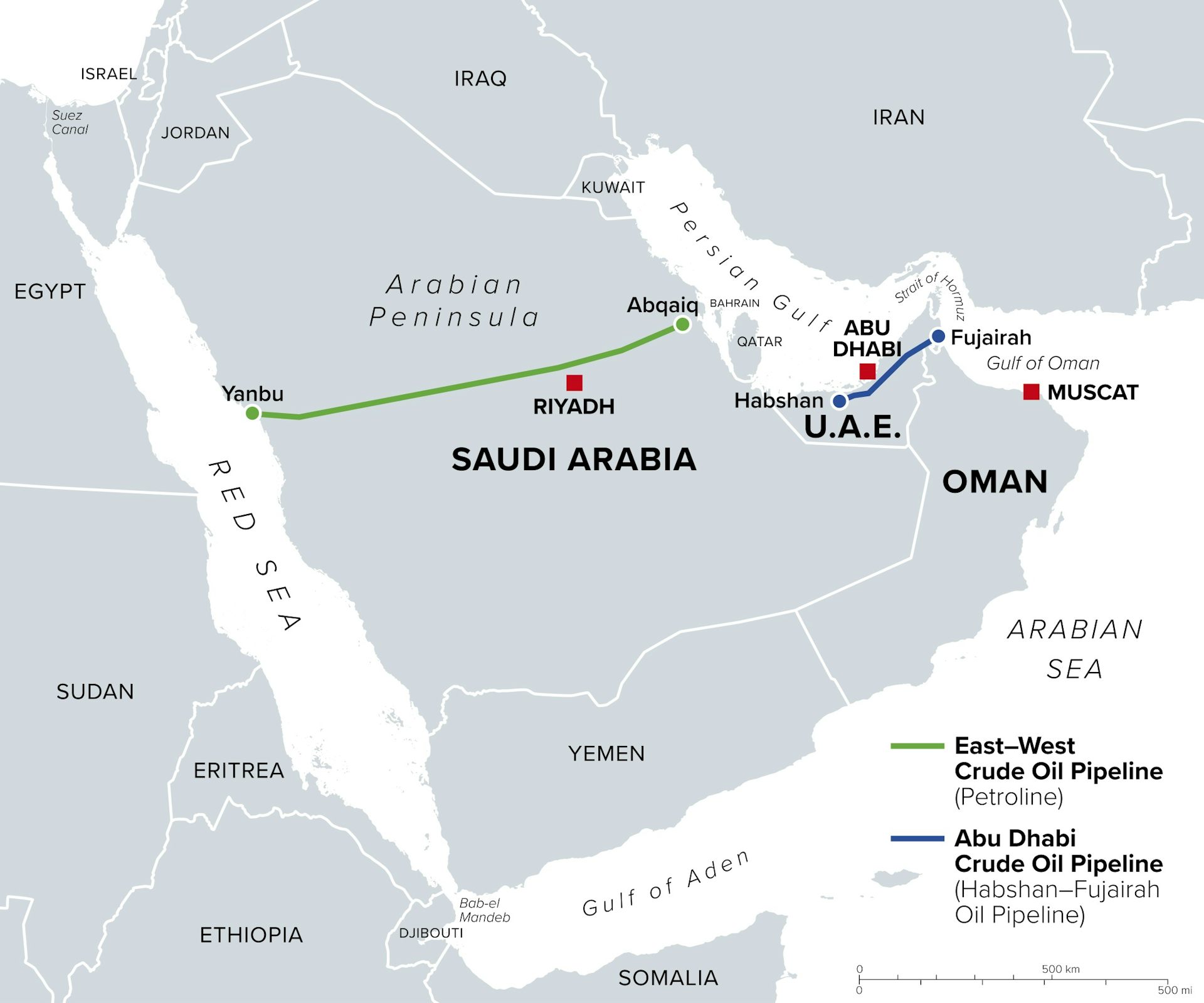
The most important pipeline on the planet right now runs across Saudi Arabia. The East-West Pipeline – also known as Petroline – was built in the 1980s during the original Tanker war, when Iran and Iraq attacked merchant vessels in the Gulf as part of their wider conflict.
目前地球上最重要的管道之一横穿沙特阿拉伯。东西管道——又称石油管道(Petroline)——是在20世纪80年代最初的油轮战争期间修建的,当时伊朗和伊拉克将其作为更广泛冲突的一部分,攻击了湾区的商船。
The pipeline’s capacity was expanded to a 7 million barrel emergency ceiling in 2019. However, the loading terminals in the city of Yanbu on Saudi Arabia’s Red Sea coast were never designed to carry this much oil this fast, and analysts tracking tanker traffic estimate that less oil is currently flowing through the pipeline than its theoretical ceiling.
该管道的运力在2019年扩大至700万桶的应急上限。然而,位于沙特阿拉伯红海沿岸延布市的装载码头从未设计过如此快速地运输如此大量的石油,分析师估计,目前流经管道的石油量低于其理论上限。
From Yanbu, oil bound for Europe still has to cross Egypt via the Sumed pipeline, which has a capacity of just 2.5 million barrels per day. Although oil flows through this pipeline have surged by 150% since the start of the war, its comparatively small capacity remains a binding constraint on European supply.
从延布出发,运往欧洲的石油仍必须通过苏梅德管道(Sumed pipeline)穿越埃及,该管道的运力仅为每天250万桶。尽管通过该管道的石油流量自战争开始以来激增了150%,但其相对较小的运力仍然是欧洲供应的制约因素。
Iran noticed the geoeconomic importance of Petroline and has targeted it accordingly. An Iranian drone strike on a pumping station in April knocked 700,000 barrels a day offline. Saudi Aramco, the operator, had the line back at full capacity within three days. While the repair time is reassuring, the fact of the strike is not.
伊朗注意到了石油管道的地缘经济重要性,并相应地对其进行打击。今年4月,伊朗对一个泵站发动了无人机袭击,使其每天停运了70万桶石油。运营商沙特阿美(Saudi Aramco)在三天内使该管道恢复了满负荷运行。虽然修复时间令人放心,但这次袭击的事实却不容乐观。
The other half of the Gulf bypass story runs through the United Arab Emirates (UAE) . The Abu Dhabi Crude Oil Pipeline (Adcop) goes from Habshan to Fujairah on the Gulf of Oman side of the country. With a capacity of just under 2 million barrels per day, Adcop is the only major bypass that exits the Gulf directly into the Indian Ocean.
湾区绕行方案的另一半则穿过阿拉伯联合酋长国(UAE)。阿布扎比原油管道(Adcop)从哈布山延伸到富查拉,位于阿曼湾一侧。Adcop的运力略低于每天200万桶,是唯一直接进入印度洋的重大绕行管道。
But as with Petroline, it has been targeted during the war. Iranian drone strikes on Fujairah on March 3, 14 and 16 set storage tanks on fire and suspended loadings. While Adcop offers some diversification for the UAE, it does not solve the targeting problem.
但与石油管道一样,它在战争期间也曾成为目标。伊朗于3月3日、14日和16日对富查拉发动无人机袭击,导致储存油罐起火并暂停装载。虽然Adcop为阿联酋提供了某种分散化,但它并没有解决目标性问题。
The situation is worse for the Gulf region’s other big oil producers. Iraq’s 3.4 million barrels per day of pre-war crude exports went almost entirely through the southern port city of Basra and the Strait of Hormuz.
对于湾区其他主要的石油生产国来说,局势更糟。伊拉克战前每天340万桶的原油出口几乎全部通过南部港口城市巴士拉和霍尔木兹海峡。
There is one northern pipeline, connecting oil fields in Kirkuk to Ceyhan in Turkey. This pipeline was reopened in September 2025 after a two-and-a-half-year halt, with flows ramped up to 250,000 barrels a day in March. But this volume pales in comparison to what Iraq has lost.
北部有一条管道,连接了基尔库克和土耳其的塞伊罕。该管道在停运两年半后于2025年9月重新开放,并在3月将流量提升至每天25万桶。但这与伊拉克损失的量相比微不足道。
Kuwait has it worse still. Pre-war crude exports ran at around 2 million barrels per day, with every barrel exiting through Hormuz. Kuwait has no pipeline alternative. Kuwait Petroleum Corporation declared force majeure in March, temporarily allowing it to suspend its obligations to meet delivery contracts.
科威特的情况更糟。战前原油出口约为每天200万桶,每一桶都必须通过霍尔木兹。科威特没有管道替代方案。科威特石油公司于3月宣布了不可抗力,暂时允许其暂停履行交货合同的义务。
This was extended on April 20, with the oil company saying it could not meet contractual obligations even if Hormuz reopened. Overcoming the damage that has been inflicted on Kuwait’s production base – and then ramping up production – will take months.
这一期限于4月20日延长,石油公司表示,即使霍尔木兹重新开放,它也无法履行合同义务。克服对科威特生产基地造成的损害——然后再提高产量——需要数月时间。
Qatar’s vulnerability is a different shape. Its pre-war crude exports were smaller than its Gulf neigbours, at around 0.6 million barrels per day. These exports all left Qatar via the strait. For Qatar, the story is gas. Its 77 million tonne LNG capacity at Ras Laffan is the largest in the world, supplying about 19% of global LNG trade. There is no alternative to shipping this gas through Hormuz.
卡塔尔的脆弱性体现在不同的方面。其战前原油出口小于其湾区邻国,约为每天60万桶。这些出口全部通过海峡离开卡塔尔。对于卡塔尔来说,重点是天然气。其位于拉斯拉凡的7700万吨液化天然气(LNG)产能是世界最大的,供应了约19%的全球液化天然气贸易。没有替代方案可以经由霍尔木兹运输这种天然气。
Iran itself has built a Hormuz bypass: a 1,000-kilometre pipeline from Goreh at the head of the Gulf to a terminal at Jask on the Gulf of Oman. It is designed for 1 million barrels per day. But in practice, sanctions and unfinished terminal infrastructure have kept actual throughput at a fraction of design.
伊朗自身也修建了一条霍尔木兹绕行管道:一条从湾口戈雷赫到阿曼湾贾斯克的1000公里管道。其设计运力为每天100万桶。但在实践中,制裁和未完工的终端基础设施使得实际吞吐量仅达到设计容量的一小部分。
The US Energy Information Administration estimated that, in summer 2024, under 70,000 barrels per day were flowing through the pipeline. Loadings stopped altogether that September. According to Kpler, which provides real-time data on global shipping movements, only a single tanker – around two million barrels – has loaded at Jask in the war so far.
美国能源信息署估计,2024年夏季,流经管道的石油量低于每天7万桶。装载工作在九月彻底停止了。根据提供全球航运实时数据的Kpler公司的数据,到目前为止,战争期间在贾斯克(Jask)仅有一艘油轮装载了约两百万桶石油。
A call for more pipes in the Gulf, as there have been since the war began, is understandable. But it is no answer. Replicating Hormuz in pipelines would cost hundreds of billions of US dollars and a decade of construction. And at the end of it, new pipelines and terminals at Yanbu, Fujairah and wherever else would be no harder to reach with a drone than the old ones.
呼吁在海湾修建更多管道,就像战争开始以来一直如此,这是可以理解的。但这并不能解决问题。在管道中复制霍尔木兹将耗资数千亿美元,并需要十年时间进行建设。而且,最终在延布、富查拉以及其他任何地方修建的新管道和终端,其可达性不会比旧的更难,无人机也能轻松到达。
David B Roberts does not work for, consult, own shares in or receive funding from any company or organisation that would benefit from this article, and has disclosed no relevant affiliations beyond their academic appointment.
David B Roberts不为任何可能从本文中受益的公司或组织工作、提供咨询、持有股份或获得资金,并且除了其学术职位外,未披露任何相关任职关系。