乌龟终于在生命之树上找到了自己的位置:南非化石的X光研究是决定性因素
Turtles finally have a place in the tree of life: X-ray…
Palaeontologists have got a clearer picture of where turtles fit in the animal kingdom, thanks to analysis of a southern African fossil.
由于对南非化石的分析,古生物学家们对乌龟在动物界中的位置有了更清晰的认识。
The origin of turtles has always been a bit of a puzzle for scientists who study the evolution of animals. To this day, where they fit in the tree of life remains a highly debated topic.
乌龟的起源一直是研究动物进化的科学家们的一个谜团。直到今天,它们在生命之树上的确切位置仍然是一个高度争议的话题。
The evolutionary relationships of most vertebrate groups are well understood. Thanks to genetic and morphological (anatomical, body shape) data, even animals with highly specialised skeletons can be clearly placed on the animal family tree. Examples include whales or birds.
大多数脊椎动物群体的进化关系已经得到了很好的了解。得益于遗传学和形态学(解剖学、体型)数据,即使是骨骼高度特化的动物,也可以在动物家族树上得到清晰的定位。例子包括鲸鱼或鸟类。
Turtles, however, have long remained an exception. Genetic studies identify them as relatives of the so-called archosaurs. This is a group that includes modern birds and crocodiles as well as extinct reptiles like dinosaurs and pterosaurs. But the fossil record seemed to tell a different story. Living turtles and their fossil relatives were so specialised that they offered few clues that would link even the oldest turtle fossils to other reptile groups. Or so scientists thought.
然而,乌龟一直是一个例外。遗传学研究将它们确定为所谓的古爬行动物(archosaurs)的亲属。这是一个包括现代鸟类和鳄鱼,以及恐龙和翼龙等已灭绝爬行动物的群体。但化石记录似乎讲述了一个不同的故事。现存的乌龟及其化石亲属过于特化,以至于它们提供的线索很少,无法将最古老的乌龟化石与其它爬行动物群体联系起来。至少科学家们是这么认为的。
Our international team of palaeontologists has now provided a comprehensive reassessment of the turtle’s place in the animal world. Our analysis sheds new light on the relationships among primitive turtles. It confirms that Eunotosaurus africanus, a fossil from South Africa and Malawi, which was presumed to be a “proto-turtle”, is not a direct ancestor of modern turtles. Instead, this animal is very distantly related to modern reptiles, finding its deep root among much older reptilian ancestors that have no modern representatives.
我们国际古生物学团队现在对乌龟在动物世界中的地位进行了全面重新评估。我们的分析为原始乌龟之间的关系提供了新的见解。它证实,来自南非和马拉维的化石物种《Eunotosaurus africanus》,曾被认为是“原始乌龟”,但它并非现代乌龟的直接祖先。相反,这种动物与现代爬行动物关系非常遥远,其深层根源存在于没有现代代表的更古老的爬行动物祖先中。
Based on anatomy, the phylogenetic analysis also provides the first robust support from fossil studies for the close relationship between turtles and the archosaur (bird-crocodilian) lineage.
基于解剖学,系统发育分析还首次从化石研究中为乌龟与古爬行动物(鸟-鳄鱼)谱系之间的密切关系提供了强有力的支持。
For more than 20 years, genetic data and anatomical data reached different conclusions about the relationships of turtles. Now they agree.
二十多年来,遗传数据和解剖数据对于乌龟的关系得出了不同的结论。现在,它们达成了一致。
Comparing reptile anatomy
比较爬行动物解剖学
Fifteen researchers from South Africa, the US, UK, France and Germany participated in the study. Their combined expertise included:
来自南非、美国、英国、法国和德国的十五名研究人员参与了这项研究。他们的综合专业知识包括:
computed tomography (CT) technology (advanced x-rays)
计算机断层扫描(CT)技术(先进的X射线)
reptilian anatomy and phylogenetics
爬行动物解剖学和系统发育学
Permo-Triassic stratigraphy (the study of rock layers where fossils are found) .
古生代-三叠纪地层学(研究发现化石的岩层)。
The combination was critical to obtain these groundbreaking results. Collection staff from the Evolutionary Studies Institute, Iziko South African Museum, National Museum, Albany Museum and Council for Geoscience in South Africa were also instrumental in enabling access to the specimens.
这种结合对于获得这些突破性结果至关重要。来自南非进化研究学院、伊齐科南非博物馆、国家博物馆、奥尔巴尼博物馆和地球科学委员会的采集人员在获取标本方面也发挥了重要作用。
The team painstakingly compiled anatomical comparisons across more than 200 fossil reptile species. We hoped to find previously overlooked similarities between early shelled turtles, their shell-less predecessors, and other early reptiles. Comparisons of the bones that frame the brain cavity were particularly important. These couldn’t previously be seen by scientists, but with powerful CT scanning methods their anatomy was laid bare.
该团队精心整理了对200多个化石爬行动物物种的解剖学比较。我们希望找到早期有壳乌龟、其无壳祖先和其他早期爬行动物之间先前被忽略的相似之处。对构成脑腔骨骼的比较尤其重要。这些骨骼以前无法被科学家看到,但借助强大的CT扫描方法,它们的解剖结构得以清晰展现。
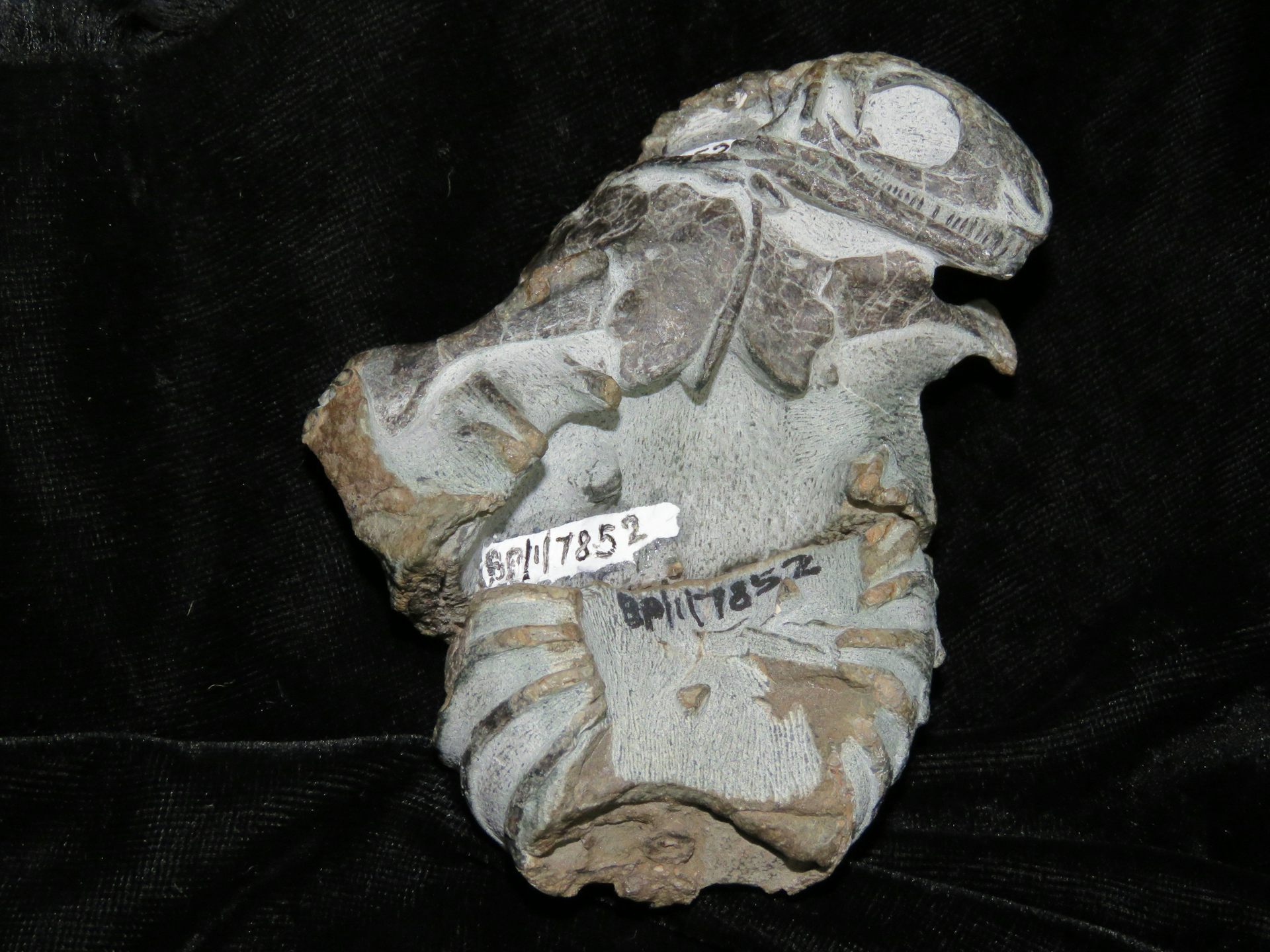
Particularly surprising was what we learned about Eunotosaurus africanus, a 30cm-long burrowing reptile that lived in southern Africa some 260 million years ago. Previous studies considered it as the oldest known member of the turtle family, or a “proto-turtle”. Its broadened trunk and wide ribs looked something like a turtle shell. We studied almost all of the material of Eunotosaurus available in South African collections to address this idea once again.
特别令人惊讶的是我们对来自南非、生活在南非的、体长30厘米的穴居爬行动物——埃诺托萨鲁斯非洲种(Eunotosaurus africanus)的研究。以往的研究曾将其认为是已知最古老的乌龟科成员,或“原型乌龟”。它加宽的躯干和宽阔的肋骨看起来有点像乌龟壳。我们研究了南非收藏馆几乎所有可获得的埃诺托萨鲁斯材料,再次探讨了这一观点。
Our working group at the Evolutionary Studies Institute studies some of the oldest rock layers from the Karoo Basin of South Africa, where Eunotosaurus is found. If Eunotosaurus was indeed a “proto-turtle”, we’d expect to find the forerunners of living lizards, crocodiles or birds (that is, reptiles) in these same layers. Paradoxically, we’ve found no other close relatives of modern reptiles at all. This made us suspect that even if turtles are ancient relatives of living birds and crocodilians, perhaps Eunotosaurus was no “proto-turtle” at all.
我们在进化研究学院的工作组研究的是南非卡鲁盆地一些最古老的岩层,埃诺托萨鲁斯就生活在这些地方。如果埃诺托萨鲁斯确实是“原型乌龟”,我们应该在这些相同的地层中找到现存蜥蜴、鳄鱼或鸟类的祖先(即爬行动物)。矛盾的是,我们根本没有发现任何现代爬行动物的近亲。这使我们怀疑,即使乌龟是现存鸟类和鳄类古老的亲属,埃诺托萨鲁斯可能根本不是“原型乌龟”。
One breakthrough was reconstructing the bones of the braincase (housing the brain and ear) from high-resolution x-ray images of fossil and living reptiles. By peering inside the skull of Eunotosaurus, and comparing its bones with those of undisputed fossil turtles, we could see previously out-of-reach aspects of their anatomy for the first time.
一项突破是利用化石和现存爬行动物的超高分辨率X射线图像重建了脑颅(容纳大脑和耳朵)的骨骼。通过观察埃诺托萨鲁斯的头骨,并将其骨骼与无可争议的化石乌龟进行比较,我们首次看到了它们先前难以触及的解剖学方面。
These x-ray scans revealed the very primitive anatomy of Eunotosaurus. For example, it has bones in the back of the skull that were lost in turtles and all living reptiles. Features like a slender ear bone (the stapes) and the hooked fifth toe that are present in many living reptiles and other fossil turtles were completely lacking in Eunotosaurus. In contrast, the braincase of unambiguous fossil turtles, such as Proganochelys quenstedti, shared a suite of characteristics that are found in the ancestors of crocodilians and birds, but absent in Eunotosaurus.
这些X射线扫描揭示了埃诺托萨鲁斯非常原始的解剖结构。例如,它在头骨后部有在乌龟和所有现存爬行动物中已经丢失的骨骼。像细长的鼓膜骨(听骨)和许多现存爬行动物及其他化石乌龟所拥有的弯曲的第五趾,在埃诺托萨鲁斯身上完全缺失。相比之下,像《普罗加诺切利斯·奎恩斯蒂氏》(Proganochelys quenstedti)这样的明确化石乌龟的脑颅,共享了一套在鳄鱼和鸟类祖先中发现的特征,但在埃诺托萨鲁斯身上却缺失了。
These lines of evidence provides firm anatomical support that turtles are the closest living relatives of archosaurs. When Eunotosaurus was considered a “proto-turtle”, many of these features were considered to have evolved independently in the turtle lineage. Now, we show that turtles share these features with their archosaur relatives because they inherited them from a common ancestor.
这些证据链提供了坚实的解剖学支持,表明乌龟是兽脚类最接近的现存亲属。当埃诺托萨鲁斯被认为是“原型乌龟”时,许多这些特征被认为是在乌龟谱系中独立进化的。现在,我们表明乌龟与它们的兽脚类亲属共享这些特征,是因为它们从共同的祖先那里继承了这些特征。
These new results now place the origin of turtles where it fits better with both fossil and genetic data. When geneticists study living turtles, they compare their DNA to modern birds, crocodiles and lizards to infer evolutionary relationships. Our fossil findings now align with what those genetic comparisons have been suggesting all along: turtles branched off from the same ancestor that gave rise to crocodiles and birds.
这些新结果将乌龟的起源定位在一个与化石和遗传数据都更吻合的位置。当遗传学家研究现存乌龟时,他们会将它们的DNA与现代鸟类、鳄鱼和蜥蜴进行比较,以推断进化关系。我们的化石发现现在与那些遗传比较一直暗示的内容一致:乌龟是从产生鳄鱼和鸟类的同一祖先分化出来的。
Instead of being a living group of relics with ancestors present in the Middle Permian, turtles, like other modern reptiles, diversified and evolved their shell in the Triassic Period, approximately 20 million years after Eunotosaurus was already extinct.
在不是中二叠纪存在祖先的活化石群的情况下,乌龟等其他现代爬行动物在三叠纪时期,在尤诺托萨鲁斯已经灭绝大约2000万年后,使其甲壳发生了多样化和进化。
With turtles now firmly placed among their closest living relatives, palaeontologists will need to reassess other long-standing questions about reptile evolution. Advanced imaging techniques like computed tomography should now be applied to other enigmatic fossil groups, potentially clarifying their evolutionary relationships.
随着乌龟现在被确定为最亲近的活体亲属之一,古生物学家需要重新评估关于爬行动物进化的其他长期悬而未决的问题。现在应该将计算机断层扫描等先进成像技术应用于其他神秘的化石群,这可能会阐明它们的进化关系。
Our work highlights the fact that overlooked early reptile fossils, particularly those found in the South African fossil record, may hold the key to understanding reptile relationships.
我们的工作强调了这样一个事实:被忽视的早期爬行动物化石,特别是那些在南非化石记录中发现的化石,可能掌握着理解爬行动物关系的关键。
Valentin Buffa receives funding from the National Research Foundation of South Africa.
Valentin Buffa的资金来自南非国家研究基金会。
Jonah Choiniere receives research funding from the South African National Research Foundation, GENUS the DSTI/NRF Centre of Excellence in Palaeosciences, and from the Palaeontological Scientific Trust. He has an honorary affiliation with the American Museum of Natural History, New York, NY.
Jonah Choiniere的研究资金来自南非国家研究基金会、DSTI/NRF古科学卓越中心GENUS,以及古生物学科学信托基金。他在纽约美国自然历史博物馆有荣誉附属身份。
Julien Benoit receives funding from the DSTI-NRF African Origins Platform.
Julien Benoit的资金来自DSTI-NRF非洲起源平台。
Xavier Jenkins receives funding from the National Science Foundation as an NSF-EAR Postdoctoral Fellow.
Xavier Jenkins的资金来自美国国家科学基金会,担任NSF-EAR博士后研究员。