Kura-kura akhirnya memiliki tempat dalam pohon kehidupan: Studi sinar-X fosil Afrika Selatan menjadi penentu
Turtles finally have a place in the tree of life: X-ray study of South African fossils was a decider
Palaeontologists have got a clearer picture of where turtles fit in the animal kingdom, thanks to analysis of a southern African fossil.
Para paleontolog kini memiliki gambaran yang lebih jelas tentang posisi kura-kura dalam dunia hewan, berkat analisis fosil dari Afrika selatan.
The origin of turtles has always been a bit of a puzzle for scientists who study the evolution of animals. To this day, where they fit in the tree of life remains a highly debated topic.
Asal-usul kura-kura selalu menjadi teka-teki bagi para ilmuwan yang mempelajari evolusi hewan. Hingga hari ini, di mana posisi mereka dalam pohon kehidupan masih menjadi topik yang sangat diperdebatkan.
The evolutionary relationships of most vertebrate groups are well understood. Thanks to genetic and morphological (anatomical, body shape) data, even animals with highly specialised skeletons can be clearly placed on the animal family tree. Examples include whales or birds.
Hubungan evolusioner dari sebagian besar kelompok vertebrata sudah dipahami dengan baik. Berkat data genetik dan morfologis (anatomi, bentuk tubuh) , bahkan hewan dengan kerangka yang sangat terspesialisasi dapat ditempatkan dengan jelas pada pohon keluarga hewan. Contohnya termasuk paus atau burung.
Turtles, however, have long remained an exception. Genetic studies identify them as relatives of the so-called archosaurs. This is a group that includes modern birds and crocodiles as well as extinct reptiles like dinosaurs and pterosaurs. But the fossil record seemed to tell a different story. Living turtles and their fossil relatives were so specialised that they offered few clues that would link even the oldest turtle fossils to other reptile groups. Or so scientists thought.
Namun, kura-kura telah lama menjadi pengecualian. Studi genetik mengidentifikasi mereka sebagai kerabat dari yang disebut arkosaurus. Ini adalah kelompok yang mencakup burung modern dan buaya serta reptil punah seperti dinosaurus dan pterosaurus. Tetapi catatan fosil tampaknya menceritakan kisah yang berbeda. Kura-kura hidup dan kerabat fosil mereka sangat terspesialisasi sehingga hanya memberikan sedikit petunjuk yang dapat menghubungkan bahkan fosil kura-kura tertua dengan kelompok reptil lainnya. Atau begitulah yang dipikirkan para ilmuwan.
Our international team of palaeontologists has now provided a comprehensive reassessment of the turtle’s place in the animal world. Our analysis sheds new light on the relationships among primitive turtles. It confirms that Eunotosaurus africanus, a fossil from South Africa and Malawi, which was presumed to be a “proto-turtle”, is not a direct ancestor of modern turtles. Instead, this animal is very distantly related to modern reptiles, finding its deep root among much older reptilian ancestors that have no modern representatives.
Tim internasional paleontolog kami kini telah memberikan penilaian ulang yang komprehensif mengenai tempat kura-kura di dunia hewan. Analisis kami memberikan cahaya baru tentang hubungan di antara kura-kura primitif. Ini mengonfirmasi bahwa Eunotosaurus africanus, fosil dari Afrika Selatan dan Malawi, yang diduga merupakan “proto-kura-kura”, bukanlah nenek moyang langsung dari kura-kura modern. Sebaliknya, hewan ini sangat jauh berhubungan dengan reptil modern, menemukan akarnya yang dalam di antara nenek moyang reptil yang jauh lebih tua yang tidak memiliki perwakilan modern.
Based on anatomy, the phylogenetic analysis also provides the first robust support from fossil studies for the close relationship between turtles and the archosaur (bird-crocodilian) lineage.
Berdasarkan anatomi, analisis filogenetik juga memberikan dukungan kuat pertama dari studi fosil untuk hubungan dekat antara kura-kura dan garis keturunan arkosaurus (burung-buaya) .
For more than 20 years, genetic data and anatomical data reached different conclusions about the relationships of turtles. Now they agree.
Selama lebih dari 20 tahun, data genetik dan data anatomi mencapai kesimpulan yang berbeda mengenai hubungan kura-kura. Kini, keduanya setuju.
Comparing reptile anatomy
Membandingkan anatomi reptil
Fifteen researchers from South Africa, the US, UK, France and Germany participated in the study. Their combined expertise included:
Lima belas peneliti dari Afrika Selatan, AS, Inggris, Prancis, dan Jerman berpartisipasi dalam penelitian ini. Keahlian gabungan mereka meliputi:
computed tomography (CT) technology (advanced x-rays)
teknologi tomografi komputer (CT) (rontgen canggih)
reptilian anatomy and phylogenetics
anatomi reptil dan filogenetika
Permo-Triassic stratigraphy (the study of rock layers where fossils are found) .
stratigrafi Permo-Trias (studi lapisan batuan tempat fosil ditemukan) .
The combination was critical to obtain these groundbreaking results. Collection staff from the Evolutionary Studies Institute, Iziko South African Museum, National Museum, Albany Museum and Council for Geoscience in South Africa were also instrumental in enabling access to the specimens.
Kombinasi ini sangat penting untuk mendapatkan hasil terobosan ini. Staf koleksi dari Evolutionary Studies Institute, Iziko South African Museum, National Museum, Albany Museum, dan Council for Geoscience di Afrika Selatan juga berperan penting dalam memungkinkan akses ke spesimen.
The team painstakingly compiled anatomical comparisons across more than 200 fossil reptile species. We hoped to find previously overlooked similarities between early shelled turtles, their shell-less predecessors, and other early reptiles. Comparisons of the bones that frame the brain cavity were particularly important. These couldn’t previously be seen by scientists, but with powerful CT scanning methods their anatomy was laid bare.
Tim ini dengan susah payah menyusun perbandingan anatomi di lebih dari 200 spesies reptil fosil. Kami berharap dapat menemukan kesamaan yang sebelumnya terlewatkan antara kura-kura bercangkang awal, pendahulu tanpa cangkang mereka, dan reptil awal lainnya. Perbandingan tulang-tulang yang membingkai rongga otak sangat penting. Hal ini sebelumnya tidak dapat dilihat oleh para ilmuwan, tetapi dengan metode pemindaian CT yang kuat, anatomi mereka terungkap.
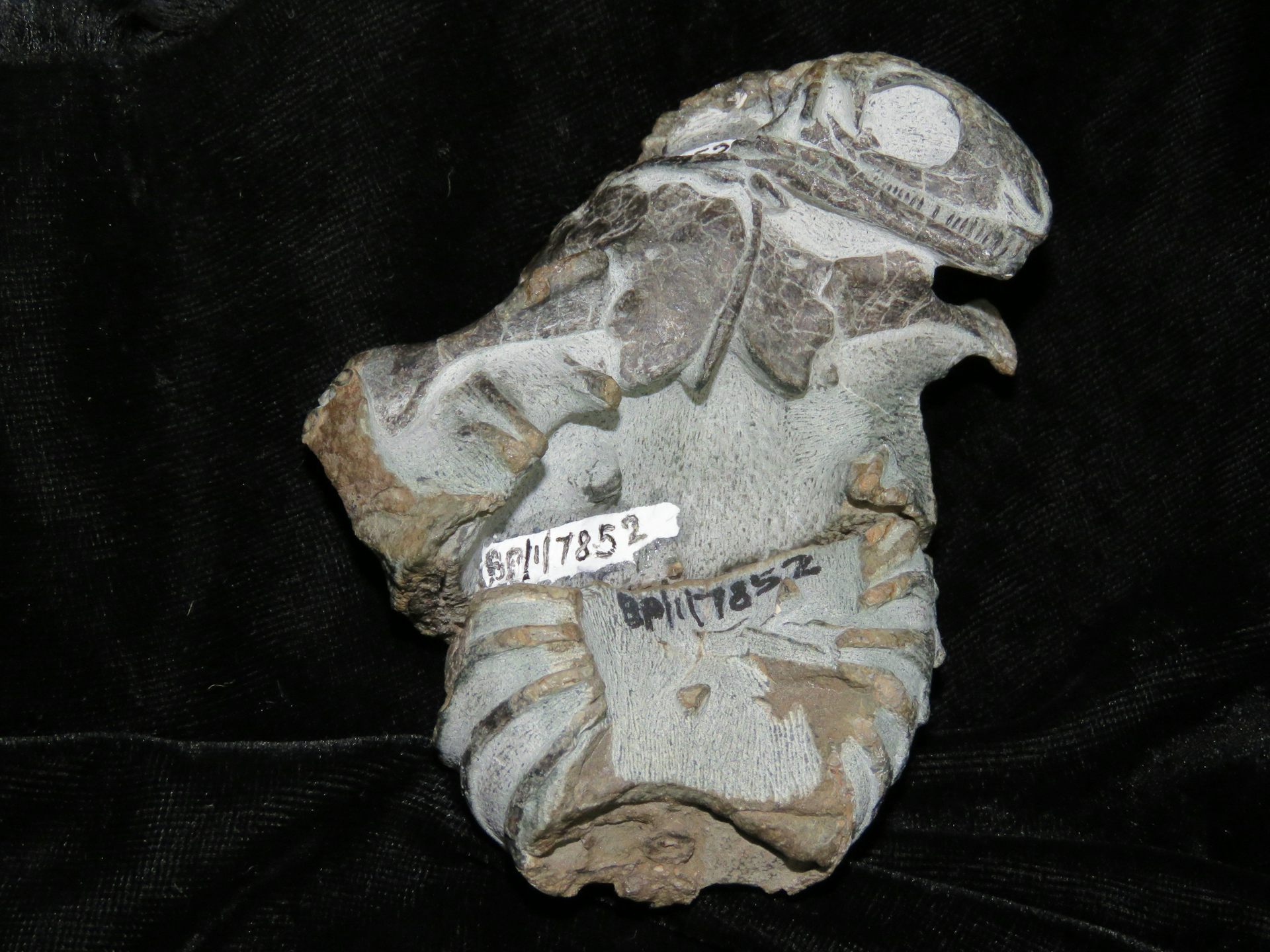
Particularly surprising was what we learned about Eunotosaurus africanus, a 30cm-long burrowing reptile that lived in southern Africa some 260 million years ago. Previous studies considered it as the oldest known member of the turtle family, or a “proto-turtle”. Its broadened trunk and wide ribs looked something like a turtle shell. We studied almost all of the material of Eunotosaurus available in South African collections to address this idea once again.
Yang sangat mengejutkan adalah apa yang kami pelajari tentang Eunotosaurus africanus, reptil penggali sepanjang 30 cm yang hidup di Afrika selatan sekitar 260 juta tahun yang lalu. Studi sebelumnya menganggapnya sebagai anggota tertua yang diketahui dari keluarga kura-kura, atau “proto-kura-kura.” Batang tubuhnya yang melebar dan tulang rusuknya yang lebar tampak seperti cangkang kura-kura. Kami mempelajari hampir semua materi Eunotosaurus yang tersedia dalam koleksi Afrika Selatan untuk membahas ide ini sekali lagi.
Our working group at the Evolutionary Studies Institute studies some of the oldest rock layers from the Karoo Basin of South Africa, where Eunotosaurus is found. If Eunotosaurus was indeed a “proto-turtle”, we’d expect to find the forerunners of living lizards, crocodiles or birds (that is, reptiles) in these same layers. Paradoxically, we’ve found no other close relatives of modern reptiles at all. This made us suspect that even if turtles are ancient relatives of living birds and crocodilians, perhaps Eunotosaurus was no “proto-turtle” at all.
Kelompok kerja kami di Evolutionary Studies Institute mempelajari beberapa lapisan batuan tertua dari Karoo Basin di Afrika Selatan, tempat Eunotosaurus ditemukan. Jika Eunotosaurus memang “proto-kura-kura”, kami akan mengharapkan untuk menemukan pendahulu kadal, buaya, atau burung hidup (yaitu, reptil) di lapisan yang sama ini. Secara paradoks, kami tidak menemukan kerabat dekat reptil modern sama sekali. Hal ini membuat kami curiga bahwa bahkan jika kura-kura adalah kerabat kuno dari burung dan krokodil hidup, mungkin Eunotosaurus sama sekali bukan “proto-kura-kura.”
One breakthrough was reconstructing the bones of the braincase (housing the brain and ear) from high-resolution x-ray images of fossil and living reptiles. By peering inside the skull of Eunotosaurus, and comparing its bones with those of undisputed fossil turtles, we could see previously out-of-reach aspects of their anatomy for the first time.
Salah satu terobosan adalah merekonstruksi tulang-tulang braincase (wadah otak dan telinga) dari gambar sinar-x resolusi tinggi dari reptil fosil dan hidup. Dengan melihat ke dalam tengkorak Eunotosaurus, dan membandingkan tulangnya dengan kura-kura fosil yang tidak diragukan lagi, kami dapat melihat aspek anatomi mereka yang sebelumnya tidak terjangkau untuk pertama kalinya.
These x-ray scans revealed the very primitive anatomy of Eunotosaurus. For example, it has bones in the back of the skull that were lost in turtles and all living reptiles. Features like a slender ear bone (the stapes) and the hooked fifth toe that are present in many living reptiles and other fossil turtles were completely lacking in Eunotosaurus. In contrast, the braincase of unambiguous fossil turtles, such as Proganochelys quenstedti, shared a suite of characteristics that are found in the ancestors of crocodilians and birds, but absent in Eunotosaurus.
Pemindaian sinar-x ini mengungkapkan anatomi Eunotosaurus yang sangat primitif. Misalnya, ia memiliki tulang di bagian belakang tengkorak yang hilang pada kura-kura dan semua reptil hidup. Fitur-fitur seperti tulang telinga yang ramping (stapes) dan jari kelima yang bengkok yang ada pada banyak reptil hidup dan kura-kura fosil lainnya sepenuhnya tidak ada pada Eunotosaurus. Sebaliknya, braincase kura-kura fosil yang jelas, seperti Proganochelys quenstedti, memiliki serangkaian karakteristik yang ditemukan pada nenek moyang krokodil dan burung, tetapi tidak ada pada Eunotosaurus.
These lines of evidence provides firm anatomical support that turtles are the closest living relatives of archosaurs. When Eunotosaurus was considered a “proto-turtle”, many of these features were considered to have evolved independently in the turtle lineage. Now, we show that turtles share these features with their archosaur relatives because they inherited them from a common ancestor.
Garis bukti ini memberikan dukungan anatomi kuat bahwa kura-kura adalah kerabat hidup terdekat dari arkhosaurus. Ketika Eunotosaurus dianggap sebagai “proto-kura-kura”, banyak fitur ini dianggap telah berevolusi secara independen dalam garis keturunan kura-kura. Sekarang, kami menunjukkan bahwa kura-kura berbagi fitur ini dengan kerabat arkhosaurus mereka karena mereka mewarisi fitur tersebut dari nenek moyang yang sama.
These new results now place the origin of turtles where it fits better with both fossil and genetic data. When geneticists study living turtles, they compare their DNA to modern birds, crocodiles and lizards to infer evolutionary relationships. Our fossil findings now align with what those genetic comparisons have been suggesting all along: turtles branched off from the same ancestor that gave rise to crocodiles and birds.
Hasil baru ini menempatkan asal usul kura-kura di tempat yang lebih sesuai dengan data fosil dan genetik. Ketika ahli genetika mempelajari kura-kura hidup, mereka membandingkan DNA mereka dengan burung, buaya, dan kadal modern untuk menyimpulkan hubungan evolusioner. Temuan fosil kami sekarang selaras dengan apa yang telah disarankan oleh perbandingan genetik tersebut selama ini: kura-kura bercabang dari nenek moyang yang sama yang melahirkan buaya dan burung.
Instead of being a living group of relics with ancestors present in the Middle Permian, turtles, like other modern reptiles, diversified and evolved their shell in the Triassic Period, approximately 20 million years after Eunotosaurus was already extinct.
Daripada menjadi kelompok relik hidup dengan nenek moyang yang ada di Permian Tengah, kura-kura, seperti reptil modern lainnya, mendiversifikasi dan mengembangkan cangkangnya pada Periode Trias, sekitar 20 juta tahun setelah Eunotosaurus sudah punah.
With turtles now firmly placed among their closest living relatives, palaeontologists will need to reassess other long-standing questions about reptile evolution. Advanced imaging techniques like computed tomography should now be applied to other enigmatic fossil groups, potentially clarifying their evolutionary relationships.
Dengan kura-kura yang kini ditempatkan dengan kokoh di antara kerabat hidup terdekatnya, para paleontolog perlu menilai kembali pertanyaan-pertanyaan lama tentang evolusi reptil. Teknik pencitraan canggih seperti tomografi terkomputerisasi kini harus diterapkan pada kelompok fosil enigmatik lainnya, yang berpotensi memperjelas hubungan evolusioner mereka.
Our work highlights the fact that overlooked early reptile fossils, particularly those found in the South African fossil record, may hold the key to understanding reptile relationships.
Karya kami menyoroti fakta bahwa fosil reptil awal yang terabaikan, terutama yang ditemukan dalam catatan fosil Afrika Selatan, mungkin memegang kunci untuk memahami hubungan reptil.
Valentin Buffa receives funding from the National Research Foundation of South Africa.
Valentin Buffa menerima pendanaan dari National Research Foundation of South Africa.
Jonah Choiniere receives research funding from the South African National Research Foundation, GENUS the DSTI/NRF Centre of Excellence in Palaeosciences, and from the Palaeontological Scientific Trust. He has an honorary affiliation with the American Museum of Natural History, New York, NY.
Jonah Choiniere menerima pendanaan penelitian dari South African National Research Foundation, GENUS the DSTI/NRF Centre of Excellence in Palaeosciences, dan dari Palaeontological Scientific Trust. Dia memiliki afiliasi kehormatan dengan American Museum of Natural History, New York, NY.
Julien Benoit receives funding from the DSTI-NRF African Origins Platform.
Julien Benoit menerima pendanaan dari DSTI-NRF African Origins Platform.
Xavier Jenkins receives funding from the National Science Foundation as an NSF-EAR Postdoctoral Fellow.
Xavier Jenkins menerima pendanaan dari National Science Foundation sebagai Postdoctoral Fellow NSF-EAR.
Read more
-
Eropa sedang menghadapi gelombang panas yang memecahkan rekor. Apa yang membuatnya begitu parah?
Europe is battling a record-breaking heatwave. What’s making it so severe?
-
Di dalam pusat penipuan Asia Tenggara: Pekerja korban perdagangan manusia bercerita tentang penipuan, paksaan, dan penyiksaan
Inside Southeast Asia’s scam compounds: A trafficked worker tells of fraud, coercion and torture