Tartarugas finalmente têm um lugar na árvore da vida: estudo por raio-X de fósseis da África do Sul foi decisivo
Turtles finally have a place in the tree of life: X-ray study of South African fossils was a decider
Palaeontologists have got a clearer picture of where turtles fit in the animal kingdom, thanks to analysis of a southern African fossil.
Paleontólogos têm uma visão mais clara de onde as tartarugas se encaixam no reino animal, graças à análise de um fóssil sul-africano.
The origin of turtles has always been a bit of a puzzle for scientists who study the evolution of animals. To this day, where they fit in the tree of life remains a highly debated topic.
A origem das tartarugas sempre foi um pouco de um mistério para os cientistas que estudam a evolução dos animais. Até hoje, onde elas se encaixam na árvore da vida continua sendo um tópico altamente debatido.
The evolutionary relationships of most vertebrate groups are well understood. Thanks to genetic and morphological (anatomical, body shape) data, even animals with highly specialised skeletons can be clearly placed on the animal family tree. Examples include whales or birds.
As relações evolutivas da maioria dos grupos de vertebrados são bem compreendidas. Graças a dados genéticos e morfológicos (anatômicos, formato do corpo) , até mesmo animais com esqueletos altamente especializados podem ser claramente posicionados na árvore familiar animal. Exemplos incluem baleias ou pássaros.
Turtles, however, have long remained an exception. Genetic studies identify them as relatives of the so-called archosaurs. This is a group that includes modern birds and crocodiles as well as extinct reptiles like dinosaurs and pterosaurs. But the fossil record seemed to tell a different story. Living turtles and their fossil relatives were so specialised that they offered few clues that would link even the oldest turtle fossils to other reptile groups. Or so scientists thought.
As tartarugas, no entanto, permaneceram por muito tempo uma exceção. Estudos genéticos identificam-nas como parentes dos chamados arquossauros. Este é um grupo que inclui pássaros e crocodilos modernos, bem como répteis extintos como dinossauros e pterossauros. Mas o registro fóssil parecia contar uma história diferente. As tartarugas vivas e seus parentes fósseis eram tão especializados que ofereciam poucas pistas que ligariam até os fósseis de tartarugas mais antigos a outros grupos de répteis. Ou assim pensavam os cientistas.
Our international team of palaeontologists has now provided a comprehensive reassessment of the turtle’s place in the animal world. Our analysis sheds new light on the relationships among primitive turtles. It confirms that Eunotosaurus africanus, a fossil from South Africa and Malawi, which was presumed to be a “proto-turtle”, is not a direct ancestor of modern turtles. Instead, this animal is very distantly related to modern reptiles, finding its deep root among much older reptilian ancestors that have no modern representatives.
Nossa equipe internacional de paleontólogos forneceu agora uma reavaliação abrangente do lugar da tartaruga no mundo animal. Nossa análise lança nova luz sobre as relações entre as tartarugas primitivas. Ela confirma que o Eunotosaurus africanus, um fóssil da África do Sul e Malawi, que era presumido ser uma “proto-tartaruga”, não é um ancestral direto das tartarugas modernas. Em vez disso, este animal está muito distantiamente relacionado aos répteis modernos, encontrando sua raiz profunda entre ancestrais reptilianos muito mais antigos que não têm representantes modernos.
Based on anatomy, the phylogenetic analysis also provides the first robust support from fossil studies for the close relationship between turtles and the archosaur (bird-crocodilian) lineage.
Com base na anatomia, a análise filogenética também fornece o primeiro suporte robusto de estudos fósseis para a estreita relação entre tartarugas e a linhagem arquossauro (ave-crocodiliano) .
For more than 20 years, genetic data and anatomical data reached different conclusions about the relationships of turtles. Now they agree.
Por mais de 20 anos, dados genéticos e dados anatômicos chegaram a conclusões diferentes sobre as relações das tartarugas. Agora eles concordam.
Comparing reptile anatomy
Comparando a anatomia dos répteis
Fifteen researchers from South Africa, the US, UK, France and Germany participated in the study. Their combined expertise included:
Quinze pesquisadores da África do Sul, EUA, Reino Unido, França e Alemanha participaram do estudo. Sua experiência combinada incluiu:
computed tomography (CT) technology (advanced x-rays)
tecnologia de tomografia computadorizada (TC) (raios-x avançados)
reptilian anatomy and phylogenetics
anatomia reptiliana e filogenética
Permo-Triassic stratigraphy (the study of rock layers where fossils are found) .
Estratigrafia Permo-Triássica (o estudo das camadas de rocha onde os fósseis são encontrados) .
The combination was critical to obtain these groundbreaking results. Collection staff from the Evolutionary Studies Institute, Iziko South African Museum, National Museum, Albany Museum and Council for Geoscience in South Africa were also instrumental in enabling access to the specimens.
A combinação foi crucial para obter esses resultados inovadores. Funcionários de coleta do Instituto de Estudos Evolutivos, Museu Iziko da África do Sul, Museu Nacional, Museu Albany e Conselho de Geociências na África do Sul também foram instrumentais para permitir o acesso aos espécimes.
The team painstakingly compiled anatomical comparisons across more than 200 fossil reptile species. We hoped to find previously overlooked similarities between early shelled turtles, their shell-less predecessors, and other early reptiles. Comparisons of the bones that frame the brain cavity were particularly important. These couldn’t previously be seen by scientists, but with powerful CT scanning methods their anatomy was laid bare.
A equipe compilou minuciosamente comparações anatômicas em mais de 200 espécies fósseis de répteis. Esperávamos encontrar semelhanças antes negligenciadas entre tartarugas primitivas com casco, seus predecessores sem casco e outros répteis primitivos. As comparações dos ossos que emolduram a cavidade cerebral foram particularmente importantes. Estes não podiam ser vistos anteriormente pelos cientistas, mas com poderosos métodos de varredura por TC, sua anatomia foi exposta.
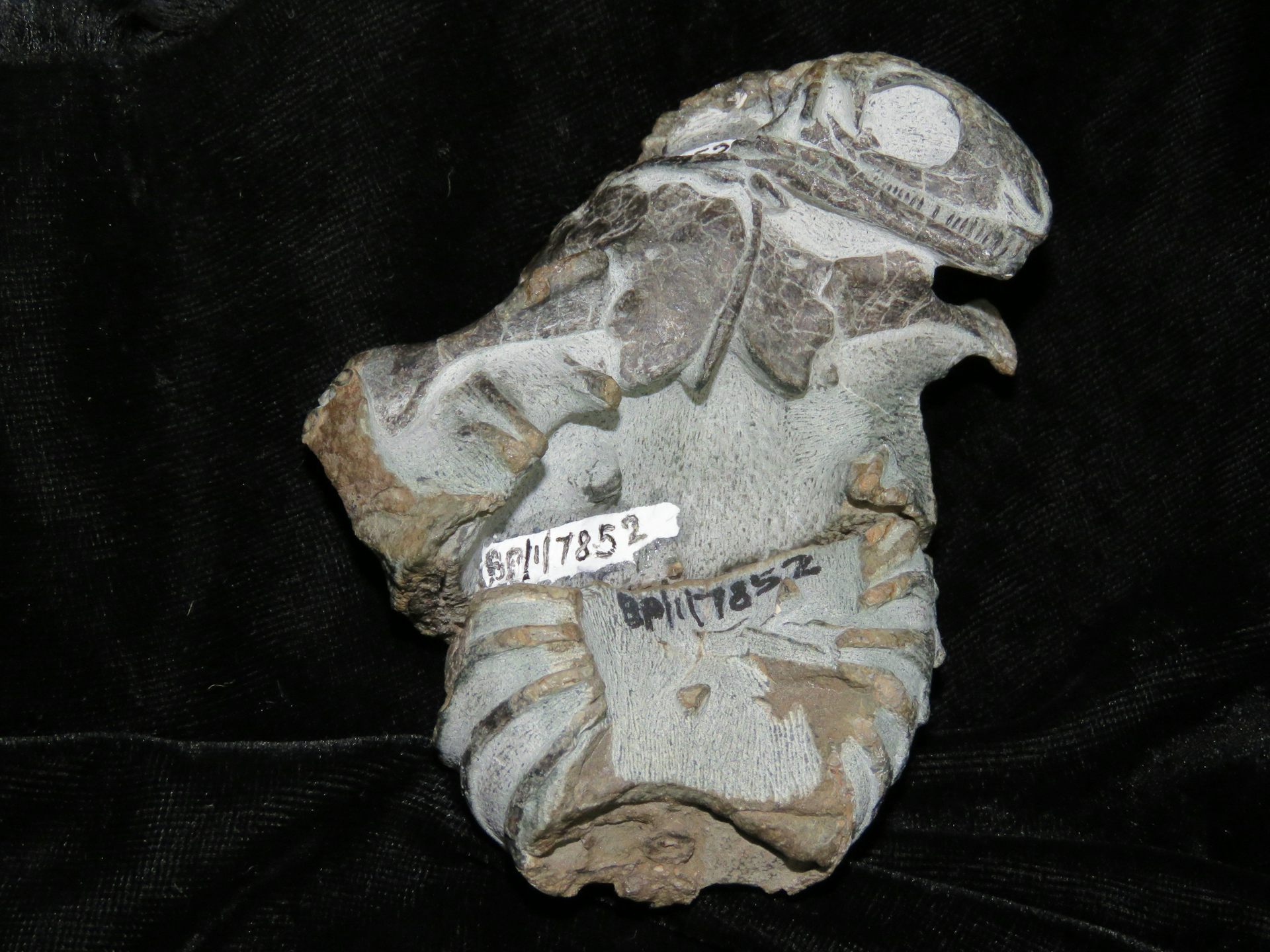
Particularly surprising was what we learned about Eunotosaurus africanus, a 30cm-long burrowing reptile that lived in southern Africa some 260 million years ago. Previous studies considered it as the oldest known member of the turtle family, or a “proto-turtle”. Its broadened trunk and wide ribs looked something like a turtle shell. We studied almost all of the material of Eunotosaurus available in South African collections to address this idea once again.
Particularmente surpreendente foi o que aprendemos sobre Eunotosaurus africanus, um réptil escavador de 30 cm que viveu na África do Sul há cerca de 260 milhões de anos. Estudos anteriores o consideravam o membro mais antigo conhecido da família das tartarugas, ou uma “proto-tartaruga”. Seu tronco alargado e costelas largas pareciam um pouco com um casco de tartaruga. Estudamos quase todo o material de Eunotosaurus disponível nas coleções sul-africanas para abordar essa ideia mais uma vez.
Our working group at the Evolutionary Studies Institute studies some of the oldest rock layers from the Karoo Basin of South Africa, where Eunotosaurus is found. If Eunotosaurus was indeed a “proto-turtle”, we’d expect to find the forerunners of living lizards, crocodiles or birds (that is, reptiles) in these same layers. Paradoxically, we’ve found no other close relatives of modern reptiles at all. This made us suspect that even if turtles are ancient relatives of living birds and crocodilians, perhaps Eunotosaurus was no “proto-turtle” at all.
Nosso grupo de trabalho no Instituto de Estudos Evolutivos estuda algumas das camadas de rocha mais antigas da Bacia do Karoo, na África do Sul, onde Eunotosaurus é encontrado. Se Eunotosaurus foi de fato uma “proto-tartaruga”, esperaríamos encontrar os precursores de lagartos, crocodilos ou pássaros vivos (ou seja, répteis) nessas mesmas camadas. Paradoxalmente, não encontramos nenhum outro parente próximo de répteis modernos. Isso nos fez suspeitar que mesmo que as tartarugas sejam parentes antigos de pássaros e crocodilianos vivos, talvez Eunotosaurus não fosse uma “proto-tartaruga” de forma alguma.
One breakthrough was reconstructing the bones of the braincase (housing the brain and ear) from high-resolution x-ray images of fossil and living reptiles. By peering inside the skull of Eunotosaurus, and comparing its bones with those of undisputed fossil turtles, we could see previously out-of-reach aspects of their anatomy for the first time.
Um avanço foi a reconstrução dos ossos da caixa craniana (que abriga o cérebro e o ouvido) a partir de imagens de raios-x de alta resolução de répteis fósseis e vivos. Ao olhar dentro do crânio de Eunotosaurus e comparar seus ossos com os de tartarugas fósseis incontestáveis, pudemos ver aspectos de sua anatomia antes inacessíveis pela primeira vez.
These x-ray scans revealed the very primitive anatomy of Eunotosaurus. For example, it has bones in the back of the skull that were lost in turtles and all living reptiles. Features like a slender ear bone (the stapes) and the hooked fifth toe that are present in many living reptiles and other fossil turtles were completely lacking in Eunotosaurus. In contrast, the braincase of unambiguous fossil turtles, such as Proganochelys quenstedti, shared a suite of characteristics that are found in the ancestors of crocodilians and birds, but absent in Eunotosaurus.
Essas varreduras por raios-x revelaram a anatomia muito primitiva de Eunotosaurus. Por exemplo, ele tem ossos na parte de trás do crânio que foram perdidos nas tartarugas e em todos os répteis vivos. Características como um osso do ouvido esguio (o estribo) e o quinto dedo curvado, presentes em muitos répteis vivos e outras tartarugas fósseis, estavam completamente ausentes em Eunotosaurus. Em contraste, a caixa craniana de tartarugas fósseis inequívocas, como Proganochelys quenstedti, compartilhava um conjunto de características encontradas nos ancestrais dos crocodilianos e pássaros, mas ausentes em Eunotosaurus.
These lines of evidence provides firm anatomical support that turtles are the closest living relatives of archosaurs. When Eunotosaurus was considered a “proto-turtle”, many of these features were considered to have evolved independently in the turtle lineage. Now, we show that turtles share these features with their archosaur relatives because they inherited them from a common ancestor.
Essas linhas de evidência fornecem suporte anatômico firme de que as tartarugas são os parentes vivos mais próximos dos arcosauros. Quando Eunotosaurus foi considerado uma “proto-tartaruga”, muitas dessas características foram consideradas terem evoluído independentemente na linhagem das tartarugas. Agora, mostramos que as tartarugas compartilham essas características com seus parentes arcosauros porque as herdaram de um ancestral comum.
These new results now place the origin of turtles where it fits better with both fossil and genetic data. When geneticists study living turtles, they compare their DNA to modern birds, crocodiles and lizards to infer evolutionary relationships. Our fossil findings now align with what those genetic comparisons have been suggesting all along: turtles branched off from the same ancestor that gave rise to crocodiles and birds.
Esses novos resultados colocam agora a origem das tartarugas onde se encaixa melhor tanto nos dados fósseis quanto nos genéticos. Quando geneticistas estudam tartarugas vivas, eles comparam seu DNA com pássaros, crocodilos e lagartos modernos para inferir relações evolutivas. Nossas descobertas fósseis agora se alinham com o que essas comparações genéticas vinham sugerindo o tempo todo: as tartarugas se ramificaram do mesmo ancestral que deu origem aos crocodilos e pássaros.
Instead of being a living group of relics with ancestors present in the Middle Permian, turtles, like other modern reptiles, diversified and evolved their shell in the Triassic Period, approximately 20 million years after Eunotosaurus was already extinct.
Em vez de ser um grupo vivo de relíquias com ancestrais presentes no Permiano Médio, as tartarugas, como outros répteis modernos, diversificaram e evoluíram seu casco no Período Triássico, aproximadamente 20 milhões de anos após o Eunotosaurus já estar extinto.
With turtles now firmly placed among their closest living relatives, palaeontologists will need to reassess other long-standing questions about reptile evolution. Advanced imaging techniques like computed tomography should now be applied to other enigmatic fossil groups, potentially clarifying their evolutionary relationships.
Com as tartarugas agora firmemente posicionadas entre seus parentes vivos mais próximos, os paleontólogos precisarão reavaliar outras questões de longa data sobre a evolução dos répteis. Técnicas avançadas de imagem, como a tomografia computadorizada, devem ser aplicadas agora a outros grupos fósseis enigmáticos, potencialmente esclarecendo suas relações evolutivas.
Our work highlights the fact that overlooked early reptile fossils, particularly those found in the South African fossil record, may hold the key to understanding reptile relationships.
Nosso trabalho destaca o fato de que fósseis de répteis primitivos negligenciados, particularmente aqueles encontrados no registro fóssil sul-africano, podem conter a chave para entender as relações entre os répteis.
Valentin Buffa receives funding from the National Research Foundation of South Africa.
Valentin Buffa recebe financiamento da Fundação Nacional de Pesquisa da África do Sul.
Jonah Choiniere receives research funding from the South African National Research Foundation, GENUS the DSTI/NRF Centre of Excellence in Palaeosciences, and from the Palaeontological Scientific Trust. He has an honorary affiliation with the American Museum of Natural History, New York, NY.
Jonah Choiniere recebe financiamento de pesquisa da Fundação Nacional de Pesquisa da África do Sul, GENUS o DSTI/NRF Centre of Excellence in Palaeosciences, e do Palaeontological Scientific Trust. Ele possui afiliação honorária com o American Museum of Natural History, Nova York, NY.
Julien Benoit receives funding from the DSTI-NRF African Origins Platform.
Julien Benoit recebe financiamento da Plataforma African Origins DSTI-NRF.
Xavier Jenkins receives funding from the National Science Foundation as an NSF-EAR Postdoctoral Fellow.
Xavier Jenkins recebe financiamento da National Science Foundation como Pós-doutorando NSF-EAR.
Read more
-

Memória fotográfica é um mito – o que a pesquisa realmente diz sobre a memória
Photographic memory is a myth – here’s what research really says about remembering
-

Medicamentos para perda de peso, como o Ozempic, podem funcionar também para vícios – e finalmente sabemos como
Weight-loss drugs like Ozempic could work for addiction too – and we finally know how