Veneza está afundando – analisamos todos os planos para salvá-la, e nenhum preservaria a cidade como a conhecemos
Venice is sinking – we analysed every plan to save it, and none would preserve the city as we know it
As sea levels rise, Venice’s options are running out. New research shows that even the most ambitious engineering may only delay the inevitable.
Com a elevação do nível do mar, as opções de Veneza estão se esgotando. Novas pesquisas mostram que até a engenharia mais ambiciosa pode apenas adiar o inevitável.
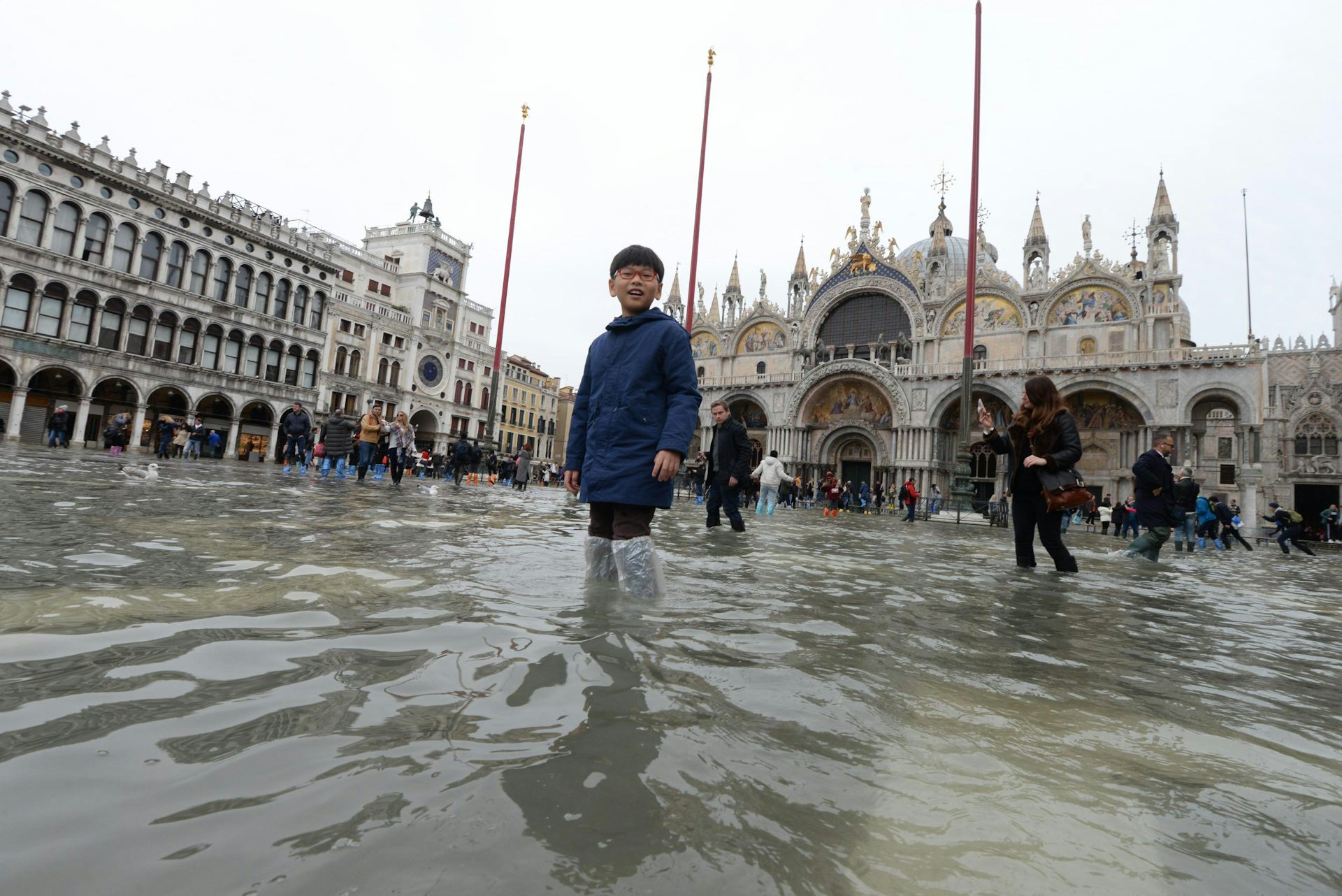
Venice has co-existed with the sea throughout its 1,500-year history, perhaps better than any other city on earth. Yet over the past century it has flooded increasingly often, as the sea rises and the city itself sinks under its own weight.
Veneza coexistiu com o mar ao longo de seus 1.500 anos de história, talvez melhor do que qualquer outra cidade na Terra. No entanto, no último século, ela tem inundado cada vez com mais frequência, à medida que o mar sobe e a própria cidade afunda sob seu próprio peso.
We recently published an academic analysis of the various options Venice has to ensure its long-term survival.
Publicamos recentemente uma análise acadêmica sobre as várias opções que Veneza tem para garantir sua sobrevivência a longo prazo.
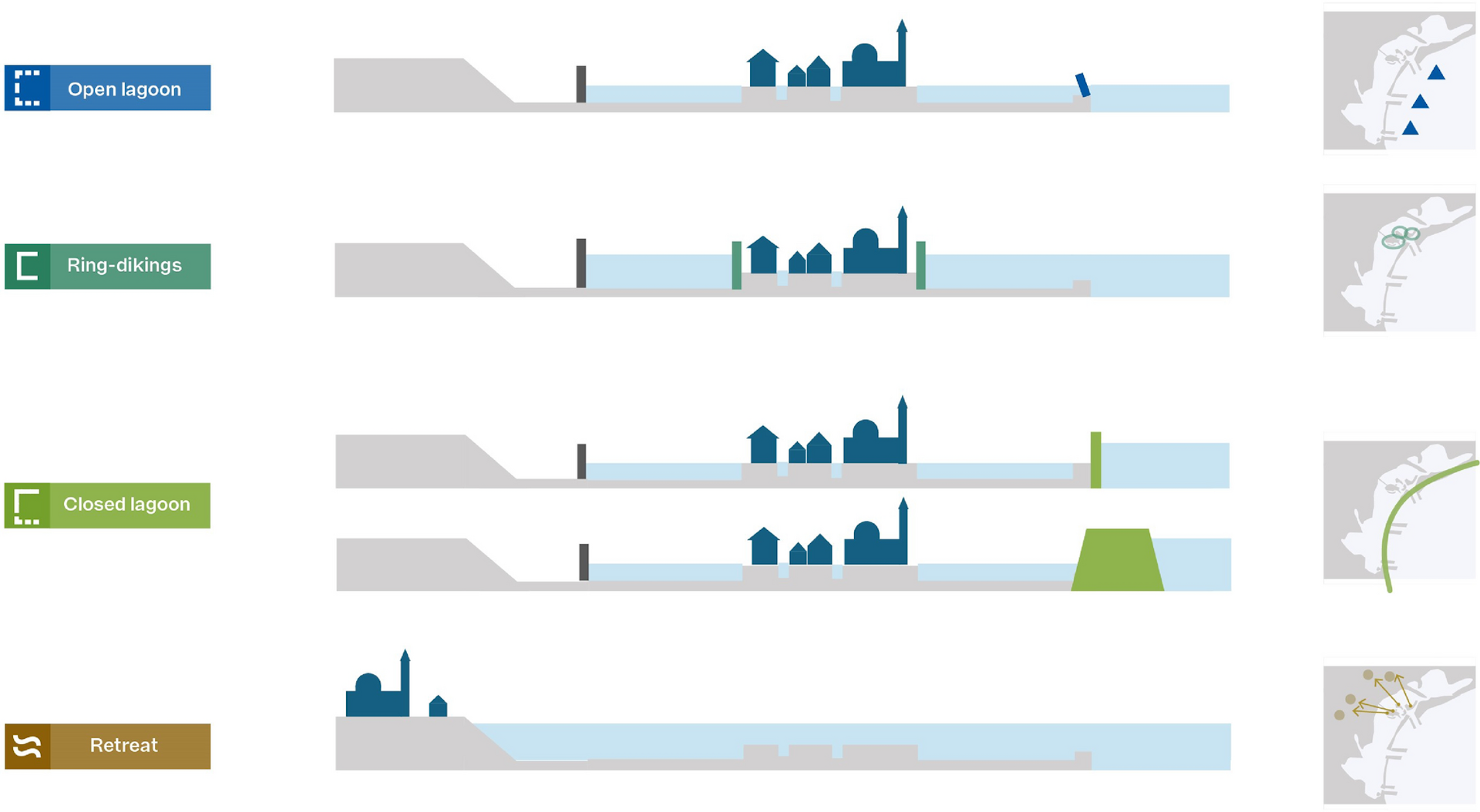
Our study compares a range of possible strategies against different degrees of sea-level rise. These include maintaining the current system of mobile barriers, building ring dykes to separate the city from the lagoon in which it sits, enclosing the whole lagoon within a much larger defence system, or – in the most extreme case – relocating much of the city and its population inland.
Nosso estudo compara uma série de estratégias possíveis em relação a diferentes graus de elevação do nível do mar. Estas incluem manter o sistema atual de barreiras móveis, construir diques anulares para separar a cidade da lagoa onde ela está situada, cercar toda a lagoa dentro de um sistema de defesa muito maior, ou – no caso mais extremo – realocar grande parte da cidade e sua população para o interior.
Each option becomes relevant at different points as sea levels rise. The city’s flood defences have already been upgraded substantially, at a cost of €6 billion (£5.2 billion) . This involves a series of huge steel gates attached to the seafloor, known as the Mose barriers. When raised, these barriers effectively seal off the Venetian Lagoon from the wider Mediterranean Sea.
Cada opção se torna relevante em pontos diferentes à medida que os níveis do mar sobem. As defesas contra inundações da cidade já foram substancialmente melhoradas, a um custo de €6 bilhões (£5,2 bilhões) . Isso envolve uma série de enormes portões de aço fixados no fundo do mar, conhecidos como barreiras Mose. Quando levantadas, essas barreiras selam efetivamente a Lagoa de Veneza do vasto Mar Mediterrâneo.
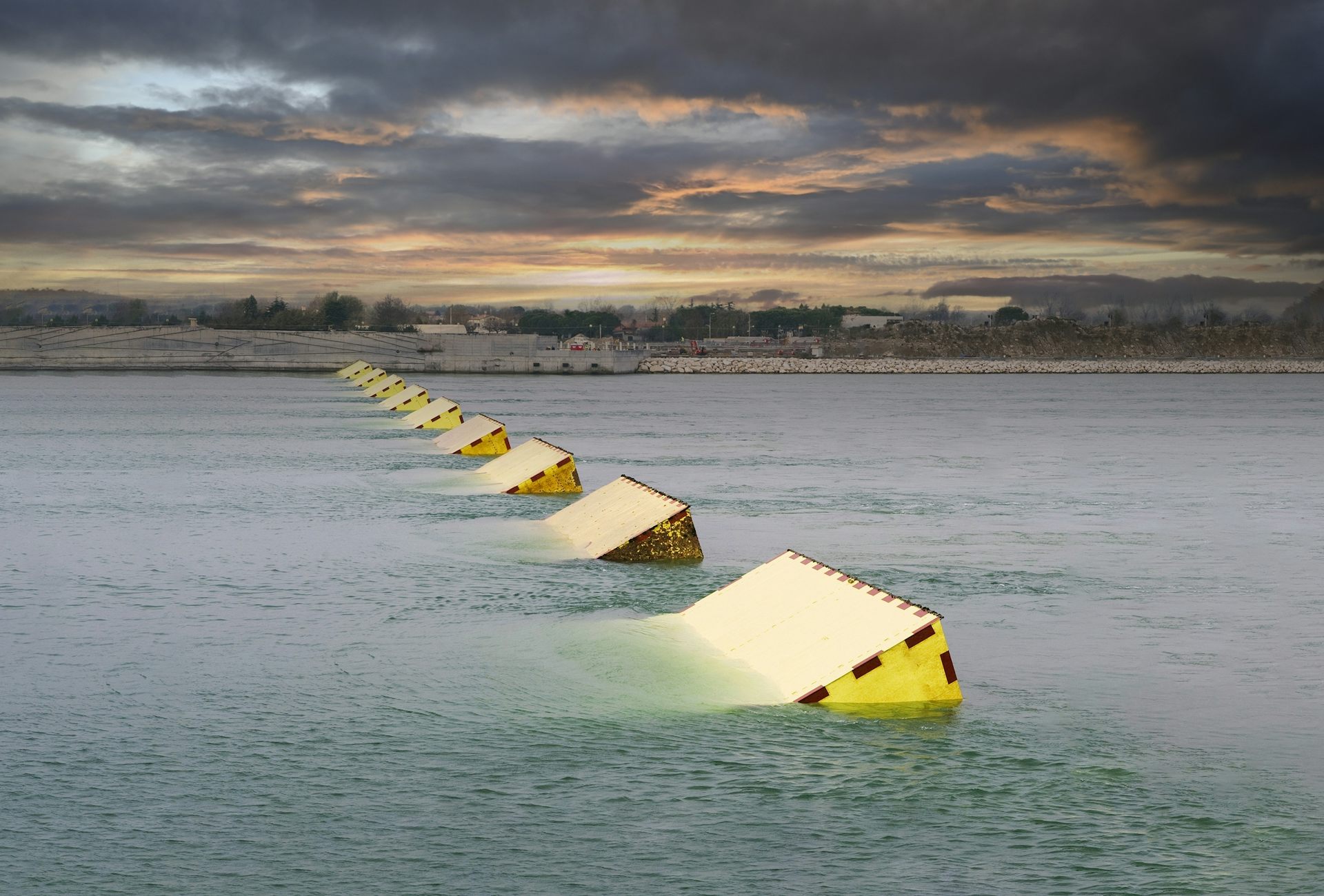
The Mose barriers mean the flood risks are currently manageable, but the frequency of their use is rising. In the first five years of use (between 2020 and 2025) the system was closed for 108 high waters, while in the first two months of 2026 it was activated 30 times. And as sea levels continue to climb, it would need to be closed more and more often – potentially for weeks at a time each year.
As barreiras Mose significam que os riscos de inundação são atualmente gerenciáveis, mas a frequência de seu uso está aumentando. Nos primeiros cinco anos de uso (entre 2020 e 2025) , o sistema foi fechado por 108 marés altas, enquanto nos primeiros dois meses de 2026 foi ativado 30 vezes. E à medida que os níveis do mar continuam a subir, ele precisará ser fechado com mais frequência – potencialmente por semanas a cada ano.
This creates a series of problems. Frequent closures would disrupt shipping and tourism, alter the lagoon’s ecology, and would require major new systems for sewage treatment and huge pumps to maintain lagoon water levels. A system designed for occasional protection risks becoming a semi-permanent barrier – something it was never intended to be.
Isso cria uma série de problemas. Fechamentos frequentes interromperiam o transporte marítimo e o turismo, alterariam a ecologia da lagoa e exigiriam novos sistemas importantes para tratamento de esgoto e enormes bombas para manter os níveis de água da lagoa. Um sistema projetado para proteção ocasional corre o risco de se tornar uma barreira semipermanente – algo para o que nunca foi destinado.
With additional measures, such as raising the city by injecting sea water into the rocks deep underground, reversing the subsidence to some degree, these barriers could remain effective for some time – perhaps even after a metre of sea-level rise.
Com medidas adicionais, como elevar a cidade injetando água do mar nas rochas profundas subterrâneas, revertendo a subsidência em algum grau, essas barreiras poderiam permanecer eficazes por algum tempo – talvez até após um metro de elevação do nível do mar.
But even under relatively low levels of warming, the sea is projected to keep rising for centuries, eventually pushing beyond what the barriers can handle.
Mas mesmo sob níveis de aquecimento relativamente baixos, projeta-se que o mar continue a subir por séculos, eventualmente ultrapassando o que as barreiras podem suportar.
At that point, more radical measures may be necessary. Building a ring of dykes around the city would physically separate Venice from the lagoon, but may be necessary by the end of this century.
Nesse ponto, medidas mais radicais podem ser necessárias. Construir um anel de diques ao redor da cidade separaria fisicamente Veneza da lagoa, mas pode ser necessário até o final deste século.
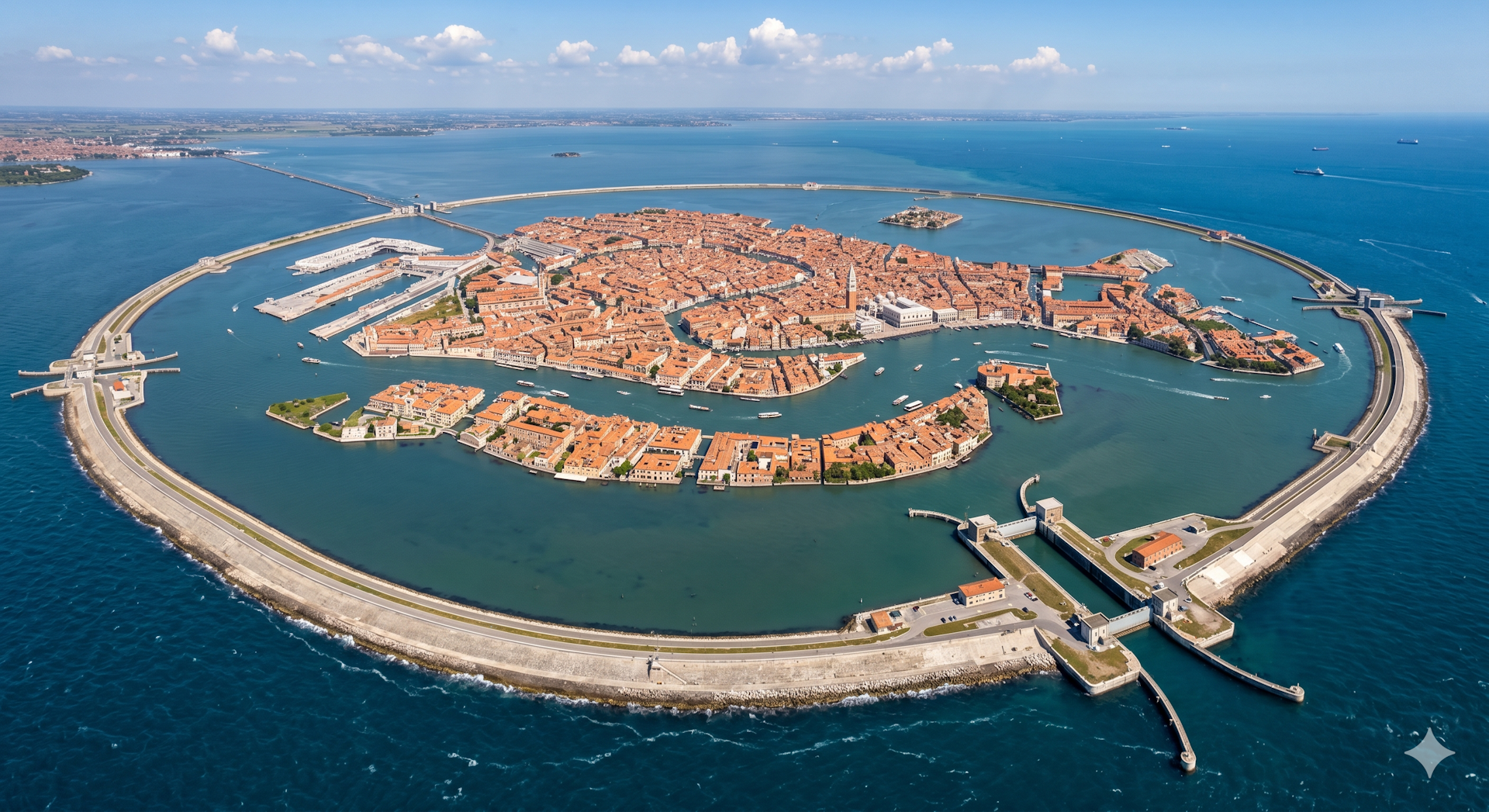
A fully enclosed lagoon – protected by a much larger “super levee” and supported by continuous pumping – could protect the city from up to 10m of sea level rise, but at severe cost to the living lagoon.
Uma lagoa totalmente fechada – protegida por um “super dique” muito maior e sustentada por bombeamento contínuo – poderia proteger a cidade contra até 10m de elevação do nível do mar, mas a um custo severo para a lagoa viva.
The only other option is to relocate the city to safer ground. This may be necessary beyond about 5m of sea-level rise, which is projected to occur after 2300.
A única outra opção é realocar a cidade para um terreno mais seguro. Isso pode ser necessário além de cerca de 5m de elevação do nível do mar, o que é projetado ocorrer após 2300.
Difficult choices ahead
Escolhas difíceis pela frente
The financial costs of these choices are substantial. We used the costs of Mose and other previous engineering projects (adjusted for inflation to 2024 prices) to estimate the cost of each adaptation strategy.
Os custos financeiros dessas escolhas são substanciais. Utilizamos os custos de Mose e de outros projetos de engenharia anteriores (ajustados pela inflação para preços de 2024) para estimar o custo de cada estratégia de adaptação.
The dykes could cost between €500 million and €4.5 billion. Closing the lagoon with a super levee could initially cost more than €30 billion, and relocating the city could cost up to €100 billion.
Os diques podem custar entre 500 milhões e 4,5 bilhões de euros. Fechar a lagoa com um superdique poderia custar inicialmente mais de 30 bilhões de euros, e realocar a cidade poderia custar até 100 bilhões de euros.
But costs aren’t the only issue. How do you even put a price on the cultural value of Venice? Especially as none of these measures will be able to sustain the Venice we see today in the long-term. Adaptation can manage change up to a certain point – beyond that, we are no longer preserving the present. Rather, we are designing a fundamentally different future.
Mas os custos não são a única questão. Como se pode colocar um preço no valor cultural de Veneza? Especialmente porque nenhuma dessas medidas será capaz de sustentar a Veneza que vemos hoje no longo prazo. A adaptação pode gerenciar a mudança até certo ponto – além disso, não estamos mais preservando o presente. Pelo contrário, estamos desenhando um futuro fundamentalmente diferente.
Our analysis shows there is no optimal adaptation strategy. Any approach involves trade-offs between the wellbeing and safety of Venice’s residents, economic prosperity, the future of the lagoon’s ecosystems, heritage preservation, and the region’s traditions and culture. In addition, many of these measures can take decades to fully implement, so early planning is essential.
Nossa análise mostra que não há uma estratégia de adaptação ideal. Qualquer abordagem envolve compensações entre o bem-estar e a segurança dos residentes de Veneza, a prosperidade econômica, o futuro dos ecossistemas da lagoa, a preservação do patrimônio e as tradições e a cultura da região. Além disso, muitas dessas medidas podem levar décadas para serem totalmente implementadas, portanto, o planejamento antecipado é essencial.
At least Venice is thinking about these things in a long-term way. Most vulnerable coastal areas are not. In fact, many continue to attract businesses and people, even as rising seas gradually narrow the range of viable long-term options.
Pelo menos Veneza está pensando nessas coisas de forma de longo prazo. A maioria das áreas costeiras vulneráveis não está. Na verdade, muitas continuam a atrair negócios e pessoas, mesmo enquanto o aumento do nível do mar restringe gradualmente o leque de opções viáveis a longo prazo.
With its long and unique history, Venice has particular challenges, but all low-lying coastal areas should recognise the danger of long-term sea-level rise and start preparing now.
Com sua história longa e única, Veneza tem desafios particulares, mas todas as áreas costeiras de baixa altitude devem reconhecer o perigo do aumento do nível do mar a longo prazo e começar a se preparar agora.
Robert James Nicholls received funding from the Horizon 2020 program of the European Commission through the CoCliCo project (#101003598) .
Robert James Nicholls recebeu financiamento do programa Horizon 2020 da Comissão Europeia através do projeto CoCliCo (#101003598) .
Piero Lionello has received funding from Italian Ministry for Education and Research (PNRR-HPC Center) . Piero LIonello is a member of the Scientific Committee of the International Centre for Climate Change Research and Studies Co-coordinator of the MedECC network (Mediterranean Experts on Environmental and Climate Change)
Piero Lionello recebeu financiamento do Ministério Italiano de Educação e Pesquisa (PNRR-HPC Center) . Piero Lionello é membro do Comitê Científico do Centro Internacional de Pesquisa e Estudos sobre Mudanças Climáticas e Coordenador da rede MedECC (Especialistas Mediterrâneos em Meio Ambiente e Mudança Climática)
Marjolijn Haasnoot does not work for, consult, own shares in or receive funding from any company or organisation that would benefit from this article, and has disclosed no relevant affiliations beyond their academic appointment.
Marjolijn Haasnoot não trabalha, não é consultora, não possui ações nem recebe financiamento de nenhuma empresa ou organização que se beneficiaria deste artigo, e não divulgou afiliações relevantes além de seu cargo acadêmico.
Read more
-
O garimpo ilegal de ouro causa picos de malária na Amazônia, e a associação é muito pior do que suspeitávamos
Illegal gold mining causes surges in malaria in the Amazon, and the association is far worse than we suspected
-
O Irã acabou de superar o exército mais poderoso do mundo. O que a Austrália pode aprender com suas estratégias?
Iran just outlasted the world’s most powerful military. What can Australia learn from its strategies?