Testamos a nova bola da Copa do Mundo – é o que você precisa saber sobre como ela vai voar, descer e desviar
We tested the new World Cup ball – this is what you need to know about how it will fly, dip and swerve
For two decades, researchers have studied soccer ball aerodynamics. Latest tests suggest the 2026 ball is more stable, but with a slightly shorter range.
Por duas décadas, pesquisadores estudaram a aerodinâmica da bola de futebol. Os testes mais recentes sugerem que a bola de 2026 é mais estável, mas com um alcance ligeiramente menor.
Every four years, the men’s World Cup delivers some certainties. The pitch dimensions are tightly regulated, offside is signaled with a flag, and referees end the match with a blast of a whistle. But one key piece of equipment is changed on purpose: the ball.
A cada quatro anos, a Copa do Mundo masculina traz algumas certezas. As dimensões do campo são rigorosamente regulamentadas, o impedimento é sinalizado com uma bandeira e os árbitros encerram a partida com o apito. Mas uma peça de equipamento chave é alterada propositalmente: a bola.
Adidas, which has supplied World Cup soccer balls since 1970, introduces a new match ball for every tournament, and with that comes fresh aerodynamic calculations for players. How will it fly through the air, weave and dip?
A Adidas, que fornece bolas de futebol da Copa do Mundo desde 1970, introduz uma nova bola de jogo para cada torneio, e com isso vêm novos cálculos aerodinâmicos para os jogadores. Como ela voará pelo ar, fará curvas e cairá?
For the past 20 years, my engineering colleagues in Japan and England and I have put the new balls through their paces, investigating soccer ball aerodynamics. Our work begins by putting balls in wind tunnels to measure drag, side and lift forces. We use the measurements from these tests in trajectory simulations that tell us how the ball will behave in a real-game setting.
Nos últimos 20 anos, eu e meus colegas engenheiros no Japão e na Inglaterra colocamos as novas bolas à prova, investigando a aerodinâmica das bolas de futebol. Nosso trabalho começa colocando bolas em túneis de vento para medir as forças de arrasto, lateral e sustentação. Usamos as medições desses testes em simulações de trajetória que nos dizem como a bola se comportará em uma situação de jogo real.
That may all sound a little academic, and we do produce an academic paper on our findings. But what our data indicates could mean the difference between a goal or a miss for strikers, a save or a blunder for goalkeepers, and jubilation or heartache for fans.
Isso pode soar um pouco acadêmico, e nós produzimos um artigo acadêmico sobre nossas descobertas. Mas o que nossos dados indicam pode significar a diferença entre um gol ou um erro para os atacantes, uma defesa ou um erro para os goleiros, e júbilo ou angústia para os torcedores.
At the World Cup, the ball is the most important piece of equipment in the biggest tournament of the world’s most popular sport.
Na Copa do Mundo, a bola é o equipamento mais importante no maior torneio do esporte mais popular do mundo.
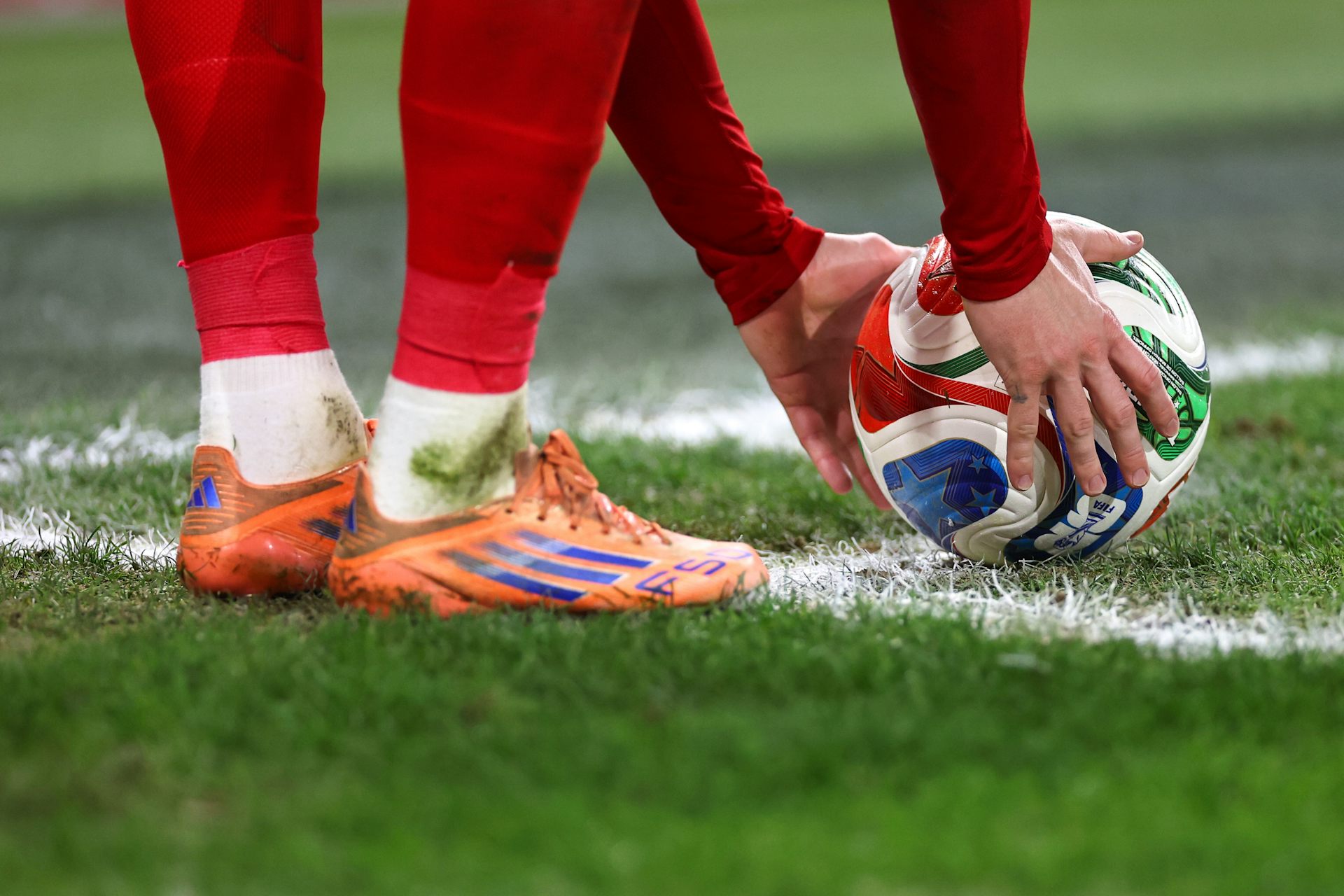
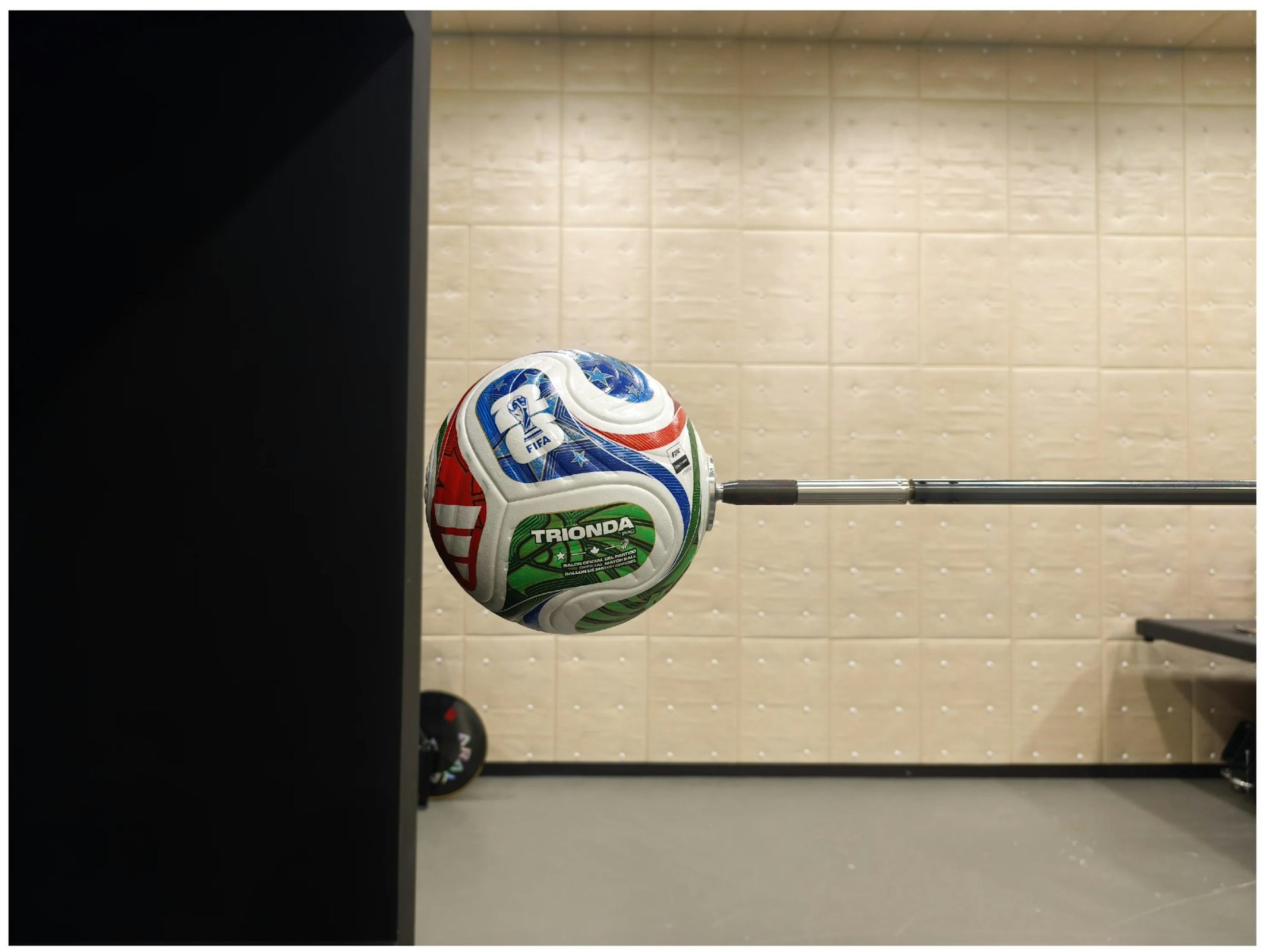
This year’s ball, the Trionda, is especially interesting. When FIFA and Adidas unveiled it in fall 2025, the first thing many people noticed was the color and the paneling.
A bola deste ano, a Trionda, é especialmente interessante. Quando a FIFA e a Adidas a revelaram no outono de 2025, a primeira coisa que muitas pessoas notaram foi a cor e o painel.
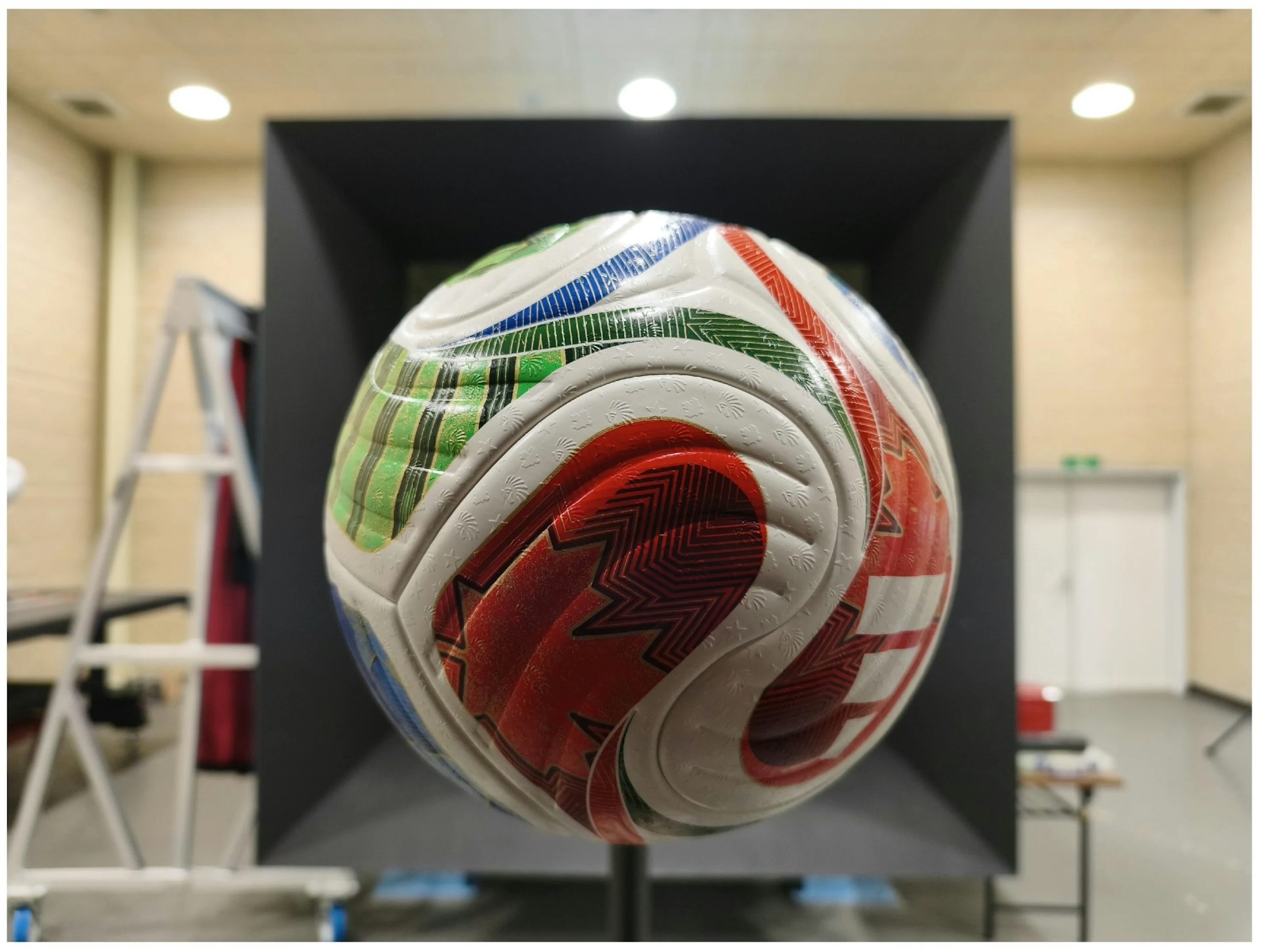
The ball’s red, blue and green graphics correspond to the three host countries, with maple leaf, star and eagle motifs representing Canada, the United States and Mexico. And for the first time in men’s World Cup history, matches will be played with a four-panel ball.
Os gráficos vermelho, azul e verde da bola correspondem aos três países anfitriões, com os motivos de folha de bordo, estrela e águia representando o Canadá, os Estados Unidos e o México. E pela primeira vez na história da Copa do Mundo masculina, as partidas serão disputadas com uma bola de quatro painéis.
But with so few panels, has Adidas made the ball too smooth? That is the trap engineers fell into with the Jabulani ball used at the 2010 World Cup in South Africa that became notorious for sudden dips and swerves, which made goalkeepers’ lives far trickier.
Mas com tão poucos painéis, a Adidas tornou a bola muito lisa? Essa foi a armadilha na qual os engenheiros caíram com a bola Jabulani usada na Copa do Mundo de 2010 na África do Sul, que se tornou notória por quedas e desvios repentinos, o que tornou a vida dos goleiros muito mais complicada.
You do not want the World Cup ball to feel like the start of a science experiment once it is in the air. And if it behaves strangely, players and goalkeepers notice immediately.
Você não quer que a bola da Copa do Mundo pareça o início de um experimento científico assim que estiver no ar. E se ela se comportar de forma estranha, jogadores e goleiros percebem imediatamente.
The evolution of soccer balls
A evolução das bolas de futebol
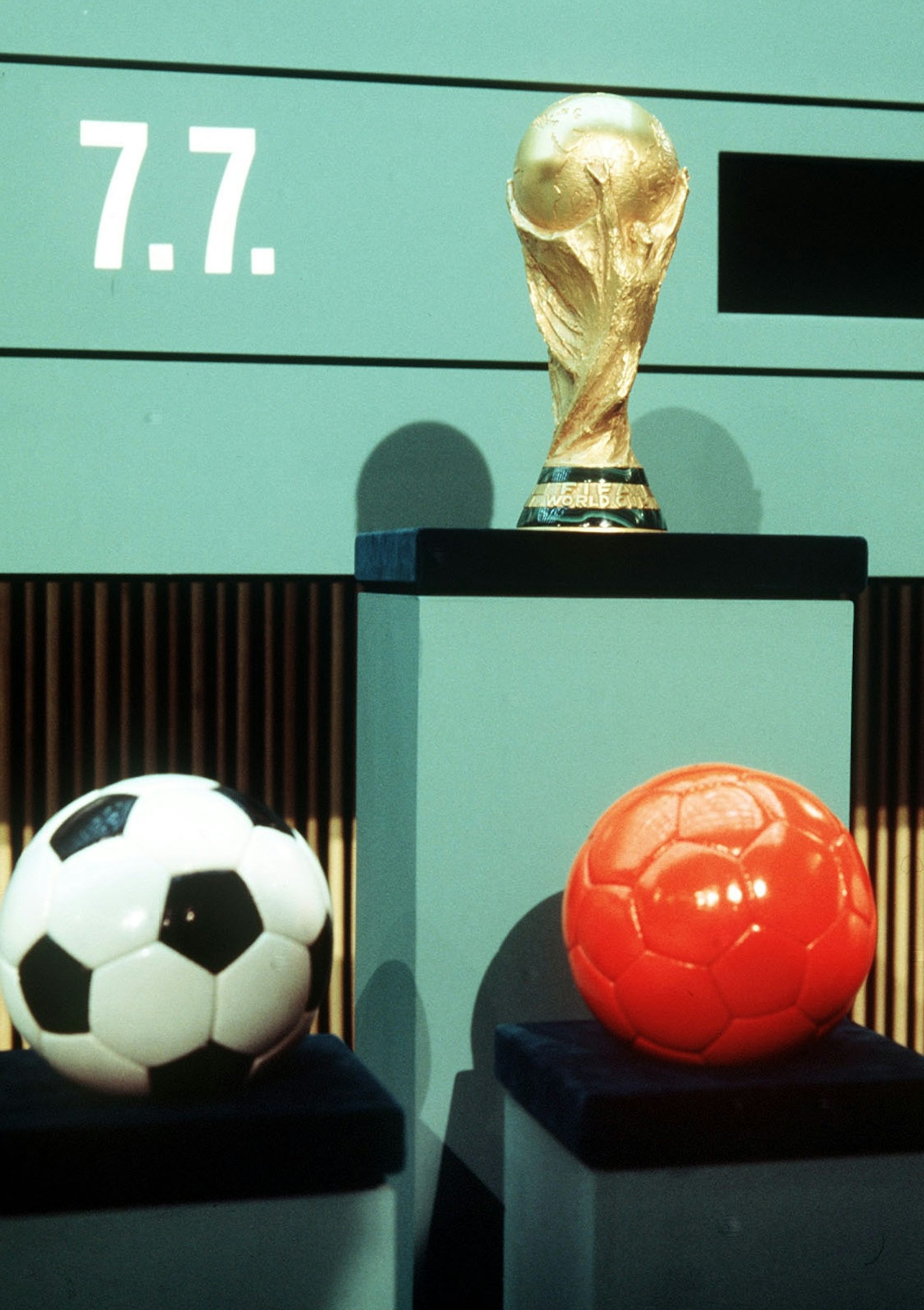
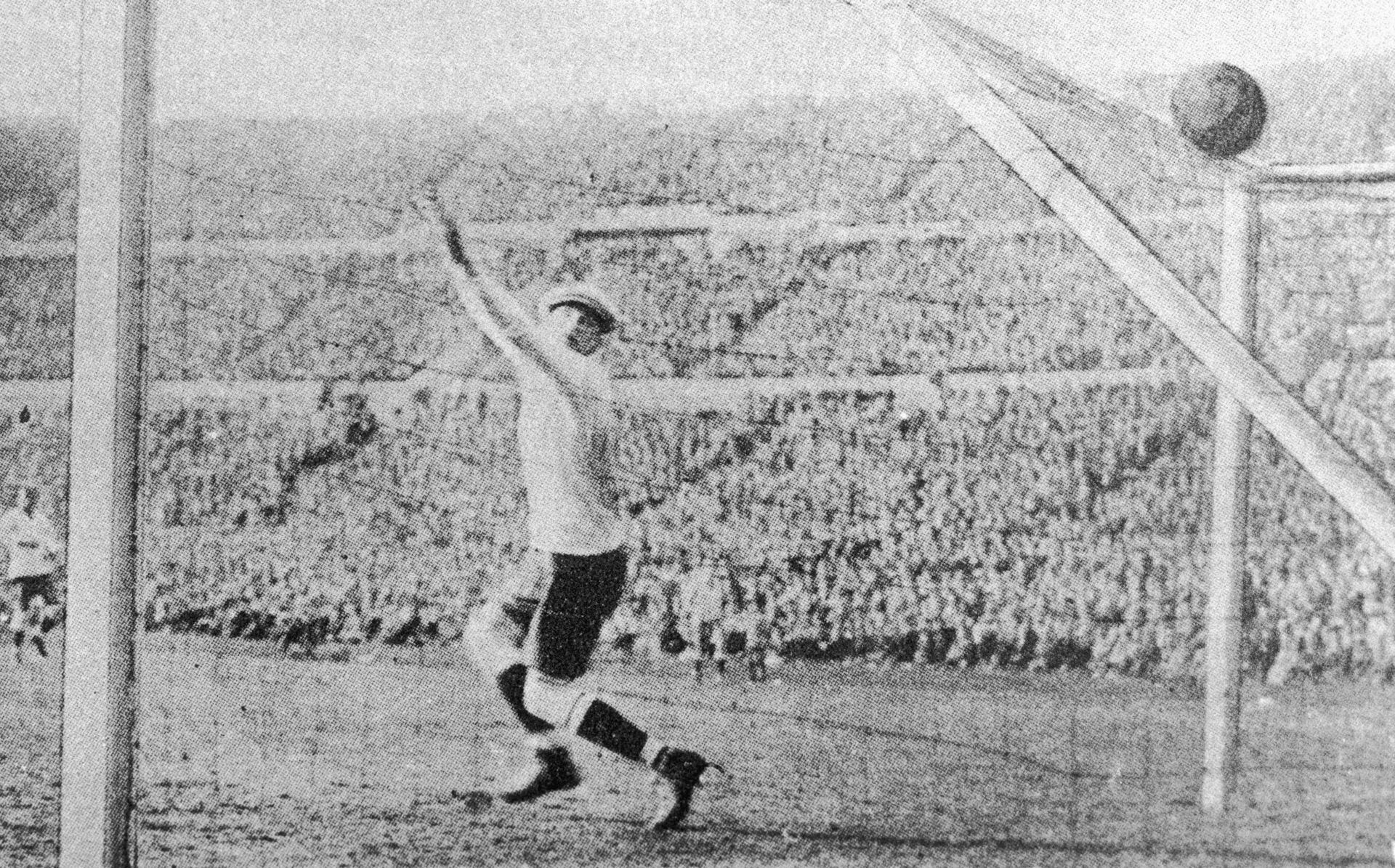
World Cup balls have come a long way over the decades. If you go back to 1930, the ball looked very different. The first World Cup final used two different leather balls: Argentina’s Tiento in the first half and Uruguay’s T-Model in the second. Both were hand-sewn, multipaneled balls, inflated through a bladder opening that had to be tied off and tucked back beneath the laces. In damp conditions, the leather absorbed water, making the ball heavier and less predictable in play.
As bolas da Copa do Mundo percorreram um longo caminho ao longo das décadas. Se voltarmos a 1930, a bola era muito diferente. A primeira final da Copa do Mundo utilizou duas bolas de couro diferentes: o Tiento da Argentina na primeira metade e o T-Model do Uruguai na segunda. Ambas eram bolas com múltiplas painéis costuradas à mão, infladas através de uma abertura de balão que tinha que ser amarrada e recolhida sob os cadarços. Em condições úmidas, o couro absorvia água, tornando a bola mais pesada e menos previsível no jogo.
By 1994 – when the United States last hosted the men’s tournament – the official ball, Adidas’ Questra, had evolved into a foam-based design. The modern World Cup ball is no longer just stitched leather. It is an engineered aerodynamic surface.
Em 1994 – quando os Estados Unidos sediaram pela última vez o torneio masculino – a bola oficial, Adidas’ Questra, havia evoluído para um design baseado em espuma. A bola moderna da Copa do Mundo não é mais apenas couro costurado. É uma superfície aerodinâmica projetada.
Trionda pushes that evolution further. It has only four panels, the fewest in men’s World Cup history, which have been thermally bonded – melded together using heat and adhesive.
A Trionda leva essa evolução ainda mais longe. Ela tem apenas quatro painéis, o menor número na história da Copa do Mundo masculina, que foram ligados termicamente – fundidos usando calor e adesivo.
Fewer panels might suggest less total seam length and therefore a smoother ball. And smoothness matters because the thin boundary layer of air clinging to the ball determines where the flow separates, how large a wake forms, and how much drag the ball experiences.
Menos painéis podem sugerir um comprimento total de costura menor e, portanto, uma bola mais lisa. E a suavidade importa porque a fina camada limite de ar que se agarra à bola determina onde o fluxo se separa, quão grande é o rastro formado e quanta resistência a bola experimenta.
The Trionda has intentionally deep seams, three pronounced grooves on each panel and fine surface texturing.
A Trionda possui costuras intencionalmente profundas, três sulcos pronunciados em cada painel e uma textura superficial fina.
But will these textures and grooves do the trick? To find that out, my colleagues and I measured the ball’s seam geometry and overall aerodynamic behavior. We compared it with Trionda’s four predecessors: 2022’s Al Rihla, 2018’s Telstar 18, the Brazuca used in 2014 and the Jabulani in 2010.
Mas essas texturas e sulcos darão conta do recado? Para descobrir isso, meus colegas e eu medimos a geometria da costura da bola e o comportamento aerodinâmico geral. Comparamos com os quatro predecessores da Trionda: o Al Rihla de 2022, o Telstar 18 de 2018, o Brazuca usado em 2014 e o Jabulani de 2010.
What the measurements show
O que as medições mostram
In our wind tunnel tests at the University of Tsukuba, we measured something called the drag coefficient, which is a way of describing how much air resistance a ball experiences as it moves.
Em nossos testes no túnel de vento na Universidade de Tsukuba, medimos algo chamado coeficiente de arrasto, que é uma forma de descrever quanta resistência do ar uma bola experimenta enquanto se move.
Using this data, we gained insights into how the airflow changes around the ball after it is kicked. The tests helped identify the drag crisis, the speed range in which changes in the boundary layer and flow separation produce a sharp change in drag, which can alter the ball’s acceleration, trajectory and range.
Usando esses dados, obtivemos percepções sobre como o fluxo de ar muda ao redor da bola depois que ela é chutada. Os testes ajudaram a identificar a crise de arrasto, a faixa de velocidade na qual as mudanças na camada limite e na separação do fluxo produzem uma mudança brusca no arrasto, o que pode alterar a aceleração, a trajetória e o alcance da bola.
We found that the Trionda is effectively rougher than those predecessors.
Descobrimos que a Trionda é efetivamente mais áspera do que seus predecessores.
Trionda reaches its drag crisis at a lower speed, at about 27 mph (43 kph) . That is below the roughly 31-40 mph (50-65 kph) range for Al Rihla, Telstar 18 and Brazuca, and far below Jabulani’s roughly 49-60 mph (79-97 kph) range, depending on orientation.
A Trionda atinge sua crise de arrasto em uma velocidade mais baixa, cerca de 27 mph (43 kph) . Isso está abaixo da faixa de aproximadamente 31-40 mph (50-65 kph) para Al Rihla, Telstar 18 e Brazuca, e muito abaixo da faixa de aproximadamente 49-60 mph (79-97 kph) de Jabulani, dependendo da orientação.
Why does all that matter? Because a ball can feel ordinary off the boot and still behave differently in flight. When the drag crisis occurs in the middle of game-relevant speeds, small changes in launch speed, orientation or spin can shift the ball from one aerodynamic regime to another.
Por que tudo isso importa? Porque uma bola pode parecer comum ao sair do pé e ainda se comportar de forma diferente no voo. Quando a crise de arrasto ocorre nas velocidades relevantes para o jogo, pequenas mudanças na velocidade de lançamento, orientação ou rotação podem mudar a bola de um regime aerodinâmico para outro.
That was Jabulani’s problem. Once kicked with little spin, it had a tendency to slow down too much as it passed through its critical-speed range.
Esse foi o problema de Jabulani. Uma vez chutada com pouca rotação, ela tinha a tendência de desacelerar demais ao passar por sua faixa de velocidade crítica.
Trionda does not look like that kind of ball. It has a more steady and consistent drag coefficient in the range of speeds associated with corner kicks and free kicks.
A Trionda não se parece com esse tipo de bola. Ela tem um coeficiente de arrasto mais estável e consistente na faixa de velocidades associadas a chutes de escanteio e faltas.
But there is a trade-off. Our measurements also showed that once Trionda enters the higher-speed, turbulent-flow regime, its drag coefficients are somewhat larger than those of Brazuca, Telstar 18 and Al Rihla.
Mas há uma compensação. Nossas medições também mostraram que, uma vez que a Trionda entra no regime de fluxo turbulento e de alta velocidade, seus coeficientes de arrasto são um pouco maiores do que os de Brazuca, Telstar 18 e Al Rihla.
In plain language, that suggests a hard-hit long ball may lose a little range.
Em termos simples, isso sugere que uma bola longa, atingida com força, pode perder um pouco de alcance.
In our simulations, the difference is not huge. But it is large enough that players may notice long kicks coming up a few meters short.
Em nossas simulações, a diferença não é enorme. Mas é grande o suficiente para que os jogadores possam notar chutes longos chegando alguns metros mais curtos.
It is also important to note that we tested a nonspinning ball. As such, our results do not provide a prediction of every pass, clearance or free kick fans will see this summer. Balls in flight often spin due to off-center kicks. That, along with altitude, humidity, temperature and air pressure all influence how a ball flies through the air once kicked.
Também é importante notar que testamos uma bola sem rotação. Como tal, nossos resultados não fornecem uma previsão de cada passe, passagem ou chute livre que os fãs verão neste verão. Bolas em voo frequentemente giram devido a chutes fora do centro. Isso, juntamente com a altitude, umidade, temperatura e pressão do ar, influencia como uma bola voa pelo ar depois de ser chutada.
The big test yet to come
O grande teste que ainda está por vir
Fewer panels and more texturing aren’t the only differences with the new ball.
Menos painéis e mais texturização não são as únicas diferenças com a nova bola.
Trionda also carries technology that has little to do with its flight and a great deal to do with officiating. Like Al Rihla, Trionda includes “connected-ball technology” that lets computers know when the ball is kicked, helping with offside decisions.
A Trionda também carrega uma tecnologia que tem pouco a ver com seu voo e muito a ver com a arbitragem. Assim como a Al Rihla, a Trionda inclui a “tecnologia de bola conectada” que permite que os computadores saibam quando a bola é chutada, ajudando nas decisões de impedimento.
But the architecture has changed. In 2022, the measurement unit was suspended at the center of the ball. With Trionda, it sits in a specially created layer inside one panel, with counterbalancing weights in the other three panels. The chip sends data to the video assistant referee, or VAR, system and the tournament’s semi-automated offside system.
Mas a arquitetura mudou. Em 2022, a unidade de medição estava suspensa no centro da bola. Com a Trionda, ela se encontra em uma camada especialmente criada dentro de um painel, com pesos de contrapeso nos outros três painéis. O chip envia dados para o sistema de árbitro assistente de vídeo, ou VAR, e para o sistema semiautomático de impedimento do torneio.
That tweak will help referees, but will the new ball in general help or hinder players?
Esse ajuste ajudará os árbitros, mas a nova bola em geral ajudará ou prejudicará os jogadores?
The evidence from our tests suggests that the ball won’t be behaving in a way that leads to baffling and erratic flight.
As evidências dos nossos testes sugerem que a bola não se comportará de uma maneira que leve a um voo confuso e errático.
But the more intriguing possibilities are subtler and outside the scope of our tests. Will the grooves on Trionda help players generate more backspin on the ball, generating more lift and possibly offsetting Trionda’s somewhat larger high-speed drag coefficient?
Mas as possibilidades mais intrigantes são mais sutis e estão fora do escopo dos nossos testes. As ranhuras na Trionda ajudarão os jogadores a gerar mais backspin na bola, gerando mais sustentação e possivelmente compensando o coeficiente de arrasto aerodinâmico um pouco maior da Trionda em alta velocidade?
That is why I keep studying World Cup balls both in the lab and through their behavior in play. Every four years, a new design offers a fresh way to watch physics enter the game, not in theory, but in the movement of an object in which every player on the soccer field must place their trust.
É por isso que continuo estudando bolas da Copa do Mundo tanto no laboratório quanto através do seu comportamento em jogo. A cada quatro anos, um novo design oferece uma maneira nova de observar a física entrar no jogo, não em teoria, mas no movimento de um objeto no qual cada jogador do campo de futebol deve depositar sua confiança.
John Eric Goff currently works as a visitor in the Department of Physics at the University of Puget Sound in Tacoma, Washington. Following the conclusion on 30 June of that one-year appointment, he will start on 1 July as Professor of Engineering Practice in the Weldon School of Biomedical Engineering and the School of Mechanical Engineering at Purdue University.
John Eric Goff atualmente trabalha como visitante no Departamento de Física da Universidade de Puget Sound, em Tacoma, Washington. Após a conclusão do seu mandato de um ano em 30 de junho, ele começará em 1º de julho como Professor de Prática de Engenharia na Escola Weldon de Engenharia Biomédica e na Escola de Engenharia Mecânica da Universidade Purdue.
Read more
-
‘Sem medo de leões rugindo’: O Irã tem uma longa história de resistência contra agressores externos
‘No fear of roaring lions’: Iran has a long history of standing firm against outside aggressors
-
De costelas de boi a um passeio ‘celestial’: O simbolismo da cúpula Xi-Trump destacou o poder americano e a tradição chinesa
From beef ribs to a ‘heavenly’ walk: Xi-Trump summit symbolism underscored American power and Chinese tradition