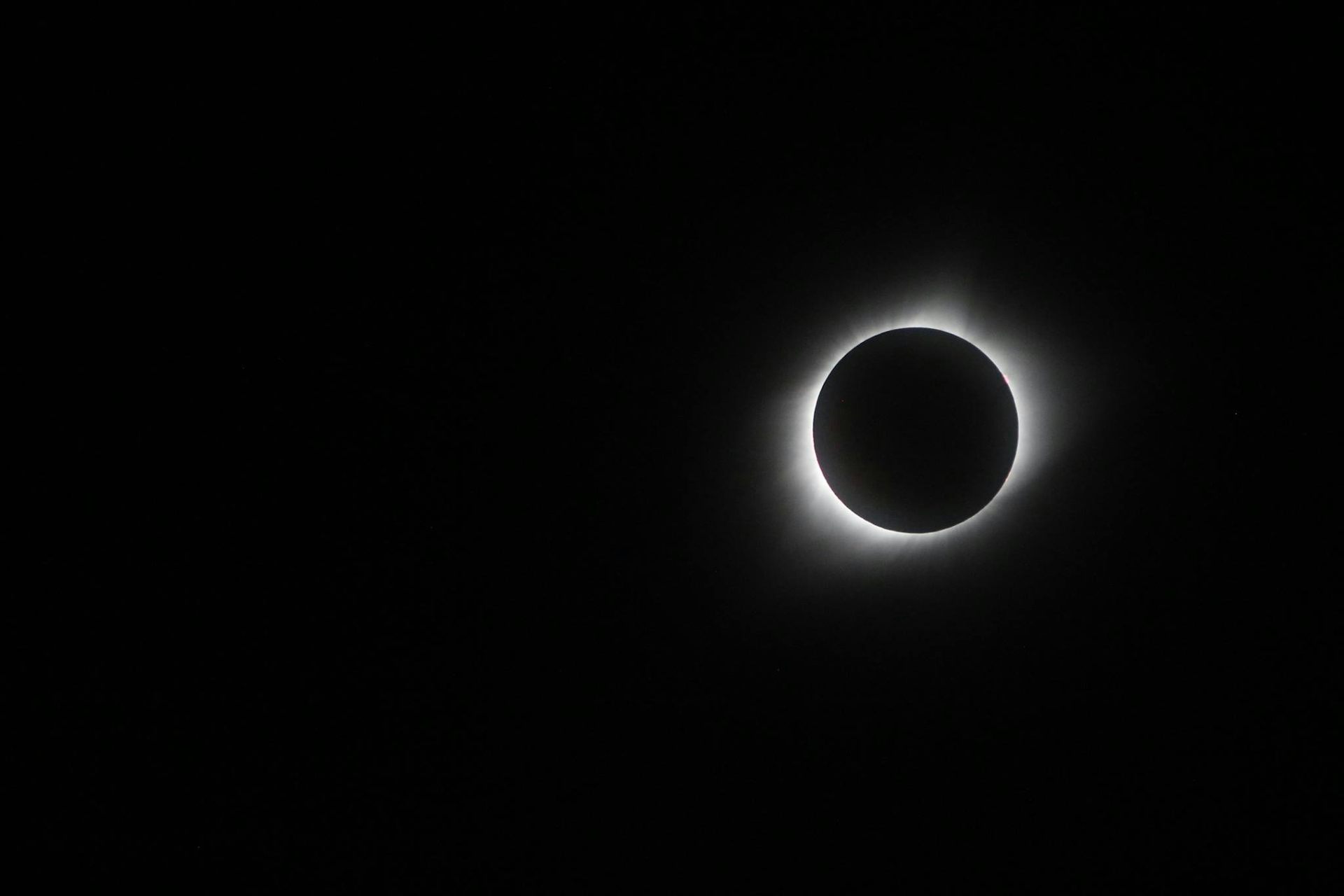
पृथ्वी से ग्रहण देखना विस्मयकारी होता है – लेकिन अंतरिक्ष से इसे देखने वाले अंतरिक्ष यात्रियों के लिए, दृश्य और भी भव्य था।
Seeing an eclipse from Earth is awe-inspiring – for astronauts seeing one from space, the scene was even more grand
Astronauts report feeling profoundly awestruck when they go to space, an anthropologist reports. This experience shapes their perspectives even back on Earth.
एक मानवविज्ञानी के अनुसार, अंतरिक्ष यात्री रिपोर्ट करते हैं कि जब वे अंतरिक्ष में जाते हैं तो वे गहरे विस्मय से भर जाते हैं। यह अनुभव पृथ्वी पर भी उनके दृष्टिकोण को आकार देता है।
The astronauts on Artemis II’s trip to the Moon in April 2026 didn’t just have an amazing journey through space. They also saw something extraordinary. They were the first humans to see a total solar eclipse from space.
अप्रैल 2026 में चंद्रमा की यात्रा पर आर्टेमिस II के अंतरिक्ष यात्रियों ने केवल अंतरिक्ष में एक अद्भुत यात्रा ही नहीं की। उन्होंने कुछ असाधारण भी देखा। वे अंतरिक्ष से पूर्ण सूर्य ग्रहण देखने वाले पहले इंसान थे।
A solar eclipse happens when the Moon moves in front of the Sun. In a total eclipse, the Sun’s central disc is covered completely.
सूर्य ग्रहण तब होता है जब चंद्रमा सूर्य के सामने आ जाता है। पूर्ण ग्रहण में, सूर्य की केंद्रीय डिस्क पूरी तरह से ढक जाती है।
From Earth, the circle of the Sun is about the same size as the circle of the Moon. With the bright circle blocked, you can see the undulating rays of the Sun’s corona, or outer atmosphere, that are normally too dim to be observed.
पृथ्वी से, सूर्य का वृत्त चंद्रमा के वृत्त के लगभग समान आकार का होता है। चमकीले वृत्त के अवरुद्ध होने पर, आप सूर्य के कोरोना, या बाहरी वातावरण की लहरदार किरणें देख सकते हैं, जो सामान्य रूप से देखने के लिए बहुत मंद होती हैं।

I’m a cultural anthropologist who studies awe-inspiring aspects of space exploration. I have been lucky enough to have seen two total solar eclipses. The first one was in Nebraska in 2017, the second in Indiana in 2024.
मैं एक सांस्कृतिक मानवविज्ञानी हूँ जो अंतरिक्ष अन्वेषण के विस्मयकारी पहलुओं का अध्ययन करता हूँ। मैं दो पूर्ण सूर्य ग्रहण देखने के सौभाग्यशाली रहा हूँ। पहला 2017 में नेब्रास्का में था, और दूसरा 2024 में इंडियाना में।
During my second total eclipse, the period of totality – that short span when you can remove your protective glasses and look directly at the eclipse – lasted close to 4 minutes. I saw waves of diffuse light snaking around an ink-black hole in the sky. It looked very wrong – almost alien.
अपने दूसरे पूर्ण ग्रहण के दौरान, पूर्णता की अवधि – वह छोटा समय जब आप अपने सुरक्षा चश्मे हटाकर सीधे ग्रहण को देख सकते हैं – लगभग 4 मिनट तक चली। मैंने आकाश में स्याह-काले छेद के चारों ओर विसरित प्रकाश की लहरें रेंगते हुए देखीं। यह बहुत गलत लग रहा था – लगभग अलौकिक।
On Aug. 12, 2026, there will be another total solar eclipse, visible only from Greenland, Iceland, Spain and the Balearic Islands of the Mediterranean. Some fortunate viewers in Spain and nearby islands may see the eclipse just before sunset, low on the horizon. The Moon illusion, a phenomenon where the Moon looks bigger when it’s near the horizon, might make this eclipse look unusually large.
12 अगस्त, 2026 को एक और पूर्ण सूर्य ग्रहण होगा, जो केवल ग्रीनलैंड, आइसलैंड, स्पेन और भूमध्य सागर के बालेरिक द्वीप समूह से दिखाई देगा। स्पेन और आस-पास के द्वीपों के कुछ भाग्यशाली दर्शक सूर्यास्त से ठीक पहले, क्षितिज पर कम दिखाई देने वाले ग्रहण को देख सकते हैं। ‘चंद्रमा भ्रम’ (Moon illusion) , एक ऐसी घटना जिसमें चंद्रमा क्षितिज के पास होने पर बड़ा दिखाई देता है, इस ग्रहण को असामान्य रूप से बड़ा दिखा सकता है।
Unusual eclipse perspectives
असामान्य ग्रहण के दृश्य
Astronauts will occasionally also have less common eclipse experiences. I interviewed one I call by the pseudonym “Jackie” in my research about astronauts’ experiences of awe. She was part of an astronaut training group that did a flight exercise during a total solar eclipse.
अंतरिक्ष यात्री कभी-कभी कम सामान्य ग्रहण के अनुभव भी करते हैं। मैंने अपने शोध में, जो अंतरिक्ष यात्रियों के विस्मय के अनुभवों पर है, एक अंतरिक्ष यात्री का साक्षात्कार लिया, जिसे मैंने उपनाम “जैकी” दिया है। वह एक अंतरिक्ष यात्री प्रशिक्षण समूह का हिस्सा थीं जिन्होंने एक पूर्ण सूर्य ग्रहण के दौरान एक उड़ान अभ्यास किया था।
Jackie and her squad flew their jets in the shadow of the Moon. This lengthened their time in totality because they could follow and stay within the shadow. Jackie was most impressed with how the Sun’s corona seemed to shift and ripple.
जैकी और उनके दल ने चंद्रमा की छाया में अपने जेट उड़ाए। इससे उनका कुल ग्रहण में बिताया गया समय बढ़ गया क्योंकि वे छाया का अनुसरण कर सकते थे और उसके भीतर रह सकते थे। जैकी सबसे अधिक प्रभावित थीं कि सूर्य का कोरोना कैसे हिलता और लहरदार दिखाई देता था।
“It’s not static … it’s alive,” she told me.
उन्होंने मुझसे कहा, “यह स्थिर नहीं है… यह जीवित है।”
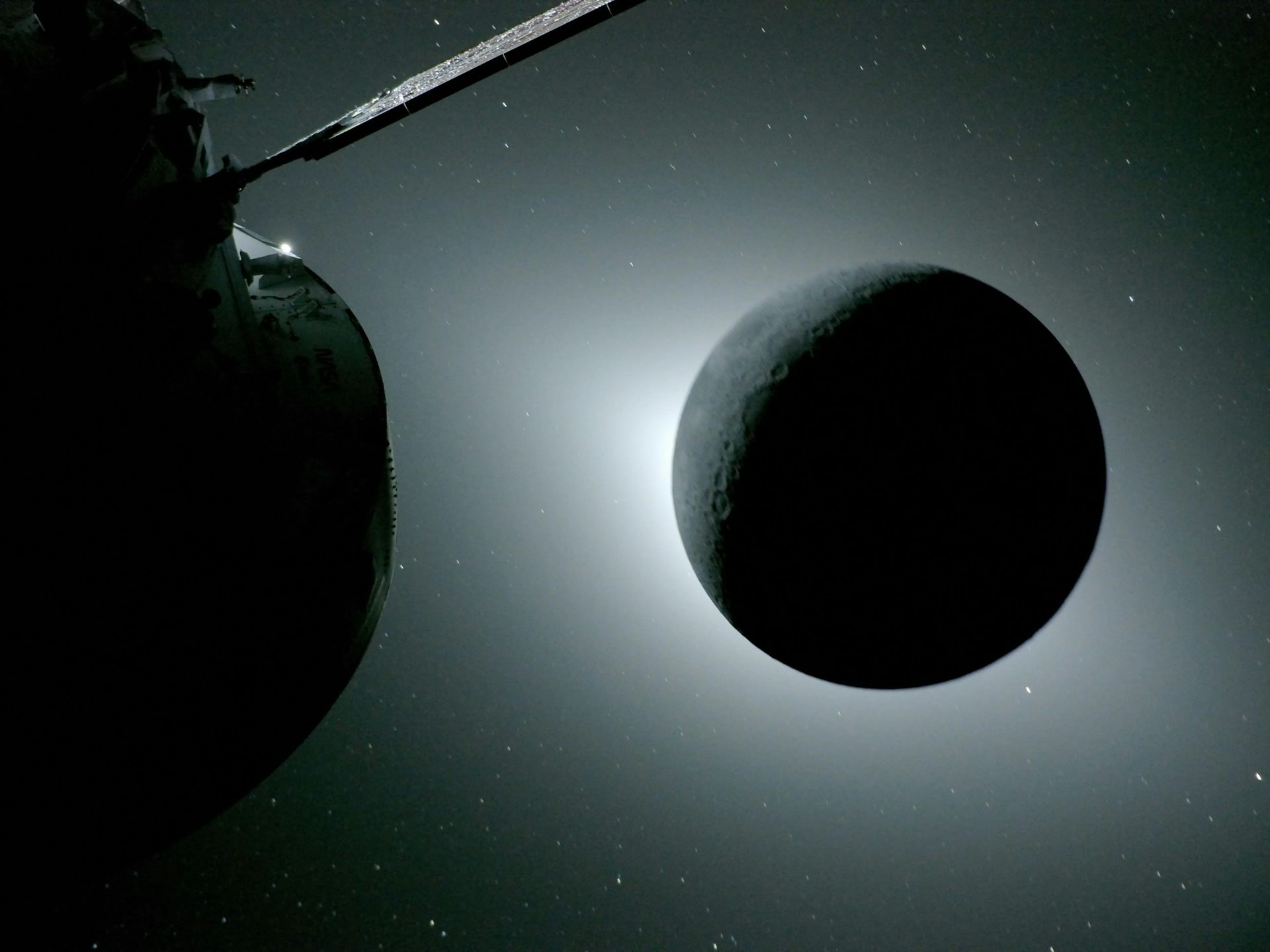
On April 6, 2026, the astronauts of NASA’s Artemis II mission saw another kind of unusual eclipse as they flew around the Moon. At one point during their flight, the Moon and the spacecraft aligned so that the Moon was directly between them and the Sun, blocking the Sun’s disk in a way that looks very different from what we see on Earth.
6 अप्रैल, 2026 को, नासा के आर्टेमिस II मिशन के अंतरिक्ष यात्रियों ने चंद्रमा के चारों ओर उड़ान भरते समय एक प्रकार के असामान्य ग्रहण को देखा। अपनी उड़ान के दौरान एक समय पर, चंद्रमा और अंतरिक्ष यान इस तरह संरेखित हुए कि चंद्रमा सीधे उनके और सूर्य के बीच में था, जिससे सूर्य की डिस्क को इस तरह से अवरुद्ध किया गया जो पृथ्वी पर दिखने वाली चीज़ से बहुत अलग दिखता है।
Astronaut Victor Glover said it felt like they “just went sci-fi.”
अंतरिक्ष यात्री विक्टर ग्लोवर ने कहा कि ऐसा महसूस हुआ जैसे वे “सीधे विज्ञान-फाई में चले गए हों।”
The astronauts were so close to the Moon that the Moon looked bigger than the Sun and hid more of its bright circle. Earth was also in view, and sunlight reflected from the Earth onto the Moon in a phenomenon NASA calls “earthshine.” This dim light is very similar to the moonlight that shines on the Earth at night.
अंतरिक्ष यात्री चंद्रमा के इतने करीब थे कि चंद्रमा सूर्य से बड़ा दिखाई दिया और अपने चमकीले वृत्त का अधिक हिस्सा छिपा दिया। पृथ्वी भी दिखाई दे रही थी, और पृथ्वी से चंद्रमा पर परावर्तित सूर्य का प्रकाश एक घटना है जिसे नासा “अर्थशाइन” कहता है। यह मंद प्रकाश रात में पृथ्वी पर चमकने वाली चाँदनी के बहुत समान है।
Imagine the Sun hidden behind the Moon, creating a hazy halo around the Moon’s edges. At the same time, faint light reflected from Earth softly illuminates the Moon, revealing mountains and craters in a dim twilight. Now imagine this striking scene lasting 54 minutes.
कल्पना कीजिए कि चंद्रमा के पीछे छिपा हुआ सूर्य, चंद्रमा के किनारों के चारों ओर एक धुंधला प्रभामंडल बना रहा है। साथ ही, पृथ्वी से परावर्तित हल्की रोशनी चंद्रमा को धीरे से रोशन करती है, जिससे एक मंद गोधूलि में पहाड़ और क्रेटर दिखाई देते हैं। अब कल्पना कीजिए कि यह मनमोहक दृश्य 54 मिनट तक रहता है।
This sight was, without a doubt, one of the most unusual eclipses ever seen by human eyes.
यह दृश्य, बिना किसी संदेह के, मानव आँखों द्वारा देखे गए सबसे असामान्य ग्रहणों में से एक था।
Although Artemis’ astronauts are trained to think scientifically, this experience propelled them into a state of awe. They talked openly about how their brains were “not processing” what they observed. While NASA kept them busy with a variety of tasks, the sound of emotion and excitement in their voices as they broadcast live from their lunar flyby was unmistakable.
हालांकि आर्टेमिस के अंतरिक्ष यात्रियों को वैज्ञानिक रूप से सोचने के लिए प्रशिक्षित किया जाता है, लेकिन इस अनुभव ने उन्हें विस्मय की स्थिति में पहुंचा दिया। उन्होंने खुले तौर पर बात की कि उनके मस्तिष्क जो देख रहे थे, उसे “प्रोसेस नहीं कर पा रहे थे।” जबकि नासा उन्हें विभिन्न कार्यों में व्यस्त रख रहा था, उनके चंद्र उड़ान से लाइव प्रसारण करते समय उनकी आवाज़ में भावना और उत्साह की ध्वनि स्पष्ट थी।
The psychology of awe
विस्मय का मनोविज्ञान
Researchers have studied the effects of awe on the human brain, including awe felt during solar eclipses. Moments of wonder like these can transform how you feel and even how you think, making you more thoughtful and open-minded.
शोधकर्ताओं ने मानव मस्तिष्क पर विस्मय के प्रभावों का अध्ययन किया है, जिसमें सौर ग्रहण के दौरान महसूस किया गया विस्मय भी शामिल है। इस तरह के आश्चर्य के पल आपके महसूस करने और यहां तक कि सोचने के तरीके को भी बदल सकते हैं, जिससे आप अधिक विचारशील और खुले विचारों वाले बन जाते हैं।
In my own work I’ve found these experiences can change how astronauts understand their own place in the universe.
अपने काम में मैंने पाया है कि ये अनुभव यह बदल सकते हैं कि अंतरिक्ष यात्री ब्रह्मांड में अपनी जगह को कैसे समझते हैं।
One astronaut said she gained an awareness of the fragility of our planet that now shapes everything she does, while another described becoming more curious after returning to Earth. A third said the awe he experienced in lunar orbit changed his understanding of time and infinity.
एक अंतरिक्ष यात्री ने कहा कि उन्हें हमारे ग्रह की नाजुकता के बारे में जागरूकता मिली है जो अब उनके हर काम को आकार देती है, जबकि एक अन्य ने पृथ्वी पर लौटने के बाद अधिक जिज्ञासु होने का वर्णन किया। एक तीसरे ने कहा कि चंद्र कक्षा में उन्हें जो विस्मय महसूस हुआ, उसने समय और अनंत की उनकी समझ को बदल दिया।
Space travel creates many opportunities for awe, but a solar eclipse from behind the Moon, as Mission Commander Reid Wiseman put it, required “20 new superlatives.”
अंतरिक्ष यात्रा विस्मय के कई अवसर पैदा करती है, लेकिन मिशन कमांडर रीड विज़मैन के अनुसार, चंद्रमा के पीछे से होने वाला सौर ग्रहण “20 नए अतिविशेषणों” की मांग करता है।
It’s an experience most of the earthbound eclipse-chasers heading to Greenland or Iceland or Spain this summer will only dream about. Whether eclipses happen in space or on Earth, though, close encounters with the grandeur of our universe can make you feel profoundly human.
यह एक ऐसा अनुभव है जिसके बारे में इस गर्मी में ग्रीनलैंड या आइसलैंड या स्पेन जाने वाले अधिकांश पृथ्वी-आधारित ग्रहण-शिकारी केवल सपना देख सकते हैं। हालांकि, चाहे ग्रहण अंतरिक्ष में हो या पृथ्वी पर, हमारे ब्रह्मांड की भव्यता के साथ करीबी मुलाकात आपको गहराई से मानवीय महसूस करा सकती है।
Deana L. Weibel is currently working on a project with funding from the National Air and Space Museum’s Aviation Space Writers Foundation Award. She has published a book, The Ultraview Effect: What We Can Learn from Astronauts about Awe, Humility, and Exploring the Unknown, with the University of California Press.
डीएना एल. वीबेल वर्तमान में नेशनल एयर एंड स्पेस म्यूजियम के एविएशन स्पेस राइटर्स फाउंडेशन अवार्ड से फंडिंग पर एक परियोजना पर काम कर रही हैं। उन्होंने यूनिवर्सिटी ऑफ कैलिफ़ोर्निया प्रेस के साथ एक किताब प्रकाशित की है, जिसका शीर्षक है ‘द अल्ट्राव्यू इफ़ेक्ट: व्हाट वी कैन लर्न फ्रॉम एस्ट्रोनॉट्स अबाउट अवेयर, हमिलिटी, एंड एक्सप्लोरिंग द अननोन’ (The Ultraview Effect: What We Can Learn from Astronauts about Awe, Humility, and Exploring the Unknown) ।
Read more
-

25वां संशोधन क्या है और क्या इसका उपयोग ट्रम्प को पद से हटाने के लिए किया जा सकता है?
What is the 25th Amendment and could it be used to remove Trump from office?
-

स्लोपोगंडा युद्ध: कैसे (और क्यों) अमेरिका और ईरान वायरल एआई-जनरेटेड शोर से क्षेत्र को भर रहे हैं
Slopaganda wars: how (and why) the US and Iran are flooding the zone with viral AI-generated noise