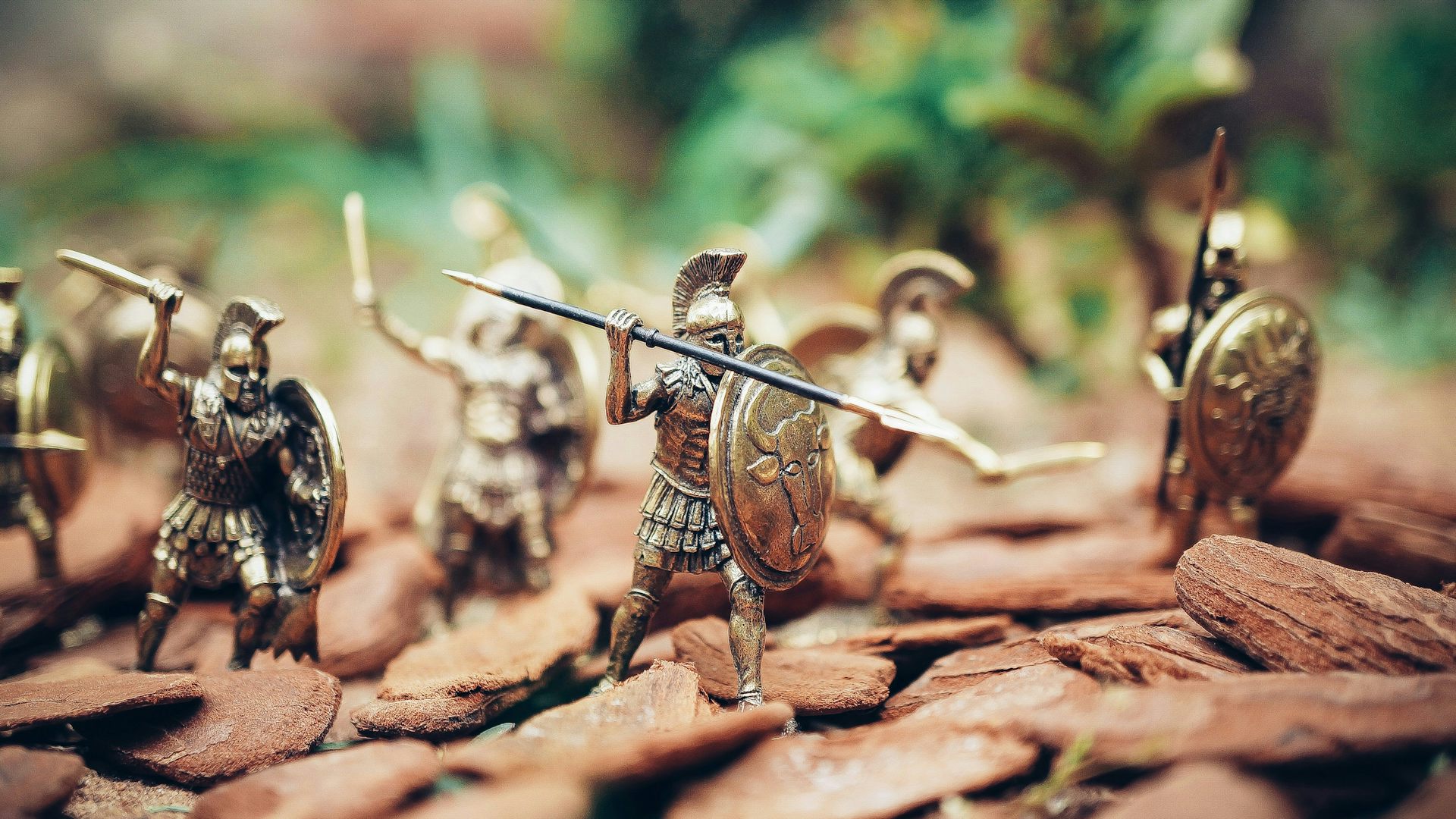
Une unité de combat d’élite composée d’amoureux gaïacs – la Bande Sacrée Thébaine dans l’ancienne Grèce
An elite fighting unit of gay lovers – the Theban Sacred Band in ancient Greece
The Theban Sacred Band – made up of ‘lovers and their loves’ came to be known for their strength, discipline, and ferocity.
La Bande Sacrée Thébaine – composée de « amants et des amours » – était réputée pour sa force, sa discipline et sa férocité.
In 1880, in the village of Chaironeia in central Greece, Greek archaeologists made a remarkable find: a largely undisturbed mass grave of 254 ancient soldiers, some of whom are buried arm in arm.
En 1880, dans le village de Chaironeia en Grèce centrale, des archéologues grecs ont fait une découverte remarquable: une tombe collective largement intacte de 254 soldats antiques, dont certains sont enterrés bras dessus bras dessous.
The men in this grave were clearly a special group, and it has generally been assumed that they were the dead of the Theban Sacred Band (hieros lochos) – an elite fighting unit made up of 150 pairs of male lovers, fighting side by side.
Les hommes dans cette tombe appartenaient clairement à un groupe spécial, et il a généralement été supposé qu’il s’agissait des défunts de la Bande Sacrée Thébaine (hieros lochos) – une unité de combat d’élite composée de 150 couples d’amants masculins, se battant côte à côte.
The Sacred Band had been set up in about 378 BCE, after the people of Thebes (in central Greece, north of Athens) had freed themselves from a brief period of rule by the regional superpower of that era, the Spartans.
La Bande Sacrée avait été créée vers 378 avant J.-C., après que les habitants de Thèbes (en Grèce centrale, au nord d’Athènes) se soient libérés d’une brève période de domination par la superpuissance régionale de cette époque, les Spartiates.
This elite unit was a professional force of 300 heavily armed infantrymen who fought in Thebes’ wars, in central Greece, north into Thessaly, and south into the Peloponnese, used either as shock troops or as a bulwark of defence.
Cette unité d’élite était une force professionnelle de 300 infanterie fortement armée qui combatta dans les guerres de Thèbes, en Grèce centrale, au nord jusqu’en Thessalie et au sud en Péloponnèse, utilisée soit comme troupes de choc, soit comme rempart de défense.
An army ‘composed of lovers and their beloveds’
Une armée « composée d’amants et de leurs bien-aimés »
As always in Greek history, the evidence is problematic.
Comme toujours dans l’histoire grecque, les preuves sont problématiques.
Much of it comes from Greek-Roman philosopher Plutarch, writing 500 years later but using earlier sources now lost to us.
Une grande partie provient du philosophe gréco-romain Plutarque, qui a écrit 500 ans plus tard mais en utilisant des sources antérieures aujourd’hui perdues pour nous.
And even Plutarch is cautious. In his text Life of Pelopidas 18.1–2, he relies on vague language, writing:
Et même Plutarque est prudent. Dans son texte Vie de Pélopide 18.1–2, il s’appuie sur un langage vague, écrivant:
Some say that this band was composed of lovers and beloved […] since the lovers are ashamed to play the coward before their beloved, and the beloved before their lovers, and both stand firm in danger to protect each other.
Certains disent que ce groupe était composé d’amants et de bien-aimés […] car les amants ont honte de jouer le lâche devant leur bien-aimé, et le bien-aimé devant ses amants, et tous deux restent fermes dans le danger pour se protéger mutuellement.
The philosopher Plato, writing many hundreds of years earlier – possibly a little before the Sacred Band was formed in about 378 BCE – wrote in his famous Symposium 178e–179a of how good a military force composed of lovers would be. They would, one of the speakers in the dialogue claims, fight for each other and to avoid disgrace in each other’s eyes:
Le philosophe Platon, écrivant des centaines d’années plus tôt – peut-être un peu avant la formation de la Bande Sacrée vers 378 av. J.-C. – a écrit dans son célèbre Symposium 178e–179a à quel point une force militaire composée d’amants serait bonne. Ils se battraient, selon ce que prétend l’un des orateurs du dialogue, les uns pour les autres et pour éviter la disgrâce aux yeux de chacun:
Therefore, if it could be arranged that a city or an army be composed of lovers and their beloveds, what better way might they organise their affairs than by abstaining from all shameful actions and prizing honour in one another’s eyes? And if such people were to fight alongside one another, even a few of them might, to coin a phrase, conquer the whole human race. For a man in love who was breaking rank or throwing away his weapons, would of course much rather be seen by anyone else at all than by his beloved. Instead of that he would choose to die many times. As for abandoning his favourite or not assisting him in the hour of danger, well there is none so base that Eros could not inspire him towards excellence, to be equal by nature to the very best.
Par conséquent, s’il était possible qu’une ville ou une armée soit composée d’amants et de leurs bien-aimés, quelle meilleure façon pourraient-ils organiser leurs affaires que de s’abstenir de toutes actions honteuses et de chérir l’honneur aux yeux des autres? Et si de telles personnes devaient se battre ensemble, même quelques-uns pourraient, pour citer une expression, conquérir toute la race humaine. Car un homme amoureux qui faisait défection ou jetait ses armes préférerait de loin être vu par n’importe qui d’autre que par son bien-aimé. Au lieu de cela, il choisirait de mourir maintes fois. Quant à abandonner sa favorite ou ne pas l’assister au moment du danger, eh bien, il n’y en a aucun si bas qu’Éros ne puisse l’inspirer vers l’excellence, pour être naturellement égal aux meilleurs.
The distinction made in these passages between “lovers” (erastai or agapontes) and “beloved” (eromenoi or paidika) reflects the fact that in ancient Greece sexual relationships were rarely between people of the same age.
La distinction faite dans ces passages entre « amants » (erastai ou agapontes) et « bien-aimés » (eromenoi ou paidika) reflète le fait que dans l’Antiquité grecque, les relations sexuelles étaient rarement entre personnes du même âge.
In Athens, first marriages were usually between a man in his late 20s and a girl of about 14.
À Athènes, les premiers mariages se faisaient généralement entre un homme d’une vingtaine d’années et une jeune fille d’environ 14 ans.
Similarly, homoerotic relationships, which were very common, were typically between an older man and an adolescent youth, anywhere from maybe around 12 (based on vase paintings) to whenever the adolescent started to grow a beard.
De même, les relations homoérotiques, très courantes, se déroulaient typiquement entre un homme plus âgé et un adolescent, allant peut-être autour de 12 ans (selon les peintures sur vases) jusqu’à ce que l’adolescent commence à développer une barbe.
Erastai (lovers) were not exclusively homosexual: they would normally also marry and have children (as, one day, would their eromenoi, or beloved) .
Les erastai (amants) n’étaient pas exclusivement homosexuels: ils se mariaient normalement et avaient des enfants (comme le feraient, un jour, leurs eromenoi, ou bien-aimés) .
These were sexual relationships but this hasn’t always been openly acknowledged by historians. 19th-century Classicists mostly sought to shield the Greeks from the imputation that they had engaged in gay sex. Today, the worry is more about under-age sex.
Ceci était des relations sexuelles mais cela n’a pas toujours été ouvertement reconnu par les historiens. Les classicistes du XIXe siècle cherchaient surtout à protéger les Grecs de l’imputation d’avoir eu des rapports homosexuels. Aujourd’hui, le souci porte davantage sur le sexe impliquant des mineurs.
The erastes – eromenos relationship had an aspect of mentoring but, within social demands of the time for a certain modesty, it was also clearly sexual.
La relation erastes – eromenos avait un aspect de mentorat mais, dans le cadre des exigences sociales de l’époque pour une certaine modestie, elle était également clairement sexuelle.
Fighting together, sleeping together
Se battre ensemble, dormir ensemble
The problem with the Theban Sacred Band is that the eromenoi would need to be old enough to face the enormous physical challenges of battle, normally reserved for men over about 20. That implies different social mores in Thebes from those at Athens.
Le problème avec la Bande Sacrée Thébaine est que les eroménoi devraient être assez âgés pour faire face aux énormes défis physiques du combat, normalement réservés aux hommes de plus de vingt ans. Cela implique des mœurs sociales différentes à Thèbes par rapport à celles d’Athènes.
In Athens, there were lifelong gay couples, including two of the characters in Plato’s Symposium, but they could often be the target of mockery. Athenians especially thought there was something shameful in an adult man being the “passive partner” in gay sex.
À Athènes, il existait des couples homosexuels de longue date, incluant deux personnages du Banquet de Platon, mais ils pouvaient souvent être la cible de moqueries. Les Athéniens pensaient particulièrement qu’il y avait quelque chose de honteux chez un homme adulte qui était le « partenaire passif » dans les relations sexuelles homosexuelles.
But possibly attitudes were different at Thebes, where gay couples seem to have pledged their love to each other at the tomb of Iolaos, the eromenos, or beloved, of Herakles (sometimes known by his Roman name Hercules) .
Mais peut-être que les attitudes étaient différentes à Thèbes, où des couples homosexuels semblent avoir scellé leur amour l’un à l’autre au tombeau d’Iolaos, l’eromenos, ou le bien-aimé, d’Héraclès (parfois connu sous son nom romain Hercule) .
The couples who made up the Sacred Band may have come together when the younger one was an adolescent and simply continued into adulthood. Were they still sexual partners?
Les couples qui formaient la Bande Sacrée ont peut-être été réunis lorsque le plus jeune était adolescent, et cette relation a simplement continué jusqu’à l’âge adulte. Étaient-ils toujours des partenaires sexuels?
Well, a passage in Greek writer Xenophon’s own text (also called Symposium, possibly written in answer to Plato’s work of the same name) explicitly and critically refers to soldiers who fought together and were also sleeping with each other.
Eh bien, un passage dans le propre texte de l’écrivain grec Xénophon (également appelé Symposion, peut-être écrit en réponse à l’œuvre de Platon du même nom) fait référence explicitement et de manière critique à des soldats qui se battaient ensemble et qui dormaient aussi ensemble.
So, probably yes.
Donc, probablement oui.
Lovers who died together
Amants qui sont morts ensemble
Although some ancient historians remain sceptical, since the 19th century the story itself – whether true or not – has been inspirational to many.
Bien que certains historiens antiques restent sceptiques, depuis le XIXe siècle l’histoire elle-même – qu’elle soit vraie ou non – a été une source d’inspiration pour beaucoup.
The Theban Sacred Band came to be known for their strength, discipline, and ferocity.
Le Groupe Sacré de Thèbes était réputé pour sa force, sa discipline et sa férocité.
Among their most famous successes was the important role they played in defeating the once powerful Spartans at the Battle of Leuctra in 371 BCE, which ended Spartan supremacy.
Parmi leurs succès les plus célèbres figurait le rôle crucial qu’ils ont joué dans la défaite des Spartiates autrefois puissants lors de la bataille de Leuctra en 371 avant J.-C., ce qui mit fin à la suprématie spartiate.
The men of the Sacred Band of Thebes died in the Battle of Chaironeia in 338 BCE, when Philip of Macedon and his son Alexander (later known to the world as Alexander the Great) defeated Greek forces led by the cities of Thebes and Athens.
Les hommes du Groupe Sacré de Thèbes sont morts lors de la bataille de Charonea en 338 avant J.-C., lorsque Philippe de Macédoine et son fils Alexandre (plus tard connu dans le monde comme Alexandre le Grand) ont vaincu les forces grecques menées par les cités de Thèbes et d’Athènes.
Maybe these soldiers, discovered arm in arm in a mass grave in central Greece more than 2,000 years later, really were lovers who died together in the Band’s final defeat.
Peut-être que ces soldats, découverts bras dessus bras dans une fosse commune en Grèce centrale plus de 2 000 ans plus tard, étaient réellement des amants qui sont morts ensemble lors de la défaite finale du Groupe.
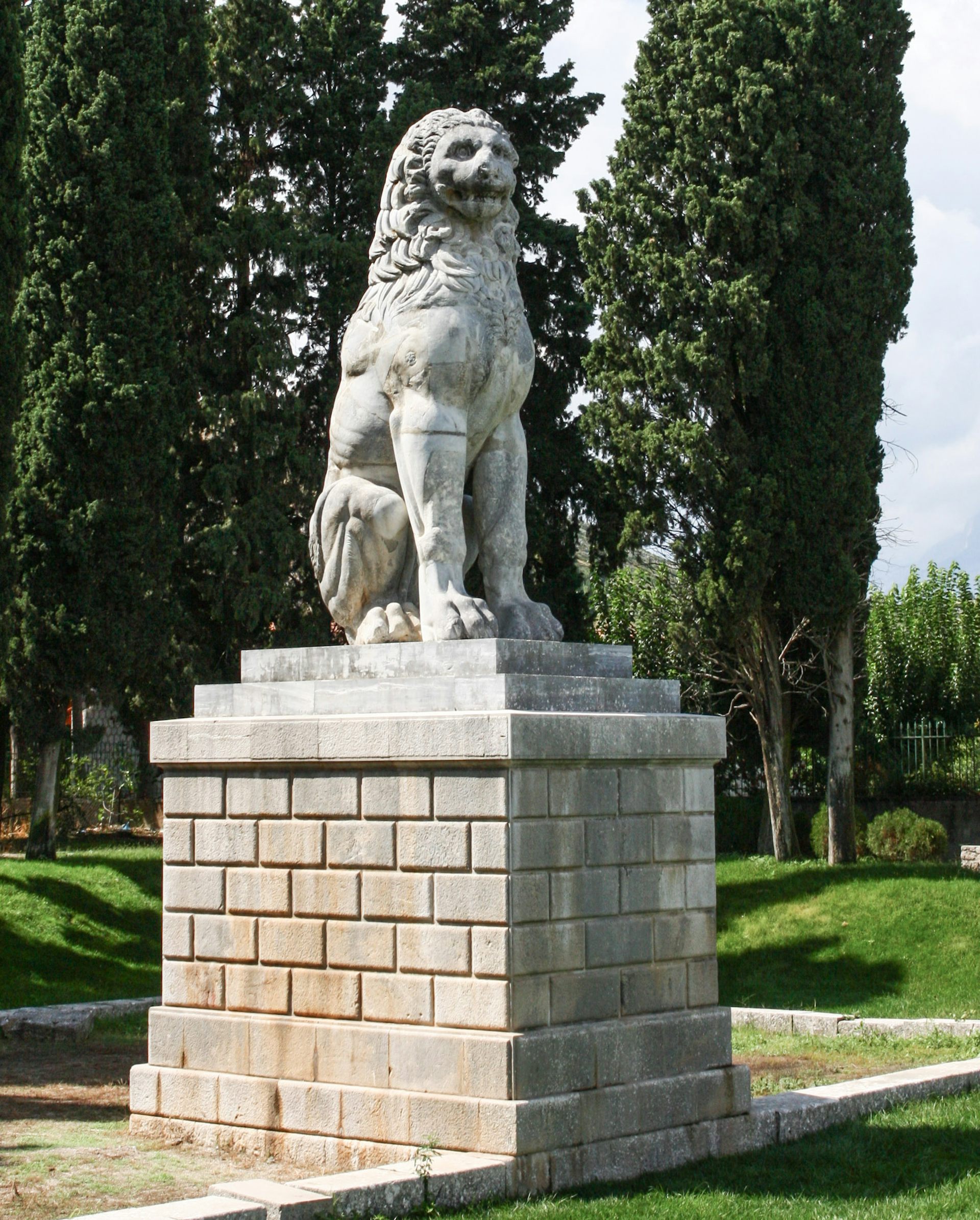
Today, the site is marked with a statue of a lion – symbolic of this elite fighting unit’s pride and strength.
Aujourd’hui, le site est marqué par une statue de lion – symbole de la fierté et de la force de cette unité combattante d’élite.
Peter Londey does not work for, consult, own shares in or receive funding from any company or organisation that would benefit from this article, and has disclosed no relevant affiliations beyond their academic appointment.
Peter Londey ne travaille pour, ne consulte pas, ne détient pas d’actions ni ne reçoit de financement de la part d’aucune entreprise ou organisation qui pourrait bénéficier de cet article, et n’a divulgué aucune affiliation pertinente au-delà de sa nomination universitaire.
Read more
-

Amour, quête, aventure : le récit derrière les discours de Xi Jinping et la grande stratégie chinoise
Love, quest, adventure: the storytelling behind Xi Jinping’s speeches and China’s grand strategy
-
La Coupe du Monde entre dans sa prochaine étape après des sorcières, des surprises et des livraisons de bière d’urgence
The World Cup enters its next stage after witch doctors, surprises and emergency beer deliveries