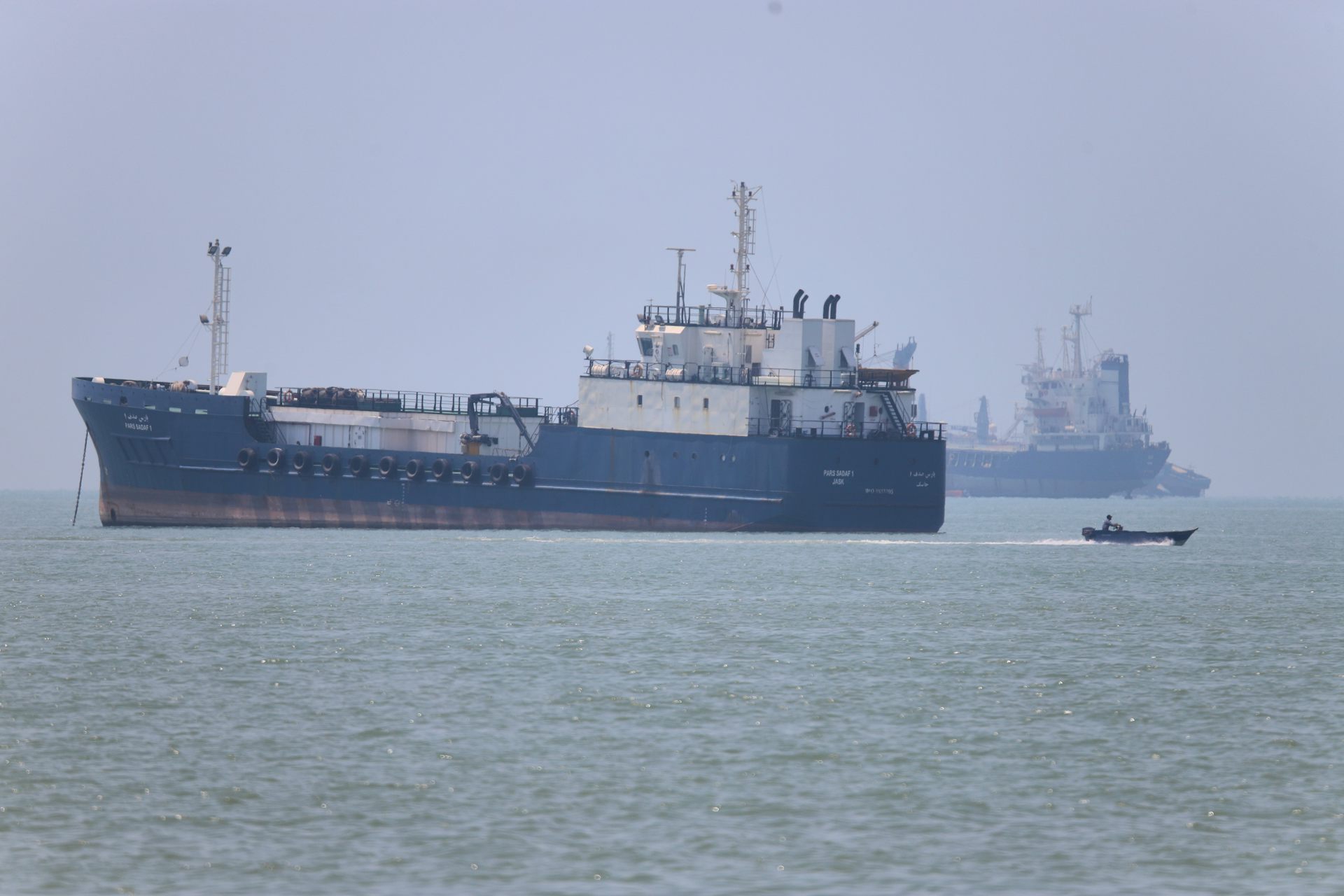
Malgré ses meilleurs efforts, l’Iran ne pourra pas bloquer le détroit d’Ormuz. Voici pourquoi
Despite its best efforts, Iran won’t be able to toll the Strait of Hormuz. Here’s why
New strikes from the US and Iran continue to put the future of the crucial shipping channel in doubt, but a permanent toll is neither legal nor workable.
Les nouvelles frappes des États-Unis et de l’Iran continuent de remettre en question l’avenir du canal maritime crucial, mais un blocus permanent n’est ni légal ni réalisable.
Tensions have again escalated in the Middle East, with the United States and Iran trading strikes around the Strait of Hormuz.
Les tensions ont de nouveau augmenté au Moyen-Orient, avec les États-Unis et l’Iran échangeant des frappes autour du détroit d’Ormuz.
It follows reports of an Iranian drone attack on a cargo ship trying to transit through the strait. Both the US and Iran have accused each other of breaking the agreed 60-day interim peace deal.
Cela fait suite à des rapports d’attaque de drone iranien contre un cargo tentant de transiter par le détroit. Les deux pays, les États-Unis et l’Iran, se sont mutuellement accusés d’avoir rompu le cessez-le-feu provisoire de 60 jours convenu.
Since Iran was attacked by the US and Israel it has increasingly signalled its intent to make control of the Strait of Hormuz a permanent feature. This has raised fears that after the conflict, it could permanently impose tolls on the roughly 130 ships that transit the strait each day.
Depuis que l’Iran a été attaqué par les États-Unis et Israël, il signale de plus en plus son intention de faire du contrôle du détroit d’Ormuz une caractéristique permanente. Cela a soulevé des craintes qu’après le conflit, il pourrait imposer des péages permanents sur les quelque 130 navires qui traversent le détroit chaque jour.
While Iran may desire a guaranteed source of revenue, the region is unlikely to accept it tolling the strait. More importantly, it would not work. The Strait of Hormuz is not a canal.
Bien que l’Iran puisse désirer une source de revenus garantie, la région est peu susceptible d’accepter qu’il taxe le détroit. Plus important encore, cela ne fonctionnerait pas. Le détroit d’Ormuz n’est pas un canal.
No legal way
Aucun moyen légal
The world is right to be concerned. Since the war began, Iran has sought to deter ships from transiting the Strait of Hormuz, attacking more than 40 neutral merchant vessels and killing several innocent merchant mariners.
Le monde a raison de s’inquiéter. Depuis le début de la guerre, l’Iran cherche à dissuader les navires de transiter par le détroit d’Ormuz, en attaquant plus de 40 navires marchands neutres et en tuant plusieurs marins marchands innocents.
Combined with missile and drone attacks and the placement of sea mines in the strait, commercial shipping has effectively ground to a halt for more than three months, with significant economic consequences.
Combiné aux attaques de missiles et de drones et au placement de mines en mer dans le détroit, le transport commercial est effectivement à l’arrêt depuis plus de trois mois, avec des conséquences économiques importantes.
Concern has been further fuelled by the wording of the recent 14-point interim deal, which stated that Iran would use its “best efforts” to ensure the safe passage of commercial vessels “with no charge, for 60 days only”.
L’inquiétude a été alimentée par la formulation du récent accord intérimaire de 14 points, qui stipulait que l’Iran utiliserait ses « meilleurs efforts » pour assurer le passage sûr des navires commerciaux « sans frais, pendant seulement 60 jours ».
The plan says Iran would discuss future arrangements with Oman and other Gulf states, “in line with applicable international law and the sovereign rights of coastal states of the Strait of Hormuz”.
Le plan indique que l’Iran discuterait de futurs arrangements avec Oman et d’autres États du Golfe, « conformément au droit international applicable et aux droits souverains des États côtiers du détroit d’Ormuz ».
Under the United Nations Convention on the Law of the Sea, the Strait of Hormuz is an international strait where all ships enjoy a right of transit passage that coastal states cannot suspend.
En vertu de la Convention des Nations Unies sur le droit de la mer, le détroit d’Ormuz est un détroit international où tous les navires jouissent d’un droit de passage en transit que les États côtiers ne peuvent suspendre.
While parts of the strait pass through Iranian territorial waters, the main traffic separation scheme lies within Omani waters. Traffic separation schemes are routes established by the International Maritime Organisation to safely manage traffic in busy chokepoints. Think of them as recommended roadways.
Bien que certaines parties du détroit traversent les eaux territoriales iraniennes, le principal système de séparation du trafic se situe dans les eaux omanaises. Les systèmes de séparation du trafic sont des routes établies par l’Organisation maritime internationale pour gérer en toute sécurité le trafic dans les points de passage encombrés. Considérez-les comme des voies recommandées.
Despite concerns about the wording of the deal, Iran could not lawfully impose a toll on transit passage.
Malgré les préoccupations concernant la formulation de l’accord, l’Iran ne pouvait légalement pas imposer un péage sur le passage en transit.
But also no practical way
Mais pas non plus de manière pratique
But the real question is whether Iran could practically impose a toll, particularly given it has effectively halted most commercial shipping through the Strait of Hormuz for more than three months.
Mais la vraie question est de savoir si l’Iran pourrait concrètement imposer un droit de passage, d’autant plus qu’il a effectivement stoppé la majeure partie du trafic commercial par le détroit d’Ormuz depuis plus de trois mois.
At first glance, there are obvious precedents. Ships pay to transit canals such as the Suez and Panama canals.
À première vue, il existe des précédents évidents. Les navires paient pour transiter par des canaux tels que le canal de Suez et le canal de Panama.
But these are fundamentally different waterways. They lie within the territory of a single state and are narrow, controlled transit routes. The navigable channel of the Suez Canal, for example, is typically around 200 metres wide.
Mais ce sont des voies navigables fondamentalement différentes. Elles se situent sur le territoire d’un seul État et constituent des routes de transit étroites et contrôlées. Le chenal navigable du canal de Suez, par exemple, fait généralement environ 200 mètres de large.
The Strait of Hormuz is different. At its narrowest point it is approximately 39 kilometres across, including areas of both Omani and Iranian waters.
Le détroit d’Ormuz est différent. À son point le plus étroit, il mesure environ 39 kilomètres de large, y compris des zones d’eaux omanaises et iraniennes.
The scale of the waterway makes it far more difficult to physically stop, inspect and control vessels that refuse to pay a toll. Imposing a toll is one thing; enforcing it against unwilling ships is another entirely.
L’échelle de cette voie navigable rend beaucoup plus difficile l’arrêt physique, l’inspection et le contrôle des navires qui refusent de payer un droit de passage. Imposer un droit de passage est une chose; l’appliquer contre des navires réticents en est une autre.
Ships transiting the Suez Canal enter via Port Said in the north or Suez in the south, then Suez Canal Authority pilots get onboard the vessels and join a tightly controlled convoy system for the transit.
Les navires traversant le canal de Suez entrent par Port-Saïd au nord ou Suez au sud, puis des pilotes de l’Autorité du Canal de Suez embarquent à bord et rejoignent un système de convoi étroitement contrôlé pour la traversée.
The canal’s confined and highly regulated nature makes it virtually impossible for vessels to transit without complying with canal authorities and paying the required tolls.
La nature confinée et hautement réglementée du canal rend pratiquement impossible la traversée pour les navires sans se conformer aux autorités du canal et payer les droits de passage requis.
For the Strait of Hormuz, international law aside, shipping companies and states are unlikely to voluntarily accept a permanent toll on transit through an international strait.
Pour le détroit d’Ormuz, mise à part le droit international, les compagnies maritimes et les États sont peu susceptibles d’accepter volontairement un droit de passage permanent pour la traversée d’un détroit international.
The issue is not simply cost, but the precedent it would set for freedom of navigation and the governance of straits around the world.
Le problème n’est pas simplement le coût, mais le précédent qu’il établirait en matière de liberté de navigation et de gouvernance des détroits du monde entier.
Leverage or long-term control?
Levier ou contrôle à long terme?
Iran would not be charging ships for a service, as occurs in the Suez or Panama canals. It would be charging vessels for exercising a pre-existing right of transit through an international strait. Oman and other Gulf states have warned that tolling arrangements would undermine free passage and set a dangerous precedent.
L’Iran ne facturerait pas de services aux navires, comme cela se produit dans les canaux du Suez ou de Panama. Il facturerait plutôt l’exercice d’un droit de transit préexistant par un détroit international. Oman et d’autres États du Golfe ont averti que des arrangements de péage saperaient le libre passage et créeraient un dangereux précédent.
Companies would therefore have to be coerced into paying. But unlike the Suez or Panama canals, the Strait of Hormuz is far larger and more difficult to police, making enforcement challenging.
Les entreprises devraient donc être contraintes de payer. Mais contrairement aux canaux du Suez ou de Panama, le détroit d’Ormuz est beaucoup plus vaste et plus difficile à contrôler, ce qui rend l’application difficile.
During the current conflict, Iran has deterred shipping through the use of weapons, killing innocent mariners and disrupting global trade.
Durant le conflit actuel, l’Iran a dissuadé le trafic maritime par l’utilisation d’armes, tuant des marins innocents et perturbant le commerce mondial.
While the international response has at times been muted, such actions are not a sustainable means of enforcing a permanent toll in peacetime.
Bien que la réponse internationale ait été parfois mitigée, de telles actions ne constituent pas un moyen durable pour imposer un péage permanent en temps de paix.
Unless Iran is willing to continue attacking innocent merchant vessels after the conflict ends, an approach that would attract significant diplomatic pressure, sanctions and criticism, including from countries such as China, it is unlikely to have either the incentive or the enforcement mechanism required to compel ships to pay a toll that is inconsistent with international law.
À moins qu’Iran ne soit prêt à continuer d’attaquer des navires marchands innocents après la fin du conflit, une approche qui attirerait une pression diplomatique significative, des sanctions et des critiques, y compris de pays comme la Chine, il est peu probable qu’il dispose de l’incitation ou du mécanisme d’application nécessaire pour forcer les navires à payer un péage contraire au droit international.
Iran is using its success in disrupting shipping through the Strait of Hormuz as leverage in negotiations. But leverage and long-term control are not the same thing. While Iran can disrupt shipping, it is unlikely to permanently toll the Strait of Hormuz.
L’Iran utilise son succès dans la perturbation du trafic par le détroit d’Ormuz comme levier dans les négociations. Mais le levier et le contrôle à long terme ne sont pas la même chose. Bien que l’Iran puisse perturber le trafic, il est peu probable qu’il parvienne à péager de manière permanente le détroit d’Ormuz.
Jennifer Parker does not work for, consult, own shares in or receive funding from any company or organisation that would benefit from this article, and has disclosed no relevant affiliations beyond their academic appointment.
Jennifer Parker n’est affiliée, ne consulte pas, ne détient pas d’actions ni ne reçoit de financement de la part d’aucune entreprise ou organisation qui bénéficierait de cet article, et n’a divulgué aucune affiliation pertinente au-delà de sa nomination universitaire.
Read more
-

Un nouveau film plastique recouvert de milliers de minuscules piliers peut défaire les virus au contact
New plastic film covered in thousands of tiny pillars can tear apart viruses on contact
-
Qu’est-ce qu’une guerre juste ? Au cœur de la guerre de mots entre l’administration Trump et l’Église catholique.
What is a just war? Inside the war of words between the Trump administration and the Catholic church