
En réplique à Trump, la Cour suprême maintient la citoyenneté de naissance, en soulignant la promesse d’égalité dans la Déclaration d’Indépendance
In rebuke to Trump, Supreme Court upholds birthright citizenship, emphasizing the promise of equality in the Declaration of Independence
Pointing to the citizenship clause of the 14th Amendment, the high court ruled that all babies born in the United States ‘are citizens by birth.’
En se référant à la clause de citoyenneté du 14e Amendement, la haute cour a statué que tous les bébés nés aux États-Unis «sont citoyens par naissance».
The Supreme Court on June 30, 2026, declared that universal birthright citizenship is protected by the citizenship clause of the 14th Amendment to the U.S. Constitution, meaning that nearly all babies born in the United States automatically become American citizens, regardless of their parents’ immigration status.
La Cour suprême, le 30 juin 2026, a déclaré que la citoyenneté universelle de naissance est protégée par la clause de citoyenneté du 14e Amendement à la Constitution américaine, ce qui signifie que presque tous les bébés nés aux États-Unis deviennent automatiquement citoyens américains, quel que soit le statut d’immigration de leurs parents.
The ruling rejects President Donald Trump’s executive order, signed the first day of his second administration, which sought to end birthright citizenship for the children of parents present in the country illegally and for tourists visiting only temporarily.
Cette décision rejette l’ordre exécutif du président Donald Trump, signé le premier jour de son deuxième mandat, qui visait à supprimer la citoyenneté de naissance pour les enfants dont les parents sont présents illégalement dans le pays et pour les touristes ne visitant que temporairement.
The high court ruled that “under the Constitution, they are citizens by birth.”
La haute cour a statué qu’« en vertu de la Constitution, ils sont citoyens de naissance. »
A close decision
Une décision serrée
The ruling was split 5-4 on the meaning of the 14th Amendment. A sixth justice, Brett Kavanaugh, ruled against the Trump order on the grounds that it violates federal law – which Congress could alter – but not the Constitution itself, making the ruling 6-3 against Trump.
Le jugement a été divisé 5-4 sur la signification du 14e Amendement. Un sixième juge, Brett Kavanaugh, s’est prononcé contre l’ordre de Trump au motif qu’il viole le droit fédéral – que le Congrès pourrait modifier – mais pas la Constitution elle-même, ce qui a fait passer le verdict à 6-3 contre Trump.
Supreme Court watchers, including myself, expected the three liberal justices – Ketanji Brown Jackson, Elena Kagan and Sonia Sotomayor – to rule in favor of universal birthright citizenship, but imagined that the six conservatives would divide.
Les observateurs de la Cour suprême, y compris moi-même, s’attendaient aux trois juges libéraux – Ketanji Brown Jackson, Elena Kagan et Sonia Sotomayor – de statuer en faveur d’une citoyenneté automatique universelle, mais imaginaient que les six conservateurs se diviqueraient.
Two conservatives, Chief Justice John Roberts and Justice Amy Coney Barrett, joined the liberals to form a narrow majority.
Deux conservateurs, le juge en chef John Roberts et la juge Amy Coney Barrett, ont rejoint les libéraux pour former une mince majorité.
Four of the justices appointed by Republican presidents see the original public meaning of the 14th Amendment as quite different, primarily recognizing the citizenship of former slaves and their descendants after the Civil War. But they don’t see it applying to anyone born in the United States regardless of parentage.
Quatre des juges nommés par des présidents républicains considèrent que le sens public original du 14e Amendement est très différent, reconnaissant principalement la citoyenneté des anciens esclaves et de leurs descendants après la Guerre civile. Mais ils ne voient pas qu’il s’applique à toute personne née aux États-Unis quelle que soit sa filiation.
In their view, birthright citizenship was only promised to those whose parents were legal residents with sole allegiance to the United States. As they see it, the American people can expand federal law to grant citizenship to others if they choose, but the Constitution does not demand it.
Selon eux, la citoyenneté automatique n’était promise qu’à ceux dont les parents étaient des résidents légaux ayant une allégeance exclusive aux États-Unis. À leur avis, le peuple américain peut étendre le droit fédéral pour accorder la citoyenneté à d’autres s’il le souhaite, mais la Constitution ne l’exige pas.
The meaning of the Declaration
La signification de la Déclaration
The timing of the landmark ruling is meaningful, coming a few days before the 250th anniversary of the Declaration of Independence on July 4, 1776.
Le calendrier du jugement historique est significatif, car il intervient quelques jours avant le 250e anniversaire de la Déclaration d’indépendance, le 4 juillet 1776.
As a longtime observer of the Supreme Court, I believe the best way to understand the dispute is that it reflects a deep conflict over how we see the meaning of the Declaration of Independence and how it frames the meaning of the Constitution.
En tant qu’observateur de longue date de la Cour suprême, je crois que la meilleure façon de comprendre le litige est qu’il reflète un profond conflit sur la manière dont nous voyons la signification de la Déclaration d’indépendance et comment celle-ci encadre la signification de la Constitution.
Roberts concludes the ruling with the statement that “Citizenship, then and now, was the right to have rights – to freely participate in our political community.”
Roberts conclut son jugement par la déclaration selon laquelle « La citoyenneté, alors comme maintenant, était le droit d’avoir des droits – de participer librement à notre communauté politique. »
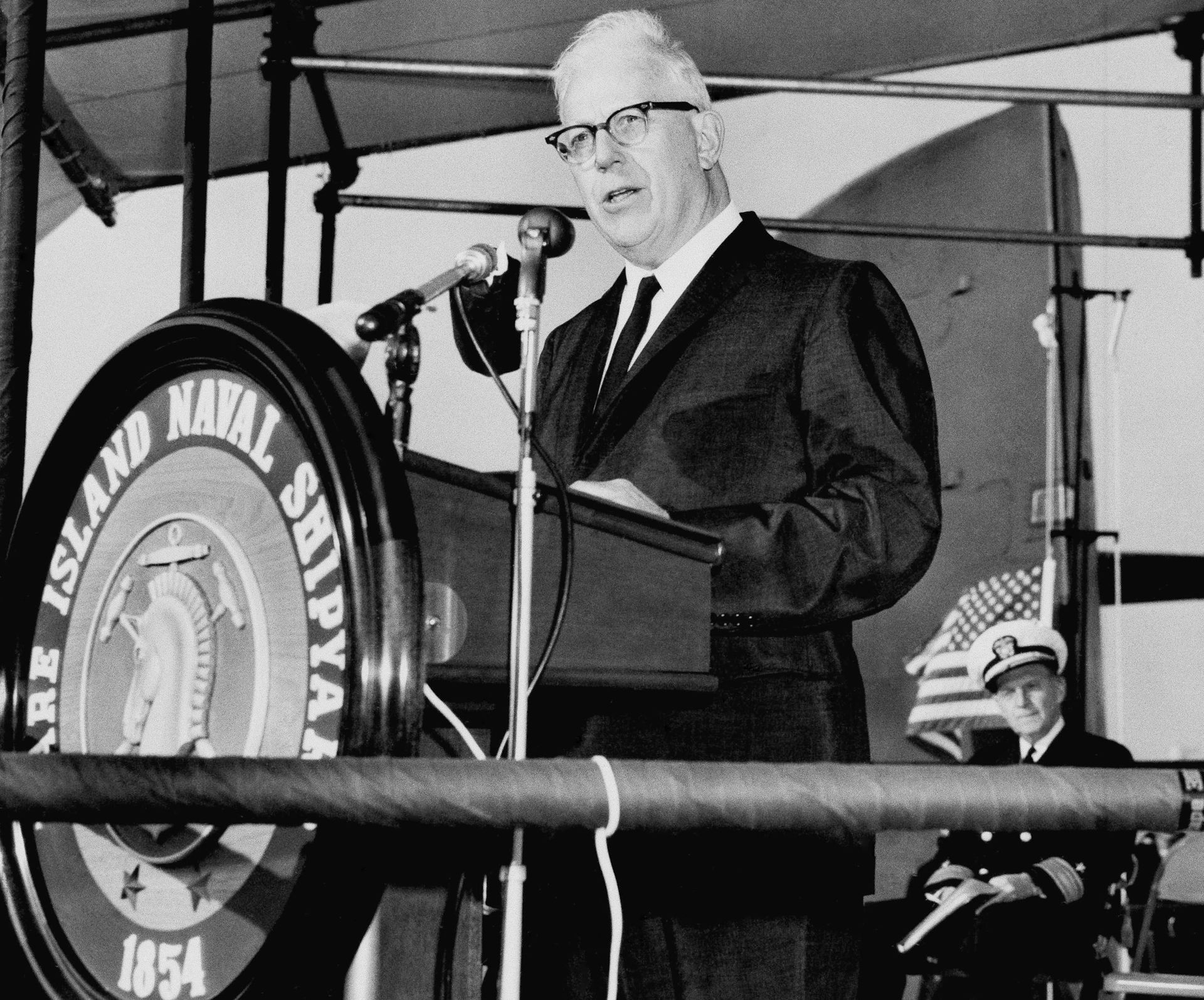
This is a reference to a famous quote from Chief Justice Earl Warren dissenting in a 1958 ruling recognizing congressional power to strip a native-born American of their citizenship for voting in a foreign election. Warren, the chief justice who authored Brown v. Board of Education in 1954 and many other landmark rulings expanding constitutional rights, wrote that “Citizenship is man’s basic right for it is nothing less than the right to have rights.”
Il s’agit d’une référence à une citation célèbre du juge en chef Earl Warren, qui était dissident lors d’un jugement de 1958 reconnaissant au Congrès le pouvoir de priver un Américain né de parents américains de sa citoyenneté pour avoir voté lors d’une élection étrangère. Warren, le juge en chef qui a rédigé Brown c. Board of Education en 1954 et de nombreux autres jugements historiques élargissant les droits constitutionnels, avait écrit que « La citoyenneté est le droit fondamental de l’homme car il n’est rien moins que le droit d’avoir des droits. »
In Warren’s – and Roberts’ – view, the Declaration of Independence established not only the importance of individual rights, but also the equality of all in holding those rights. Citizenship must be equal and open, defined as broadly as the Constitution allows, rather than narrow in its scope.
Selon Warren – et Roberts – la Déclaration d’indépendance a établi non seulement l’importance des droits individuels, mais aussi l’égalité de tous dans le fait de détenir ces droits. La citoyenneté doit être égale et ouverte, définie aussi largement que le permet la Constitution, plutôt que limitée dans son champ d’application.
When the 14th Amendment expanded citizenship after the Civil War, it did so with universal language, addressing race but also something broader: “All persons born or naturalized in the United States, and subject to the jurisdiction thereof, are citizens of the United States and of the State wherein they reside.”
Lorsque le 14e amendement a élargi la citoyenneté après la guerre civile, il l’a fait avec un langage universel, abordant la race mais aussi quelque chose de plus large: « Toutes les personnes nées ou naturalisées aux États-Unis et soumises à leur juridiction sont citoyennes des États-Unis et de l’État où elles résident. »
In the majority’s view, this must be read broadly to achieve the declaration’s insistence on rights and equality.
Selon la majorité, cela doit être lu largement pour atteindre l’insistance de la déclaration sur les droits et l’égalité.
The dissenters believe that the declaration did something else: It established a new sovereign people who control their own definition of citizenship. In this view, the Declaration of Independence established a distinct kind of equality — an equal share in control over the government through political representation and elections.
Les dissidents estiment que la déclaration a fait autre chose: elle a établi un nouveau peuple souverain qui contrôle sa propre définition de la citoyenneté. Selon cette vision, la Déclaration d’indépendance a établi une forme distincte d’égalité — une part égale dans le contrôle du gouvernement par le biais de la représentation politique et des élections.
This view means that the current citizens must agree to offer an equal share in governance to any new members of society, but there is no such thing as citizenship without consent: No one can demand citizenship in a democracy by violating its laws.
Cette vision signifie que les citoyens actuels doivent accepter d’offrir une part égale de gouvernance à tout nouveau membre de la société, mais il n’existe pas de citoyenneté sans consentement: personne ne peut exiger la citoyenneté dans une démocratie en violant ses lois.
Accepting or rejecting the British inheritance
Accepter ou rejeter l’héritage britannique
On the second page of the ruling, Roberts explains that “the story of citizenship in the United States begins with the English common law.”
Sur la deuxième page de l’arrêt, Roberts explique que « l’histoire de la citoyenneté aux États-Unis commence avec le droit commun anglais. »
Going back to the landmark Calvin’s Case in 1608, the British rule was that anyone born in the dominion of the king was a natural born subject.
Reprenant l’affaire historique de Calvin’s Case en 1608, la règle britannique était que toute personne née dans le domaine du roi était un sujet né naturellement.
Roberts writes that “This view crossed the Atlantic with the colonists — and was adopted with little fanfare after the Revolution, as ‘subjects’ of the sovereign became ‘citizens’ of the States.”
Roberts écrit que « cette vision a traversé l’Atlantique avec les colons — et a été adoptée sans grand éclat après la Révolution, lorsque les ‘sujets’ du souverain sont devenus des ‘citoyens’ des États. »
This British common law rule of broad citizenship shaped the discussion in the key case of Wong Kim Ark in 1898. As Roberts summarizes it, “What the Court held in Wong Kim Ark was simple: the Citizenship Clause incorporated the common law and granted citizenship to nearly all children born in the United States.”
Cette règle de droit commun britannique relative à la citoyenneté étendue a façonné le débat dans l’affaire clé de Wong Kim Ark en 1898. Comme le résume Roberts, « ce que la Cour a statué dans Wong Kim Ark était simple: la Clause de Citoyenneté incorporait le droit commun et accordait la citoyenneté à presque tous les enfants nés aux États-Unis. »
In the view of the dissenters, the problem is that subjects are not citizens. That means that being “under the jurisdiction” of the United States is very different from being under the jurisdiction of England or any other previous nation.
Selon les dissidents, le problème est que les sujets ne sont pas des citoyens. Cela signifie qu’être « sous la juridiction » des États-Unis est très différent d’être sous la juridiction de l’Angleterre ou de tout autre pays précédent.
Justice Clarence Thomas dissented on the grounds that “the English principle was a rule of feudal servitude, not a rule of citizenship.”
Le juge Clarence Thomas s’est opposé au motif que « le principe anglais était une règle de servitude féodale, et non une règle de citoyenneté. »
Justice Samuel Alito agreed in his dissent, referring to the common law as “a medieval rule” and an “ancient British rule that even the United Kingdom has abandoned.”
Le juge Samuel Alito a adhéré à son désaccord, qualifiant le droit commun de « règle médiévale » et d’« ancienne règle britannique que même le Royaume-Uni a abandonnée. »
Alito insists that “the Declaration of Independence repudiated the foundation on which the British rule was based” because it “emphatically rejected the British theory of government.”
Alito insiste sur le fait que « la Déclaration d’Indépendance a répudié les fondations sur lesquelles reposait la règle britannique » car elle « rejetait catégoriquement la théorie britannique du gouvernement. »
5-4 on the meaning of July 4
5-4 sur la signification du 4 juillet
The Declaration of Independence established a new relationship between individuals and the government, moving from the government controlling the people to the people controlling the government. Subjects became citizens, and with it came the authority over who can become a new citizen.
La Déclaration d’Indépendance a établi une nouvelle relation entre les individus et le gouvernement, passant du contrôle des gens par le gouvernement au contrôle du gouvernement par les gens. Les sujets sont devenus des citoyens, et avec cela est venue l’autorité sur qui peut devenir un nouveau citoyen.
In the now-controlling interpretation of the Constitution, the American people did just that through the 14th Amendment, expanding the nature of citizenship to a more universal and equal footing, in line with the new racial equality the amendment enshrines.
Dans l’interprétation désormais dominante de la Constitution, le peuple américain a fait exactement cela par le 14e Amendement, élargissant la nature de la citoyenneté à un pied plus universel et égalitaire, conformément à la nouvelle égalité raciale que garantit cet amendement.
Birthright citizenship applies to all who are born here. That view is now the law of the land.
La citoyenneté de naissance s’applique à tous ceux qui naissent ici. Cette vision est désormais la loi du pays.
In the other, now-dissenting view, the 14th Amendment granted citizenship only to those “who, at birth, owe allegiance solely to this country.”
Dans l’autre vision, désormais dissidente, le 14e Amendement n’accordait la citoyenneté qu’à ceux « qui, à la naissance, doivent allégeance uniquement à ce pays ».
Both sides agree, as Alito phrased it, that this may be “one of the most important decisions in the history of the Court.”
Les deux parties s’accordent, comme l’a formulé Alito, sur le fait que cela pourrait être « l’une des décisions les plus importantes de l’histoire de la Cour ».
Morgan Marietta does not work for, consult, own shares in or receive funding from any company or organization that would benefit from this article, and has disclosed no relevant affiliations beyond their academic appointment.
Morgan Marietta ne travaille pour, ne consulte pas, ne détient pas d’actions ni ne reçoit de financement de quelque entreprise ou organisation que ce soit qui bénéficierait de cet article, et n’a divulgué aucune affiliation pertinente au-delà de sa nomination universitaire.
Read more
-

Le corps « garde-t-il vraiment la note » après un traumatisme ? Comment l’idée réfutée des « souvenirs refoulés » fait un retour en force
Does the body really ‘keep the score’ after trauma? How the debunked idea of ‘repressed memories’ is making a comeback
-

Arbitres, athlètes, supporters : comment les mesures de restriction aux frontières américaines ternissent le Mondial
Referees, athletes, fans: how the US border crackdowns are tarnishing the World Cup