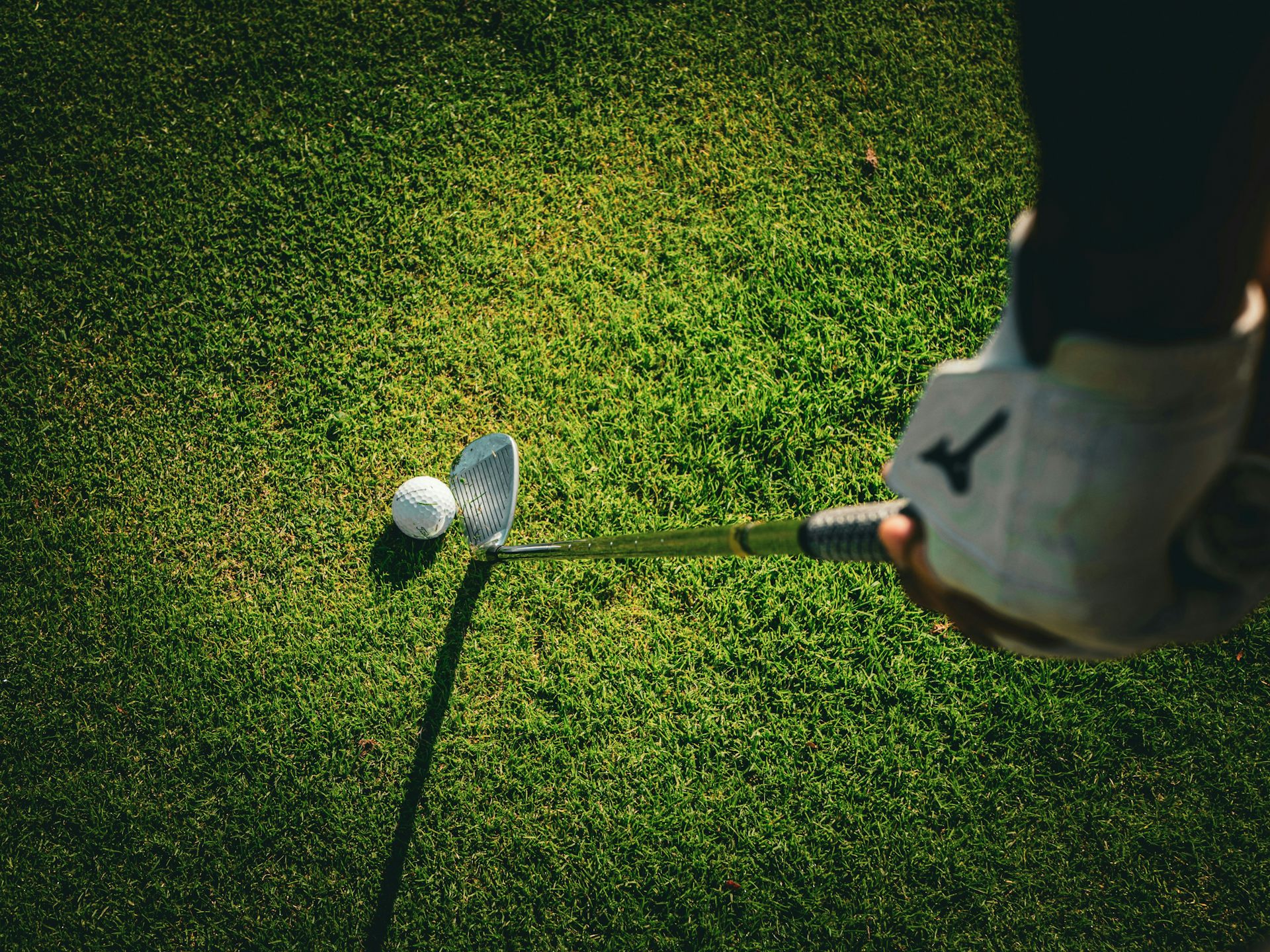
Los yips: cuando el ‘bloqueo’ deportivo alcanza otro nivel
The yips: when ‘choking’ in sport can go next level
In sport, the yips can be a chronic, more severe form of ‘choking’ under pressure. Some athletes overcome them – others can get defeated by them.
En el deporte, los yips pueden ser una forma crónica y más grave de ‘bloqueo’ bajo presión. Algunos atletas los superan, mientras que otros pueden ser derrotados por ellos.
Legendary 18-time major winner Jack Nicklaus once stated golf was “90% mental and 10% physical”.
El legendario ganador de 18 torneos importantes, Jack Nicklaus, afirmó una vez que el golf era «90% mental y 10% físico.»
That’s because unlike most other ball sports, a golfer spends most of the time thinking about their game instead of actually playing it: the contact time a player has with the ball is minuscule compared to the time spent planning the next shot, or frustratedly replaying a previous wonky hit.
Esto se debe a que, a diferencia de la mayoría de los otros deportes con pelota, un golfista pasa la mayor parte del tiempo pensando en su juego en lugar de jugarlo: el tiempo de contacto que tiene un jugador con la pelota es minúsculo en comparación con el tiempo que se dedica a planificar el siguiente tiro, o a revivir con frustración un golpe anterior fallido.
This can take a toll on even the best players – who can forget Greg Norman’s 1996 US Masters collapse, considered one of the worst chokes in the history of sport?
Esto puede pasar factura incluso a los mejores jugadores, ¿quién puede olvidar el colapso de Greg Norman en el US Masters de 1996, considerado uno de los peores fallos en la historia del deporte?
But there can be times when these wobbles go next level: the yips.
Pero puede haber momentos en los que estos titubeos pasan a otro nivel: los yips.
Let’s unpack this rare, fascinating and occasionally devastating disorder, which can affect athletes in sports such as golf, tennis, archery, baseball, softball and darts.
Desglosemos este trastorno raro, fascinante y ocasionalmente devastador, que puede afectar a atletas en deportes como el golf, el tenis, el tiro con arco, el béisbol, el sóftbol y los dardos.
What are the yips?
¿Qué son los yips?
The yips is a movement disorder that involves involuntary muscle spasms that disrupt the normal execution of mostly small muscle movements, such as finger and hand movements.
Los yips es un trastorno del movimiento que implica espasmos musculares involuntarios que interrumpen la ejecución normal de movimientos de músculos pequeños, como los movimientos de dedos y manos.
It is likely a result of bad injuries, training these small muscle groups too much, and/or worrying excessively about an upcoming performance.
Es probable que sea el resultado de malas lesiones, el entrenamiento excesivo de estos grupos musculares pequeños y/o la preocupación excesiva por un próximo rendimiento.
In that respect, it is largely a mental issue, but the causes can be physical, psychological, or both.
En ese sentido, es en gran medida un problema mental, pero las causas pueden ser físicas, psicológicas o ambas.
Athletes with the yips can struggle to hit a ball with another object (such as in golf or tennis) or accurately throw a ball or object toward a target (such as darts or baseball) .
Los atletas con yips pueden tener dificultades para golpear una pelota con otro objeto (como en golf o tenis) o para lanzar una pelota u objeto con precisión hacia un objetivo (como dardos o béisbol) .
It is unclear how many athletes are affected by the yips, but some studies in golf (the most frequently yips-affected sport) estimate between 17% and even up to 50% of serious golfers have endured this problem.
No está claro cuántos atletas se ven afectados por los yips, pero algunos estudios de golf (el deporte más afectado por yips) estiman que entre el 17% e incluso hasta el 50% de los golfistas serios han padecido este problema.
Although more research is needed, golfers are probably more at risk due to a combination of the small motor movements that occur during a golf swing and the sport’s intense mental pressures.
Aunque se necesita más investigación, los golfistas probablemente corren más riesgo debido a una combinación de los pequeños movimientos motores que ocurren durante un swing de golf y las intensas presiones mentales del deporte.
There are different causes
Hay diferentes causas
Three causes can trigger the yips: something physical (a past injury) , something psychological (anxiety experienced when performing the task) , or combined (such as a previous traumatic sporting event like failing under pressure in an important moment) .
Tres causas pueden desencadenar los yips: algo físico (una lesión pasada) , algo psicológico (ansiedad experimentada al realizar la tarea) , o combinado (como un evento deportivo traumático anterior, como fallar bajo presión en un momento importante) .
Yips always involve involuntary muscle spasms: jerking and “freezing” of body parts crucial to perform a skill.
Los yips siempre implican espasmos musculares involuntarios: sacudidas y “congelamiento” de partes del cuerpo cruciales para ejecutar una habilidad.
Athletes may experience these physical ailments with or without being nervous.
Los atletas pueden experimentar estas dolencias físicas con o sin nerviosismo.
It’s not just ‘choking’
No es solo «bloquearse»
The yips is a term often used inaccurately by media and fans to explain why athletes miss an AFL set shot or a short putt in golf.
Los yips es un término que a menudo es utilizado de manera inexacta por los medios y los aficionados para explicar por qué los atletas fallan un tiro establecido de AFL o un putt corto en golf.
This is incorrect – the term “choking under pressure” should be used instead.
Esto es incorrecto: en su lugar se debe utilizar el término «bloquearse bajo presión.»
The yips are different from choking in several ways:
Los yips son diferentes de bloquearse de varias maneras:
the yips involve involuntary muscle movements; choking does not
los yips implican movimientos musculares involuntarios; bloquearse no lo hace.
the yips may occur over a prolonged period (days, weeks, months) ; choking only occurs during one event or competition
los yips pueden ocurrir durante un período prolongado (días, semanas, meses) ; bloquearse solo ocurre durante un evento o competición.
the yips occur with or without being nervous (they can happen during training or in competition) ; choking only occurs when an athlete is nervous (for example, during competition) .
los yips ocurren con o sin nerviosismo (pueden suceder durante el entrenamiento o en competición) ; bloquearse solo ocurre cuando un atleta está nervioso (por ejemplo, durante la competición) .
The yips can be a chronic, more severe form of choking where an increase in anxiety leads to the involuntary muscle movements, but chronic choking does not always lead to the yips.
Los yips pueden ser una forma crónica y más grave de bloqueo donde un aumento de la ansiedad conduce a los movimientos musculares involuntarios, pero el bloqueo crónico no siempre conduce a los yips.
Can athletes recover from them?
¿Pueden los atletas recuperarse de ellos?
Some athletes can overcome them but others get defeated.
Algunos atletas pueden superarlos, pero otros son derrotados.
Jon Lester, a former professional baseball player, developed the yips and could not throw accurately to first base – a basic yet vital skill for elite pitchers.
Jon Lester, un exjugador profesional de béisbol, desarrolló el yips y no podía lanzar con precisión a la primera base, una habilidad básica pero vital para los lanzadores de élite.
Several throwing coaches suggested he change his technique, with no success. So Lester decided to purposely bounce the ball off the ground when throwing to first base instead of throwing it on the full. This is hardly ideal considering the importance of throwing quickly and accurately to bases.
Varios entrenadores de lanzamiento sugirieron que cambiara su técnica, sin éxito. Así que Lester decidió rebotar la pelota intencionalmente en el suelo al lanzar a la primera base en lugar de lanzarla con fuerza. Esto no es nada ideal considerando la importancia de lanzar rápido y con precisión a las bases.
He said at the time the new technique was an idea to:
Dijo en ese momento que la nueva técnica era una idea para:
[…] eliminate all tension and bounce it over there. I don’t really care what it looks like. I don’t care if it bounces 72 times.
[…] eliminar toda la tensión y rebotarla por allí. Realmente no me importa cómo se vea. No me importa si rebota 72 veces.
Despite his woes throwing to first base, Lester still enjoyed a highly successful career.
A pesar de sus problemas para lanzar a la primera base, Lester aún disfrutó de una carrera muy exitosa.
But some yips-affected athletes have been forced to walk away from their sport.
Pero algunos atletas afectados por el yips se han visto obligados a abandonar su deporte.
Ian Baker-Finch, a professional golfer who won the British Open title in 1991, developed the yips and attempted to change his swing multiple times.
Ian Baker-Finch, un golfista profesional que ganó el título del British Open en 1991, desarrolló el yips e intentó cambiar su swing varias veces.
It didn’t work – at the 1997 British Open he played so poorly that he withdrew before the second round and retired with immediate effect.
No funcionó: en el British Open de 1997 jugó tan mal que se retiró antes de la segunda ronda y se jubiló con efecto inmediato.
The title of his biography is To Hell And Back, which delves into his battle with the yips and then finding fulfilment in golf commentary.
El título de su biografía es To Hell And Back, que profundiza en su batalla con el yips y luego en encontrar realización en el comentario de golf.
How can the yips be overcome?
¿Cómo se pueden superar los «yips»?
There isn’t much research that has focused specifically on how to overcome the yips.
No hay mucha investigación que se haya centrado específicamente en cómo superar los «yips.»
Interventions are usually based on the type of yips the athlete is experiencing.
Las intervenciones generalmente se basan en el tipo de «yips» que experimenta el atleta.
For example, if the issue is more physical, medication is often used to reduce the likelihood of muscle spasms and jerking. Acupuncture can also help.
Por ejemplo, si el problema es más físico, a menudo se utilizan medicamentos para reducir la probabilidad de espasmos musculares y tirones. La acupuntura también puede ayudar.
With psychological yips, pre-performance (or pre-shot) routines and solution-focused guided imagery may help yips-affected athletes (and performance generally) .
Con los «yips» psicológicos, las rutinas pre-rendimiento (o pre-disparo) y la imaginería guiada centrada en soluciones pueden ayudar a los atletas afectados por los «yips» (y al rendimiento en general) .
If the athlete is battling the combined version of the yips, then eye movement desensitisation and reprocessing therapy (often shortened to EMDR) has been shown to improve symptoms and performance.
Si el atleta está luchando contra la versión combinada de los «yips», la terapia de desensibilización y reprocesamiento por movimiento ocular (a menudo abreviada como EMDR) ha demostrado mejorar los síntomas y el rendimiento.
With all these interventions though, only a small sample of yips-affected athletes were tested, and long-term follow-up studies are needed.
Sin embargo, con todas estas intervenciones, solo se probó una pequeña muestra de atletas afectados por los «yips», y se necesitan estudios de seguimiento a largo plazo.
Dealing with pressure
Lidiar con la presión
With golf’s next major, the 2026 PGA Championship, starting on Thursday, the best golfers in the world will descend on Aronimink Golf Club in Philadelphia.
Con el próximo gran torneo de golf, el PGA Championship de 2026, que comienza el jueves, los mejores golfistas del mundo descenderán sobre el Aronimink Golf Club en Filadelfia.
Some will excel under the immense pressure but let’s hope none of them succumb to choking – or even worse, the yips.
Algunos sobresaldrán bajo la inmensa presión, pero esperemos que ninguno sucumba al bloqueo – o peor aún, a los yips.
Christopher Mesagno does not work for, consult, own shares in or receive funding from any company or organisation that would benefit from this article, and has disclosed no relevant affiliations beyond their academic appointment.
Christopher Mesagno no trabaja, asesora, posee acciones ni recibe financiación de ninguna empresa u organización que se beneficiaría de este artículo, y no ha revelado afiliaciones relevantes más allá de su nombramiento académico.
Read more
-

Leer la Ilíada de Homero se siente como hacer scroll por TikTok
Reading Homer’s Iliad feels like scrolling through TikTok
-
Por qué a los impresionistas les encantaba pintar jardines
Why impressionists loved to paint gardens