ما هي البدائل المتاحة لدول الخليج عن مضيق هرمز؟
What alternatives do Gulf states have to the Strait of Hormuz?
While the UAE and Saudi Arabia can at least partly circumvent the Strait of Hormuz, other Gulf states are less fortunate.
بينما يمكن لدولة الإمارات العربية المتحدة والمملكة العربية السعودية على الأقل تجاوز مضيق هرمز جزئياً، فإن دول الخليج الأخرى أقل حظاً.
Two months into the Iran war and the Strait of Hormuz is still mostly shut. Vessel traffic is running at a fraction of pre-war levels, with the patchwork of ceasefires, blockades and re-closures since February 28 not restoring confidence on the bridge of any tanker.
بعد شهرين من الحرب الإيرانية، لا يزال مضيق هرمز مغلقاً إلى حد كبير. وتعمل حركة السفن بنسبة ضئيلة من مستوياتها قبل الحرب، ومع التداخل المتقطع بين الهدنات والحصار وإعادة الإغلاق منذ الثامن والعشرين من فبراير، لم يتم استعادة الثقة على متن أي ناقلة نفط.
Hormuz has long been understood as one of the world’s central trade chokepoints. It normally carries around 20 million barrels of crude and oil products each day, as well as roughly a fifth of global liquefied natural gas (LNG) exports. A third of the world’s helium and a similar amount of the urea that ends up as fertiliser also pass through the strait.
لطالما اعتُبر مضيق هرمز أحد نقاط الاختناق التجارية المركزية في العالم. فإنه يحمل عادةً حوالي 20 مليون برميل من النفط الخام ومنتجات النفط يوميًا، بالإضافة إلى ما يقرب من خُمس صادرات الغاز الطبيعي المسال (LNG) العالمية. كما يمر عبر المضيق ثلث هيليوم العالم وكمية مماثلة من اليوريا التي تُستخدم كسماد.
Plans and projects to diversify away from Hormuz have been on drawing boards for decades, and those workarounds are now being stress-tested as never before. The bypass infrastructure is doing roughly what architects had hoped, providing around 3.5 million barrels to 5.5 million barrels a day of crude capacity.
لقد كانت خطط ومشاريع تنويع مصادر الطاقة بعيداً عن هرمز مطروحة على المخططات لعقود، ويجري الآن اختبار هذه الحلول البديلة تحت ضغط لم يسبق له مثيل. تحقق البنية التحتية للتجاوز تقريباً ما كان المعماريون يأملون به، حيث توفر قدرة خام تتراوح بين 3.5 مليون برميل و 5.5 مليون برميل يومياً.
But this is still nowhere near enough.
لكن هذا لا يزال بعيداً كل البعد عن الكفاية.
Hormuz workarounds
حلول التحايل حول هرمز
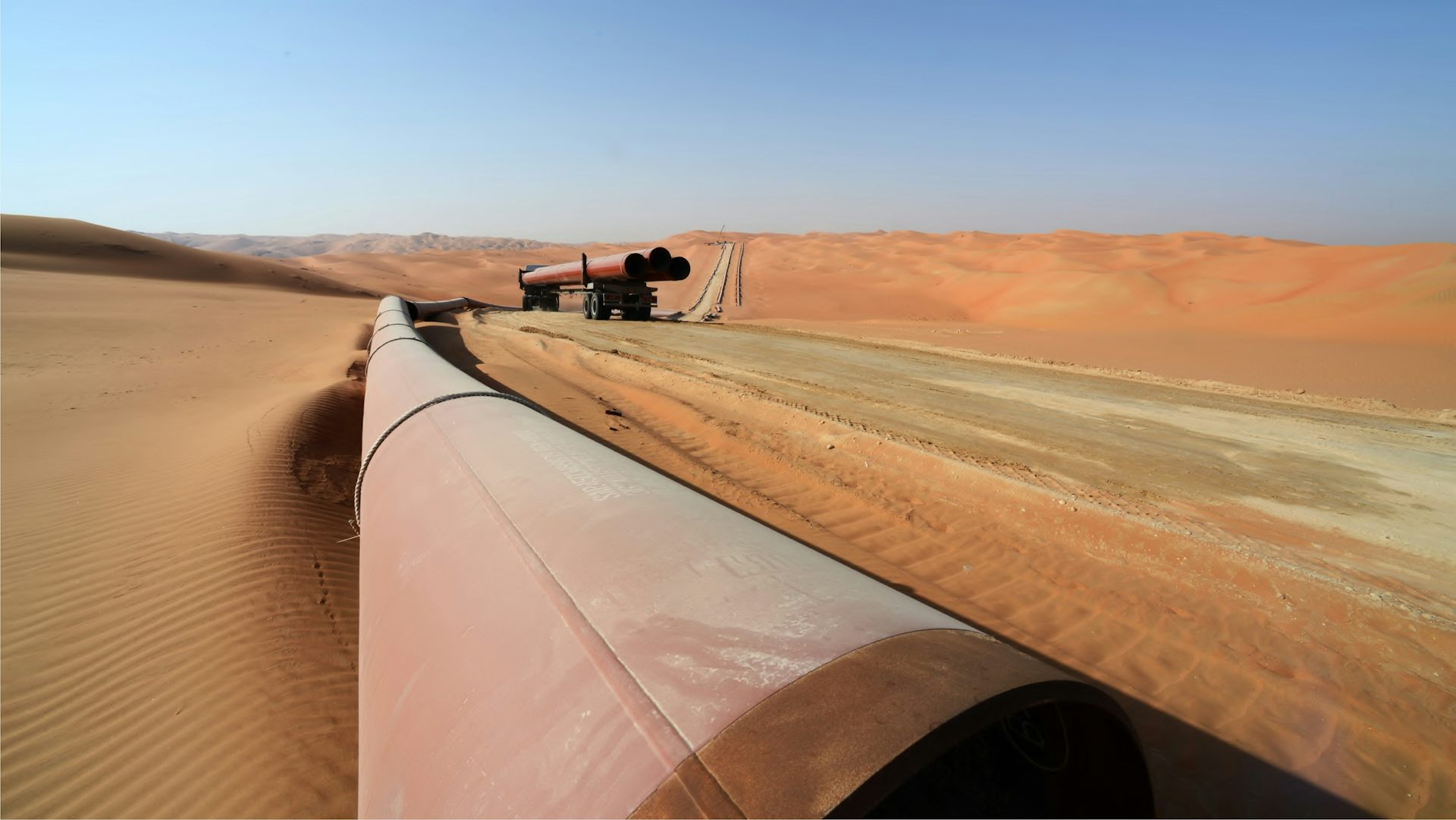
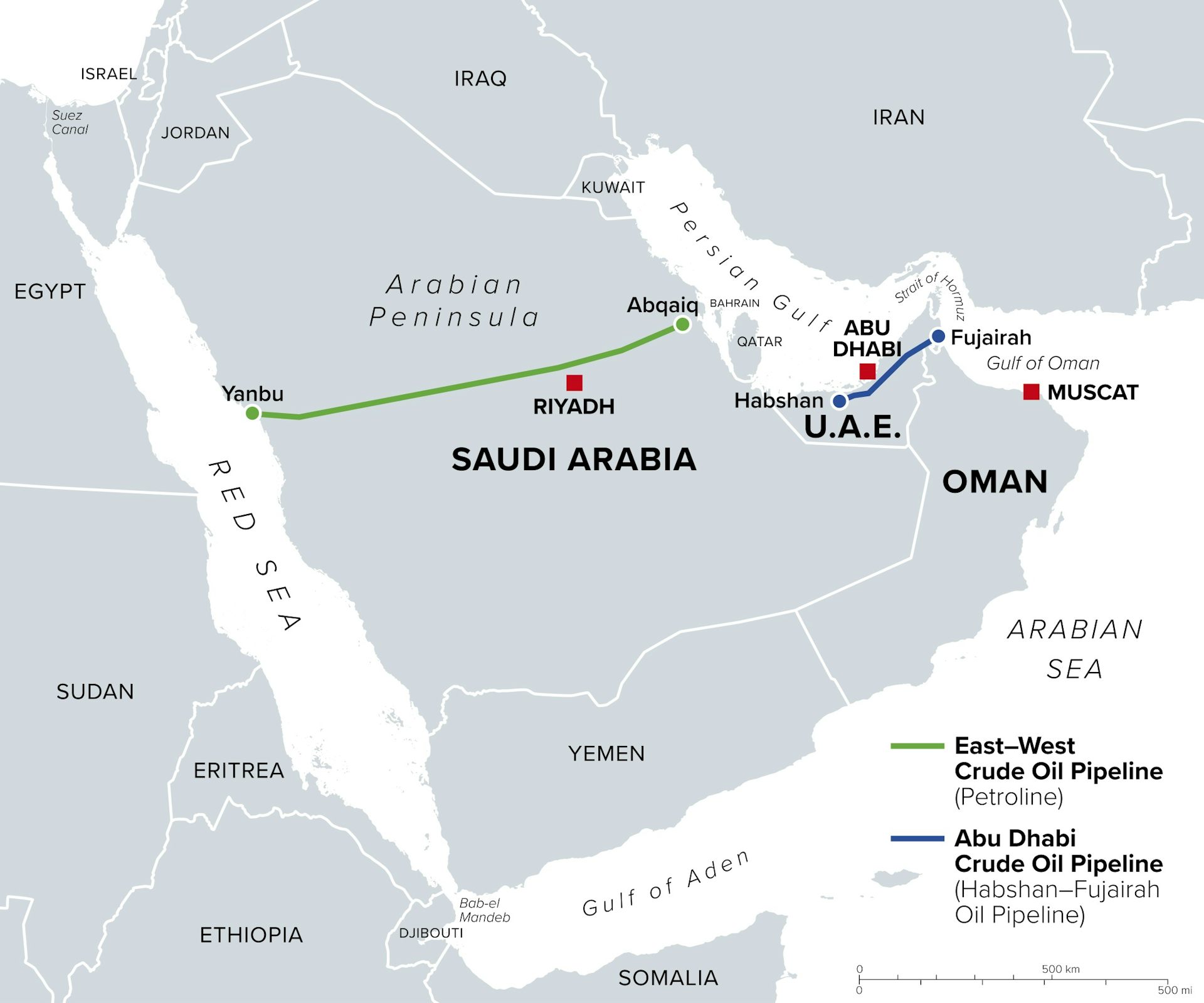
The most important pipeline on the planet right now runs across Saudi Arabia. The East-West Pipeline – also known as Petroline – was built in the 1980s during the original Tanker war, when Iran and Iraq attacked merchant vessels in the Gulf as part of their wider conflict.
يمر أهم خط أنابيب في العالم حاليًا عبر المملكة العربية السعودية. تم بناء خط أنابيب الشرق-الغرب – المعروف أيضًا باسم بترولاين – في الثمانينيات من القرن الماضي خلال حرب الناقلات الأصلية، عندما هاجمت إيران والعراق سفنًا تجارية في الخليج كجزء من صراعهما الأوسع.
The pipeline’s capacity was expanded to a 7 million barrel emergency ceiling in 2019. However, the loading terminals in the city of Yanbu on Saudi Arabia’s Red Sea coast were never designed to carry this much oil this fast, and analysts tracking tanker traffic estimate that less oil is currently flowing through the pipeline than its theoretical ceiling.
تم توسيع سعة خط الأنابيب لتصل إلى سقف طارئ يبلغ 7 ملايين برميل في عام 2019. ومع ذلك، لم تُصمم محطات التحميل في مدينة ينبع على ساحل البحر الأحمر السعودي أبدًا لحمل هذا القدر من النفط بهذه السرعة، ويقدر المحللون الذين يتتبعون حركة الناقلات أن كمية النفط التي تتدفق حاليًا عبر خط الأنابيب أقل من سقفها النظري.
From Yanbu, oil bound for Europe still has to cross Egypt via the Sumed pipeline, which has a capacity of just 2.5 million barrels per day. Although oil flows through this pipeline have surged by 150% since the start of the war, its comparatively small capacity remains a binding constraint on European supply.
من ينبع، لا يزال النفط المتجه إلى أوروبا بحاجة إلى عبور مصر عبر خط أنابيب الساميد، الذي تبلغ سعته 2.5 مليون برميل يوميًا فقط. وعلى الرغم من أن تدفق النفط عبر هذا الخط قد ارتفع بنسبة 150% منذ بداية الحرب، إلا أن سعته الصغيرة نسبيًا لا تزال تشكل قيدًا ملزمًا على الإمدادات الأوروبية.
Iran noticed the geoeconomic importance of Petroline and has targeted it accordingly. An Iranian drone strike on a pumping station in April knocked 700,000 barrels a day offline. Saudi Aramco, the operator, had the line back at full capacity within three days. While the repair time is reassuring, the fact of the strike is not.
لاحظت إيران الأهمية الجيواقتصادية لخط بترولاين واستهدفته وفقًا لذلك. أدى ضربة طائرة مسيرة إيرانية على محطة ضخ في أبريل إلى تعطيل 700,000 برميل يوميًا. واستعادت شركة أرامكو السعودية، المشغلة، الخط بكامل طاقته في غضون ثلاثة أيام. وفي حين أن وقت الإصلاح مطمئن، فإن حقيقة الهجوم ليست كذلك.
The other half of the Gulf bypass story runs through the United Arab Emirates (UAE) . The Abu Dhabi Crude Oil Pipeline (Adcop) goes from Habshan to Fujairah on the Gulf of Oman side of the country. With a capacity of just under 2 million barrels per day, Adcop is the only major bypass that exits the Gulf directly into the Indian Ocean.
يمر النصف الآخر من قصة التحايل الخليجي عبر الإمارات العربية المتحدة. يمتد خط أبو ظبي النفطي الخام (Adcop) من حفرشان إلى الفجيرة على جانب الخليج العربي من البلاد. وبقدرة تقل عن 2 مليون برميل يوميًا، يعد خط Adcop هو التحايل الرئيسي الوحيد الذي يغادر الخليج مباشرة إلى المحيط الهندي.
But as with Petroline, it has been targeted during the war. Iranian drone strikes on Fujairah on March 3, 14 and 16 set storage tanks on fire and suspended loadings. While Adcop offers some diversification for the UAE, it does not solve the targeting problem.
ولكن، كما حدث مع بترولاين، فقد استُهدف خلال الحرب. أدت ضربات الطائرات المسيرة الإيرانية على الفجيرة في 3 و 14 و 16 مارس إلى إشعال خزانات التخزين وتعليق عمليات التحميل. وفي حين أن خط Adcop يوفر بعض التنويع لدولة الإمارات، فإنه لا يحل مشكلة الاستهداف.
The situation is worse for the Gulf region’s other big oil producers. Iraq’s 3.4 million barrels per day of pre-war crude exports went almost entirely through the southern port city of Basra and the Strait of Hormuz.
الوضع أسوأ بالنسبة لمنتجي النفط الكبار الآخرين في منطقة الخليج. كانت صادرات العراق النفطية الخام قبل الحرب، البالغة 3.4 مليون برميل يوميًا، تمر بالكامل تقريبًا عبر مدينة البصرة الساحلية وجبل خورموز.
There is one northern pipeline, connecting oil fields in Kirkuk to Ceyhan in Turkey. This pipeline was reopened in September 2025 after a two-and-a-half-year halt, with flows ramped up to 250,000 barrels a day in March. But this volume pales in comparison to what Iraq has lost.
يوجد خط أنابيب شمالي واحد، يربط حقول النفط في كركوك بجيحان في تركيا. وأعيد افتتاح هذا الخط في سبتمبر 2025 بعد توقف دام عامين ونصف، حيث تم رفع التدفقات إلى 250,000 برميل يوميًا في مارس. لكن هذا الحجم ضئيل مقارنة بما خسرته العراق.
Kuwait has it worse still. Pre-war crude exports ran at around 2 million barrels per day, with every barrel exiting through Hormuz. Kuwait has no pipeline alternative. Kuwait Petroleum Corporation declared force majeure in March, temporarily allowing it to suspend its obligations to meet delivery contracts.
الكويت في وضع أسوأ. كانت صادرات النفط الخام قبل الحرب تبلغ حوالي 2 مليون برميل يوميًا، حيث يغادر كل برميل عبر هرمز. ولا تمتلك الكويت بديلاً خطًا أنابيبياً. أعلنت مؤسسة البترول الكويتية حالة القوة القاهرة في مارس، مما سمح لها مؤقتًا بتعليق التزاماتها بتلبية عقود التسليم.
This was extended on April 20, with the oil company saying it could not meet contractual obligations even if Hormuz reopened. Overcoming the damage that has been inflicted on Kuwait’s production base – and then ramping up production – will take months.
وتم تمديد ذلك في 20 أبريل، حيث قالت شركة النفط إنها لا تستطيع الوفاء بالالتزامات التعاقدية حتى لو أعيد فتح هرمز. وسيتطلب تجاوز الأضرار التي لحقت بقاعدة الإنتاج الكويتية – ثم رفع مستوى الإنتاج – شهورًا.
Qatar’s vulnerability is a different shape. Its pre-war crude exports were smaller than its Gulf neigbours, at around 0.6 million barrels per day. These exports all left Qatar via the strait. For Qatar, the story is gas. Its 77 million tonne LNG capacity at Ras Laffan is the largest in the world, supplying about 19% of global LNG trade. There is no alternative to shipping this gas through Hormuz.
إن ضعف قطر يأخذ شكلاً مختلفًا. كانت صادراتها النفطية الخام قبل الحرب أصغر من جيرانها في الخليج، حيث بلغت حوالي 0.6 مليون برميل يوميًا. وغادرت جميع هذه الصادرات قطر عبر المضيق. وبالنسبة لقطر، فالقصة تتعلق بالغاز. وتعد سعتها من الغاز الطبيعي المسال (LNG) البالغة 77 مليون طن في رأس لفان الأكبر في العالم، حيث تزود بحوالي 19% من تجارة الغاز الطبيعي المسال العالمية. ولا يوجد بديل لشحن هذا الغاز عبر هرمز.
Iran itself has built a Hormuz bypass: a 1,000-kilometre pipeline from Goreh at the head of the Gulf to a terminal at Jask on the Gulf of Oman. It is designed for 1 million barrels per day. But in practice, sanctions and unfinished terminal infrastructure have kept actual throughput at a fraction of design.
قامت إيران نفسها ببناء تحايل حول هرمز: خط أنابيب بطول 1000 كيلومتر يمتد من قره في رأس الخليج إلى محطة في جاسم على خليج عمان. وهو مصمم لـ 1 مليون برميل يوميًا. ولكن عمليًا، أبقت العقوبات والبنية التحتية غير المكتملة للمحطات الإنتاج الفعلي عند جزء بسيط من التصميم.
The US Energy Information Administration estimated that, in summer 2024, under 70,000 barrels per day were flowing through the pipeline. Loadings stopped altogether that September. According to Kpler, which provides real-time data on global shipping movements, only a single tanker – around two million barrels – has loaded at Jask in the war so far.
قدرت إدارة معلومات الطاقة الأمريكية أنه في صيف عام 2024، كان يتدفق عبر خط الأنابيب أقل من 70,000 برميل يوميًا. وتوقفت عمليات التحميل تمامًا في سبتمبر. ووفقًا لـ Kpler، التي توفر بيانات في الوقت الفعلي عن تحركات الشحن العالمية، لم يتم تحميل سوى ناقلة واحدة – حوالي مليوني برميل – في جاسم منذ بدء الحرب حتى الآن.
A call for more pipes in the Gulf, as there have been since the war began, is understandable. But it is no answer. Replicating Hormuz in pipelines would cost hundreds of billions of US dollars and a decade of construction. And at the end of it, new pipelines and terminals at Yanbu, Fujairah and wherever else would be no harder to reach with a drone than the old ones.
إن الدعوة إلى المزيد من خطوط الأنابيب في الخليج، كما حدث منذ بدء الحرب، أمر مفهوم. لكنها ليست إجابة. إن استنساخ هرمز في خطوط أنابيب سيكلف مئات المليارات من الدولارات الأمريكية وعقدًا من الإنشاءات. وفي نهاية المطاف، لن تكون خطوط الأنابيب والمحطات الجديدة في ينبع، والفجيرة، وأي مكان آخر، أصعب في الوصول إليها بواسطة طائرة بدون طيار من القديمة.
David B Roberts does not work for, consult, own shares in or receive funding from any company or organisation that would benefit from this article, and has disclosed no relevant affiliations beyond their academic appointment.
لا يعمل ديفيد ب. روبرتس لدى، أو يقدم استشارات لـ، أو يمتلك أسهمًا في، أو يتلقى تمويلاً من أي شركة أو منظمة تستفيد من هذه المقالة، ولم يفصح عن أي انتماءات ذات صلة بخلاف منصبه الأكاديمي.
Read more
-
يمكن أن تكون الزلازل مدمرة للمدن البعيدة المبنية فوق الأحواض – والآن نعرف السبب
Earthquakes can be destructive for distant cities built on top of basins – now we know why
-

مقال الجمعة: بوليوود ساعدت في تشكيلي – والآن، هي تعرض القومية الهندية لمودي
Friday essay: Bollywood helped make me – now, it projects Modi’s Indian nationalism