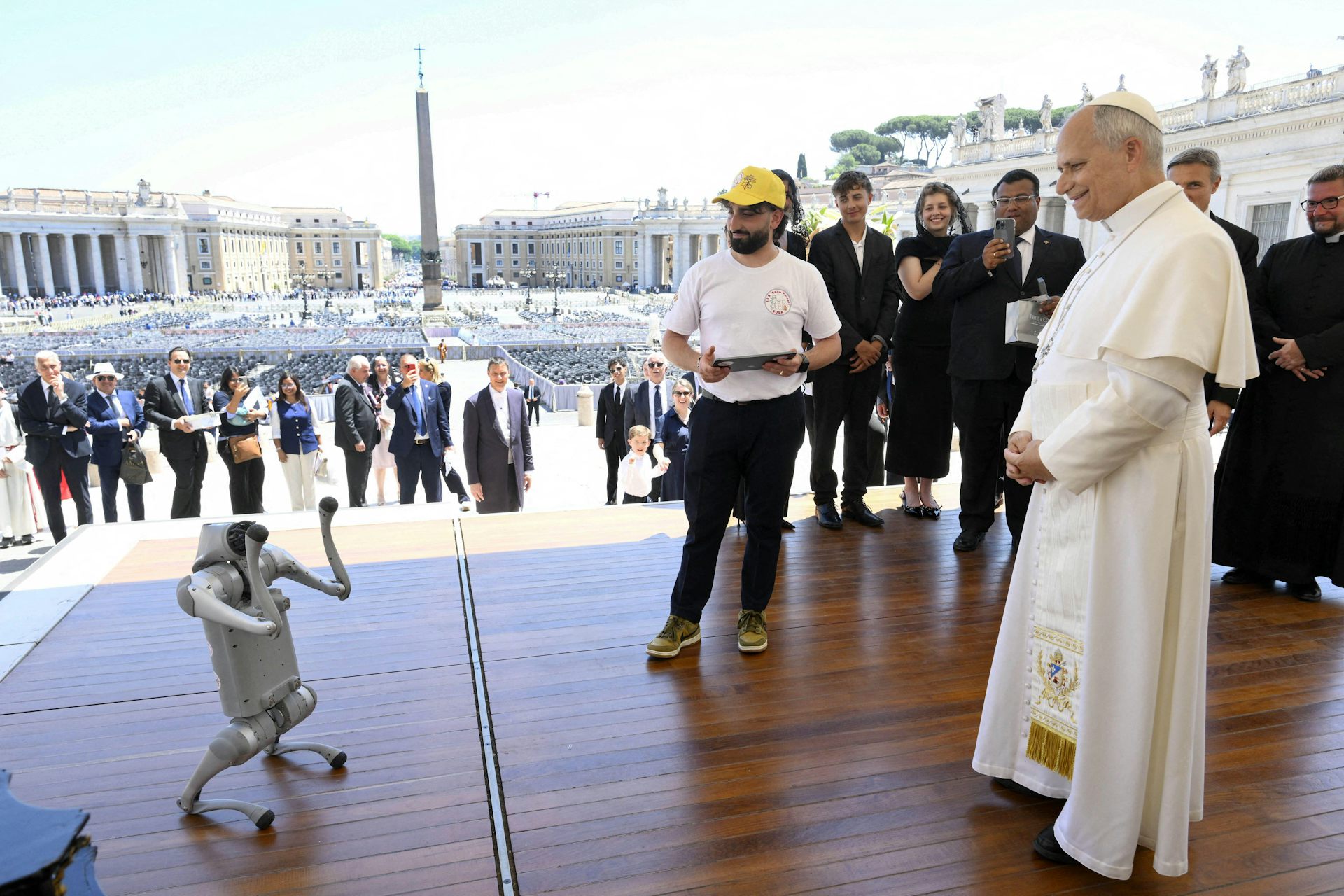
قصة نص البابا ليو “المفصلي” حول تقنية الذكاء الاصطناعي – بقلم عضو في لجنة إطلاقه
The story of Pope Leo’s ‘landmark’ text on AI technology – by a member of its launch panel
I knew this text would not be welcomed by all. And that’s OK.
كنت أعلم أن هذا النص لن يتقبله الجميع. وهذا أمر جيد.
For the last few years, I’ve been seconded to assist the Catholic Church’s unprecedented global grassroots listening initiative. Just as that process drew to a close, I received a surprise request: would I help Pope Leo XIV launch his first social encyclical, focused on what it means to be human in a time of artificial intelligence?
على مدى السنوات القليلة الماضية، كُلِّفتُ لمساعدة مبادرة الاستماع العالمية الشعبية غير المسبوقة للكنيسة الكاثوليكية. ومع اقتراب تلك العملية من نهايتها، تلقيت طلباً مفاجئاً: هل أساعد البابا ليو الرابع عشر في إطلاق إنزيميكالية اجتماعية له، تركز على معنى أن تكون إنساناً في زمن الذكاء الاصطناعي؟
It is difficult to think of a more important theme right now than the impact of digital technologies, AI and robotics on every level of our social interactions and structures.
من الصعب التفكير في موضوع أكثر أهمية الآن من تأثير التقنيات الرقمية والذكاء الاصطناعي والروبوتات على كل مستوى من مستويات تفاعلاتنا وهياكلنا الاجتماعية.
The Vatican has addressed technological questions before. My research includes the social teaching of popes since 1891, starting with Pope Leo XIII’s influential text Rerum Novarum (Of New Things) , which addressed the impact of the industrial revolution on working people (and which this new text commemorates) . A range of previous letters have addressed both the opportunities and dangers of technology.
لقد تناول الفاتيكان الأسئلة التكنولوجية من قبل. يشمل بحثي التعاليم الاجتماعية للباباوات منذ عام 1891، بدءاً من نص البابا ليو الثالث عشر المؤثر “ريروم نوفاروم” (عن الأشياء الجديدة) ، الذي تناول تأثير الثورة الصناعية على العمال (وهو ما يخلده هذا النص الجديد) . وقد تناولت مجموعة من الرسائل السابقة كلاً من فرص ومخاطر التكنولوجيا.
Of course, the Vatican does have a chequered history with regard to theological reflection on scientific and medical developments. Over the past decade, it has been pursuing focused and, in my view, productive conversations with the AI tech sector through initiatives such as the Minerva Dialogues – a series of closed-door conferences with leading figures from both worlds. In this sense, the concern with AI does not spring from nowhere.
بالطبع، لدى الفاتيكان تاريخ متقلب فيما يتعلق بالتأمل اللاهوتي في التطورات العلمية والطبية. وخلال العقد الماضي، كان يتابع محادثات مركزة، وفي رأيي، مثمرة مع قطاع الذكاء الاصطناعي من خلال مبادرات مثل “حوارات مينيرفا” – وهي سلسلة من المؤتمرات المغلقة مع شخصيات رائدة من كلا العالمين. وبهذا المعنى، فإن الاهتمام بالذكاء الاصطناعي لا ينبع من فراغ.
Nonetheless, Magnifica Humanitas (Magnificent Humanity) was a landmark moment: a papal text addressing AI as its central focus for the first time, launched by a pope in person – this does not usually happen – in the presence of the very industry it sought to critique. The encyclical panel on which I sat also included Chris Olah, co-founder of the AI tech firm Anthropic.
ومع ذلك، كانت “ماغنيفيكا هيومانيتاس” (الإنسانية العظيمة) لحظة فارقة: نص بابوي يتناول الذكاء الاصطناعي كتركيز أساسي له لأول مرة، وأطلقه بابا شخصياً – وهو أمر لا يحدث عادةً – وفي حضور الصناعة التي يسعى إلى نقدها. وشمل فريق الإنزيميكالية الذي جلست فيه أيضاً كريس أولاه، المؤسس المشارك لشركة الذكاء الاصطناعي “أنثروبيك.”
All of this meant a much higher level of media and public interest. In the run-up to launch, questions about the make-up of the panel and how equipped a pope is to comment on AI showed me this text would be controversial. And that’s OK.
كل هذا يعني مستوى أعلى بكثير من الاهتمام الإعلامي والعام. وفي فترة ما قبل الإطلاق، أظهرت لي التساؤلات حول تكوين الفريق ومدى تجهيز البابا للتعليق على الذكاء الاصطناعي أن هذا النص سيكون مثيراً للجدل. وهذا أمر مقبول.
The job of the text is both to offer the stimulus of a particular tradition – Catholic social teaching – and to encourage debate among people with a variety of views about what makes for a common good use of AI technologies. Our task as a panel was to explore both of these realities.
تتمثل مهمة النص في تقديم محفز لتقليد معين – وهو التعليم الاجتماعي الكاثوليكي – وتشجيع النقاش بين أشخاص لديهم مجموعة متنوعة من الآراء حول ما يشكل استخداماً مشتركاً وصالحاً لتكنولوجيات الذكاء الاصطناعي. وكانت مهمتنا كفريق هي استكشاف هذين الواقعين معاً.
Not anti-technology but pro-human
ليس مناهضاً للتكنولوجيا بل مؤيد للإنسان
The Vatican was unconcerned about the encyclical’s lack of neutrality because it declares its hand transparently – and does not believe the tech sector operates with a neutral mindset either.
لم يقلق الفاتيكان بشأن افتقار المذكرة البابوية إلى الحياد لأنها تعلن عن موقفها بشفافية – ولا تعتقد أن قطاع التكنولوجيا يعمل بعقلية محايدة أيضاً.
The inclusion of Anthropic on the panel was welcomed by some as a sign of serious engagement with the sector on these issues. For others, it showed a risk of naïvety about the Vatican’s corporate capture, or of privileging the voices of capital.
رحّب البعض بتضمين “أنثروبيك” في اللجنة كعلامة على المشاركة الجادة في القطاع بشأن هذه القضايا. وبالنسبة للآخرين، أظهر ذلك خطر السذاجة تجاه الاستحواذ المؤسسي للفااتيكان، أو تفضيل أصوات رأس المال.
The document calls for a movement out of the silos of private boardrooms where the morality (and profits) of new technologies is decided by the few, into a public space of transparency, participation, common benefit and shared power – if that is possible.
تطالب الوثيقة بحركة للخروج من صوامع قاعات الاجتماعات الخاصة حيث يتم تحديد أخلاق (وأرباح) التقنيات الجديدة من قبل القلة، إلى فضاء عام من الشفافية والمشاركة والمنفعة المشتركة والقوة المشتركة – إذا كان ذلك ممكناً.
Olah did at least note that the tech sector requires exactly the kind of conversation this text promotes: a public, shared conversation in which the shape of our working, educational, political and social lives are not determined by a few wealthy individuals.
أشار أولاه على الأقل إلى أن قطاع التكنولوجيا يتطلب بالضبط نوع المحادثة التي تروج لها هذه الوثيقة: محادثة عامة ومشتركة لا يحدد فيها شكل حياتنا العملية أو التعليمية أو السياسية أو الاجتماعية من قبل عدد قليل من الأفراد الأثرياء.
The text is neither anti-technology nor anti-industry. It is pro-human, pro-social and resistant to false religious claims that AI will, in itself, save us. It resists the idea that human limits are things to be despised and overcome with models of perfected or eternal bodies or minds.
النص ليس مناهضاً للتكنولوجيا ولا مناهضاً للصناعة. إنه مؤيد للإنسان، ومؤيد للمجتمع، ومقاوم للمزاعم الدينية الكاذبة بأن الذكاء الاصطناعي سينقذنا بحد ذاته. إنه يقاوم فكرة أن الحدود البشرية هي أشياء يجب احتقارها والتغلب عليها بنماذج من الأجساد أو العقول المثالية أو الأبدية.
It stresses that AI should enhance the human capacity for finite, embodied relationships, for meaningful work as part of a dignified life, and for the human person to be recognised as an end – not a tool of utility, power or profit.
يؤكد النص أن الذكاء الاصطناعي يجب أن يعزز القدرة البشرية على العلاقات المحدودة والمجسدة، وعلى العمل الهادف كجزء من حياة كريمة، وعلى اعتبار الشخص البشري غاية في حد ذاته – وليس أداة للمنفعة أو القوة أو الربح.
Technology is as old as humanity. It is part of how we shape and steward our world. It preserves and fosters our survival, and the social lives that give us meaning. Pope Leo was clear: what matters are the ends to which these new AI technologies are set, and their relationship with the Earth’s natural resources.
التكنولوجيا قديمة قدم البشرية. وهي جزء من كيفية تشكيلنا لعالمنا وإدارته. إنها تحافظ على بقائنا وتعززه، والحياة الاجتماعية التي تمنحنا المعنى. كان البابا ليون واضحاً: ما يهم هي الغايات التي تُوجّه إليها تقنيات الذكاء الاصطناعي الجديدة، وعلاقتها بالموارد الطبيعية للأرض.
Reshaping the idea of being human
إعادة تشكيل فكرة الكينونة البشرية
The Vatican has issued previous texts comparing human and artificial intelligence, as well as a separate text critiquing trans- and post-humanisms. The added dimension in Leo’s first social encyclical is to ask questions about how technologies are reshaping the very idea of being human – rescripting work, education, politics and warfare – and how they are enacting and enmeshed in new cultures of dominating power.
أصدر الفاتيكان نصوصاً سابقة تقارن بين الذكاء البشري والذكاء الاصطناعي، بالإضافة إلى نص منفصل ينتقد ما بعد الإنسان والإنسانية ما بعد البشرية. البُعد المضاف في الإنزيكليك الاجتماعي الأول لـ “ليو” هو طرح تساؤلات حول كيفية إعادة تشكيل التقنيات لفكرة الكينونة البشرية ذاتها – وإعادة كتابة العمل والتعليم والسياسة والحرب – وكيف أنها تتجسد وتتداخل في ثقافات جديدة من السلطة المهيمنة.
The text interrogates freedom and flourishing – two categories central to Enlightenment thought.
يتناول النص موضوع الحرية والازدهار – وهما تصنيفان أساسيان في فكر التنوير.
Within the church, there are theologians who are engaged optimists regarding the possibility of AI technologies, and those who are more guarded. There are also some who might be characterised as “radical pessimists” – an honourable tradition to be distinguished from the merely cynical.
داخل الكنيسة، هناك لاهوتيون متفائلون منخرطون بشأن إمكانية تقنيات الذكاء الاصطناعي، وآخرون أكثر حذرًا. وهناك أيضاً من يمكن وصفهم بأنهم “متشائمون راديكاليون” – وهو تقليد مشرف يجب تمييزه عن مجرد السخرية.
The new text draws from each of these perspectives, while remaining closest to a prudential middle. It names the risk of new dependencies, exclusions, manipulations and inequalities. Any positive and hopeful account of such new tech must be able to face and respond to these realities.
يستمد النص الجديد من كل هذه المنظورات، بينما يظل أقرب إلى الوسط الاحترازي. ويشير إلى خطر التبعيات والإقصاءات والتلاعبات والتفاوتات الجديدة. ويجب أن يكون أي سرد إيجابي ومفعم بالأمل حول هذه التقنيات الجديدة قادراً على مواجهة هذه الحقائق والاستجابة لها.
Above all, this text marks a new phase in the papacy’s public (rather than closed-door) involvement in debates about AI technology. Its invitation is for a social dialogue on many levels across many groups, sectors and stakeholders.
وقبل كل شيء، يمثل هذا النص مرحلة جديدة في مشاركة البابوية العلنية (بدلاً من المغلقة) في النقاشات حول تكنولوجيا الذكاء الاصطناعي. ودعوته هي لإجراء حوار اجتماعي على مستويات عديدة وعبر مجموعات وقطاعات وأطراف معنية متعددة.
My experience is that views on these matters are lively and fiercely contested. But above all, they are urgent.
تجربتي هي أن الآراء حول هذه المسائل حيوية ومتنازع عليها بشدة. ولكن الأهم من ذلك، أنها ملحة.
Anna Rowlands is a member of the Dicastery for Integral Human Development at the Vatican. This is a governance role. She has also served as an advisor to the Vatican in various capacities for the last five years.
آنا روولاندز هي عضو في المجمع المعني بالتنمية البشرية الشاملة في الفاتيكان. وهو دور إداري. كما عملت مستشارة للفاتيكان في سعات مختلفة على مدى السنوات الخمس الماضية.
Read more
-

أسئلة وأجوبة الخبراء: لماذا انهارت كل هذه المباني في الزلزال المزدوج بفنزويلا؟
Expert Q&A: why did so many buildings collapse in Venezuela’s double earthquake?
-
التمرد البلوشي: القنابل الانتحارية وتصاعد العنف يهددان الأمن الإقليمي وباكستان
Baloch insurgency: Suicide bombs and uptick in violence threaten Pakistan, regional security