أقلية دونغ في الصين: لماذا نقوم بالتوثيق الرقمي والحفاظ على تراثها المعماري الأصلي
China’s Dong minority: why we’re digitally recording and preserving their Indigenous architectural heritage
A new project uses cutting-edge digital technology to precord the architecture and culture of China’s Indigenous Dong minority.
يستخدم مشروع جديد تقنية رقمية متطورة لتوثيق عمارة وثقافة أقلية دونغ الأصلية في الصين.
The Dong people in China are an Indigenous ethnic group who are known to have lived in the mountainous regions of southwestern China for about 600 years. They don’t have a written language – instead their cultural knowledge is shared by word of mouth. This means that the outside world doesn’t know much about them.
يُعدّ شعب الدونغ في الصين مجموعة عرقية أصلية يُعرف عنهم أنهم عاشوا في المناطق الجبلية جنوب غرب الصين لمدة 600 عام تقريباً. ليس لديهم لغة مكتوبة – بل يتم تناقل معرفتهم الثقافية شفهياً. وهذا يعني أن العالم الخارجي لا يعرف الكثير عنهم.
But an ambitious university-led research project to document the Dong people’s distinctive architecture is revealing a great deal about this marginalised Indigenous group’s way of life.
لكن مشروع بحثي طموح، يقوده جامعي، يهدف إلى توثيق العمارة المميزة لشعب الدونغ يكشف الكثير عن نمط حياة هذه المجموعة الأصلية المهمشة.
There are an estimated 3 million Dong people living in the provinces of Guizhou, Hunan and Guangxi. They are renowned for their polyphonic choral singing, which has been inscribed by Unesco since 2009 as an example of world-class intangible cultural heritage. Their architecture, landscape and refined agricultural terracing are also distinctive, but less well known and never digitally recorded.
يُقدّر عدد سكان الدونغ بـ 3 ملايين شخص يعيشون في مقاطعات غويتشو وهونان وغوانغشي. وهم مشهورون بغنائهم الكورالي متعدد الأصوات، الذي أدرجته اليونسكو منذ عام 2009 كمثال للتراث الثقافي غير المادي عالمي المستوى. كما أن عمارة الدونغ ومناظرها الطبيعية وتدرجاتها الزراعية المصقولة مميزة أيضاً، ولكنها أقل شهرة ولم تُسجل رقمياً قط.
Dong buildings and settlements are typically hidden in fir forests with direct access to waterways at the bottom of valleys or halfway up hills. A Dong settlement typically has around 200 households of four to five people – although some larger villages can have as many as 500 households.
عادةً ما تكون مباني واستيطانات الدونغ مخبأة في غابات التنوب مع وصول مباشر إلى الممرات المائية في قاع الوديان أو في منتصف التلال. عادةً ما يحتوي مستوطن الدونغ على حوالي 200 أسرة تتكون من أربعة إلى خمسة أشخاص – على الرغم من أن بعض القرى الأكبر يمكن أن تضم ما يصل إلى 500 أسرة.
These villages tend to have a gatehouse marking their boundary, defining their territory in relation to neighbouring settlements. Many feature a distinctive “wind-and-rain bridge” – a mix of village gate and covered bridge – used for communal gatherings and blocking ceremonies. Ponds, wells, and granaries are scattered throughout the landscape.
تميل هذه القرى إلى وجود بوابة تحدد حدودها، وتحدد إقليمها بالنسبة للمستوطنات المجاورة. تتميز العديد منها بـ “جسر الريح والمطر” المميز – وهو مزيج من بوابة القرية والجسر المغطى – ويُستخدم للتجمعات المجتمعية واحتفالات الحجب. تنتشر البرك والآبار والمخازن في جميع أنحاء المشهد الطبيعي.
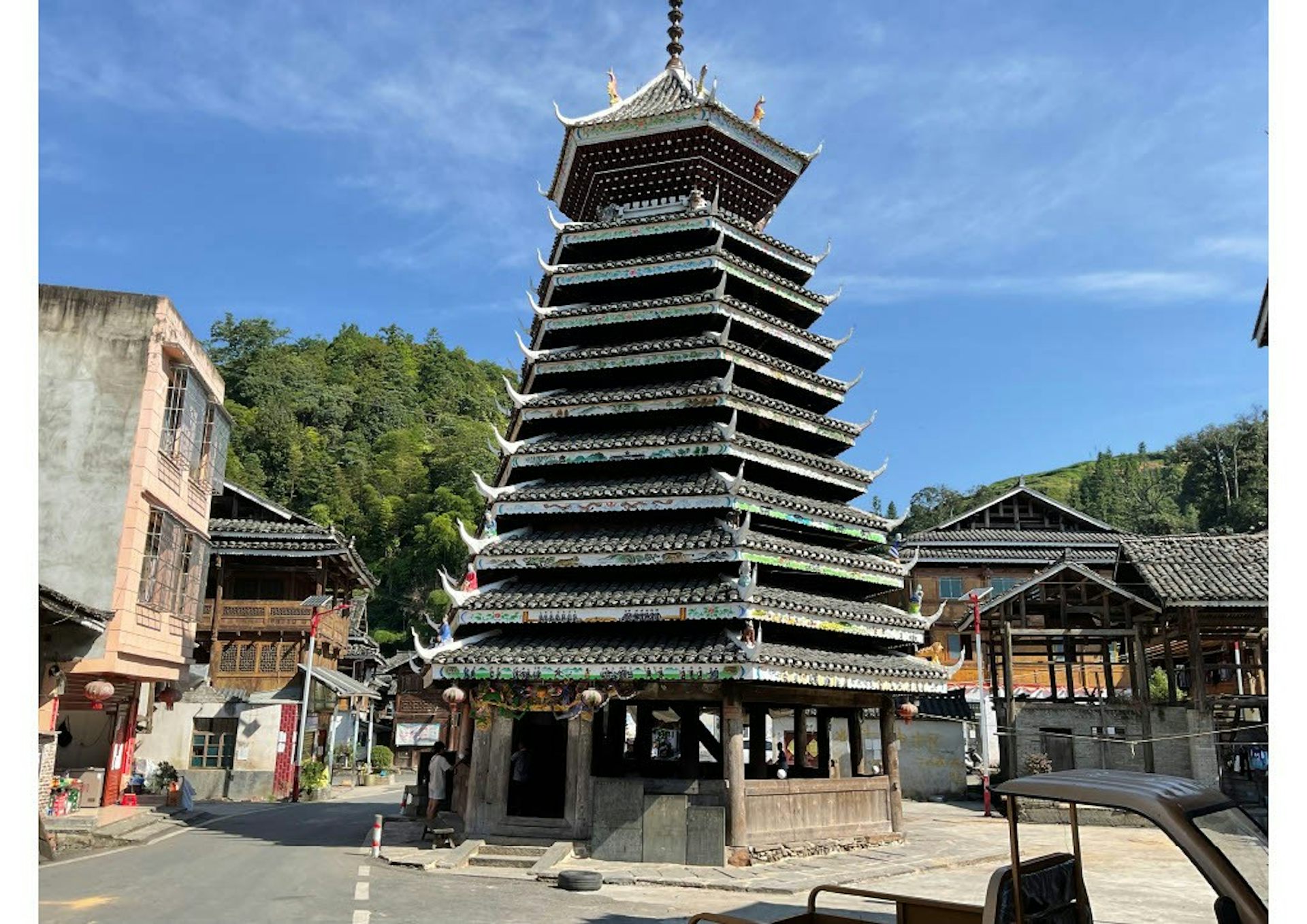
At the heart of most villages, surrounded by wooden houses of two or three storeys, there is a “drum tower” and a “Sa-Sui shrine”. The former represents the connection of the people’s sacred belief of clan kinship and fir trees, while the latter represents the centre of the Dong’s worship of the “Sa” or grandmother. They are the most important buildings in a village – for security, social and spiritual reasons.
في قلب معظم القرى، وتحيط بها المنازل الخشبية المكونة من طابقين أو ثلاثة طوابق، توجد “برج الطبل” و”مزار سا-سوي.” يمثل الأول ارتباط المعتقد المقدس للناس بقرب القرابة العشائرية وأشجار التنوب، بينما يمثل الثاني مركز عبادة الدونغ لـ “سا”، أو الجدة. وهما أهم مبنيين في أي قرية – لأسباب أمنية واجتماعية وروحانية.
Culture at risk
الثقافة في خطر
Nowadays, the Dong’s built and cultural heritage are increasingly at risk. This is due to a combination of climate change, natural disasters, urban infrastructure development and the expansion of rural tourism.
في الوقت الحاضر، بات التراث المادي والثقافي لقبيلة دونغ معرضًا بشكل متزايد للخطر. ويعود ذلك إلى مزيج من تغير المناخ والكوارث الطبيعية وتطوير البنية التحتية الحضرية والتوسع السياحي الريفي.
A warming climate is increasingly triggering wild fires and causing mountain flooding. We are also seeing the encroachment of urbanism into the Dong’s rural settings. While bringing improvements in the quality of life, this often presents domestic fire hazards due to poor-quality electrical infrastructure. And in recent years, the growth of tourism and the encroachment of roads, railways and bridges is in danger of turning these villages into decorated stage-sets. This may bring in money, but threatens the Dong people’s unique architecture and landscape.
يتسبب ارتفاع المناخ بشكل متزايد في اندلاع حرائق الغابات وفيضانات الجبال. كما نشهد تغلغل العمران الحضري في المناطق الريفية لقبيلة دونغ. وبينما يجلب هذا تحسينات في نوعية الحياة، فإنه غالبًا ما يمثل مخاطر حريق منزلي بسبب البنية التحتية الكهربائية ذات الجودة الرديئة. وفي السنوات الأخيرة، يشكل نمو السياحة وتعدي الطرق والسكك الحديدية والجسور خطرًا على تحويل هذه القرى إلى مسارح مزينة. قد يجلب هذا المال، ولكنه يهدد العمارة والمشهد الفريد لشعب دونغ.
It’s a pressing challenge for this Indigenous people and for those of us dedicated to preserving their historic environment, their culture and their highly ritualised way of life.
إنه تحدٍ ملح لهذا الشعب الأصلي ولأولئك منا المكرسين للحفاظ على بيئتهم التاريخية وثقافتهم وطريقة حياتهم الطقوسية للغاية.
Tragically, the scarcity of resources means that schemes for repair, restoration and regeneration works, as well as insufficient conservation policies and frameworks, have been slow to help preserve these precious villages. The far remote mountainous environment does not help. Both the local communities and government authorities have extremely limited resources to manage almost any change to their historic environment.
مأساويًا، فإن ندرة الموارد تعني أن خطط أعمال الإصلاح والترميم والتجديد، بالإضافة إلى سياسات وأطر الحفظ غير الكافية، كانت بطيئة في مساعدة هذه القرى الثمينة على البقاء. ولا تساعد البيئة الجبلية النائية البعيدة. فكل من المجتمعات المحلية والسلطات الحكومية لديها موارد محدودة للغاية لإدارة أي تغيير تقريبًا في بيئتها التاريخية.
Despite the remote location of many of these villages, they are now being encroached upon by modern development. We’re seeing the growth of contemporary housing developments using modern structures and materials. It’s part of the rapid urbanisation of China over the past few decades – but, like elsewhere, it’s irreversibly changing the image and identity of the Dong settlements and their architecture.
على الرغم من الموقع النائي للعديد من هذه القرى، إلا أنها تتعرض الآن للتعدي بالتنمية الحديثة. ونحن نشهد نمو التجمعات السكنية المعاصرة التي تستخدم الهياكل والمواد الحديثة. وهو جزء من التحضر السريع في الصين على مدى العقود الماضية – ولكن، مثل أماكن أخرى، فإنه يغير بشكل لا رجعة فيه صورة وهوية مستوطنات دونغ وعمارتها.
The problem of modern tourist development can be seen in the way traditional-style drum towers are being built as theme park attractions. At the Danzhai Wanda Village, a newly developed theme park near Kaili in Guizhou, the nearest city to the Dong’s Indigenous areas, there are five newly built drum towers, billed as “iconic”, which are presented as standalone monuments with no sense of their relationship with the surrounding houses and forests.
يمكن رؤية مشكلة التنمية السياحية الحديثة في الطريقة التي يتم بها بناء أبراج الطبول ذات النمط التقليدي كجزء من مناطق الجذب في المتنزهات الترفيهية. ففي قرية دانزهاي واندا، وهي متنزه ترفيهي مطور حديثًا بالقرب من كايليه في مقاطعة غويتشو، أقرب مدينة إلى مناطق دونغ الأصلية، توجد خمسة أبراج طبول مبنية حديثًا، ويتم وصفها بأنها “أيقونية”، وتُعرض كمنشآت قائمة بذاتها دون أي إحساس بعلاقتها بالبيوت والغابات المحيطة.
Decoding Dong built heritage
توثيق تراث دونغ المعماري
The need to document and protect authentic Indigenous Dong culture is what has driven the Decoding Dong project.
إن الحاجة إلى توثيق وحماية ثقافة دونغ الأصلية والأصيلة هي ما قاد مشروع “تفكيك دونغ” (Decoding Dong) .
This was launched in 2023 and completed in 2025 and set to digitally document Dong physical and cultural heritage.
تم إطلاق هذا المشروع في عام 2023 واكتمل في عام 2025، ويهدف إلى التوثيق الرقمي للتراث المادي والثقافي لقبائل دونغ.
This interdisciplinary project draws on humanities and social science disciplines ranging from architecture, anthropology, heritage sciences, sociology and digital humanities.
يعتمد هذا المشروع متعدد التخصصات على مجالات العلوم الإنسانية والاجتماعية التي تتراوح بين الهندسة المعمارية، والأنثروبولوجيا، وعلوم التراث، وعلم الاجتماع، والعلوم الإنسانية الرقمية.
It put together a series of innovative and complementary research methods. This has involved 3D LiDAR scanning, aerial and terrestrial photogrammetry (the science of applying mathematics to photographs to extract accurate 3D measurements) , 3D reality capture modelling, measured drawing, documentary film making and mapping. This has been complemented with oral histories from provided by Dong people.
وقد جمع مجموعة من أساليب البحث المبتكرة والمتكاملة. وقد شمل ذلك المسح بالليزر ثلاثي الأبعاد (3D LiDAR scanning) ، والتصوير المساحي الجوي والأرضي (علم تطبيق الرياضيات على الصور لاستخلاص قياسات دقيقة ثلاثية الأبعاد) ، ونمذجة الالتقاط الواقعي ثلاثي الأبعاد، والرسم الهندسي المقاس، وإنتاج الأفلام الوثائقية، ورسم الخرائط. وقد استُكمل ذلك بتوثيق الشفوي المقدم من شعب دونغ.
The project has completed a first-of-its-kind digital documentation of the Dong architectural heritage, building digital and audio-visual documentaries of around 100 historic buildings across a dozen remote Dong villages.
أنجز المشروع أول توثيق رقمي لتراث دونغ المعماري من نوعه، وبنى أفلاماً وثائقية رقمية وسمعية بصرية لحوالي 100 مبنى تاريخي عبر اثنتي عشرة قرية نائية تابعة لدونغ.
A key part of the research process was to consult with key stakeholders, including clan leaders, elderly villagers and provincial policymakers wherever possible.
وكان جزء رئيسي من عملية البحث هو التشاور مع أصحاب المصلحة الرئيسيين، بما في ذلك زعماء العشائر وكبار السن في القرى وصانعي السياسات على مستوى المقاطعات حيثما أمكن.
Indigenous Dong heritage is still under threat, due to the scarcity of resources faced by both the local authority and the communities themselves.
لا يزال التراث الأصيل لقبائل دونغ مهدداً، بسبب ندرة الموارد التي تواجهها كل من السلطات المحلية والمجتمعات نفسها.
But this project represents a step change. By building a mutually beneficial store of information, supported by cutting-edge digital technologies, we hope to draw more attention to this distinctive people without threatening what it is that makes them unique.
لكن هذا المشروع يمثل نقلة نوعية. فمن خلال بناء مخزن معلومات مفيد للطرفين، مدعوم بأحدث التقنيات الرقمية، نأمل في لفت المزيد من الاهتمام إلى هذا الشعب المتميز دون تهديد ما يجعلهم فريدين.
Xiang Ren receives funding from Arcadia—a charitable fund to record cultural heritage, to conserve and restore nature, and to promote open access to knowledge, via its Endangered Wooden Architecture Programme coordinated by Oxford Brookes University (EWAP2039LG, 2023-25) , and the University of Sheffield Knowledge Exchange Funding (QR-PSF, 2026) .
يتلقى شيانغ رن التمويل من أركاديا (Arcadia) – وهو صندوق خيري لتسجيل التراث الثقافي، والحفاظ على الطبيعة واستعادتها، وتعزيز الوصول المفتوح للمعرفة، وذلك عبر برنامج الهندسة المعمارية الخشبية المهددة بالانقراض التابع لجامعة أوكسفورد بروكس (EWAP2039LG, 2023-25) ، وتمويل تبادل المعرفة من جامعة شيفيلد (QR-PSF, 2026) .
Read more
-

اكتشاف تلسكوب جنوب أفريقي لإشارة قياسية من الكون المبكر
South African telescope detects record-breaking signal from the early universe
-
يقول العلماء إن الجفاف قد يزيد من تفاقم مقاومة المضادات الحيوية
Drought could be making antibiotic resistance worse, scientists say