美国最高法院如何审理案件——分步指南
How the US Supreme Court decides its cases – a step-by-…
Grasping how the nation’s highest court makes policy requires stepping into an exceptionally regulated and sometimes hidden routine.
要了解这个国家的最高法院如何制定政策,你需要深入了解其一套极其规范、有时甚至隐秘的操作流程。
Each June, the nation turns its attention to the U.S. Supreme Court as it hands down some of its most consequential decisions.
每年六月,随着美国最高法院发布一些最具影响力的判决,全国的目光都会聚焦于此。
Long before a landmark Supreme Court ruling dominates the headlines, it is shaped by a highly structured legal process, much of which takes place out of public view. This procedure involves strict gatekeeping rules, a series of private conferences, written briefs, oral arguments and, finally, the announcement of an opinion.
在一项里程碑式的最高法院裁决占据新闻头条之前很久,它就已经由一个高度结构化的法律程序塑造而成,而其中大部分过程都是不公开的。该程序涉及严格的把关规则、一系列私人会议、书面法律文书、口头辩论,最终才是判决意见的公布。
As a legal and Supreme Court scholar, I know that understanding how the nation’s highest court actually makes policy requires stepping into this exceptionally regulated, sometimes hidden routine. It is through this process that the court evaluates, and eventually decides, increasingly high-stakes cultural and political battles.
作为一名法律和最高法院学者,我知道要了解国家最高法院如何实际制定政策,就必须深入了解这一极其规范、有时隐秘的日常流程。正是通过这个过程,法院评估并最终裁决了越来越多的高风险文化和政治冲突。
Here’s how it all unfolds:
整个过程是这样的:
The agenda-setting process
议程设置过程
The Supreme Court is a reactive institution. This means that it must wait for individuals, businesses, governments and the like to bring cases to the court before it can issue a ruling.
最高法院是一个反应性的机构。这意味着它必须等待个人、企业、政府等将案件提交给法院,然后才能作出裁决。
The way this most commonly works is that the party who loses in a lower court files a writ of certiorari to the Supreme Court. This is a legal document that outlines why the court should review the case. The party who won in the lower court can file a brief in opposition, arguing that the lower court made the right decision and therefore the case does not warrant Supreme Court review.
最常见的工作方式是,在较低级别法院败诉的一方向最高法院提交《传票》(writ of certiorari)。这是一份法律文件,概述了为何法院应该审查该案。在较低级别法院胜诉的一方可以提交反对意见书(brief in opposition),辩称较低级别的法院做出了正确的决定,因此案件不需要最高法院进行审查。
Sometimes, interest groups weigh in by filing amicus curiae, or “friend of the court” briefs. Amicus briefs help signal that a case has broad national importance. The court is more likely to review cases accompanied by amicus briefs.
有时,利益团体会通过提交“法庭之友”(amicus curiae)意见书来介入。这些“法庭之友”意见书有助于表明一个案件具有广泛的全国重要性。伴有“法庭之友”意见书的案件更有可能获得法院的审查。
In recent years, the high court has received about 4,000 of these petitions per term, and it decides less than 80 cases. This means the odds of getting the court to hear any given case are quite small – about 2%.
近年来,高院收到了大约每任期 4,000 份此类请愿书,但它只审理不到 80 个案件。这意味着让法院听取任何给定案件的可能性相当小——只有大约 2%。
To handle the large volume of petitions, the justices rely heavily on their law clerks. These are young lawyers – typically only a few years out of law school – who write short memos for the justices recommending that they grant or deny each petition.
为了处理大量请愿书,大法官们严重依赖他们的法律助理(law clerks)。这些是年轻的律师——通常刚从法学院毕业几年——他们为大法官撰写简短的备忘录,建议是否应批准或拒绝每份请愿书。
On most Fridays throughout their term, the justices meet to discuss these petitions. This is a private conference with only the nine justices in attendance. Here, the court employs a rule of four: It takes the votes of four out of the nine justices to agree to review a case.
在任期内的大多数周五,大法官们会开会讨论这些请愿书。这是一个只有九名大法官参加的私人会议。在此,法院采用“四票规则”:需要九名大法官中有四名同意审查一个案件。
Following the conference, the court releases its list of cases granted and denied certiorari, known as the orders of the court. For cases denied certiorari, the lower court decision stands. Cases granted certiorari move onto the merits stage.
会议结束后,法院会发布其批准和拒绝《传票》的案件清单,这被称为法院命令(orders of the court)。对于被拒绝《传票》的案件,较低级别的法院判决仍然有效。获得《传票》的案件将进入实体审理阶段。
Legal briefs and oral arguments
法律文书和口头辩论
The primary way the parties to a case try to persuade the justices is through their legal briefs. The petitioner, who lost in the lower court, tries to convince the justices that the lower court made some sort of legal error that should be reversed. The respondent, the lower court winner, argues that the lower court decision was correct and should be affirmed.
案件当事人说服大法官的主要方式是通过提交法律文书。在下级法院败诉的申诉方(petitioner)试图说服法官,认为下级法院犯了某种法律错误,应该被推翻。而作为下级法院胜诉方的答辩方(respondent),则主张下级法院的判决是正确的,应该得到维持。
Interest groups, businesses and other interested entities that aren’t parties to the case can weigh in through a second type of amicus curiae brief. These briefs often highlight the public policy implications of a case, and they provide a way for these groups to pursue their ideological goals.
非案件当事人的利益团体、企业和其他相关实体可以通过提交第二种类型的“法庭之友”法律文书(amicus curiae brief)发表意见。这些文书通常会强调案件的公共政策影响,并为这些团体追求其意识形态目标提供了一种途径。
In recent terms, there has been an average of about 16 amicus briefs per case. And some cases see more than 100 amicus briefs, such as in Obergefell v. Hodges, the court’s 2015 same-sex marriage case, which had 148 briefs.
近年来,每个案件平均有大约16份“法庭之友”文书。有些案件的“法庭之友”文书甚至超过了100份,例如在涉及同性婚姻的2015年案件《奥伯格菲尔诉霍奇斯案》(Obergefell v. Hodges)中,就有148份文书。
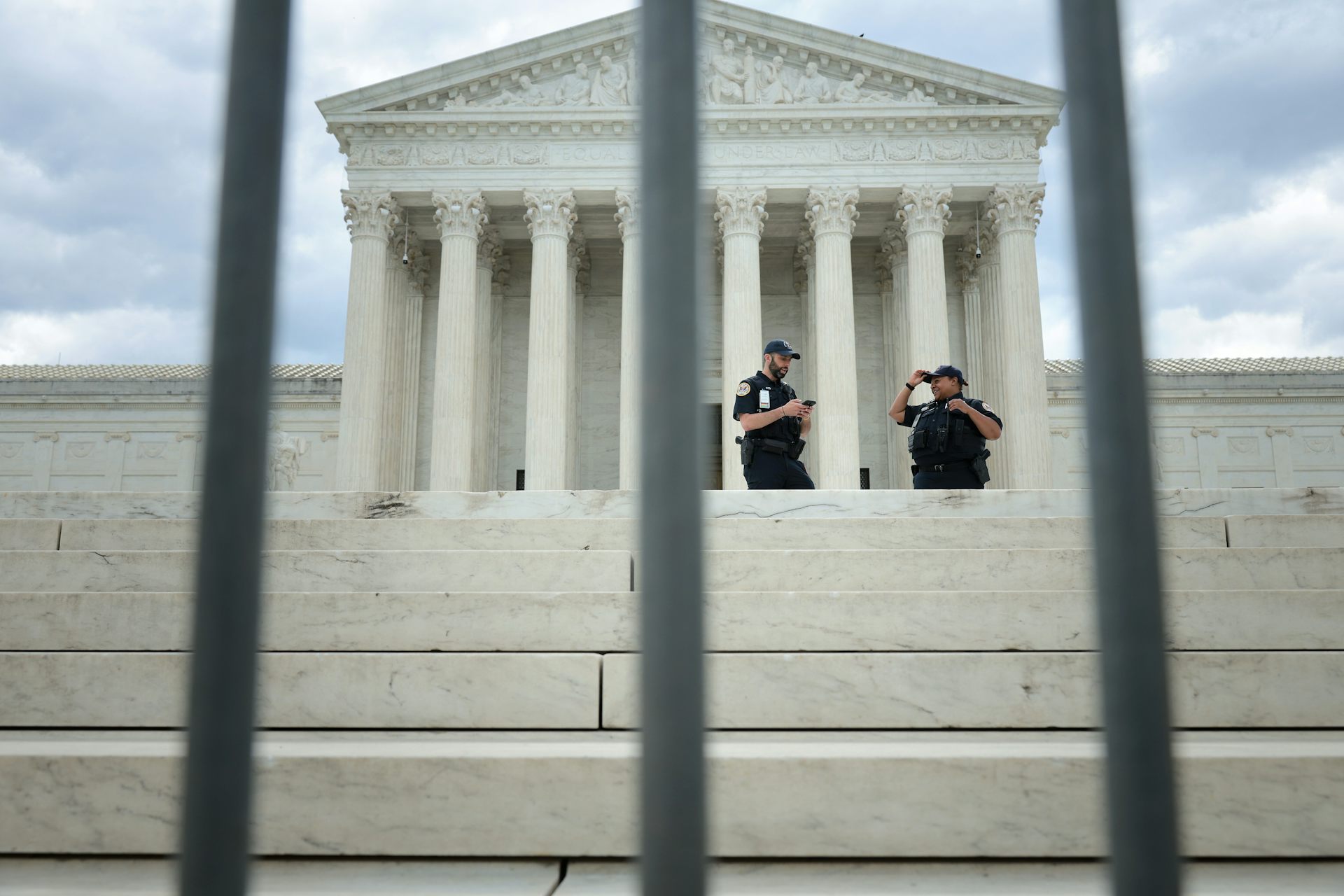
After briefing, oral arguments take place. Most oral arguments take an hour, with the time divided evenly between the petitioner and respondent. During oral arguments, the justices pepper the attorneys with questions and frequently preview how they might vote in the case.
文书提交后,便进行口头辩论。大多数口头辩论持续一小时,时间在申诉方和答辩方之间平均分配。在口头辩论期间,大法官们会向律师提出大量问题,并经常预先透露他们可能对该案的投票倾向。
Conference and votes
会议和投票
A few days after oral arguments, the justices meet again in a private conference to discuss cases and cast preliminary votes. The chief justice speaks first, followed by the rest of the court in order of seniority.
口辩论几天后,大法官们再次举行私人会议讨论案件并进行初步投票。首席大法官首先发言,随后是按照资历顺序的其他法官。
A majority forms in this conference, although the justices are free to change their votes until the opinion is announced, and occasionally do so.
在这次会议上形成多数意见,尽管法官们可以在判决公布前自由更改投票,并且偶尔也会这样做。
Perhaps most importantly, a justice in the majority is assigned to draft the majority opinion. If the chief justice is in the court’s majority, the chief makes the opinion assignment. The chief justice can assign the opinion to another justice in the majority or to himself. If the chief justice is in the minority, the most senior justice in the majority makes the opinion assignment.
也许最重要的是,多数派中的一位法官负责起草多数意见。如果首席大法官属于法院的多数派,则由他进行意见分配。首席大法官可以将该意见分配给多数派中的其他法官或自己。如果首席大法官属于少数派,则由多数派中资历最老的法官进行意见分配。
Majority opinions typically go through a series of revisions, as justices bargain and negotiate over its content. They do this by providing written feedback to the majority opinion author. If a justice in the court’s initial majority grows unhappy with the content of the draft opinion, they can defect by joining the minority.
多数意见通常会经过一系列的修改,因为法官们会就其内容进行讨价还价和协商。他们通过向多数意见撰写人提供书面反馈来完成这一过程。如果法院最初的多数派中的一位法官对草案意见的内容感到不满,他可以通过加入少数派而改变立场。
In addition to the majority opinion, justices may write concurring and dissenting opinions. Concurring opinions are written by justices in the majority and are often used to highlight a different legal basis for the court’s decision. Dissenting opinions are written by justices who are in the minority and disagree with the outcome of the case and the majority’s reasoning.
除了多数意见外,法官们还可能撰写同意意见和不同意意见。同意意见由多数派的法官撰写,通常用于强调法院判决的不同法律依据。不同意意见则由少数派的法官撰写,他们对案件的结果和多数派的推理持有异议。
Releasing opinions
发布意见书
The final step is the public release and announcement of the court’s opinions. This occurs on a rolling basis throughout the court’s term – from October to late June or early July – but the most important cases usually come down in June.
法院意见的最终步骤是公开宣布。这在整个任期内持续进行——从十月到六月下旬或七月初——但最重要的案件通常是在六月公布。
During opinion announcement, the majority opinion author usually reads a summary of the court’s opinion. On rare occasions, dissenting justices may read from their opinions. Reading a dissent from the bench signals that a justice is particularly unhappy with the majority’s decision.
在发表意见的过程中,多数意见撰写人通常会宣读一份关于法院意见的摘要。极少数情况下,持不同意见的法官可能会宣读他们的异议意见。从法庭宣读异议意见表明该法官对多数人的决定特别不满。
For instance, on June 29, 2023, Justice Sonia Sotomayor read from her fiery dissent in Students for Fair Admissions v. Harvard College. In that opinion, Sotomayor criticized the court’s majority for effectively ending affirmative action in college admissions. According to Sotomayor, affirmative action programs are constitutional because they help to achieve the 14th Amendment’s guarantee of racial equality by mitigating the enduring effects of racial discrimination.
例如,2023年6月29日,索尼娅·索托马约尔大法官宣读了她在《学生公平入学诉哈佛学院案》中的激烈异议意见。在这份意见书中,索托马约尔批评法院的多数人有效地终结了大学招生中的平权行动(affirmative action)。根据索托马约尔的说法,平权行动项目是合宪的,因为它们通过减轻种族歧视的持续影响,有助于实现第十四修正案关于种族平等的保障。
The blockbuster rulings that dominate the news cycle each June are not sudden flashes of judicial willpower. They are the product of a lengthy and carefully structured process in which thousands of petitions are screened, less than 80 cases are argued, and draft opinions are negotiated and refined behind closed doors. By the time a decision is announced from the bench, it reflects months of legal argument, deliberation and compromise.
每年六月占据新闻头条的重磅裁决并非司法意志的突然闪光。它是漫长而精心构建的过程的产物,在这个过程中,数千份请愿书被筛选,不到80个案件接受辩论,草拟意见则在闭门会议中进行协商和完善。直到判决从法庭宣布,它都反映了数月的法律论证、审议和妥协。
Understanding that process helps demystify the court and reveals how nine unelected justices can shape the meaning of the Constitution and, in turn, influence the everyday lives of millions of Americans.
了解这一过程有助于揭开法院的神秘面纱,并展现出九名非民选大法官如何能够塑造宪法的意义,进而影响数百万美国人的日常生活。
Paul M. Collins Jr. does not work for, consult, own shares in or receive funding from any company or organization that would benefit from this article, and has disclosed no relevant affiliations beyond their academic appointment.
保罗·M·柯林斯二世(Paul M. Collins Jr.)不为任何公司或组织工作、咨询、持有股份或接受资金支持,这些公司或组织不会从本文中受益,并且除了其学术任命之外,没有披露任何相关的关联关系。