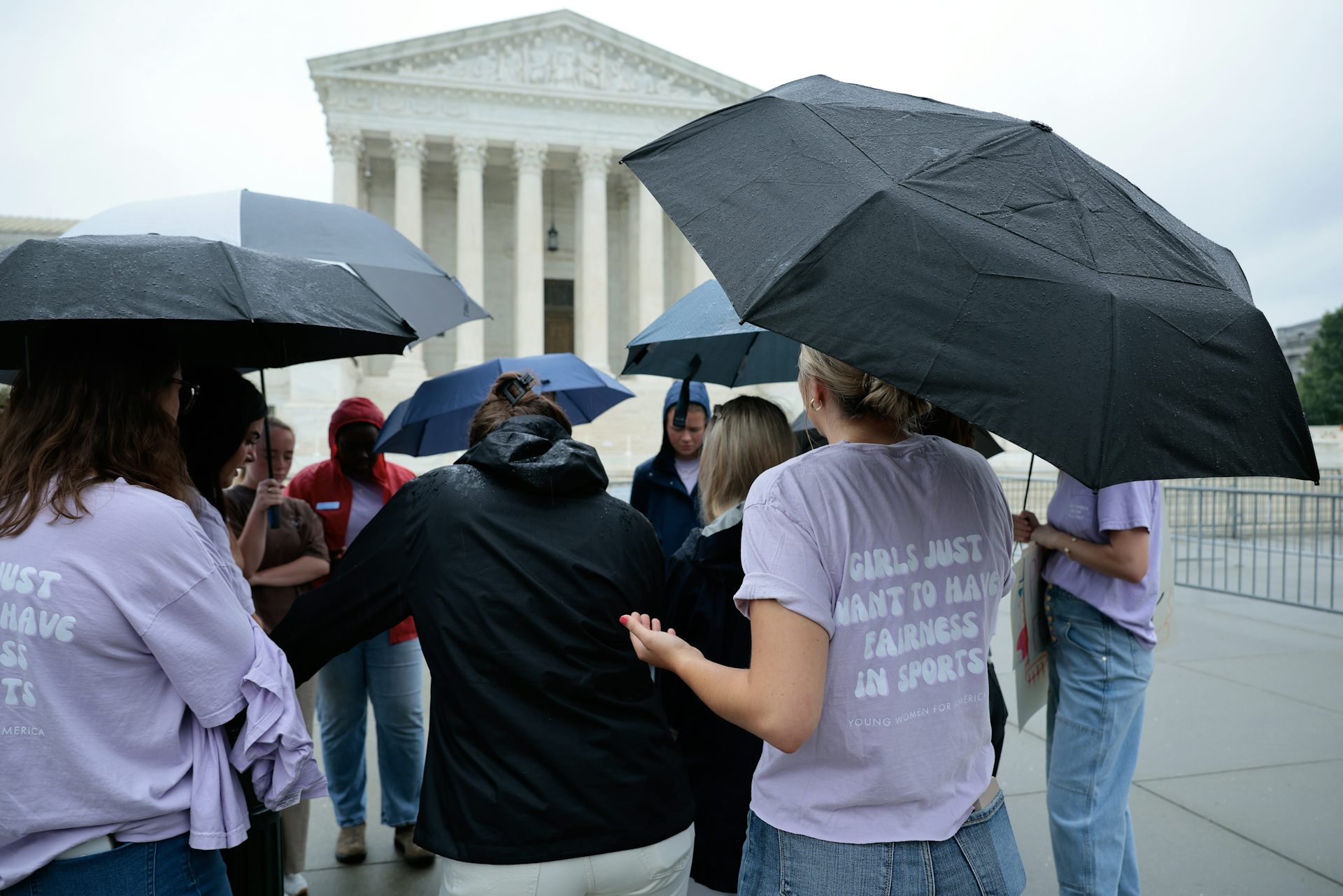
Como a Suprema Corte dos EUA decide seus casos – um guia passo a passo
How the US Supreme Court decides its cases – a step-by-step guide
Grasping how the nation’s highest court makes policy requires stepping into an exceptionally regulated and sometimes hidden routine.
Compreender como a mais alta corte da nação define políticas exige entrar em uma rotina excepcionalmente regulamentada e, por vezes, oculta.
Each June, the nation turns its attention to the U.S. Supreme Court as it hands down some of its most consequential decisions.
Todo junho, a nação volta sua atenção para a Suprema Corte dos EUA à medida que ela emite algumas de suas decisões mais consequenciais.
Long before a landmark Supreme Court ruling dominates the headlines, it is shaped by a highly structured legal process, much of which takes place out of public view. This procedure involves strict gatekeeping rules, a series of private conferences, written briefs, oral arguments and, finally, the announcement of an opinion.
Muito antes que um julgamento histórico da Suprema Corte domine os títulos, ele é moldado por um processo jurídico altamente estruturado, grande parte do qual ocorre fora da vista pública. Este procedimento envolve regras estritas de controle, uma série de conferências privadas, petições escritas, argumentos orais e, finalmente, o anúncio de um parecer.
As a legal and Supreme Court scholar, I know that understanding how the nation’s highest court actually makes policy requires stepping into this exceptionally regulated, sometimes hidden routine. It is through this process that the court evaluates, and eventually decides, increasingly high-stakes cultural and political battles.
Como acadêmico de direito e da Suprema Corte, sei que entender como o tribunal mais elevado da nação realmente define políticas exige mergulhar nesta rotina excepcionalmente regulamentada e às vezes oculta. É por meio desse processo que o tribunal avalia, e eventualmente decide, batalhas culturais e políticas cada vez mais importantes.
Here’s how it all unfolds:
Veja como tudo acontece:
The agenda-setting process
O processo de definição da pauta
The Supreme Court is a reactive institution. This means that it must wait for individuals, businesses, governments and the like to bring cases to the court before it can issue a ruling.
A Suprema Corte é uma instituição reativa. Isso significa que ela deve esperar que indivíduos, empresas, governos e similares apresentem casos ao tribunal antes de poder emitir um julgamento.
The way this most commonly works is that the party who loses in a lower court files a writ of certiorari to the Supreme Court. This is a legal document that outlines why the court should review the case. The party who won in the lower court can file a brief in opposition, arguing that the lower court made the right decision and therefore the case does not warrant Supreme Court review.
A forma mais comum de isso funcionar é que a parte perdedora em um tribunal inferior apresente um writ of certiorari à Suprema Corte. Este é um documento legal que descreve por que o tribunal deve revisar o caso. A parte vencedora no tribunal inferior pode apresentar uma petição em oposição, argumentando que o tribunal inferior tomou a decisão correta e, portanto, o caso não justifica revisão pela Suprema Corte.
Sometimes, interest groups weigh in by filing amicus curiae, or “friend of the court” briefs. Amicus briefs help signal that a case has broad national importance. The court is more likely to review cases accompanied by amicus briefs.
Às vezes, grupos de interesse intervêm apresentando amicus curiae, ou petições de “amigo do tribunal.” As petições amicus ajudam a sinalizar que um caso tem ampla importância nacional. O tribunal é mais propenso a revisar casos acompanhados por petições amicus.
In recent years, the high court has received about 4,000 of these petitions per term, and it decides less than 80 cases. This means the odds of getting the court to hear any given case are quite small – about 2%.
Nos últimos anos, o tribunal superior recebeu cerca de 4.000 dessas petições por mandato, e decide menos de 80 casos. Isso significa que as chances de o tribunal ouvir qualquer caso específico são bastante pequenas – cerca de 2%.
To handle the large volume of petitions, the justices rely heavily on their law clerks. These are young lawyers – typically only a few years out of law school – who write short memos for the justices recommending that they grant or deny each petition.
Para lidar com o grande volume de petições, os juízes dependem muito dos seus assistentes jurídicos (law clerks) . São jovens advogados – tipicamente recém-formados em faculdade de direito – que escrevem memorandos curtos para os juízes recomendando se devem conceder ou negar cada petição.
On most Fridays throughout their term, the justices meet to discuss these petitions. This is a private conference with only the nine justices in attendance. Here, the court employs a rule of four: It takes the votes of four out of the nine justices to agree to review a case.
Na maioria das sextas-feiras durante o mandato, os juízes se reúnem para discutir essas petições. Esta é uma conferência privada com apenas os nove juízes presentes. Aqui, o tribunal emprega a regra dos quatro: são necessários os votos de quatro dos nove juízes para concordar em revisar um caso.
Following the conference, the court releases its list of cases granted and denied certiorari, known as the orders of the court. For cases denied certiorari, the lower court decision stands. Cases granted certiorari move onto the merits stage.
Após a conferência, o tribunal publica sua lista de casos concedidos e negados certiorari, conhecida como ordens do tribunal. Para os casos em que o certiorari é negado, a decisão do tribunal inferior permanece válida. Os casos em que o certiorari é concedido avançam para a fase de mérito.
Legal briefs and oral arguments
Peças jurídicas e argumentos orais
The primary way the parties to a case try to persuade the justices is through their legal briefs. The petitioner, who lost in the lower court, tries to convince the justices that the lower court made some sort of legal error that should be reversed. The respondent, the lower court winner, argues that the lower court decision was correct and should be affirmed.
A principal maneira pela qual as partes de um caso tentam persuadir os juízes é através das suas peças jurídicas. O peticionário, que perdeu no tribunal inferior, tenta convencer os juízes de que o tribunal inferior cometeu algum tipo de erro legal que deve ser revertido. O respondente, o vencedor do tribunal inferior, argumenta que a decisão do tribunal inferior estava correta e deve ser mantida.
Interest groups, businesses and other interested entities that aren’t parties to the case can weigh in through a second type of amicus curiae brief. These briefs often highlight the public policy implications of a case, and they provide a way for these groups to pursue their ideological goals.
Grupos de interesse, empresas e outras entidades interessadas que não são partes no caso podem intervir por meio um segundo tipo de peça amicus curiae. Essas peças frequentemente destacam as implicações de política pública de um caso e fornecem uma maneira para esses grupos buscarem seus objetivos ideológicos.
In recent terms, there has been an average of about 16 amicus briefs per case. And some cases see more than 100 amicus briefs, such as in Obergefell v. Hodges, the court’s 2015 same-sex marriage case, which had 148 briefs.
Nos últimos tempos, houve em média cerca de 16 peças amicus curiae por caso. E alguns casos veem mais de 100 peças amicus curiae, como em Obergefell v. Hodges, o caso de casamento igualitário do tribunal em 2015, que teve 148 peças.
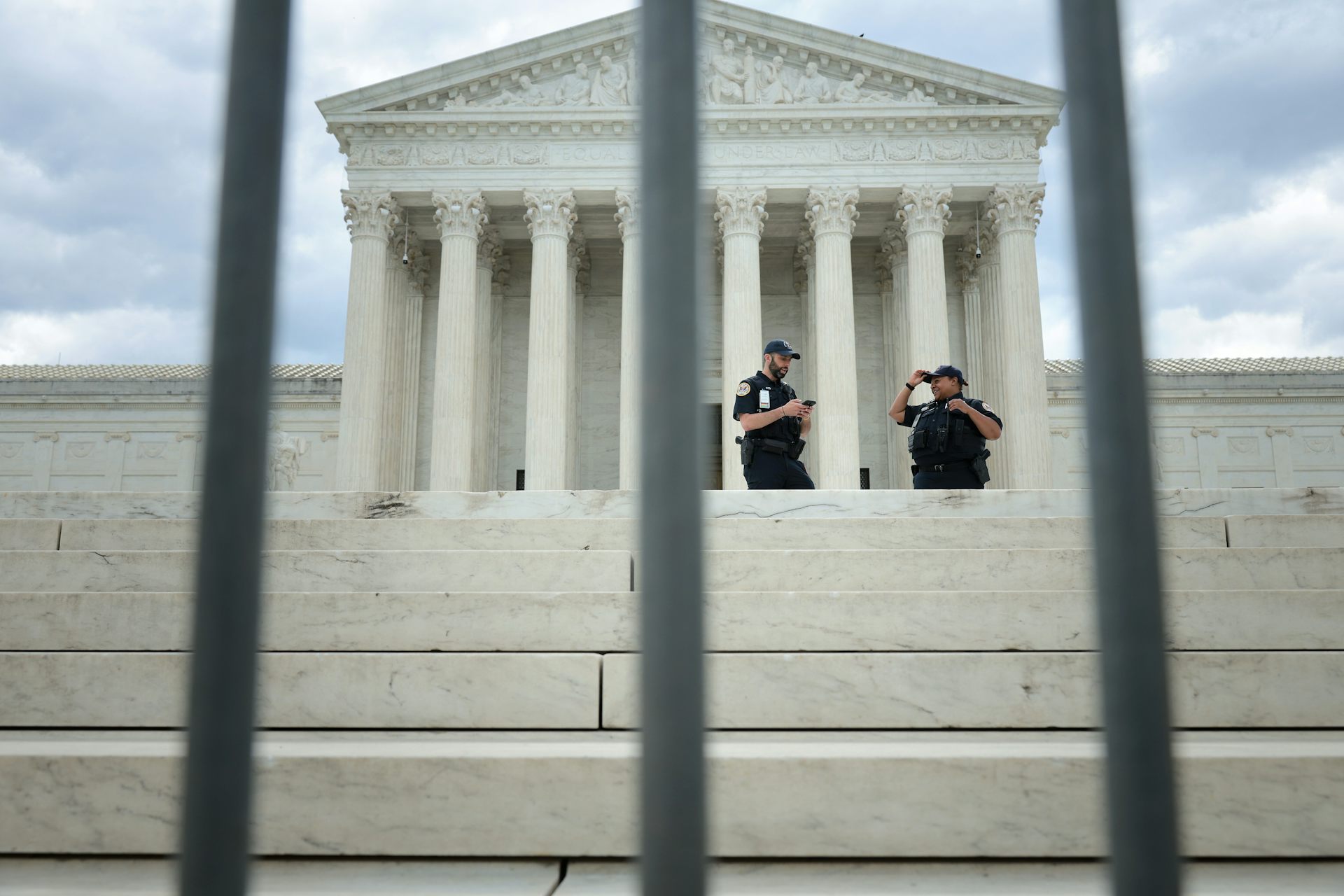
After briefing, oral arguments take place. Most oral arguments take an hour, with the time divided evenly between the petitioner and respondent. During oral arguments, the justices pepper the attorneys with questions and frequently preview how they might vote in the case.
Após a apresentação das peças, ocorrem os argumentos orais. A maioria dos argumentos orais dura uma hora, com o tempo dividido igualmente entre o peticionário e o respondente. Durante os argumentos orais, os juízes bombardeiam os advogados com perguntas e frequentemente antecipam como podem votar no caso.
Conference and votes
Conferência e votos
A few days after oral arguments, the justices meet again in a private conference to discuss cases and cast preliminary votes. The chief justice speaks first, followed by the rest of the court in order of seniority.
Alguns dias após os argumentos orais, os ministros se reúnem novamente em uma conferência privada para discutir casos e emitir votos preliminares. O ministro presidente fala primeiro, seguido pelo restante do tribunal por ordem de antiguidade.
A majority forms in this conference, although the justices are free to change their votes until the opinion is announced, and occasionally do so.
Uma maioria se forma nesta conferência, embora os ministros sejam livres para mudar seus votos até que o parecer seja anunciado, e ocasionalmente o fazem.
Perhaps most importantly, a justice in the majority is assigned to draft the majority opinion. If the chief justice is in the court’s majority, the chief makes the opinion assignment. The chief justice can assign the opinion to another justice in the majority or to himself. If the chief justice is in the minority, the most senior justice in the majority makes the opinion assignment.
Talvez o mais importante seja que um ministro da maioria é designado para redigir o parecer majoritário. Se o ministro presidente estiver na maioria do tribunal, ele faz a atribuição do parecer. O ministro presidente pode atribuir o parecer a outro ministro na maioria ou a si mesmo. Se o ministro presidente estiver na minoria, o ministro mais antigo da maioria faz a atribuição do parecer.
Majority opinions typically go through a series of revisions, as justices bargain and negotiate over its content. They do this by providing written feedback to the majority opinion author. If a justice in the court’s initial majority grows unhappy with the content of the draft opinion, they can defect by joining the minority.
Os pareceres majoritários geralmente passam por uma série de revisões, à medida que os ministros negociam e debatem seu conteúdo. Eles fazem isso fornecendo feedback escrito ao autor do parecer majoritário. Se um ministro na maioria inicial do tribunal se sentir insatisfeito com o conteúdo do rascunho do parecer, ele pode desertar juntando-se à minoria.
In addition to the majority opinion, justices may write concurring and dissenting opinions. Concurring opinions are written by justices in the majority and are often used to highlight a different legal basis for the court’s decision. Dissenting opinions are written by justices who are in the minority and disagree with the outcome of the case and the majority’s reasoning.
Além do parecer majoritário, os ministros podem escrever pareceres concordantes e divergentes. Os pareceres concordantes são escritos por ministros da maioria e são frequentemente usados para destacar um fundamento jurídico diferente para a decisão do tribunal. Os pareceres divergentes são escritos por ministros que estão na minoria e discordam do resultado do caso e do raciocínio da maioria.
Releasing opinions
Divulgação de Opiniões
The final step is the public release and announcement of the court’s opinions. This occurs on a rolling basis throughout the court’s term – from October to late June or early July – but the most important cases usually come down in June.
A etapa final é a divulgação pública e o anúncio das opiniões do tribunal. Isso ocorre em um ritmo contínuo durante o mandato do tribunal – de outubro até o final de junho ou início de julho – mas os casos mais importantes geralmente são decididos em junho.
During opinion announcement, the majority opinion author usually reads a summary of the court’s opinion. On rare occasions, dissenting justices may read from their opinions. Reading a dissent from the bench signals that a justice is particularly unhappy with the majority’s decision.
Durante o anúncio das opiniões, o autor da opinião majoritária geralmente lê um resumo da decisão do tribunal. Em raras ocasiões, juízes dissidentes podem ler suas próprias opiniões. A leitura de uma dissidência do banco sinaliza que um juiz está particularmente insatisfeito com a decisão da maioria.
For instance, on June 29, 2023, Justice Sonia Sotomayor read from her fiery dissent in Students for Fair Admissions v. Harvard College. In that opinion, Sotomayor criticized the court’s majority for effectively ending affirmative action in college admissions. According to Sotomayor, affirmative action programs are constitutional because they help to achieve the 14th Amendment’s guarantee of racial equality by mitigating the enduring effects of racial discrimination.
Por exemplo, em 29 de junho de 2023, a Juíza Sonia Sotomayor leu sua veemente dissidência em Students for Fair Admissions v. Harvard College. Nessa opinião, Sotomayor criticou a maioria do tribunal por acabar efetivamente com a ação afirmativa no processo de admissão universitária. Segundo Sotomayor, os programas de ação afirmativa são constitucionais porque ajudam a alcançar a garantia de igualdade racial da 14ª Emenda ao mitigar os efeitos duradouros da discriminação racial.
The blockbuster rulings that dominate the news cycle each June are not sudden flashes of judicial willpower. They are the product of a lengthy and carefully structured process in which thousands of petitions are screened, less than 80 cases are argued, and draft opinions are negotiated and refined behind closed doors. By the time a decision is announced from the bench, it reflects months of legal argument, deliberation and compromise.
As decisões de grande impacto que dominam o ciclo de notícias a cada junho não são lampejos repentinos de força de vontade judicial. São o produto de um processo longo e cuidadosamente estruturado, no qual milhares de petições são examinadas, menos de 80 casos são debatidos e rascunhos de opiniões são negociados e refinados a portas fechadas. Quando uma decisão é anunciada do banco, ela reflete meses de argumentação legal, deliberação e compromisso.
Understanding that process helps demystify the court and reveals how nine unelected justices can shape the meaning of the Constitution and, in turn, influence the everyday lives of millions of Americans.
Entender esse processo ajuda a desmistificar o tribunal e revela como nove juízes não eleitos podem moldar o significado da Constituição e, por sua vez, influenciar a vida cotidiana de milhões de americanos.
Paul M. Collins Jr. does not work for, consult, own shares in or receive funding from any company or organization that would benefit from this article, and has disclosed no relevant affiliations beyond their academic appointment.
Paul M. Collins Jr. não trabalha para, consulta, possui ações em ou recebe financiamento de nenhuma empresa ou organização que se beneficiaria deste artigo, e não divulgou afiliações relevantes além de seu cargo acadêmico.
Read more
-

Nosso estudo analisou o comportamento de mídia social de adolescentes em 43 países – aqueles de origens desfavorecidas enfrentam maiores danos.
Our study looked at teens’ social media behaviour in 43 countries – those from disadvantaged backgrounds face greater harms
-

Trump lucrou mais de US$ 1 bilhão com cripto em um ano. Como?
Trump has made more than $1 billion from crypto in a year. How?