كيف تقرر المحكمة العليا الأمريكية قضاياها – دليل خطوة بخطوة
How the US Supreme Court decides its cases – a step-by-step guide
Grasping how the nation’s highest court makes policy requires stepping into an exceptionally regulated and sometimes hidden routine.
إن استيعاب كيفية صياغة أعلى محاكم الأمة للسياسات يتطلب الدخول إلى روتين منظم للغاية ومخفي في بعض الأحيان.
Each June, the nation turns its attention to the U.S. Supreme Court as it hands down some of its most consequential decisions.
في كل شهر يونيو، تُوجّه الأمة اهتمامها إلى المحكمة العليا الأمريكية وهي تصدر بعضاً من أكثر قراراتها أهمية.
Long before a landmark Supreme Court ruling dominates the headlines, it is shaped by a highly structured legal process, much of which takes place out of public view. This procedure involves strict gatekeeping rules, a series of private conferences, written briefs, oral arguments and, finally, the announcement of an opinion.
قبل وقت طويل من أن يهيمن حكم تاريخي صادر عن المحكمة العليا على العناوين الرئيسية، فإنه يتشكل بواسطة عملية قانونية منظمة للغاية، جزء كبير منها يحدث بعيداً عن الأنظار العامة. تتضمن هذه الإجراءات قواعد صارمة لضبط الدخول، وسلسلة من المؤتمرات الخاصة، والمذكرات المكتوبة، والمرافعات الشفوية، وأخيراً، إعلان الرأي.
As a legal and Supreme Court scholar, I know that understanding how the nation’s highest court actually makes policy requires stepping into this exceptionally regulated, sometimes hidden routine. It is through this process that the court evaluates, and eventually decides, increasingly high-stakes cultural and political battles.
بصفتي باحثاً قانونياً وأكاديمياً في المحكمة العليا، أعلم أن فهم كيفية صياغة أعلى محاكم الأمة للسياسات يتطلب التعمق في هذا الروتين المنظم بشكل استثنائي والمخفي أحياناً. فمن خلال هذه العملية تقوم المحكمة بتقييم، وفي نهاية المطاف تقرر، المعارك الثقافية والسياسية ذات المخاطر المتزايدة.
Here’s how it all unfolds:
وإليكم كيف يتكشف الأمر بأكمله:
The agenda-setting process
عملية تحديد الأجندة
The Supreme Court is a reactive institution. This means that it must wait for individuals, businesses, governments and the like to bring cases to the court before it can issue a ruling.
تُعد المحكمة العليا مؤسسة تفاعلية (رد فعل) . وهذا يعني أنها يجب أن تنتظر الأفراد والشركات والحكومات وما شابه ذلك لرفع القضايا أمامها قبل أن تتمكن من إصدار حكم.
The way this most commonly works is that the party who loses in a lower court files a writ of certiorari to the Supreme Court. This is a legal document that outlines why the court should review the case. The party who won in the lower court can file a brief in opposition, arguing that the lower court made the right decision and therefore the case does not warrant Supreme Court review.
الطريقة الأكثر شيوعاً لحدوث ذلك هي أن الطرف الخاسر في محكمة أدنى يقدّم “طلب الاطلاع” (writ of certiorari) إلى المحكمة العليا. هذه وثيقة قانونية تحدد الأسباب التي يجب على المحكمة مراجعة القضية بناءً عليها. أما الطرف الذي فاز في المحكمة الأدنى، فيمكنه تقديم مذكرة اعتراض، بحجة أن المحكمة الأدنى اتخذت القرار الصحيح وبالتالي لا تستدعي القضية مراجعة من المحكمة العليا.
Sometimes, interest groups weigh in by filing amicus curiae, or “friend of the court” briefs. Amicus briefs help signal that a case has broad national importance. The court is more likely to review cases accompanied by amicus briefs.
في بعض الأحيان، تتدخل مجموعات المصالح بتقديم مذكرات “صديق المحكمة” (amicus curiae) . تساعد مذكرات الصداقة في الإشارة إلى أن القضية ذات أهمية وطنية واسعة. ومن المرجح أن تراجع المحكمة القضايا التي تصاحبها مثل هذه المذكرات.
In recent years, the high court has received about 4,000 of these petitions per term, and it decides less than 80 cases. This means the odds of getting the court to hear any given case are quite small – about 2%.
في السنوات الأخيرة، تلقت المحكمة العليا حوالي 4000 من هذه الالتماسات لكل فترة قضائية، وهي تقرر أقل من 80 قضية. وهذا يعني أن احتمالية أن تستمع المحكمة إلى أي قضية معينة صغيرة جداً – حوالي 2٪.
To handle the large volume of petitions, the justices rely heavily on their law clerks. These are young lawyers – typically only a few years out of law school – who write short memos for the justices recommending that they grant or deny each petition.
للتعامل مع الحجم الكبير من الالتماسات، يعتمد القضاة بشكل كبير على مساعدي القانون (law clerks) الخاصين بهم. وهم محامون شباب – عادة ما يكونون قد تخرجوا من كلية الحقوق منذ بضع سنوات فقط – ويكتبون مذكرات موجزة للقضاة يوصون فيها بالموافقة على كل التماس أو رفضه.
On most Fridays throughout their term, the justices meet to discuss these petitions. This is a private conference with only the nine justices in attendance. Here, the court employs a rule of four: It takes the votes of four out of the nine justices to agree to review a case.
في معظم أيام الجمعة خلال فترة عملهم، يجتمع القضاة لمناقشة هذه الالتماسات. وهو مؤتمر خاص بحضور القضاة التسعة فقط. وهنا، تطبق المحكمة قاعدة الأربعة: يتطلب الأمر تصويت أربعة من القضاة التسعة للموافقة على مراجعة قضية ما.
Following the conference, the court releases its list of cases granted and denied certiorari, known as the orders of the court. For cases denied certiorari, the lower court decision stands. Cases granted certiorari move onto the merits stage.
بعد المؤتمر، تُصدر المحكمة قائمة بالقضايا التي تمت الموافقة على الاطلاع عليها وتلك التي رُفض فيها طلب الاطلاع، والمعروفة باسم “أوامر المحكمة.” بالنسبة للقضايا التي رُفض فيها الاطلاع، يبقى قرار المحكمة الأدنى سارياً. أما القضايا التي مُنح لها الاطلاع فتنتقل إلى مرحلة الموضوع (merits stage) .
Legal briefs and oral arguments
المذكرات القانونية والمرافعات الشفوية
The primary way the parties to a case try to persuade the justices is through their legal briefs. The petitioner, who lost in the lower court, tries to convince the justices that the lower court made some sort of legal error that should be reversed. The respondent, the lower court winner, argues that the lower court decision was correct and should be affirmed.
إن الطريقة الأساسية التي تحاول بها الأطراف في قضية ما إقناع القضاة هي من خلال مذكراتها القانونية. يحاول مقدم الالتماس، الذي خسر أمام المحكمة الأدنى درجة، إقناع القضاة بأن المحكمة الأدنى ارتكبت نوعًا من الخطأ القانوني الذي يجب نقضه. أما المستأنف ضده، وهو الفائز في المحكمة الأدنى، فيجادل بأن قرار تلك المحكمة كان صحيحًا ويجب تأكيده.
Interest groups, businesses and other interested entities that aren’t parties to the case can weigh in through a second type of amicus curiae brief. These briefs often highlight the public policy implications of a case, and they provide a way for these groups to pursue their ideological goals.
يمكن لمجموعات المصالح والشركات والكيانات المهتمة الأخرى التي ليست أطرافاً في القضية أن تتدخل من خلال نوع ثانٍ من مذكرات “صديق المحكمة” (amicus curiae brief) . غالبًا ما تسلط هذه المذكرات الضوء على التداعيات المتعلقة بالسياسة العامة للقضية، وتوفر طريقة لهذه المجموعات لمتابعة أهدافها الأيديولوجية.
In recent terms, there has been an average of about 16 amicus briefs per case. And some cases see more than 100 amicus briefs, such as in Obergefell v. Hodges, the court’s 2015 same-sex marriage case, which had 148 briefs.
في الآونة الأخيرة، بلغ متوسط عدد مذكرات “صديق المحكمة” حوالي 16 مذكرة لكل قضية. وتشهد بعض القضايا أكثر من 100 مذكرة، كما هو الحال في قضية أوبرجيفيل ضد هودجز (Obergefell v. Hodges) ، وهي قضية زواج المثليين عام 2015 للمحكمة، والتي تضمنت 148 مذكرة.
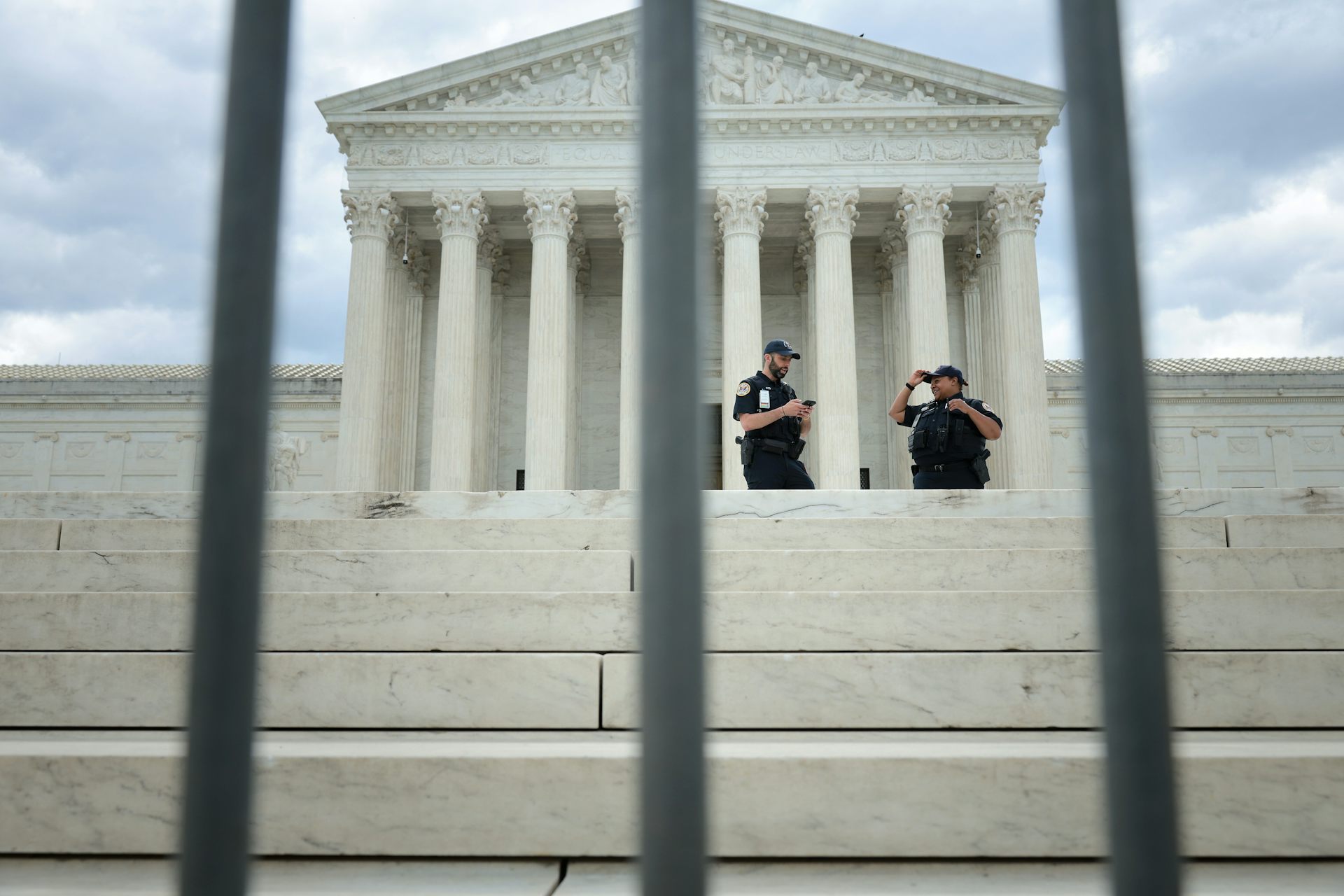
After briefing, oral arguments take place. Most oral arguments take an hour, with the time divided evenly between the petitioner and respondent. During oral arguments, the justices pepper the attorneys with questions and frequently preview how they might vote in the case.
بعد تقديم المذكرات، تجري المرافعات الشفوية. تستغرق معظم المرافعات الشفوية ساعة كاملة، ويتم تقسيم الوقت بالتساوي بين مقدم الالتماس والمستأنف ضده. وخلال المرافعات الشفوية، يطرح القضاة الأسئلة الكثيرة على المحامين وغالبًا ما يستبقون كيفية تصويتهم في القضية.
Conference and votes
المؤتمرات والتصويتات
A few days after oral arguments, the justices meet again in a private conference to discuss cases and cast preliminary votes. The chief justice speaks first, followed by the rest of the court in order of seniority.
بعد أيام قليلة من المرافعة الشفوية، يجتمع القضاة مرة أخرى في مؤتمر خاص لمناقشة القضايا وإلقاء أصوات أولية. يتحدث رئيس المحكمة أولاً، يليه بقية أعضاء هيئة المحكمة بترتيب الأقدمية.
A majority forms in this conference, although the justices are free to change their votes until the opinion is announced, and occasionally do so.
يتشكل أغلبية في هذا المؤتمر، على الرغم من أن القضاة أحرار في تغيير أصواتهم حتى الإعلان عن الرأي، ويقومون بذلك بين الحين والآخر.
Perhaps most importantly, a justice in the majority is assigned to draft the majority opinion. If the chief justice is in the court’s majority, the chief makes the opinion assignment. The chief justice can assign the opinion to another justice in the majority or to himself. If the chief justice is in the minority, the most senior justice in the majority makes the opinion assignment.
ربما أهم شيء هو تكليف قاضٍ ينتمي للأغلبية بصياغة رأي الأغلبية. إذا كان رئيس المحكمة ضمن أغلبية المحكمة، فإن الرئيس هو من يكلف بتعيين الرأي. يمكن لرئيس المحكمة أن يعيّن الرأي لقاضٍ آخر في الأغلبية أو لنفسه. وإذا كان رئيس المحكمة ضمن الأقلية، فإن القاضي الأقدم في الأغلبية هو من يقوم بتكليف تعيين الرأي.
Majority opinions typically go through a series of revisions, as justices bargain and negotiate over its content. They do this by providing written feedback to the majority opinion author. If a justice in the court’s initial majority grows unhappy with the content of the draft opinion, they can defect by joining the minority.
عادةً ما يمر رأي الأغلبية بسلسلة من التنقيحات، حيث يتفاوض ويتساوم القضاة حول محتواه. ويقومون بذلك عن طريق تقديم ملاحظات مكتوبة لمؤلف رأي الأغلبية. وإذا شعر قاضٍ ضمن الأغلبية الأولية للمحكمة بعدم الرضا عن محتوى المسودة، فيمكنه الانشقاق بالانضمام إلى الأقلية.
In addition to the majority opinion, justices may write concurring and dissenting opinions. Concurring opinions are written by justices in the majority and are often used to highlight a different legal basis for the court’s decision. Dissenting opinions are written by justices who are in the minority and disagree with the outcome of the case and the majority’s reasoning.
بالإضافة إلى رأي الأغلبية، قد يكتب القضاة آراء توافق وآراء معارضة. تُكتب الآراء التوافقية من قبل قضاة ينتمون للأغلبية وغالباً ما تُستخدم لتسليط الضوء على أساس قانوني مختلف لقرار المحكمة. أما الآراء المعارضة فتُكتب من قبل القضاة المنتمين للأقلية الذين يختلفون مع نتيجة القضية ومنطق الأغلبية.
Releasing opinions
إصدار الآراء
The final step is the public release and announcement of the court’s opinions. This occurs on a rolling basis throughout the court’s term – from October to late June or early July – but the most important cases usually come down in June.
تتمثل الخطوة الأخيرة في الإفصاح العام وإعلان آراء المحكمة. ويحدث ذلك على أساس مستمر طوال فترة عمل المحكمة – من أكتوبر إلى أواخر يونيو أو أوائل يوليو – لكن القضايا الأكثر أهمية عادة ما تُصدر أحكامها في شهر يونيو.
During opinion announcement, the majority opinion author usually reads a summary of the court’s opinion. On rare occasions, dissenting justices may read from their opinions. Reading a dissent from the bench signals that a justice is particularly unhappy with the majority’s decision.
أثناء إعلان الآراء، يقوم مؤلف الرأي الأغلبية عادة بقراءة ملخص لرأي المحكمة. وفي مناسبات نادرة، قد يقرأ القضاة المعارضون من آراءهم الخاصة. ويشير قراءة رأي مخالف من المنصة إلى أن أحد القضاة غير راضٍ بشكل خاص عن قرار الأغلبية.
For instance, on June 29, 2023, Justice Sonia Sotomayor read from her fiery dissent in Students for Fair Admissions v. Harvard College. In that opinion, Sotomayor criticized the court’s majority for effectively ending affirmative action in college admissions. According to Sotomayor, affirmative action programs are constitutional because they help to achieve the 14th Amendment’s guarantee of racial equality by mitigating the enduring effects of racial discrimination.
على سبيل المثال، في 29 يونيو 2023، قرأت القاضية سونيا سوتومايور من رأيها المعارض اللاذع في قضية “الطلاب المؤيدون للقبول العادل ضد كلية هارفارد.” وفي ذلك الرأي، انتقدت سوتومايور أغلبية المحكمة لتنهيها فعلياً نظام الإجراءات التفضيلية (affirmative action) في القبول الجامعي. ووفقاً لسوتومايور، فإن برامج الإجراءات التفضيلية دستورية لأنها تساعد على تحقيق ضمان المساواة العرقية المنصوص عليه في التعديل الرابع عشر من الدستور عن طريق تخفيف الآثار المستمرة للتمييز العنصري.
The blockbuster rulings that dominate the news cycle each June are not sudden flashes of judicial willpower. They are the product of a lengthy and carefully structured process in which thousands of petitions are screened, less than 80 cases are argued, and draft opinions are negotiated and refined behind closed doors. By the time a decision is announced from the bench, it reflects months of legal argument, deliberation and compromise.
إن الأحكام الكبرى التي تهيمن على دورة الأخبار كل يونيو ليست مجرد ومضات مفاجئة لإرادة قضائية. بل هي نتاج عملية طويلة ومنظمة بعناية، يتم فيها فحص آلاف الالتماسات، ويتم خلالها مناقشة أقل من 80 قضية، وتتفاوض وصياغة الآراء الأولية وتنقيحها خلف الأبواب المغلقة. وبحلول الوقت الذي يُعلن فيه القرار من المنصة، فإنه يعكس أشهرًا من الحجج القانونية والمداولات والتسويات.
Understanding that process helps demystify the court and reveals how nine unelected justices can shape the meaning of the Constitution and, in turn, influence the everyday lives of millions of Americans.
إن فهم تلك العملية يساعد على إزالة الغموض عن المحكمة ويكشف كيف يمكن لتسعة قضاة غير منتخبين تشكيل معنى الدستور، وبالتالي التأثير في الحياة اليومية لملايين الأمريكيين.
Paul M. Collins Jr. does not work for, consult, own shares in or receive funding from any company or organization that would benefit from this article, and has disclosed no relevant affiliations beyond their academic appointment.
باول م. كولينز الابن لا يعمل لدى أو يشارك استشارات أو يمتلك حصصاً في أي شركة أو منظمة تستفيد من هذه المقالة، ولم يفصح عن أي انتماءات ذات صلة تتجاوز تعيينه الأكاديمي.
Read more
-

3 أسباب تشير إلى أن الحرب بين الولايات المتحدة وإسرائيل وإيران تتجه نحو صراع متجمد
3 reasons the war between the US, Israel and Iran is headed for a frozen conflict
-
أزمة وظائف الشباب تغذي احتجاجات حزب جانتا الصرصار في الهند
The youth jobs crisis fuelling India’s Cockroach Janta Party protests