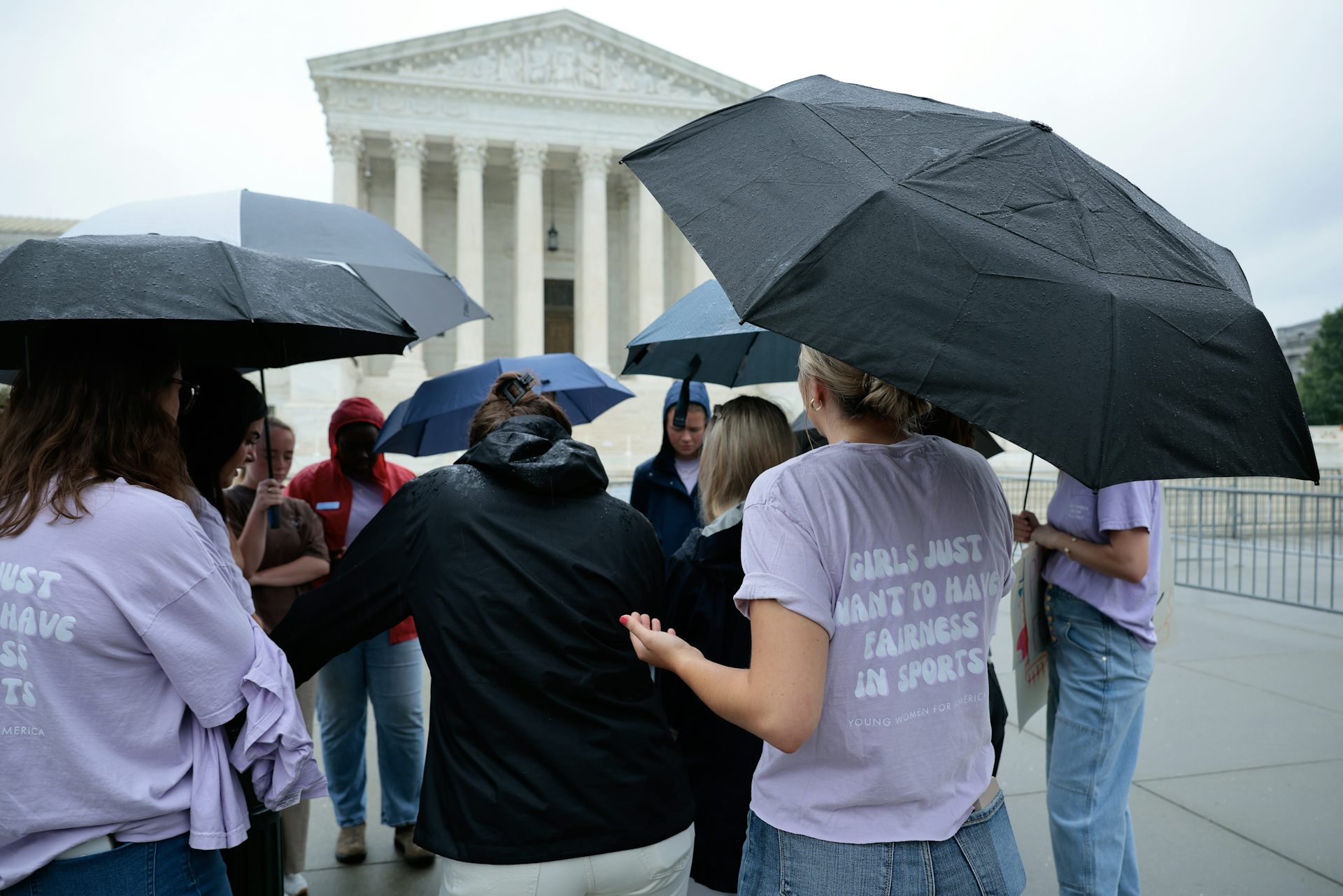
Cómo decide la Corte Suprema de EE. UU. sus casos: una guía paso a paso
How the US Supreme Court decides its cases – a step-by-step guide
Grasping how the nation’s highest court makes policy requires stepping into an exceptionally regulated and sometimes hidden routine.
Comprender cómo el tribunal más alto de la nación establece políticas requiere adentrarse en una rutina excepcionalmente regulada y a veces oculta.
Each June, the nation turns its attention to the U.S. Supreme Court as it hands down some of its most consequential decisions.
Cada junio, la nación centra su atención en la Corte Suprema de EE. UU. mientras emite algunas de sus decisiones más trascendentales.
Long before a landmark Supreme Court ruling dominates the headlines, it is shaped by a highly structured legal process, much of which takes place out of public view. This procedure involves strict gatekeeping rules, a series of private conferences, written briefs, oral arguments and, finally, the announcement of an opinion.
Mucho antes de que un fallo histórico de la Corte Suprema domine los titulares, es moldeado por un proceso legal altamente estructurado, gran parte del cual tiene lugar fuera de la vista pública. Este procedimiento implica estrictas reglas de control, una serie de conferencias privadas, escritos legales, argumentos orales y, finalmente, el anuncio de una opinión.
As a legal and Supreme Court scholar, I know that understanding how the nation’s highest court actually makes policy requires stepping into this exceptionally regulated, sometimes hidden routine. It is through this process that the court evaluates, and eventually decides, increasingly high-stakes cultural and political battles.
Como académico de derecho y de la Corte Suprema, sé que entender cómo el tribunal más alto de la nación realmente establece políticas requiere adentrarse en esta rutina excepcionalmente regulada y a veces oculta. Es a través de este proceso que la corte evalúa, y finalmente decide, batallas culturales y políticas cada vez más complejas.
Here’s how it all unfolds:
Así es como todo se desarrolla:
The agenda-setting process
El proceso de fijación de la agenda
The Supreme Court is a reactive institution. This means that it must wait for individuals, businesses, governments and the like to bring cases to the court before it can issue a ruling.
La Corte Suprema es una institución reactiva. Esto significa que debe esperar a que individuos, empresas, gobiernos y entidades similares presenten casos ante el tribunal antes de poder emitir un fallo.
The way this most commonly works is that the party who loses in a lower court files a writ of certiorari to the Supreme Court. This is a legal document that outlines why the court should review the case. The party who won in the lower court can file a brief in opposition, arguing that the lower court made the right decision and therefore the case does not warrant Supreme Court review.
La forma más común en que esto funciona es que la parte que pierde en un tribunal inferior presenta un recurso de certiorari ante la Corte Suprema. Este es un documento legal que describe por qué el tribunal debe revisar el caso. La parte que ganó en el tribunal inferior puede presentar un escrito en oposición, argumentando que el tribunal inferior tomó la decisión correcta y, por lo tanto, el caso no justifica una revisión por parte de la Corte Suprema.
Sometimes, interest groups weigh in by filing amicus curiae, or “friend of the court” briefs. Amicus briefs help signal that a case has broad national importance. The court is more likely to review cases accompanied by amicus briefs.
A veces, los grupos de interés intervienen presentando escritos amicus curiae, o «amigos del tribunal.» Los escritos amicus ayudan a señalar que un caso tiene una importancia nacional amplia. Es más probable que el tribunal revise casos acompañados de amicus briefs.
In recent years, the high court has received about 4,000 of these petitions per term, and it decides less than 80 cases. This means the odds of getting the court to hear any given case are quite small – about 2%.
En años recientes, la corte superior ha recibido alrededor de 4,000 de estas peticiones por período, y decide menos de 80 casos. Esto significa que las probabilidades de que el tribunal escuche cualquier caso en particular son bastante pequeñas: aproximadamente un 2%.
To handle the large volume of petitions, the justices rely heavily on their law clerks. These are young lawyers – typically only a few years out of law school – who write short memos for the justices recommending that they grant or deny each petition.
Para manejar el gran volumen de peticiones, los jueces dependen en gran medida de sus asistentes legales. Son abogados jóvenes —generalmente con solo unos años de haber terminado la facultad de derecho— que escriben memorandos breves para los jueces recomendando si deben conceder o denegar cada petición.
On most Fridays throughout their term, the justices meet to discuss these petitions. This is a private conference with only the nine justices in attendance. Here, the court employs a rule of four: It takes the votes of four out of the nine justices to agree to review a case.
La mayoría de los viernes durante su período, los jueces se reúnen para discutir estas peticiones. Esta es una conferencia privada en la que solo asisten los nueve jueces. Aquí, el tribunal emplea una regla de cuatro: Se necesitan los votos de cuatro de los nueve jueces para acordar revisar un caso.
Following the conference, the court releases its list of cases granted and denied certiorari, known as the orders of the court. For cases denied certiorari, the lower court decision stands. Cases granted certiorari move onto the merits stage.
Después de la conferencia, el tribunal publica su lista de casos concedidos y denegados certiorari, conocida como las órdenes del tribunal. Para los casos en que se niega el certiorari, la decisión del tribunal inferior se mantiene. Los casos a los que se les concede el certiorari pasan a la etapa de fondo (o mérito) .
Legal briefs and oral arguments
Escritos legales y argumentos orales
The primary way the parties to a case try to persuade the justices is through their legal briefs. The petitioner, who lost in the lower court, tries to convince the justices that the lower court made some sort of legal error that should be reversed. The respondent, the lower court winner, argues that the lower court decision was correct and should be affirmed.
La forma principal en que las partes de un caso intentan persuadir a los jueces es mediante sus escritos legales. El peticionario, que perdió en el tribunal inferior, intenta convencer a los jueces de que el tribunal inferior cometió algún tipo de error legal que debe ser revertido. El contestante, el ganador del tribunal inferior, argumenta que la decisión del tribunal inferior fue correcta y debe ser confirmada.
Interest groups, businesses and other interested entities that aren’t parties to the case can weigh in through a second type of amicus curiae brief. These briefs often highlight the public policy implications of a case, and they provide a way for these groups to pursue their ideological goals.
Grupos de interés, empresas y otras entidades interesadas que no son partes del caso pueden intervenir mediante un segundo tipo de escrito amicus curiae. Estos escritos a menudo resaltan las implicaciones de política pública de un caso, y proporcionan una forma para que estos grupos persigan sus objetivos ideológicos.
In recent terms, there has been an average of about 16 amicus briefs per case. And some cases see more than 100 amicus briefs, such as in Obergefell v. Hodges, the court’s 2015 same-sex marriage case, which had 148 briefs.
En términos recientes, ha habido un promedio de unas 16 amicus curiae por caso. Y algunos casos ven más de 100 escritos amicus curiae, como en Obergefell contra Hodges, el caso de matrimonio igualitario del tribunal de 2015, que tuvo 148 escritos.
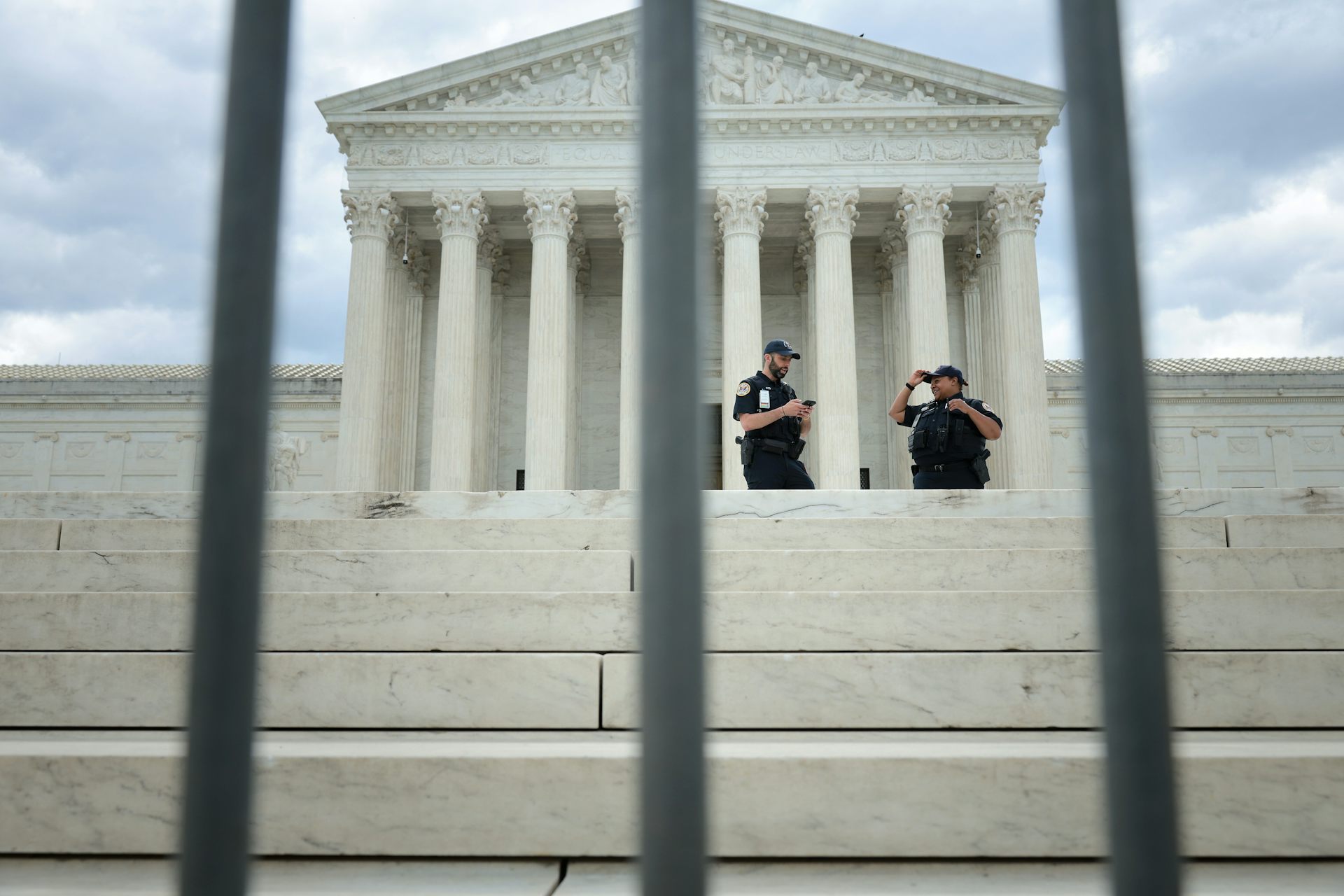
After briefing, oral arguments take place. Most oral arguments take an hour, with the time divided evenly between the petitioner and respondent. During oral arguments, the justices pepper the attorneys with questions and frequently preview how they might vote in the case.
Después de los escritos, tienen lugar los argumentos orales. La mayoría de los argumentos orales duran una hora, con el tiempo dividido equitativamente entre el peticionario y el contestante. Durante los argumentos orales, los jueces bombardean a los abogados con preguntas y frecuentemente adelantan cómo podrían votar en el caso.
Conference and votes
Conferencia y votos
A few days after oral arguments, the justices meet again in a private conference to discuss cases and cast preliminary votes. The chief justice speaks first, followed by the rest of the court in order of seniority.
Unos días después de los argumentos orales, los jueces se reúnen nuevamente en una conferencia privada para discutir casos y emitir votos preliminares. El juez principal habla primero, seguido por el resto del tribunal por orden de antigüedad.
A majority forms in this conference, although the justices are free to change their votes until the opinion is announced, and occasionally do so.
Se forma una mayoría en esta conferencia, aunque los jueces son libres de cambiar sus votos hasta que se anuncie el fallo, y ocasionalmente lo hacen.
Perhaps most importantly, a justice in the majority is assigned to draft the majority opinion. If the chief justice is in the court’s majority, the chief makes the opinion assignment. The chief justice can assign the opinion to another justice in the majority or to himself. If the chief justice is in the minority, the most senior justice in the majority makes the opinion assignment.
Quizás lo más importante es que a un juez de la mayoría se le asigna la redacción del fallo mayoritario. Si el juez principal está en la mayoría del tribunal, este último realiza la asignación del fallo. El juez principal puede asignar el fallo a otro juez de la mayoría o a sí mismo. Si el juez principal está en la minoría, el juez más antiguo de la mayoría realiza la asignación del fallo.
Majority opinions typically go through a series of revisions, as justices bargain and negotiate over its content. They do this by providing written feedback to the majority opinion author. If a justice in the court’s initial majority grows unhappy with the content of the draft opinion, they can defect by joining the minority.
Los fallos mayoritarios suelen pasar por una serie de revisiones, ya que los jueces negocian sobre su contenido. Hacen esto proporcionando retroalimentación escrita al autor del fallo mayoritario. Si un juez de la mayoría inicial del tribunal se siente insatisfecho con el contenido del borrador del fallo, puede desertar uniéndose a la minoría.
In addition to the majority opinion, justices may write concurring and dissenting opinions. Concurring opinions are written by justices in the majority and are often used to highlight a different legal basis for the court’s decision. Dissenting opinions are written by justices who are in the minority and disagree with the outcome of the case and the majority’s reasoning.
Además del fallo mayoritario, los jueces pueden escribir opiniones concordantes y disidentes. Las opiniones concordantes son escritas por jueces de la mayoría y a menudo se utilizan para destacar una base legal diferente para la decisión del tribunal. Las opiniones disidentes son escritas por jueces que están en la minoría y discrepan con el resultado del caso y el razonamiento de la mayoría.
Releasing opinions
Publicación de opiniones
The final step is the public release and announcement of the court’s opinions. This occurs on a rolling basis throughout the court’s term – from October to late June or early July – but the most important cases usually come down in June.
El paso final es la publicación y anuncio público de las opiniones del tribunal. Esto ocurre de manera continua durante el mandato del tribunal —de octubre a finales de junio o principios de julio—, pero los casos más importantes suelen resolverse en junio.
During opinion announcement, the majority opinion author usually reads a summary of the court’s opinion. On rare occasions, dissenting justices may read from their opinions. Reading a dissent from the bench signals that a justice is particularly unhappy with the majority’s decision.
Durante el anuncio de las opiniones, el autor de la opinión mayoritaria suele leer un resumen de la opinión del tribunal. En raras ocasiones, los jueces disidentes pueden leer sus propias opiniones. Leer una disidencia desde el estrado indica que un juez está particularmente descontento con la decisión de la mayoría.
For instance, on June 29, 2023, Justice Sonia Sotomayor read from her fiery dissent in Students for Fair Admissions v. Harvard College. In that opinion, Sotomayor criticized the court’s majority for effectively ending affirmative action in college admissions. According to Sotomayor, affirmative action programs are constitutional because they help to achieve the 14th Amendment’s guarantee of racial equality by mitigating the enduring effects of racial discrimination.
Por ejemplo, el 29 de junio de 2023, la jueza Sonia Sotomayor leyó su apasionada disidencia en Students for Fair Admissions v. Harvard College. En esa opinión, Sotomayor criticó a la mayoría del tribunal por poner fin efectivamente a las acciones afirmativas en el ingreso universitario. Según Sotomayor, los programas de acción afirmativa son constitucionales porque ayudan a lograr la garantía de igualdad racial de la Decimocuarta Enmienda al mitigar los efectos persistentes de la discriminación racial.
The blockbuster rulings that dominate the news cycle each June are not sudden flashes of judicial willpower. They are the product of a lengthy and carefully structured process in which thousands of petitions are screened, less than 80 cases are argued, and draft opinions are negotiated and refined behind closed doors. By the time a decision is announced from the bench, it reflects months of legal argument, deliberation and compromise.
Los fallos destacados que dominan el ciclo de noticias cada junio no son destellos repentinos de voluntad judicial. Son producto de un proceso largo y cuidadosamente estructurado en el que se revisan miles de peticiones, se argumentan menos de 80 casos y los borradores de opiniones se negocian y perfeccionan a puerta cerrada. Cuando se anuncia una decisión desde el estrado, refleja meses de argumentos legales, deliberación y compromiso.
Understanding that process helps demystify the court and reveals how nine unelected justices can shape the meaning of the Constitution and, in turn, influence the everyday lives of millions of Americans.
Comprender ese proceso ayuda a desmitificar al tribunal y revela cómo nueve jueces no electos pueden moldear el significado de la Constitución e influir, a su vez, en la vida cotidiana de millones de estadounidenses.
Paul M. Collins Jr. does not work for, consult, own shares in or receive funding from any company or organization that would benefit from this article, and has disclosed no relevant affiliations beyond their academic appointment.
Paul M. Collins Jr. no trabaja para, asesora, posee acciones ni recibe financiación de ninguna empresa u organización que se beneficiaría de este artículo, y no ha revelado afiliaciones relevantes más allá de su nombramiento académico.
Read more
-

Irán amenaza los cables submarinos. Los ‘puntos de estrangulamiento’ digitales del mundo nunca han sido más vulnerables
Iran is threatening undersea cables. The world’s ‘digital chokepoints’ have never been more vulnerable
-

Conflicto de Oriente Medio: este alto el fuego puede haber fortalecido a Irán
Middle East conflict: this ceasefire may have made Iran stronger