委内瑞拉是否遭受了“地震双峰”?这是我们目前所知的一切
Was Venezuela struck by an earthquake ‘doublet’? Here’s…
The two deadly earthquakes happened just 39 seconds apart, but were seismologically distinct.
这两场致命的地震相隔仅39秒,但在地震学上是独立的。
On Wednesday evening just after 6pm local time, two earthquakes violently shook northern Venezuela.
周三晚些时候,当地时间下午六点刚过,北委内瑞拉发生了两次剧烈的地震。
The first one struck near San Felipe, the capital of the state of Yaracuy. Just 39 seconds later, another quake struck near the town of Yumare, within 5 to 10km from the first one.
第一次发生在亚拉库伊州的首府圣费利佩附近。仅仅39秒后,另一次地震在尤马雷镇附近发生,该地点距离第一次震区位于5至10公里范围内。
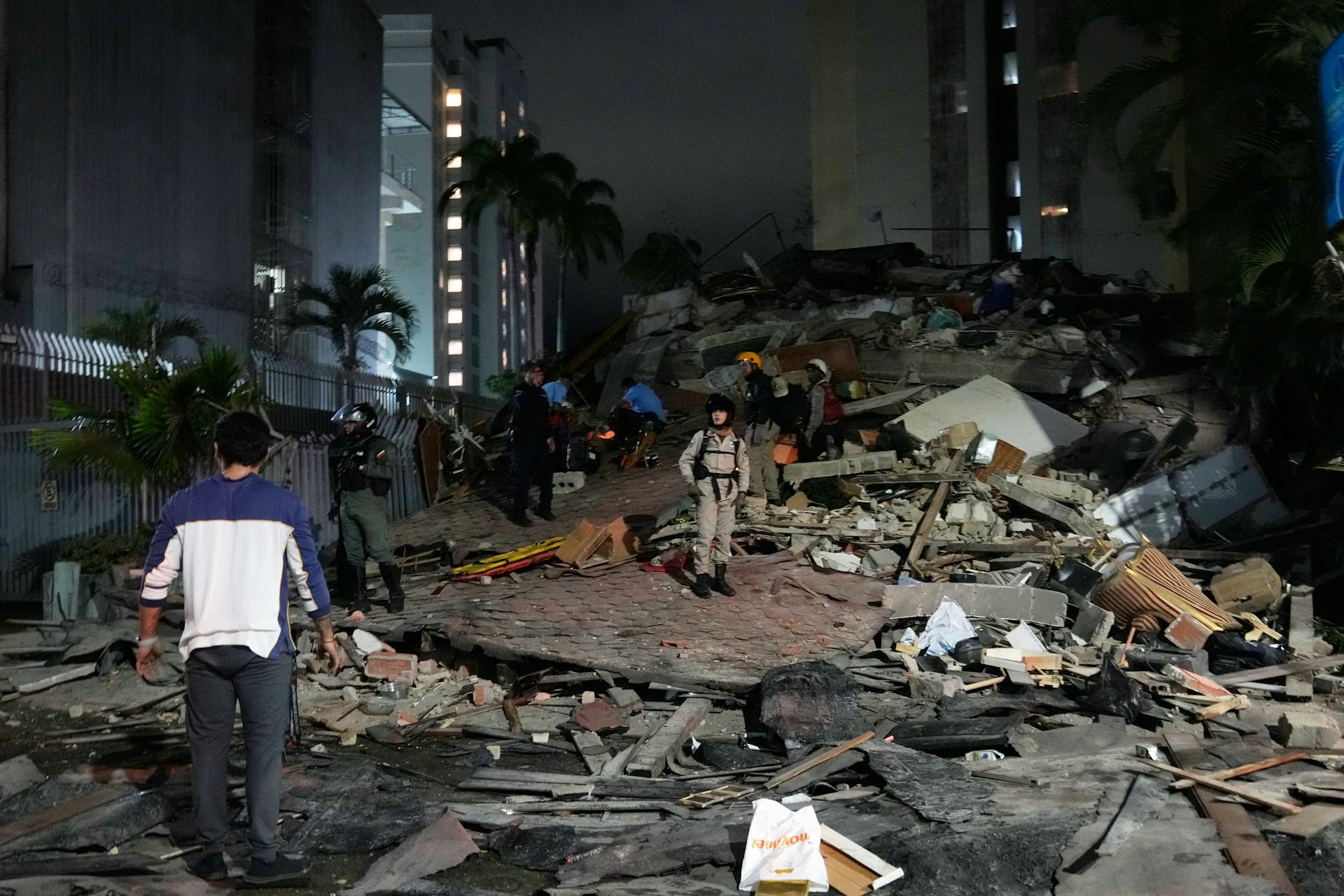
Powerful ground shaking was felt across the region, including in Venezuela’s capital Caracas about 150km east of the earthquake epicentres. Buildings collapsed, and authorities report the casualty toll may be in the thousands.
整个地区感受到了强烈的地面震动,包括位于地震震中以东约150公里的委内瑞拉首都加拉加斯。建筑物倒塌了,当局报告称伤亡人数可能高达数千人。
In addition to strong shaking, ground failure including landslides and liquefaction are anticipated to have occurred throughout the region. The earthquakes happened in a mountainous region where slope failures are common. And the type of sediment beneath Caracas amplifies seismic waves and enhances earthquake damage.
除了强烈的震动外,整个地区预计还发生了包括山体滑坡和液化在内的地面塌陷。这些地震发生在山区,该地区斜面崩塌现象普遍。此外,加拉加斯下方的沉积物类型会放大地震波并加剧地震破坏。
According to the US Geological Survey (USGS) , the earthquakes were a “doublet”: a magnitude 7.2 foreshock followed 39 seconds later by a mainshock, this one with a magnitude of 7.5.
根据美国地质调查局(USGS)的数据,这些地震是一次“双震”事件:一次里氏7.2级的预震,后间隔39秒发生了一次主震,其震级为7.5。
What is an earthquake ‘doublet’?
什么是地震“双震”?
An earthquake doublet is a pair of earthquakes that happen within a short time and distance from each other.
地震双震是指在短时间、短距离内发生的两组地震。
Unlike a typical earthquake sequence, where a larger earthquake is followed by significantly smaller aftershocks, doublets are earthquakes of similar magnitude that are causally linked, but seismologically distinct. This means the seismic waves from each quake are separated by a gap in time, and/or originate from distinct sources.
与典型的地震序列不同,后者是大型地震后跟着明显较小的余震;而双震则是具有相似震级的、因果关联但地质学上独立的地震。这意味着每次地震产生的地震波在时间上存在间隔,和/或源自不同的断层。
Although the Venezuelan earthquake epicentres were within mere kilometres of each other, seismic wave information from the USGS suggests they likely originated from different faults with different rupture styles.
尽管委内瑞拉的地震震中相距仅几公里,但美国地质调查局(USGS)的地震波信息表明,它们可能源自具有不同破裂模式的不同断层。
This is consistent with previously developed maps of active faults in this region. These show large strike-slip faults, where rocks slide past each other in an east-west direction, linked with arrays of smaller faults in various orientations.
这与该地区先前绘制的活动断层图一致。这些地图显示了大型走滑断层,岩石以东西方向相互滑动,并与各种方向的小型断层阵列相连。
It’s likely the first earthquake triggered the second one. This could have happened because Earth’s crust displacement in the first earthquake fault increased stress on the second earthquake’s source fault. Additionally, the passage of seismic waves from the first earthquake could have rattled nearby faults already prone to a rupture, causing them to fail.
很可能第一次地震触发了第二次地震。这可能是因为第一次地震断层引起的地球地壳位移增加了第二次地震源断层的应力。此外,第一次地震产生的地震波的传播也可能震动了附近本就易发生破裂的断层,导致其失稳。
Earthquake doublets are uncommon, but they do happen. In 2023, an earthquake doublet struck Turkey and Syria, measuring at magnitudes of 7.8 and 7.7. These happened just 95 kilometres and nine hours apart, affecting 14 million people and causing widespread damage.
地震双震并不常见,但确实发生过。2023年,土耳其和叙利亚经历了一次地震双震,震级分别为7.8级和7.7级。这两次事件相隔仅95公里和九小时,影响了1400万人并造成了广泛破坏。
In 1988, a “triplet” – a series of three earthquakes just half an hour apart from each other – occurred in Tennant Creek in Australia.
1988年,澳大利亚滕南溪发生了一次“三震”,即一系列相隔仅半小时的三次地震。
Why is Venezuela so prone to earthquakes?
为什么委内瑞拉如此容易发生地震?
The doublets in Venezuela occurred along the diffuse onshore boundary between the Caribbean and South American tectonic plates.
委内瑞拉的地震活动发生在加勒比板块和南美洲板块之间弥散的陆地边界上。
In northern Venezuela, these plates slide past each other at a rate of about 20mm per year as the Caribbean Plate moves east relative to the South American Plate. This produces large strike-slip faults, including the Boconó, San Sebastián, and El Pilar fault systems.
在委内瑞拉北部,随着加勒比板块相对于南美洲板块向东移动,这些板块以每年约20毫米的速度相互滑动。这产生了大型走滑断层,包括博科诺(Boconó)、圣塞巴斯蒂安(San Sebastián)和埃尔皮拉尔(El Pilar)断裂系统。
This active plate boundary generates frequent shallow earthquakes, some of which can be damaging.
这个活跃的板块边界会产生频繁的浅层地震,其中一些可能具有破坏性。
The region has experienced several significant earthquakes in the past. These include the magnitude 7.7 Caracas earthquake in 1900 and a magnitude 6.5 earthquake in 1967.
该地区过去经历过几次重大的地震。其中包括1900年的里氏7.7级加拉加斯地震和1967年的一次里氏6.5级地震。
West of the recent earthquake, the plate boundary becomes broader and more complex, and is prone to widespread seismic activity, with many shallow to intermediate-depth earthquakes.
在最近地震的西部,板块边界变得更广、更复杂,容易发生广泛的地震活动,并伴有许多浅层到中等深度的地震。
Mark Quigley receives funding from the Australian Research Council and National Emergency Management Agency.
Mark Quigley 的资金来自澳大利亚研究理事会和国家应急管理署。