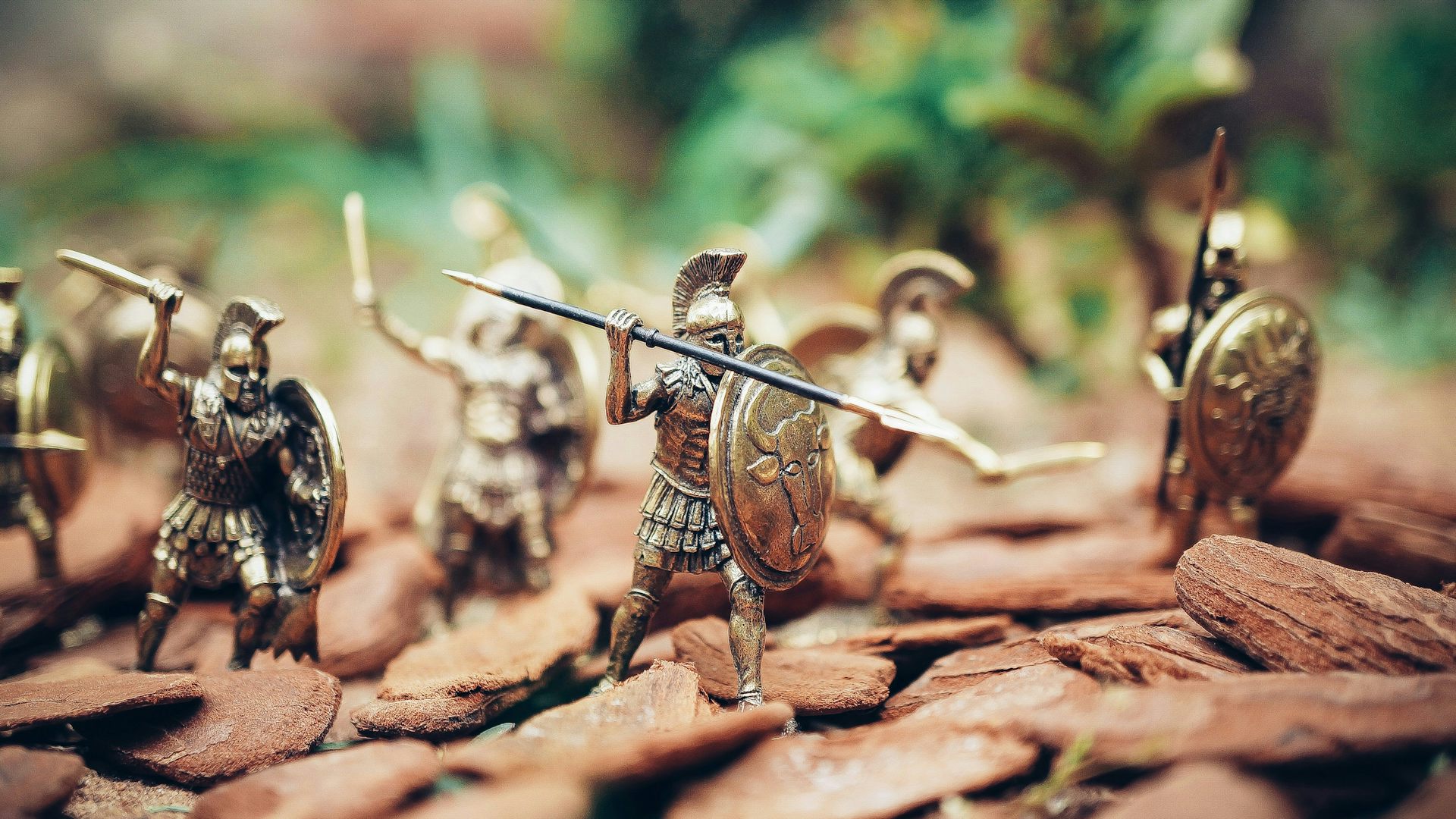
Una unidad de combate élite de amantes gais: la Banda Sagrada Tebana en la antigua Grecia
An elite fighting unit of gay lovers – the Theban Sacred Band in ancient Greece
The Theban Sacred Band – made up of ‘lovers and their loves’ came to be known for their strength, discipline, and ferocity.
La Banda Sagrada Tebana, compuesta por ‘amantes y sus amores’, llegó a ser conocida por su fuerza, disciplina y ferocidad.
In 1880, in the village of Chaironeia in central Greece, Greek archaeologists made a remarkable find: a largely undisturbed mass grave of 254 ancient soldiers, some of whom are buried arm in arm.
En 1880, en el pueblo de Chaironeia, en Grecia central, arqueólogos griegos hicieron un hallazgo notable: una fosa común en gran parte intacta de 254 soldados antiguos, algunos de los cuales están enterrados brazo con brazo.
The men in this grave were clearly a special group, and it has generally been assumed that they were the dead of the Theban Sacred Band (hieros lochos) – an elite fighting unit made up of 150 pairs of male lovers, fighting side by side.
Los hombres de esta tumba eran claramente un grupo especial, y se ha asumido generalmente que eran los caídos de la Banda Sagrada de Tebas (hieros lochos) – una unidad de combate élite compuesta por 150 parejas de amantes masculinos, luchando uno al lado del otro.
The Sacred Band had been set up in about 378 BCE, after the people of Thebes (in central Greece, north of Athens) had freed themselves from a brief period of rule by the regional superpower of that era, the Spartans.
La Banda Sagrada fue establecida alrededor del 378 a.C., después de que el pueblo de Tebas (en Grecia central, al norte de Atenas) se liberara de un breve período de dominio por la superpotencia regional de esa época: los espartanos.
This elite unit was a professional force of 300 heavily armed infantrymen who fought in Thebes’ wars, in central Greece, north into Thessaly, and south into the Peloponnese, used either as shock troops or as a bulwark of defence.
Esta unidad élite era una fuerza profesional de 300 infantes fuertemente armados que lucharon en las guerras de Tebas, en Grecia central, hacia el norte hasta Tesalia y hacia el sur hasta el Peloponeso, utilizados ya como tropas de choque o como un baluarte de defensa.
An army ‘composed of lovers and their beloveds’
Un ejército «compuesto de amantes y sus amados»
As always in Greek history, the evidence is problematic.
Como siempre en la historia griega, la evidencia es problemática.
Much of it comes from Greek-Roman philosopher Plutarch, writing 500 years later but using earlier sources now lost to us.
Gran parte proviene del filósofo griego-romano Plutarco, quien escribió 500 años después pero utilizando fuentes anteriores ahora perdidas para nosotros.
And even Plutarch is cautious. In his text Life of Pelopidas 18.1–2, he relies on vague language, writing:
E incluso Plutarco es cauteloso. En su texto Vida de Pelópida 18.1–2, se basa en un lenguaje vago, escribiendo:
Some say that this band was composed of lovers and beloved […] since the lovers are ashamed to play the coward before their beloved, and the beloved before their lovers, and both stand firm in danger to protect each other.
Algunos dicen que esta banda estaba compuesta de amantes y amados […] ya que los amantes tienen vergüenza de actuar como cobardes ante su amado, y el amado ante sus amantes, y ambos se mantienen firmes en peligro para protegerse mutuamente.
The philosopher Plato, writing many hundreds of years earlier – possibly a little before the Sacred Band was formed in about 378 BCE – wrote in his famous Symposium 178e–179a of how good a military force composed of lovers would be. They would, one of the speakers in the dialogue claims, fight for each other and to avoid disgrace in each other’s eyes:
El filósofo Platón, escribiendo cientos de años antes – posiblemente un poco antes de que la Banda Sagrada se formara alrededor del 378 a.C. – escribió en su famoso Simposio 178e–179a sobre lo buena que sería una fuerza militar compuesta de amantes. Afirma uno de los oradores del diálogo que lucharían el uno por el otro y para evitar la deshonra a los ojos del otro:
Therefore, if it could be arranged that a city or an army be composed of lovers and their beloveds, what better way might they organise their affairs than by abstaining from all shameful actions and prizing honour in one another’s eyes? And if such people were to fight alongside one another, even a few of them might, to coin a phrase, conquer the whole human race. For a man in love who was breaking rank or throwing away his weapons, would of course much rather be seen by anyone else at all than by his beloved. Instead of that he would choose to die many times. As for abandoning his favourite or not assisting him in the hour of danger, well there is none so base that Eros could not inspire him towards excellence, to be equal by nature to the very best.
Por lo tanto, si se pudiera organizar que una ciudad o un ejército estuviera compuesto de amantes y sus amados, ¿qué mejor manera podrían organizar sus asuntos que absteniéndose de todas las acciones vergonzosas y valorando el honor a los ojos del otro? Y si tales personas lucharan juntas, incluso unos pocos podrían, por así decirlo, conquistar a toda la raza humana. Porque un hombre enamorado que rompiera filas o tirara sus armas, sin duda preferiría ser visto por cualquier otra persona antes que por su amado. En lugar de eso elegiría morir muchas veces. En cuanto abandonar a su favorito o no asistirlo en la hora del peligro, bueno, no hay nadie tan bajo que Eros no pudiera inspirarle hacia la excelencia, para ser natural igual al mejor.
The distinction made in these passages between “lovers” (erastai or agapontes) and “beloved” (eromenoi or paidika) reflects the fact that in ancient Greece sexual relationships were rarely between people of the same age.
La distinción hecha en estos pasajes entre «amantes» (erastai o agapontes) y «amados» (eromenoi o paidika) refleja el hecho de que en la antigua Grecia las relaciones sexuales rara vez eran entre personas de la misma edad.
In Athens, first marriages were usually between a man in his late 20s and a girl of about 14.
En Atenas, los primeros matrimonios eran generalmente entre un hombre de unos veintitantos años y una chica de unos 14.
Similarly, homoerotic relationships, which were very common, were typically between an older man and an adolescent youth, anywhere from maybe around 12 (based on vase paintings) to whenever the adolescent started to grow a beard.
De manera similar, las relaciones homoeróticas, que eran muy comunes, solían ser entre un hombre mayor y un joven adolescente, desde quizás alrededor de los 12 años (basado en pinturas de vasijas) hasta cuando el adolescente comenzara a crecer barba.
Erastai (lovers) were not exclusively homosexual: they would normally also marry and have children (as, one day, would their eromenoi, or beloved) .
Los erastai (amantes) no eran exclusivamente homosexuales: normalmente también se casaban y tenían hijos (como lo harían un día sus eromenoi, o amados) .
These were sexual relationships but this hasn’t always been openly acknowledged by historians. 19th-century Classicists mostly sought to shield the Greeks from the imputation that they had engaged in gay sex. Today, the worry is more about under-age sex.
Estas eran relaciones sexuales, pero esto no siempre ha sido reconocido abiertamente por los historiadores. Los clasicistas del siglo XIX buscaron en su mayoría proteger a los griegos de la imputación de haber participado en sexo gay. Hoy en día, la preocupación es más sobre el sexo con menores de edad.
The erastes – eromenos relationship had an aspect of mentoring but, within social demands of the time for a certain modesty, it was also clearly sexual.
La relación erastes-eromenos tenía un aspecto de mentoría, pero, dentro de las exigencias sociales de la época para cierta modestia, también era claramente sexual.
Fighting together, sleeping together
Luchando juntos, durmiendo juntos
The problem with the Theban Sacred Band is that the eromenoi would need to be old enough to face the enormous physical challenges of battle, normally reserved for men over about 20. That implies different social mores in Thebes from those at Athens.
El problema con la Banda Sagrada Tebana es que los eromenoi tendrían que ser lo suficientemente mayores para enfrentar los enormes desafíos físicos de la batalla, normalmente reservados para hombres mayores de unos 20 años. Esto implica costumbres sociales diferentes en Tebas a las de Atenas.
In Athens, there were lifelong gay couples, including two of the characters in Plato’s Symposium, but they could often be the target of mockery. Athenians especially thought there was something shameful in an adult man being the “passive partner” in gay sex.
En Atenas, había parejas homosexuales de por vida, incluyendo a dos de los personajes del Simposio de Platón, pero a menudo podían ser objeto de burla. Los atenienses pensaban especialmente que había algo vergonzoso en que un hombre adulto fuera el «socio pasivo» en sexo gay.
But possibly attitudes were different at Thebes, where gay couples seem to have pledged their love to each other at the tomb of Iolaos, the eromenos, or beloved, of Herakles (sometimes known by his Roman name Hercules) .
Pero posiblemente las actitudes eran diferentes en Tebas, donde parejas homosexuales parecen haber prometido su amor el uno al otro en la tumba de Iolaos, el eromeno, o amado, de Heracles (a veces conocido por su nombre romano Hércules) .
The couples who made up the Sacred Band may have come together when the younger one was an adolescent and simply continued into adulthood. Were they still sexual partners?
Las parejas que conformaban la Banda Sagrada pudieron haberse unido cuando el más joven era un adolescente y simplemente continuaron hasta la edad adulta. ¿Seguían siendo parejas sexuales?
Well, a passage in Greek writer Xenophon’s own text (also called Symposium, possibly written in answer to Plato’s work of the same name) explicitly and critically refers to soldiers who fought together and were also sleeping with each other.
Bueno, un pasaje en el propio texto del escritor griego Jenofonte (también llamado Simposio, posiblemente escrito en respuesta a la obra de Platón con el mismo nombre) se refiere explícita y críticamente a soldados que lucharon juntos y también dormían con otros.
So, probably yes.
Entonces, probablemente sí.
Lovers who died together
Amantes que murieron juntos
Although some ancient historians remain sceptical, since the 19th century the story itself – whether true or not – has been inspirational to many.
Aunque algunos historiadores antiguos siguen escépticos, desde el siglo XIX la historia en sí misma —sea cierta o no— ha sido una fuente de inspiración para muchos.
The Theban Sacred Band came to be known for their strength, discipline, and ferocity.
La Banda Sagrada de Tebas llegó a ser conocida por su fuerza, disciplina y ferocidad.
Among their most famous successes was the important role they played in defeating the once powerful Spartans at the Battle of Leuctra in 371 BCE, which ended Spartan supremacy.
Entre sus éxitos más famosos se encuentra el papel importante que desempeñaron al derrotar a los otrora poderosos espartanos en la Batalla de Leuctra en el 371 a.C., lo que puso fin a la supremacía espartana.
The men of the Sacred Band of Thebes died in the Battle of Chaironeia in 338 BCE, when Philip of Macedon and his son Alexander (later known to the world as Alexander the Great) defeated Greek forces led by the cities of Thebes and Athens.
Los hombres de la Banda Sagrada de Tebas murieron en la Batalla de Queronea en el 338 a.C., cuando Filipo de Macedonia y su hijo Alejandro (más tarde conocido por el mundo como Alejandro Magno) derrotaron a las fuerzas griegas lideradas por las ciudades de Tebas y Atenas.
Maybe these soldiers, discovered arm in arm in a mass grave in central Greece more than 2,000 years later, really were lovers who died together in the Band’s final defeat.
Quizás estos soldados, descubiertos brazo con brazo en una fosa común en Grecia central hace más de 2.000 años, fueron realmente amantes que murieron juntos en la derrota final de la Banda.
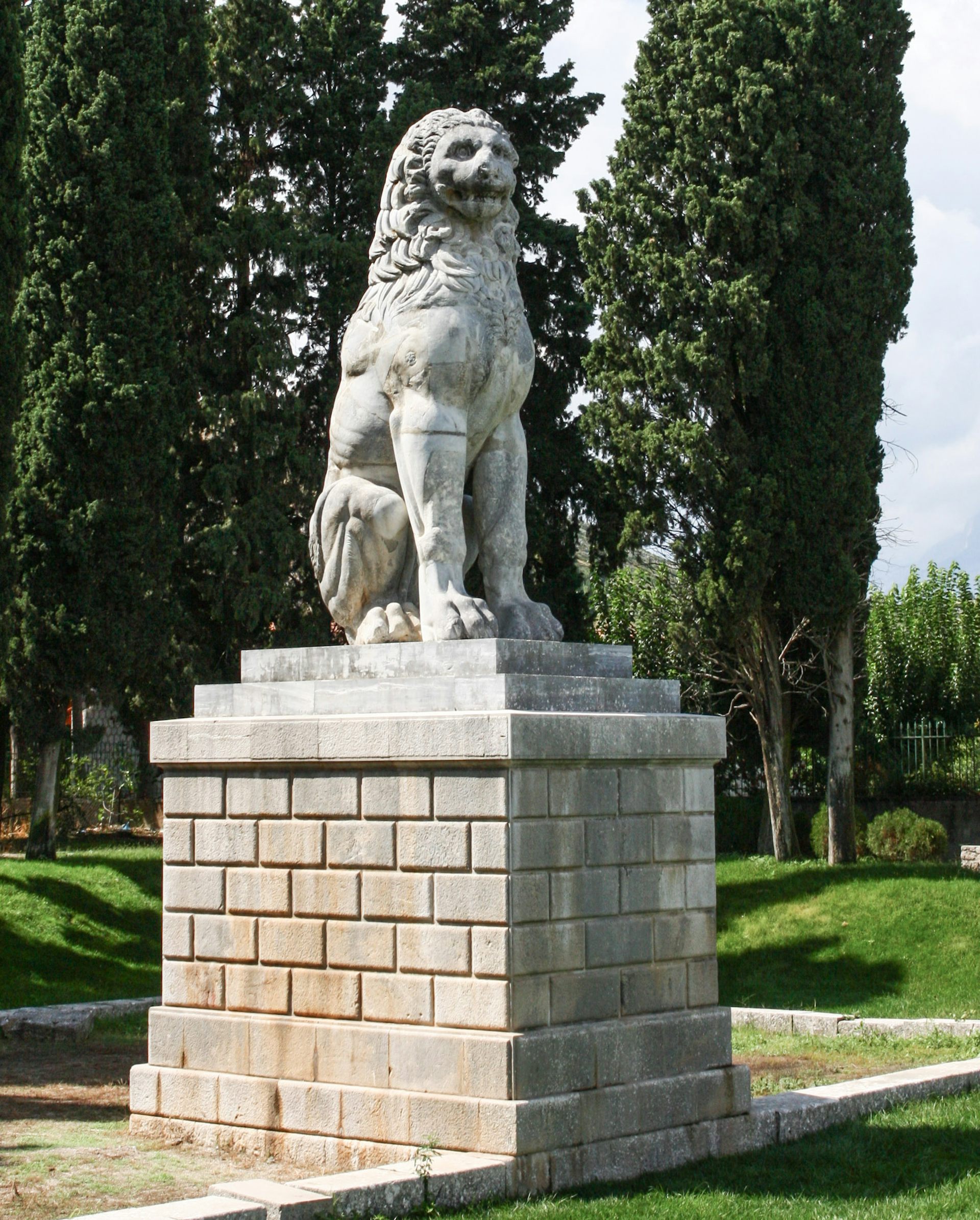
Today, the site is marked with a statue of a lion – symbolic of this elite fighting unit’s pride and strength.
Hoy, el sitio está marcado con una estatua de un león, símbolo del orgullo y la fuerza de esta unidad de combate élite.
Peter Londey does not work for, consult, own shares in or receive funding from any company or organisation that would benefit from this article, and has disclosed no relevant affiliations beyond their academic appointment.
Peter Londey no trabaja para, asesora, posee acciones ni recibe financiación de ninguna empresa u organización que se beneficiaría de este artículo, y no ha revelado afiliaciones relevantes más allá de su cargo académico.
Read more
-

Casi todo lo que usamos en línea es propiedad de las grandes tecnológicas. Hay una mejor manera de avanzar.
Nearly everything we use online is owned by big tech. There’s a better way forward
-

‘Primer contacto’ que pudo haber llevado a la vida compleja en la Tierra finalmente presenciado por científicos
‘First contact’ that may have led to complex life on Earth finally witnessed by scientists