Esponjas de águas profundas sobrevivem na escuridão total de maneiras que não sabíamos antes
Deep-sea sponges survive in complete darkness in ways we didn’t know before
Beyond the sunlit ocean lies a vast abyss where organisms have to recycle every scrap available.
Além do oceano iluminado pelo sol jaz um vasto abismo onde os organismos têm que reciclar cada pedaço disponível.
When we think of marine life, we usually picture colourful coral reefs or dense seaweed forests filled with fish and other critters. The ocean that comes to mind is the one touched by sunlight.
Quando pensamos na vida marinha, geralmente imaginamos recifes de coral coloridos ou densas florestas de algas marinhas cheias de peixes e outras criaturas. O oceano que nos vem à mente é aquele tocado pela luz do sol.
However, most of the ocean is not like that. By volume, roughly 95% of the ocean consists of the permanently dark, cold deep sea. Despite such hostile conditions though, there is life in the ocean’s abyss.
No entanto, a maior parte do oceano não é assim. Por volume, aproximadamente 95% do oceano consiste nas profundezas do mar, permanentemente escuras e frias. Apesar dessas condições hostis, contudo, há vida no abismo oceânico.
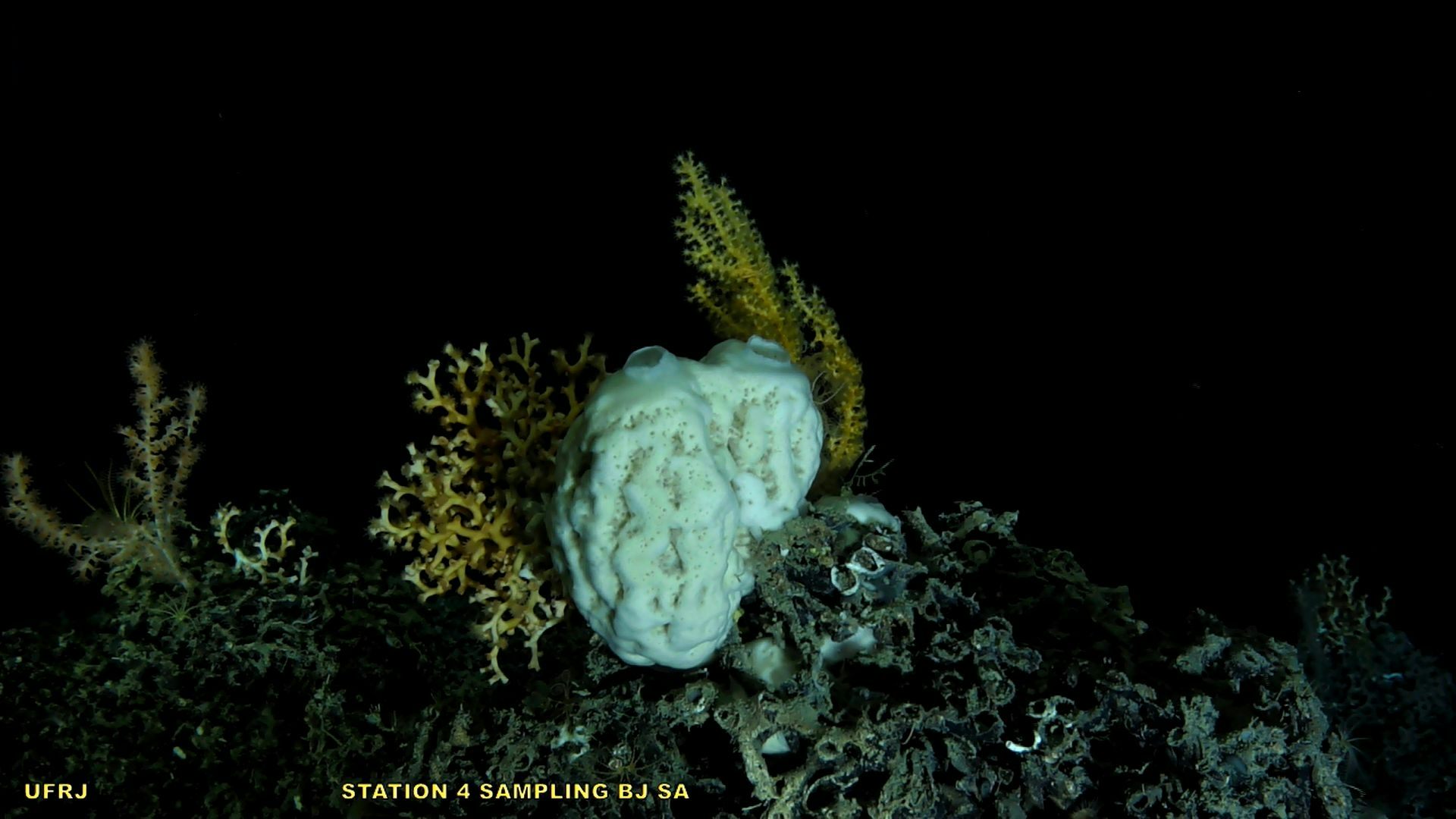
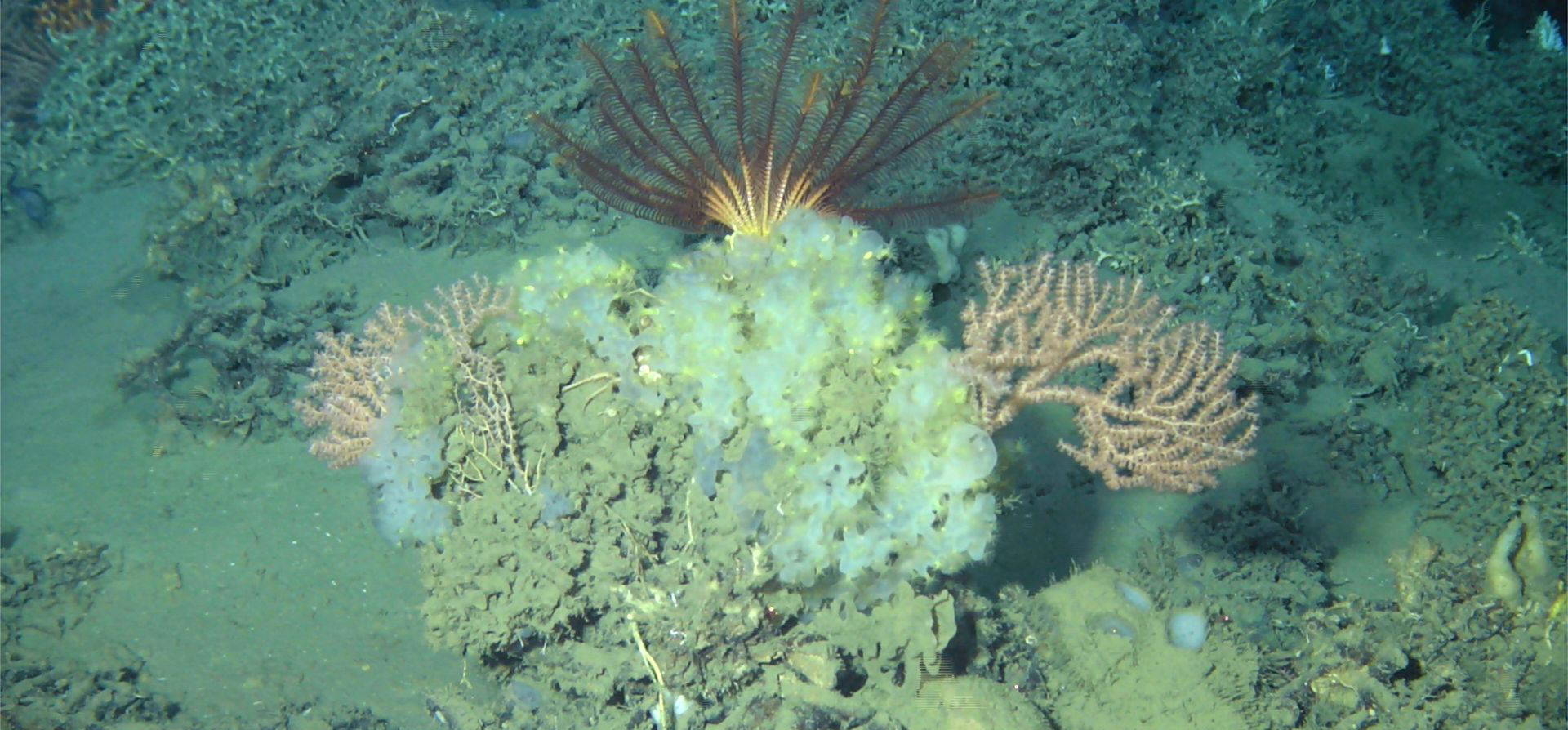
Deep-sea marine sponges are among the organisms that live in these mysterious dark waters. They form “gardens” that are among the largest ecosystems on the planet, some spanning thousands of square kilometres on the ocean floor. They act as ecosystem engineers, providing habitats to many other organisms living on the seafloor.
As esponjas marinhas de águas profundas estão entre os organismos que vivem nessas águas escuras e misteriosas. Elas formam “jardins” que são alguns dos maiores ecossistemas do planeta, alguns abrangendo milhares de quilômetros quadrados no fundo do mar. Elas atuam como engenheiras de ecossistemas, fornecendo habitats a muitos outros organismos que vivem no fundo do mar.
Individual sponges can also pump and filter thousands of litres of water every day through their bodies. The nutrients they release support other organisms. Yet we know remarkably little about how sponges survive, let alone thrive, in the inhospitable environment of the deep-sea.
As esponjas individuais também podem bombear e filtrar milhares de litros de água todos os dias através de seus corpos. Os nutrientes que elas liberam sustentam outros organismos. No entanto, sabemos muito pouco sobre como as esponjas sobrevivem, quanto mais prosperam, no ambiente inóspito das profundezas do mar.
Symbiosis with microbes is an important part of how marine sponges live. We’ve been studying deep-sea sponges to better understand life in the ocean’s depths. So far, we’ve found some sponges are packed with microorganisms that use energy from chemical reactions.
A simbiose com micróbios é uma parte importante de como as esponjas marinhas vivem. Temos estudado esponjas de águas profundas para entender melhor a vida nas profundezas do oceano. Até agora, descobrimos que algumas esponjas são repletas de microrganismos que usam energia de reações químicas.
This is called chemosynthesis and is commonly found in other deep-sea organisms, such as mussels and tubeworms living in hydrothermal vents – deep-sea “hot springs”.
Isso é chamado de quimiossíntese e é comumente encontrado em outros organismos de águas profundas, como mexilhões e vermes tubulares que vivem em fontes hidrotermais – “fontes termais” de águas profundas.
Our new study, published today in the journal Microbiome, shows sponges and their microbial partners also use a second strategy to make a living in the deep sea.
Nosso novo estudo, publicado hoje na revista Microbiome, mostra que as esponjas e seus parceiros microbianos também usam uma segunda estratégia para sobreviver nas profundezas do mar.
Two strategies, one sponge
Duas estratégias, uma esponja
All living organisms produce waste. Just like humans produce urine, many sponges produce ammonia as one of their waste products.
Todos os organismos vivos produzem resíduos. Assim como os humanos produzem urina, muitas esponjas produzem amônia como um de seus subprodutos.
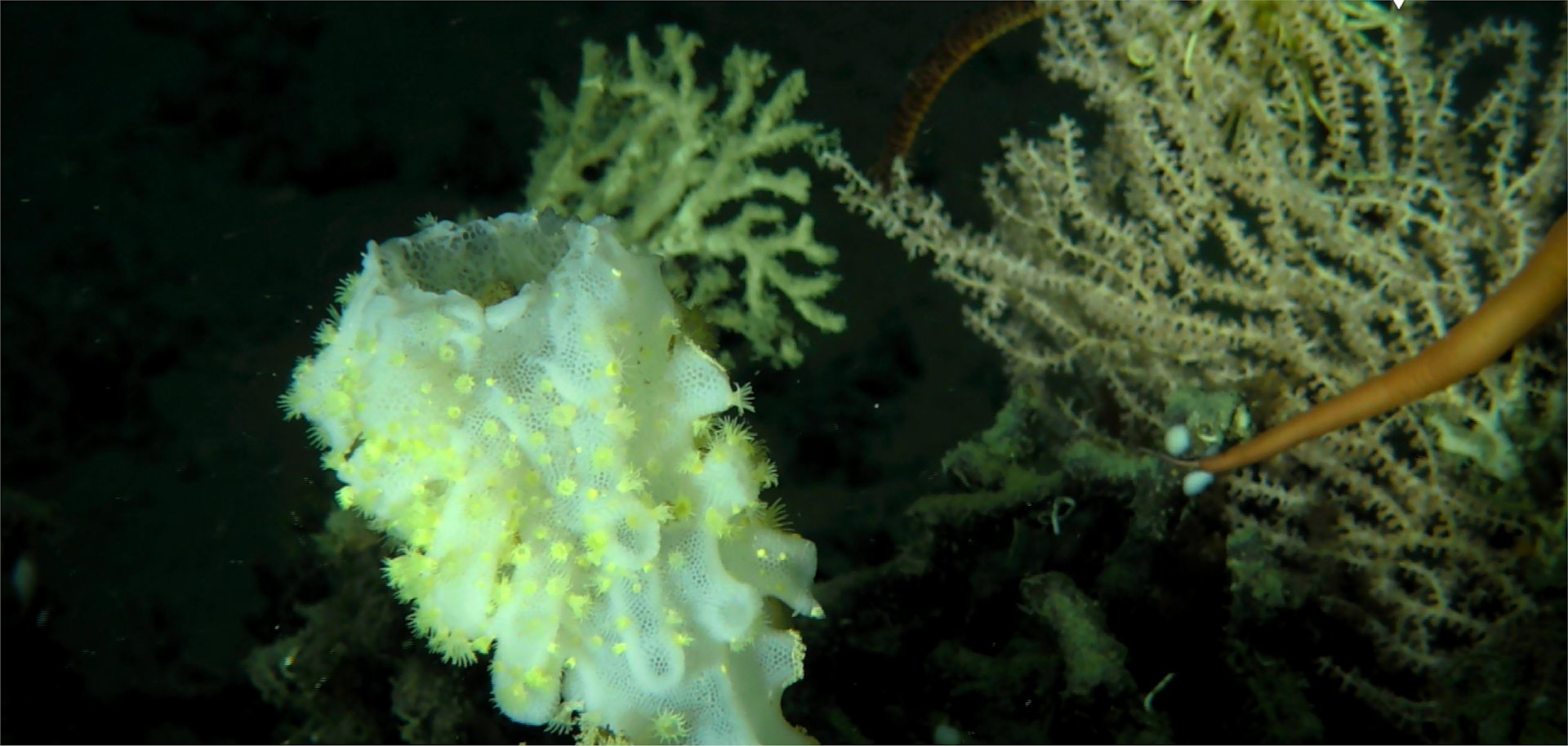
In this study, we analysed the Calyx species of deep-sea sponges from a depth of 830 metres.
Neste estudo, analisamos a espécie Calyx de esponjas de águas profundas a uma profundidade de 830 metros.
About 16% of their microbial partners use the familiar chemosynthesis process. With ammonia as the energy source, they use carbon dioxide dissolved in the water to build biomass – it’s a bit like plants growing through photosynthesis from sunlight, but in the dark.
Cerca de 16% de seus parceiros microbianos usam o familiar processo de quimiossíntese. Com amônia como fonte de energia, eles usam dióxido de carbono dissolvido na água para construir biomassa – é um pouco como as plantas crescendo por fotossíntese a partir da luz solar, mas no escuro.
In well-lit shallow waters, many sponges and corals have photosynthetic microbes that help them build biomass from carbon dioxide. Our findings show that in the dark depths of the ocean, sponges have microbial partners that use ammonia instead of light for the same process.
Em águas rasas e bem iluminadas, muitas esponjas e corais têm micróbios fotossintéticos que as ajudam a construir biomassa a partir de dióxido de carbono. Nossos achados mostram que nas profundezas escuras do oceano, as esponjas têm parceiros microbianos que usam amônia em vez de luz para o mesmo processo.
The remaining 84% of microbial partners are where it gets really interesting. Instead of chemosynthesis these microbes use heterotrophy, which means consuming organic matter to generate energy and biomass (like the vast majority of animals, humans are also heterotrophs) .
Os 84% restantes de parceiros microbianos é onde fica realmente interessante. Em vez de quimiossíntese, esses micróbios usam heterotrofia, o que significa consumir matéria orgânica para gerar energia e biomassa (assim como a grande maioria dos animais, os humanos também são heterótrofos) .
The problem here is that there’s little organic matter in the deep sea. Whatever falls down from the surface waters, such as dead plankton and algae, gets stripped by bacteria and small crustaceans of anything easily digestible as it sinks through the water column.
O problema aqui é que há pouca matéria orgânica no mar profundo. Tudo o que cai das águas superficiais, como plâncton e algas mortas, é despojado por bactérias e pequenos crustáceos de qualquer coisa facilmente digerível à medida que afunda pela coluna d’água.
So, the little amount of organic matter that reaches the seafloor is generally poor food for the sponge itself. But, as we discovered, not necessarily for its microbial partners.
Portanto, a pequena quantidade de matéria orgânica que chega ao fundo do mar é geralmente um alimento pobre para a própria esponja. Mas, como descobrimos, não necessariamente para seus parceiros microbianos.
It turns out the heterotrophic microbes in Calyx sponges have lots of enzymes specialised in breaking down complex compounds, such as xylan and pectin, which make up the hard-to-digest cell walls of algae.
Acontece que os micróbios heterotróficos nas esponjas Calyx têm muitas enzimas especializadas na quebra de compostos complexos, como xilana e pectina, que compõem as paredes celulares difíceis de digerir das algas.
Feeding on these algal skeletons would allow the microbes to thrive and to transform organic molecules into nutrients their sponge host can use.
Alimentar-se desses esqueletos de algas permitiria que os micróbios prosperassem e transformassem moléculas orgânicas em nutrientes que o hospedeiro esponja pode usar.
Protecting what we don’t yet understand
Protegendo o que ainda não entendemos
Our study shows that sponges and their microbial partners are complex, biogeochemical reactors. They use and recycle ammonia “urine”, carbon dioxide and hard-to-digest organics to generate biomass.
Nosso estudo mostra que esponjas e seus parceiros microbianos são reatores biogeoquímicos complexos. Eles usam e reciclam amônia “urina”, dióxido de carbono e orgânicos de difícil digestão para gerar biomassa.
The biomass can then support the growth of other organisms, such as brittle stars and fish, in turn supporting the broader community of animals living on the dark seafloor.
A biomassa pode então sustentar o crescimento de outros organismos, como estrelas-do-mar e peixes, por sua vez apoiando a comunidade mais ampla de animais que vivem no fundo do mar escuro.
Unfortunately, these ecosystems are under pressure from human activities. Deep-sea trawling physically destroys sponge gardens. Deep-sea mining, now being actively pursued for rare metals used in batteries and electronics, threatens to disrupt the deep-sea habitat in ways that might take centuries to recover.
Infelizmente, esses ecossistemas estão sob pressão de atividades humanas. O arrasto de fundo marinho destrói fisicamente os jardins de esponjas. A mineração em águas profundas, agora sendo ativamente buscada por metais raros usados em baterias e eletrônicos, ameaça perturbar o habitat de águas profundas de maneiras que podem levar séculos para se recuperar.
The United Nations has recognised deep-sea sponge gardens as vulnerable marine ecosystems, a formal acknowledgement of both their ecological importance and their fragility. But recognition alone is not enough.
As Nações Unidas reconheceram os jardins de esponjas de águas profundas como ecossistemas marinhos vulneráveis, um reconhecimento formal tanto de sua importância ecológica quanto de sua fragilidade. Mas o reconhecimento por si só não é suficiente.
If we destroy these habitats before we fully understand their role in carbon transformation, then we may lose a critical piece of Earth’s carbon cycle before fully realising it was there.
Se destruirmos esses habitats antes de entender completamente seu papel na transformação do carbono, podemos perder uma peça crítica do ciclo de carbono da Terra antes de perceber totalmente que ela estava lá.
Torsten Thomas receives funding from the Betty and Gordon Moore Foundation USA and the Australian Government.
Torsten Thomas recebe financiamento da Betty and Gordon Moore Foundation USA e do Governo Australiano.
Alessandro N. Garritano does not work for, consult, own shares in or receive funding from any company or organisation that would benefit from this article, and has disclosed no relevant affiliations beyond their academic appointment.
Alessandro N. Garritano não trabalha, não é consultor, não possui ações nem recebe financiamento de nenhuma empresa ou organização que se beneficiaria deste artigo, e não divulgou afiliações relevantes além de seu cargo acadêmico.
Read more
-
Os preços do petróleo voltarão verdadeiramente ao ‘normal’ algum dia?
Will oil prices ever truly go back to ‘normal’?
-

O que é a ‘armadilha de Tucídides’ que Xi alertou Trump? Lições de uma guerra antiga entre Atenas e Esparta
What is the ‘Thucydides trap’ Xi warned Trump about? Lessons from an ancient war between Athens and Sparta