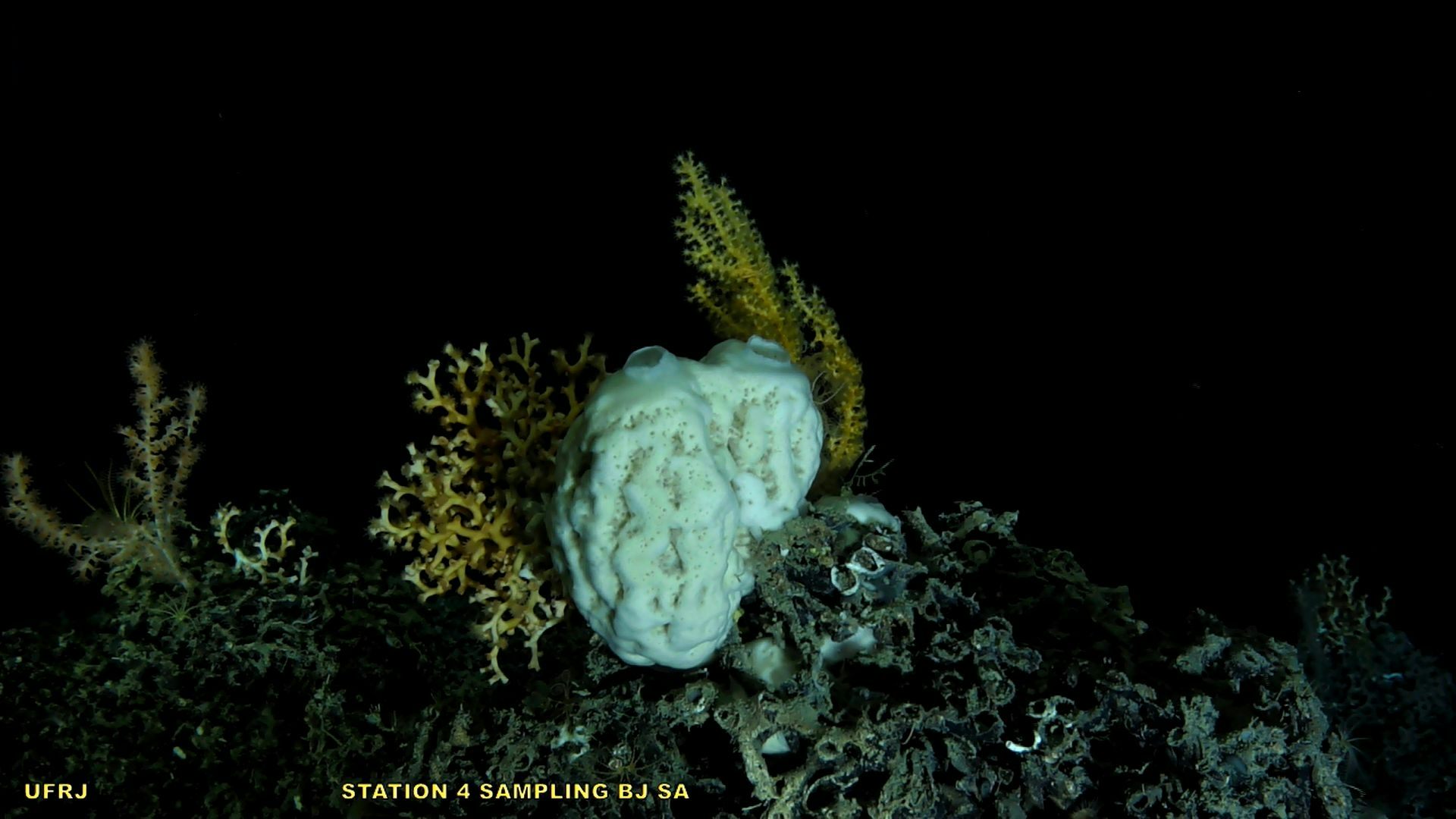
Las esponjas de aguas profundas sobreviven en completa oscuridad de maneras que antes no sabíamos
Deep-sea sponges survive in complete darkness in ways we didn’t know before
Beyond the sunlit ocean lies a vast abyss where organisms have to recycle every scrap available.
Más allá del océano iluminado por el sol yace un vasto abismo donde los organismos tienen que reciclar hasta el último recurso disponible.
When we think of marine life, we usually picture colourful coral reefs or dense seaweed forests filled with fish and other critters. The ocean that comes to mind is the one touched by sunlight.
Cuando pensamos en la vida marina, solemos imaginar arrecifes de coral coloridos o densos bosques de algas llenos de peces y otras criaturas. El océano que viene a la mente es aquel tocado por la luz solar.
However, most of the ocean is not like that. By volume, roughly 95% of the ocean consists of the permanently dark, cold deep sea. Despite such hostile conditions though, there is life in the ocean’s abyss.
Sin embargo, la mayor parte del océano no es así. Por volumen, aproximadamente el 95% del océano consiste en el mar profundo, frío y permanentemente oscuro. A pesar de estas condiciones hostiles, sin embargo, hay vida en el abismo oceánico.
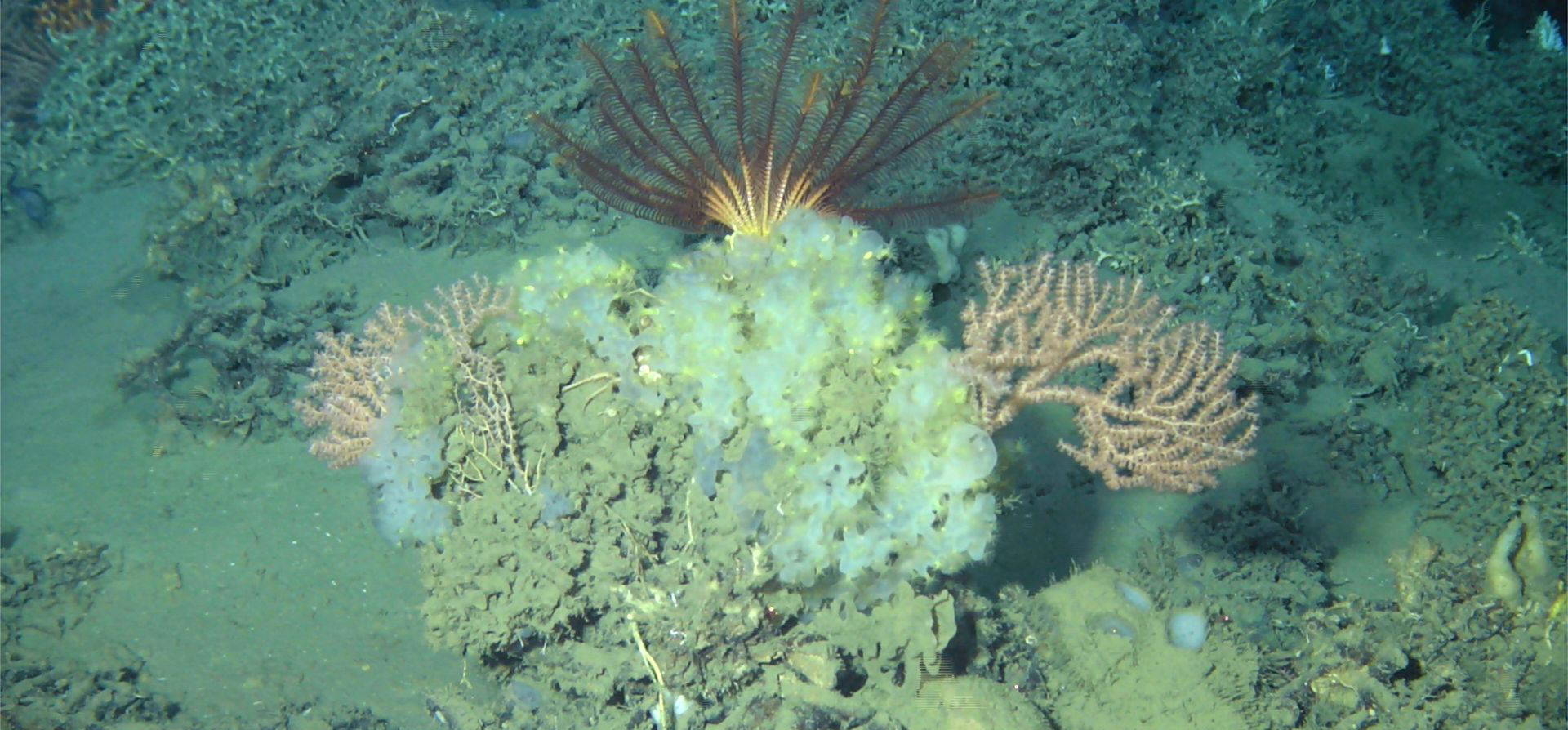
Deep-sea marine sponges are among the organisms that live in these mysterious dark waters. They form “gardens” that are among the largest ecosystems on the planet, some spanning thousands of square kilometres on the ocean floor. They act as ecosystem engineers, providing habitats to many other organisms living on the seafloor.
Las esponjas marinas de aguas profundas son entre los organismos que viven en estas misteriosas aguas oscuras. Forman «jardines» que son de los ecosistemas más grandes del planeta, algunos que abarcan miles de kilómetros cuadrados en el fondo oceánico. Actúan como ingenieros de ecosistemas, proporcionando hábitats a muchos otros organismos que viven en el fondo marino.
Individual sponges can also pump and filter thousands of litres of water every day through their bodies. The nutrients they release support other organisms. Yet we know remarkably little about how sponges survive, let alone thrive, in the inhospitable environment of the deep-sea.
Las esponjas individuales también pueden bombear y filtrar miles de litros de agua cada día a través de sus cuerpos. Los nutrientes que liberan sustentan a otros organismos. Sin embargo, sabemos muy poco sobre cómo sobreviven, y mucho menos cómo prosperan, las esponjas en el ambiente inhóspito de las profundidades marinas.
Symbiosis with microbes is an important part of how marine sponges live. We’ve been studying deep-sea sponges to better understand life in the ocean’s depths. So far, we’ve found some sponges are packed with microorganisms that use energy from chemical reactions.
La simbiosis con microbios es una parte importante de cómo viven las esponjas marinas. Hemos estado estudiando esponjas de aguas profundas para comprender mejor la vida en las profundidades del océano. Hasta ahora, hemos descubierto que algunas esponjas están repletas de microorganismos que utilizan energía de reacciones químicas.
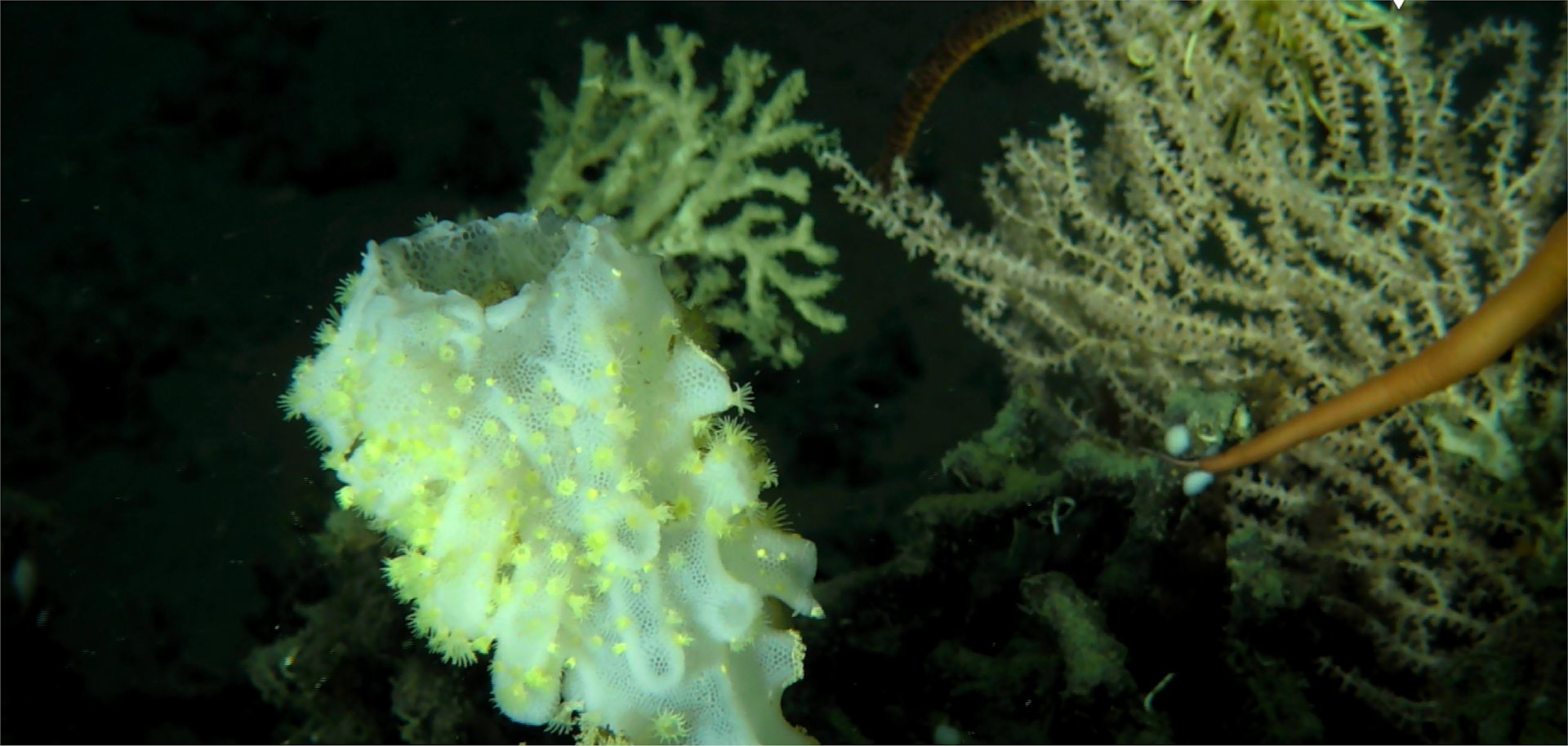
This is called chemosynthesis and is commonly found in other deep-sea organisms, such as mussels and tubeworms living in hydrothermal vents – deep-sea “hot springs”.
Esto se llama quimiosíntesis y se encuentra comúnmente en otros organismos de aguas profundas, como los mejillones y los gusanos tubícolas que viven en fuentes hidrotermales, o «manantiales calientes» de aguas profundas.
Our new study, published today in the journal Microbiome, shows sponges and their microbial partners also use a second strategy to make a living in the deep sea.
Nuestro nuevo estudio, publicado hoy en la revista Microbiome, muestra que las esponjas y sus socios microbianos también utilizan una segunda estrategia para subsistir en las profundidades marinas.
Two strategies, one sponge
Dos estrategias, una esponja
All living organisms produce waste. Just like humans produce urine, many sponges produce ammonia as one of their waste products.
Todos los organismos vivos producen desechos. Al igual que los humanos producen orina, muchas esponjas producen amoníaco como uno de sus productos de desecho.
In this study, we analysed the Calyx species of deep-sea sponges from a depth of 830 metres.
En este estudio, analizamos la especie Calyx de esponjas de aguas profundas a una profundidad de 830 metros.
About 16% of their microbial partners use the familiar chemosynthesis process. With ammonia as the energy source, they use carbon dioxide dissolved in the water to build biomass – it’s a bit like plants growing through photosynthesis from sunlight, but in the dark.
Aproximadamente el 16% de sus socios microbianos utilizan el conocido proceso de quimiosíntesis. Usando amoníaco como fuente de energía, utilizan dióxido de carbono disuelto en el agua para construir biomasa; es un poco como las plantas que crecen mediante fotosíntesis con luz solar, pero en la oscuridad.
In well-lit shallow waters, many sponges and corals have photosynthetic microbes that help them build biomass from carbon dioxide. Our findings show that in the dark depths of the ocean, sponges have microbial partners that use ammonia instead of light for the same process.
En aguas poco profundas y bien iluminadas, muchas esponjas y corales tienen microbios fotosintéticos que les ayudan a construir biomasa a partir de dióxido de carbono. Nuestros hallazgos muestran que en las profundidades oscuras del océano, las esponjas tienen socios microbianos que utilizan amoníaco en lugar de luz para el mismo proceso.
The remaining 84% of microbial partners are where it gets really interesting. Instead of chemosynthesis these microbes use heterotrophy, which means consuming organic matter to generate energy and biomass (like the vast majority of animals, humans are also heterotrophs) .
El 84% restante de los socios microbianos es donde se pone realmente interesante. En lugar de quimiosíntesis, estos microbios utilizan heterotrofía, lo que significa consumir materia orgánica para generar energía y biomasa (como la gran mayoría de los animales, los humanos también son heterótrofos) .
The problem here is that there’s little organic matter in the deep sea. Whatever falls down from the surface waters, such as dead plankton and algae, gets stripped by bacteria and small crustaceans of anything easily digestible as it sinks through the water column.
El problema aquí es que hay poca materia orgánica en el mar profundo. Todo lo que cae desde las aguas superficiales, como plancton y algas muertas, es despojado por bacterias y pequeños crustáceos de cualquier cosa fácilmente digerible a medida que se hunde a través de la columna de agua.
So, the little amount of organic matter that reaches the seafloor is generally poor food for the sponge itself. But, as we discovered, not necessarily for its microbial partners.
Por lo tanto, la pequeña cantidad de materia orgánica que llega al fondo marino es generalmente un alimento pobre para la propia esponja. Pero, como descubrimos, no necesariamente para sus socios microbianos.
It turns out the heterotrophic microbes in Calyx sponges have lots of enzymes specialised in breaking down complex compounds, such as xylan and pectin, which make up the hard-to-digest cell walls of algae.
Resulta que los microbios heterótrofos en las esponjas Calyx tienen muchas enzimas especializadas en descomponer compuestos complejos, como xilano y pectina, que componen las paredes celulares difíciles de digerir de las algas.
Feeding on these algal skeletons would allow the microbes to thrive and to transform organic molecules into nutrients their sponge host can use.
Alimentarse de estos esqueletos de algas permitiría a los microbios prosperar y transformar moléculas orgánicas en nutrientes que el huésped esponja puede utilizar.
Protecting what we don’t yet understand
Protegiendo lo que aún no entendemos
Our study shows that sponges and their microbial partners are complex, biogeochemical reactors. They use and recycle ammonia “urine”, carbon dioxide and hard-to-digest organics to generate biomass.
Nuestro estudio muestra que las esponjas y sus socios microbianos son reactores biogeoquímicos complejos. Utilizan y reciclan amoníaco “orina”, dióxido de carbono y orgánicos difíciles de digerir para generar biomasa.
The biomass can then support the growth of other organisms, such as brittle stars and fish, in turn supporting the broader community of animals living on the dark seafloor.
La biomasa puede luego sustentar el crecimiento de otros organismos, como estrellas frágiles y peces, lo que a su vez apoya a la comunidad más amplia de animales que viven en el fondo marino oscuro.
Unfortunately, these ecosystems are under pressure from human activities. Deep-sea trawling physically destroys sponge gardens. Deep-sea mining, now being actively pursued for rare metals used in batteries and electronics, threatens to disrupt the deep-sea habitat in ways that might take centuries to recover.
Desafortunadamente, estos ecosistemas están bajo presión de las actividades humanas. El arrastre en aguas profundas destruye físicamente los jardines de esponjas. La minería en aguas profundas, que ahora se busca activamente para obtener metales raros utilizados en baterías y electrónica, amenaza con alterar el hábitat de aguas profundas de maneras que podrían tardar siglos en recuperarse.
The United Nations has recognised deep-sea sponge gardens as vulnerable marine ecosystems, a formal acknowledgement of both their ecological importance and their fragility. But recognition alone is not enough.
Las Naciones Unidas han reconocido los jardines de esponjas de aguas profundas como ecosistemas marinos vulnerables, un reconocimiento formal tanto de su importancia ecológica como de su fragilidad. Pero el reconocimiento por sí solo no es suficiente.
If we destroy these habitats before we fully understand their role in carbon transformation, then we may lose a critical piece of Earth’s carbon cycle before fully realising it was there.
Si destruimos estos hábitats antes de comprender completamente su papel en la transformación del carbono, podríamos perder una pieza crítica del ciclo de carbono de la Tierra sin darnos cuenta de que estuvo allí.
Torsten Thomas receives funding from the Betty and Gordon Moore Foundation USA and the Australian Government.
Torsten Thomas recibe financiación de la Fundación Betty y Gordon Moore de EE. UU. y del Gobierno australiano.
Alessandro N. Garritano does not work for, consult, own shares in or receive funding from any company or organisation that would benefit from this article, and has disclosed no relevant affiliations beyond their academic appointment.
Alessandro N. Garritano no trabaja, asesora, posee acciones ni recibe financiación de ninguna empresa u organización que se beneficiaría de este artículo, y no ha revelado afiliaciones relevantes más allá de su nombramiento académico.
Read more
-
La basura espacial en caída plantea un riesgo creciente a medida que las naves espaciales se vuelven más fuertes y resistentes al calor.
Falling space debris poses an escalating risk as spacecraft get stronger and more heat resistant
-
Venecia se está hundiendo: analizamos cada plan para salvarla, y ninguno preservaría la ciudad como la conocemos
Venice is sinking – we analysed every plan to save it, and none would preserve the city as we know it