为什么人们又对(并偷)宝可梦卡牌如此着迷?
Why are people obsessed with (and stealing) Pokemon car…
Pokémon cards emerged from Japan’s love affair with collectables – but creator Satoshi Tajiri had a vision for global conquest.
宝可梦卡牌源于日本对收藏品的热爱——但创作者鸟山直人却有着全球征服的愿景。
In 1973, Japanese food company Calbee started attaching free collectable baseball player cards to its potato chip packets (and continues to do so today) . It was mimicking a trend that had already taken off in tobacco markets in Japan and overseas. Baseball, Japan’s national sport, was an obvious choice for Calbee to attract consumers.
1973年,日本食品公司Calbee开始在其薯片包装上附赠免费的集邮棒球卡(至今仍在继续)。这模仿了日本和海外烟草市场已经兴起的潮流。棒球作为日本的国球,对Calbee来说是一个显而易见的吸引消费者的方式。
Some four years later, rival company Lotte joined the trend, launching a chocolate wafer snack with Bikkuriman “surprise man” stickers. These stickers quickly caught on – and eventually spawned an entire fantasy world that made its way to anime and manga.
大约四年后,竞争对手乐天(Lotte)也加入了这一潮流,推出了带有Bikkuriman“惊喜人”贴纸的巧克力薄脆零食。这些贴纸迅速走红——并最终催生了一个整个的幻想世界,进入了动画和漫画领域。
Both Calbee and Lotte helped set a template for how children’s collectables could become objects of desire, competition and, later, nostalgia. Bikkuriman is still sold today, with rare 1980s Super Zeus stickers going for thousands of dollars to adult collectors.
Calbee和乐天共同为儿童收藏品如何成为欲望、竞争,以及后来怀旧的对象设定了模板。Bikkuriman至今仍在销售,稀有的20世纪80年代超级宙斯贴纸甚至能卖到成人的收藏家手中数千美元。
It was against this backdrop that Satoshi Tajiri (born 1965) grew up. He would have been about 12 when the first Bikkuriman card was released. Satoshi himself would end up creating one of the most popular collectable card games in the world: Pokémon.
正是在这样的背景下,鸟山石平(Satoshi Tajiri,生于1965年)成长起来的。当第一张Bikkuriman卡发行时,他大约12岁。石平本人最终创造了世界上最受欢迎的收藏卡牌游戏之一:宝可梦(Pokémon)。
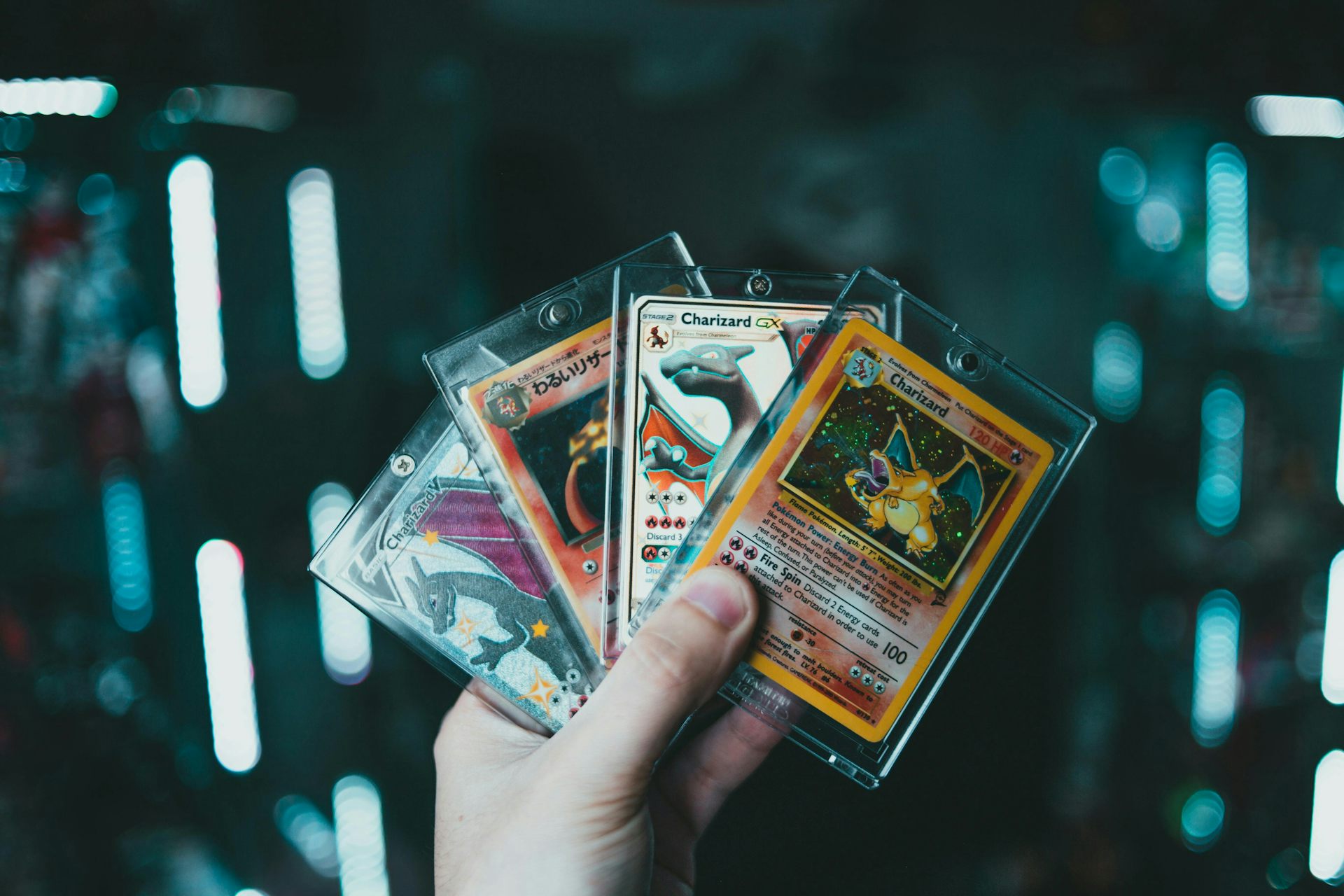
These cards are now so highly coveted they are driving international crime, getting banned from schools, and locked behind glass cabinets in stores.
如今,这些卡牌的价值极高,以至于它们引发了国际犯罪,被学校禁止,并在商店里用玻璃柜锁起来。
Creating the cultural conditions for a hit
为一款爆款创造文化条件
Satoshi drew on a childhood memory when he created Pokémon (short for “Pocket Monsters”): catching insects and trading them with friends.
小智在创作《宝可梦》(Pokémon,即“口袋怪兽”的简称)时,受到了童年记忆的启发:捕捉昆虫并与朋友交换它们。
He imagined a Nintendo Game Boy game where players could collect and exchange monsters. After seven years in development, Pocket Monsters Red and Green launched in February 1996. This was followed by a trading card game in October.
他设想了一款任天堂Game Boy游戏,玩家可以在其中收集和交换怪兽。经过七年的开发,《宝可梦红》和《宝可梦蓝》于1996年2月发布。随后,游戏卡牌版于同年10月推出。
In 1997, the anime began airing on Japanese television, with a protagonist also named Satoshi (the name still used in Japan today) . Pikachu – originally just one of 151 monsters – became the face of the franchise.
1997年,动画片在日本电视上开始播出,主角的名字也叫小智(这个名字至今仍在日本使用)。皮卡丘——最初只是151个怪兽中的一个——成为了整个系列的代表形象。
Like Bikkuriman, Pocket Monster spread rapidly across games, TV and print media. But unlike Bikkuriman, it also aimed to cross borders.
像《毕克曼》一样,《宝可梦》迅速传播到游戏、电视和印刷媒体等各个领域。但与《毕克曼》不同的是,《宝可梦》还旨在跨越国界。
The English-language version of the game was released in 1998, with its name changed to Pokémon. “Pocket Monsters” may have sounded awkward, or even suggestive, to English speakers. Although it remains the official name in Japan, most Japanese fans also use the portmanteau, Pokémon.
游戏的英文版于1998年发布,名称更改为Pokémon。“Pocket Monsters”对英语使用者来说可能听起来很别扭,甚至带有暗示性。尽管在日本仍是官方名称,但大多数日本粉丝也使用这个合成词“Pokémon”。
Character names were also adapted and anglicised for overseas audiences.
角色名称也为海外观众进行了改编和英语化。
For instance, Satoshi became Ash. Nyarth, a bipedal cat thought to be inspired by the Japanese lucky charm maneki-neko, became Meowth, to match the English-language cat sound. (Pikachu, drawing on the Japanese onomatopoeia of “pika” and “chu”, was retained.)
例如,小智变成了Ash。奈亚斯(Nyarth)——一只被认为受到日本招财猫maneki-neko启发的双足猫——变成了Meowth,以匹配英文的猫叫声。(皮卡丘则保留了其源自日语拟声词“pika”和“chu”的特点。)
Soon enough, the character names, types and Pokédex numbers became shared internationally, allowing players the world over to connect through a shared Pokémon language. In 2004, the first World Championship for the Pokémon Trading Card Game was held in the United States.
很快,角色名称、属性和图鉴编号便成为国际共享的知识,让世界各地的玩家能够通过共同的宝可梦语言建立联系。2004年,首届宝可梦卡牌游戏世界锦标赛在美国举行。
Squirtle in your neighbourhood
你家附近的妙蛙种子
It’s difficult for any single commodity to maintain popularity over decades. During the early 2010s, Nintendo suffered significantly, even falling into deficit, and the Pokémon franchise faced competition from rivals such as Yu-Gi-Oh! and Yo-Kai Watch.
任何单一商品都很难维持数十年的受欢迎程度。在2010年代初期,任天堂遭受了重大损失,甚至陷入亏损,而宝可梦系列面临着《游戏王》和《妖怪手表》等竞争对手的挑战。
The old-school model of marketing through traditional media was no longer enough for global dominance. To survive, Pokémon would need to adopt the logic of new media platforms – and catch the eye of the online generation. Then came Pokémon GO.
通过传统媒体进行营销的旧模式已不足以实现全球主导地位。为了生存,宝可梦需要采用新媒体平台的逻辑——从而吸引在线一代的目光。随后,宝可梦GO应运而生。
The 2016 smartphone app was developed by American software company Niantic, in collaboration with Nintendo and The Pokémon Company.
这款2016年的智能手机应用程序由美国软件公司Niantic与任天堂和宝可梦公司合作开发。
Through augmented reality, parks, shopping streets and neighbourhoods gained new meaning as potential locations for your next Pokémon catch. One grandfather in Taiwan made the news for using 64 smartphones at once.
通过增强现实技术,公园、购物街和社区获得了新的意义,成为捕捉下一只宝可梦的潜在地点。一位台湾的老人因一次使用64部智能手机而登上新闻头条。
Some players even travelled internationally to capture region-exclusive Pokémon, such as Kangaskhan in Australia, which was clearly modelled on a kangaroo.
有些玩家甚至跨国旅行,捕捉区域限定的宝可梦,例如在澳大利亚的袋熊,它明显是以袋鼠为原型。
Downloaded more than 500 million times, the enormous success of Pokémon GO played a key role in re-energising the global Pokémon fandom. Many players sought out the cards they had collected as children.
《宝可梦GO》下载量超过5亿次,巨大的成功在重振全球宝可梦粉丝群方面发挥了关键作用。许多玩家寻找着他们儿时收集的卡牌。
Interest was further amplified by the release of Pokémon TCG Pocket. Released in 2024, this app digitised the old-school Japanese tabletop to make it accesible for all.
《宝可梦卡牌口袋》(Pokémon TCG Pocket)的发布进一步提升了兴趣。这款于2024年发布的应用程序将传统的日本桌面游戏数字化,使其对所有人触手可及。
Chasing profits and childhood memories
追逐利润与童年回忆
Then there was another, less predictable factor that drove the popularity of Pokémon cards: COVID lockdowns. With more time at home, people dug out old binders and rediscovered their childhood cards – many of which had high value – and began trading to make money.
另一个不太可预测的因素推动了宝可梦卡牌的流行:新冠疫情封锁。由于在家时间增多,人们翻出了旧卡册,重新发现了童年卡牌——其中许多具有高价值——并开始交易以赚钱。
This has led to a renewed interest in rare cards such as the Pikachu Illustrator, which was distributed in 1998 to the winners of an illustration contest. The card features artwork by Atsuko Nishida, Pikachu’s original designer. With only 39 copies known to exist, collectors call it the “holy grail” of Pokémon cards.
这引发了对稀有卡牌的重新兴趣,例如“皮卡丘插画师”,该卡牌于1998年分发给插画比赛的获胜者。该卡牌的艺术作品由皮卡丘的原设计师西田敦子绘制。由于已知仅有39张,收藏家称其为宝可梦卡牌的“圣杯”。
Earlier this year, influencer Logan Paul sold his Pikachu Illustrator for US$16.492 million, setting a record for the most expensive trading card ever sold.
今年早些时候,网红洛根·保罗以1649.2万美元的价格出售了他的“皮卡丘插画师”,创下了有史以来最昂贵交易卡牌的记录。
This potential for profit has led to a surge in Pokémon card-related crime, as the cards are easy to carry, hide and move internationally. We’ve seen a wave of burglaries targeting hobby shops all over the world, including in Australia, the US and Japan.
这种盈利潜力导致了与宝可梦卡牌相关的犯罪激增,因为这些卡牌易于携带、隐藏和国际运输。我们看到了一波针对全球爱好商店的入室盗窃案,包括在澳大利亚、美国和日本。
Many fans may now find themselves unable to purchase cards due to the economic bubble. Still, it seems demand is high; roughly 10.2 billion cards were printed from 2024 to 2025.
由于经济泡沫,许多粉丝现在可能无法购买卡牌。不过,需求似乎仍然很高;据估计,2024年至2025年期间印刷了大约102亿张卡牌。
Pokémon cards are a rare kind of tangible object. They connect the digital to the physical – the past to the present – and Japan to the world. They aren’t just collectables; they are a cultural currency, which, unfortunately, can be stolen.
宝可梦卡牌是一种稀有的有形物品。它们连接了数字与实体——连接了过去与现在——连接了日本与世界。它们不仅仅是收藏品;它们是一种文化货币,但遗憾的是,这种货币可以被偷走。
Tets Kimura does not work for, consult, own shares in or receive funding from any company or organisation that would benefit from this article, and has disclosed no relevant affiliations beyond their academic appointment.
Tets Kimura不为任何从本文中受益的公司或组织工作、提供咨询、拥有股份或接受资金,并且除了其学术任命之外,未披露任何相关隶属关系。