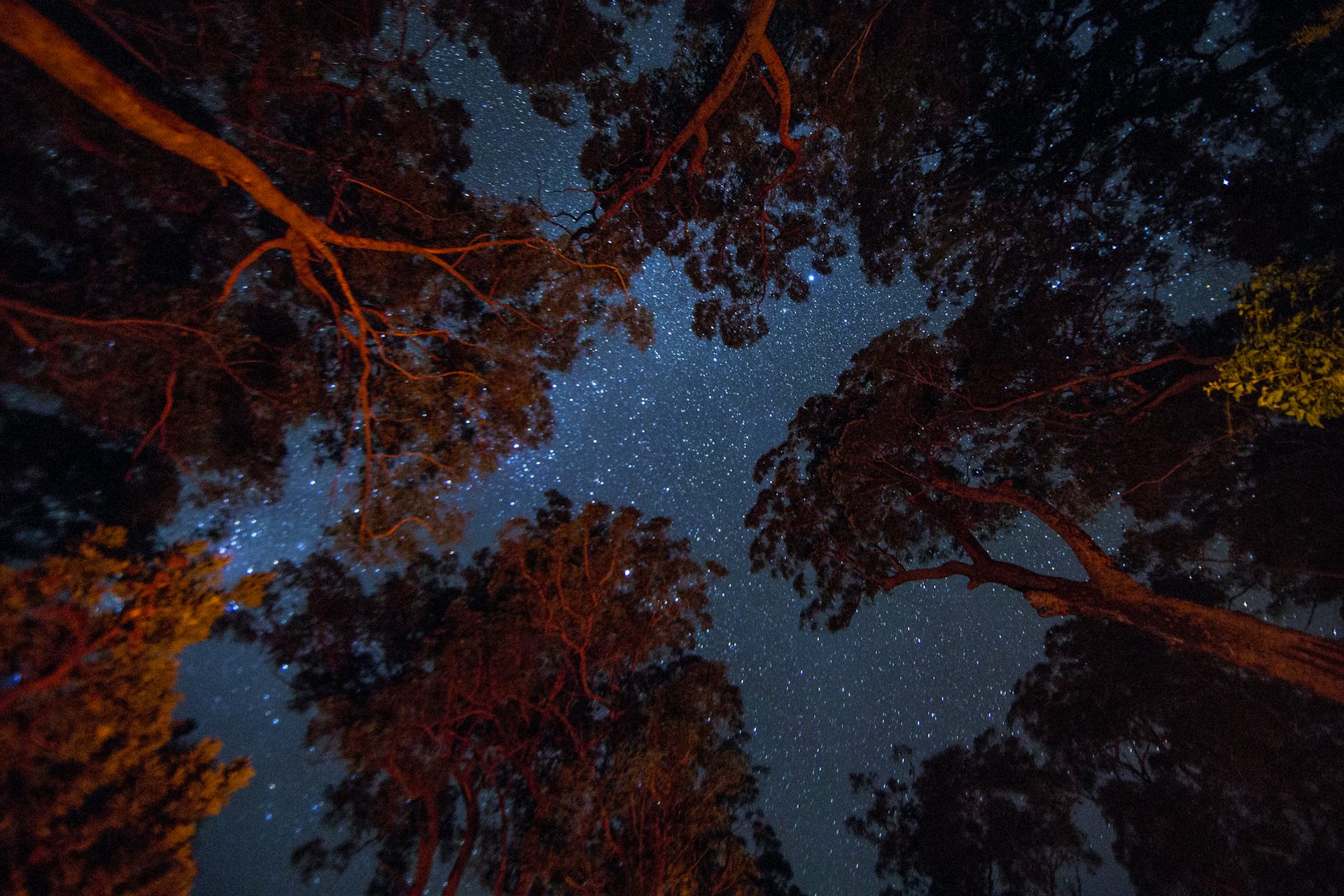
Os australianos indígenas foram os primeiros astrônomos do mundo. Mas o conhecimento deles está agora em risco.
Indigenous Australians were the world’s first astronomers. But their knowledge is now at risk
Aboriginal communities have observed the night sky for millennia. But they face a growing threat – light pollution.
As comunidades aborígenes observaram o céu noturno por milênios. Mas enfrentam uma ameaça crescente – a poluição luminosa.
I’m a proud Yorta Yorta and Barapa Barapa man, an Indigenous astronomer and a trainee ecologist.
Sou um homem Yorta Yorta e Barapa Barapa orgulhoso, astrônomo indígena e ecologista em treinamento.
When I look at the night sky, I don’t just see stars. Instead, I see an ancient knowledge system that has guided people, culture and Country for tens of thousands of years.
Quando olho para o céu noturno, não vejo apenas estrelas. Em vez disso, vejo um sistema de conhecimento ancestral que guiou pessoas, cultura e Terra por dezenas de milhares de anos.
But that knowledge is now at risk. In many of our towns and cities, the stars are increasingly hidden behind a haze of artificial light. And that light pollution is threatening a unique way of understanding the world.
Mas esse conhecimento está agora em risco. Em muitas de nossas cidades e vilas, as estrelas estão cada vez mais escondidas atrás de uma névoa de luz artificial. E essa poluição luminosa está ameaçando uma maneira única de entender o mundo.
A ‘living classroom’
Uma ‘sala de aula viva’
The night sky is a living classroom, at once a calendar, map, lore book and weather forecast.
O céu noturno é uma sala de aula viva, sendo ao mesmo tempo um calendário, mapa, livro de lendas e previsão do tempo.
Indigenous Elders share this knowledge with younger people – often outdoors, on Country, beneath the stars.
Anciãos Indígenas compartilham esse conhecimento com os jovens – muitas vezes ao ar livre, em seu território, sob as estrelas.
They may start by talking about constellations, which have helped guide Indigenous Australians for millenia.
Eles podem começar falando sobre constelações, que ajudaram a guiar os australianos indígenas por milênios.
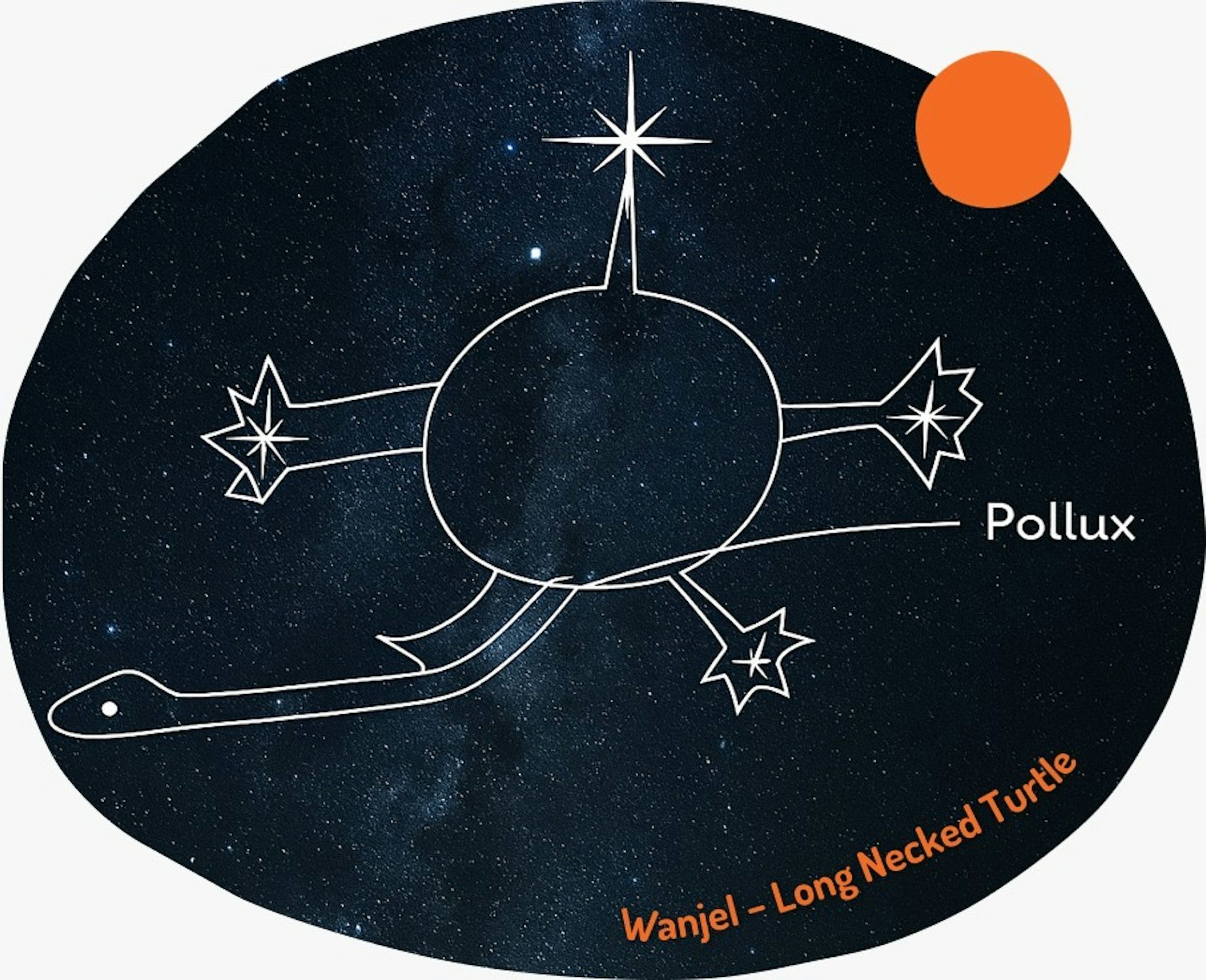
One example is the Wangel or “long-necked turtle” constellation. Various Indigenous communities looked to this constellation, based on the bright orange star Pollux, to know when it was time to travel and gather for different ceremonies. This may be because the bright orange star reflects the turtle’s orange colouring.
Um exemplo é a constelação Wangel ou “tartaruga de pescoço longo”. Várias comunidades indígenas observavam esta constelação, baseada na brilhante estrela Pollux, para saber quando era hora de viajar e se reunir para diferentes cerimônias. Isso pode ser porque a estrela laranja brilhante reflete a coloração laranja da tartaruga.
Another is the Djurt or “red-rumped parrot” constellation. This constellation is based on the Antares star which appears bright red with a blue halo, resembling the parrot’s red and blue feathers. This constellation guided communities to spots where food was abundant, such as grasslands that were full of seeds.
Outra é a constelação Djurt ou “papagaio de ventre vermelho”. Esta constelação é baseada na estrela Antares, que aparece vermelho vivo com um halo azul, assemelhando-se às penas vermelhas e azuis do papagaio. Esta constelação guiou comunidades a locais onde o alimento era abundante, como prados cheios de sementes.
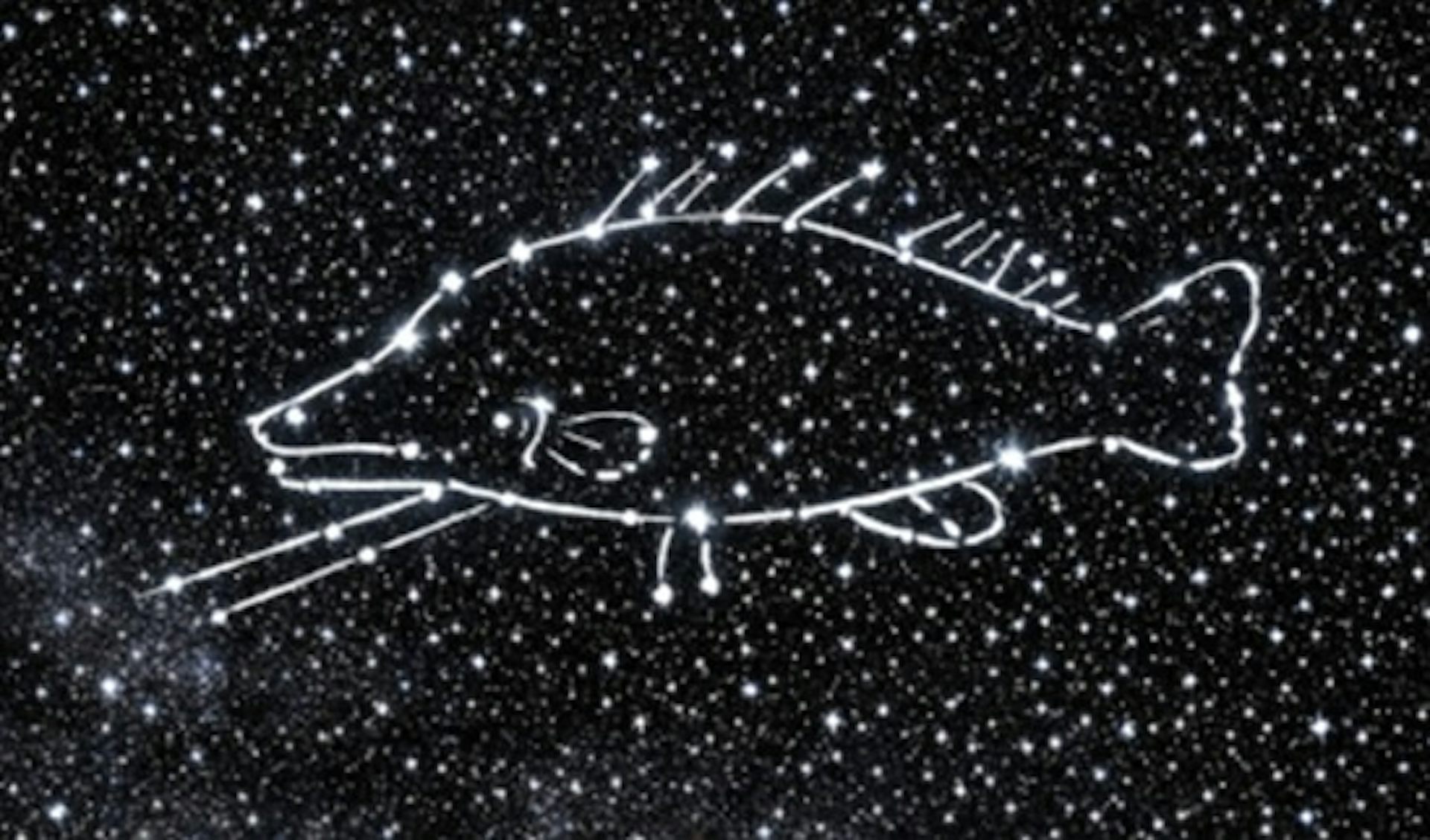
Constellations also hold lore, or rules, that guide sustainable practices. For example, when the Otchocut or “Murray cod” constellation appears in the night sky, we do not hunt Murray Cod. This is because it becomes visible when the rivers are warm and the fish are breeding, typically between October to November. Similarly, when the red-rumped parrot constellation appears, that means the parrot is breeding and therefore cannot be hunted.
As constelações também contêm lendas, ou regras, que guiam práticas sustentáveis. Por exemplo, quando a constelação Otchocut ou “Murray cod” aparece no céu noturno, não caçamos o Murray Cod. Isso ocorre porque ele se torna visível quando os rios estão quentes e os peixes estão se reproduzindo, tipicamente entre outubro e novembro. Da mesma forma, quando a constelação do papagaio de ventre vermelho aparece, isso significa que o papagaio está se reproduzindo e, portanto, não pode ser caçado.
The stars may also provide weather forecasts, but only if you have the knowledge and observation skills to understand them. For example, a star that twinkles and appears bright blue suggests a storm is coming. And if a cluster of stars twinkle quickly, it may mean the wind will become stronger.
As estrelas também podem fornecer previsões do tempo, mas apenas se você tiver o conhecimento e as habilidades de observação para entendê-las. Por exemplo, uma estrela que pisca e parece azul brilhante sugere que uma tempestade está chegando. E se um aglomerado de estrelas piscar rapidamente, pode significar que o vento ficará mais forte.
Stars and songlines
Estrelas e trilhas de canto
The routes laid out by the stars are often connected to songlines. Songlines, sometimes known as dreaming tracks, are cultural pathways that connect traditional sites. Songlines also act as “drop pins” that indicate where important resources, such as waterholes and food, may be.
As rotas traçadas pelas estrelas estão frequentemente conectadas às trilhas de canto (songlines) . As trilhas de canto, às vezes conhecidas como trilhas do sonho, são caminhos culturais que conectam locais tradicionais. As trilhas de canto também funcionam como “marcadores” que indicam onde podem estar recursos importantes, como poços d’água e alimentos.
A well-known example is the Seven Sisters dreamtime story, which recounts the journey of seven sisters that ultimately become part of the Taurus constellation. For some Indigenous communities in central Australia, the Seven Sisters serve as a kind of celestial map. This is because the seven stars roughly mirror the location of seven waterholes.
Um exemplo bem conhecido é a história do tempo do sonho das Sete Irmãs, que narra a jornada de sete irmãs que acabam fazendo parte da constelação de Touro. Para algumas comunidades indígenas no centro da Austrália, as Sete Irmãs servem como um tipo de mapa celestial. Isso ocorre porque as sete estrelas espelham aproximadamente a localização de sete poços d’água.
The threat of light
A ameaça da luz
As our cities grow, light pollution from streetlights, floodlights and buildings is spreading. As a result, it’s increasingly rare to see dark nights and starry skies near urban areas.
À medida que nossas cidades crescem, a poluição luminosa de postes de luz, holofotes e edifícios está se espalhando. Como resultado, é cada vez mais raro ver noites escuras e céus estrelados perto de áreas urbanas.
For Indigenous communities, this has a direct cultural impact.
Para as comunidades indígenas, isso tem um impacto cultural direto.
Light pollution makes it near impossible to connect with the stars, and therefore share Indigenous sky knowledge with younger generations.
A poluição luminosa torna quase impossível conectar-se às estrelas e, portanto, compartilhar o conhecimento indígena do céu com as gerações mais jovens.
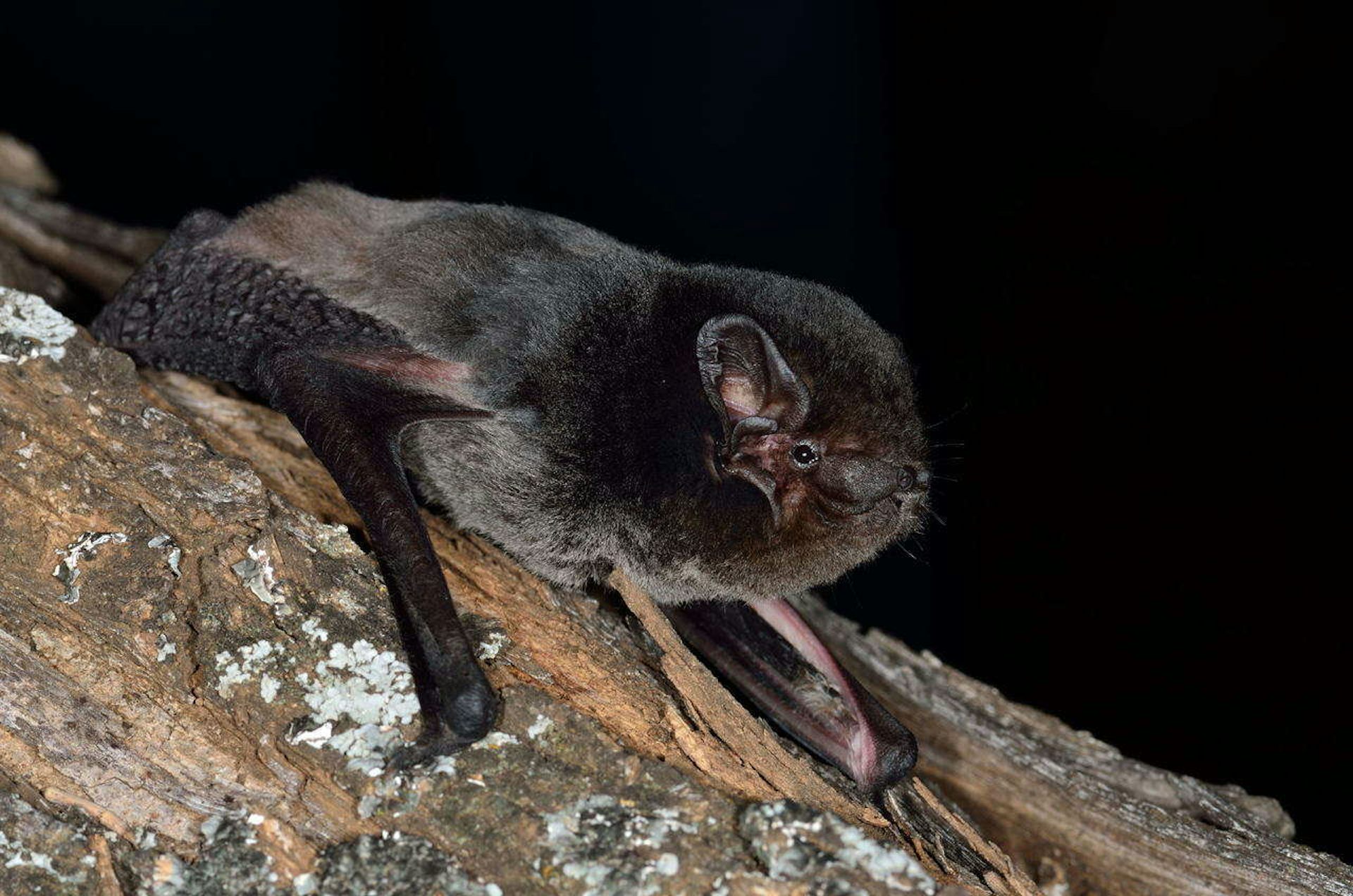
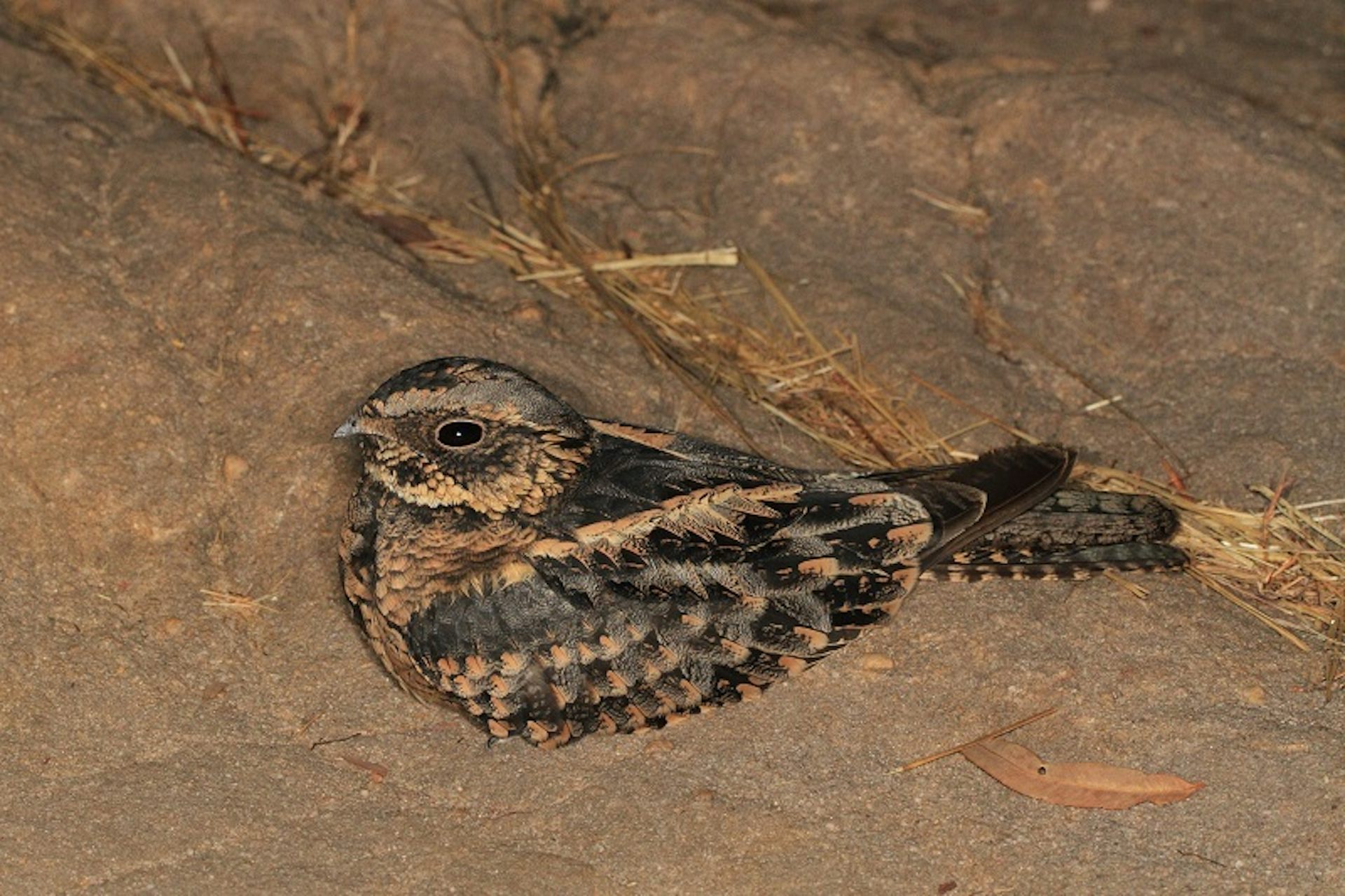
Light pollution also affects culturally important species. In Barapa Barapa culture, the microbat is a men’s totem and the nightjar is a women’s totem. Both are nocturnal animals that rely on darkness, so artificial light makes it harder for them to survive.
A poluição luminosa também afeta espécies culturalmente importantes. Na cultura Barapa Barapa, o morcego-micro é um totem masculino e o pássaro-noturno é um totem feminino. Ambos são animais noturnos que dependem da escuridão, então a luz artificial torna mais difícil sua sobrevivência.
Beyond culture, light pollution has widespread ecological impacts, affecting how animals grow, behave and breed. Research suggests light pollution can stop clownfish eggs from hatching, shrink the brains of spiders and disorient threatened seabirds such as petrels and shearwaters.
Além da cultura, a poluição luminosa tem impactos ecológicos generalizados, afetando como os animais crescem, se comportam e se reproduzem. Pesquisas sugerem que a poluição luminosa pode impedir o nascimento dos ovos de peixes-palhaço, encolher os cérebros das aranhas e desorientar aves marinhas ameaçadas, como petreles e albatrozes.
It can also negatively affect human health. Research shows artificial light – particularly from LED lights and electronic devices – may trigger sleep and mood disorders and certain cardiovascular problems.
Também pode afetar negativamente a saúde humana. Pesquisas mostram que a luz artificial – particularmente de LEDs e dispositivos eletrônicos – pode desencadear distúrbios do sono e do humor, e certos problemas cardiovasculares.
So, what can we do?
Então, o que podemos fazer?
The good news is, we can each help reduce light pollution by making simple lifestyle changes. Here are some ideas:
A boa notícia é que podemos ajudar a reduzir a poluição luminosa fazendo simples mudanças no estilo de vida. Aqui estão algumas ideias:
turn off outdoor lights whenever you’re not using them
apagar as luzes externas sempre que não estiverem em uso
use lightbulbs with a lower brightness and warmer colouring
usar lâmpadas com menor brilho e cor mais quente
choose light designs that direct light only where its needed
escolher designs de iluminação que direcionem a luz apenas para onde é necessária
close curtains and blinds at night to stop indoor light from spilling out
fechar cortinas e persianas à noite para impedir que a luz interna vaze
during festive times such as Christmas, opt for daytime decorations instead of outdoor lights.
durante épocas festivas, como o Natal, opte por decorações diurnas em vez de luzes externas.
We can also better regulate the use of artificial light outdoors. Currently, Australia does not have any regulations around light pollution. But countries such as France have substantially reduced their light pollution levels by regulating what kind of lighting people can use and install.
Também podemos regulamentar melhor o uso de luz artificial ao ar livre. Atualmente, a Austrália não possui regulamentações sobre poluição luminosa. Mas países como a França reduziram substancialmente seus níveis de poluição luminosa regulamentando que tipo de iluminação as pessoas podem usar e instalar.
Together, stronger regulation and simple lifestyle tweaks could help us tackle light pollution. And that’s key to keeping Indigenous sky knowledge alive.
Juntos, regulamentações mais fortes e simples ajustes no estilo de vida poderiam ajudar a combater a poluição luminosa. E isso é fundamental para manter vivo o conhecimento indígena sobre o céu.
Kai Lane works for Ecology Restoration Australia and also co-leads the Habitat Warriors program.
Kai Lane trabalha para a Ecology Restoration Australia e também co-lidera o programa Habitat Warriors.
Jaana Dielenberg is an Ambassador for the Australasian Dark Sky Alliance, Science Communication Director of the Biodiversity Council, Honorary Fellow at The University of Melbourne and University Fellow (Biodiversity) at Charles Darwin University. She was previously employed under a grant funded by the Australian government’s National Environmental Science Program Threatened Species Recovery Hub.
Jaana Dielenberg é Embaixadora da Australasian Dark Sky Alliance, Diretora de Comunicação Científica do Biodiversity Council, Membro Honorário da University of Melbourne e Membro Universitário (Biodiversidade) da Charles Darwin University. Ela foi anteriormente empregada sob uma bolsa de estudos financiada pelo National Environmental Science Program Threatened Species Recovery Hub do governo australiano.
Kaori Yokochi is a lecturer at Deakin University. She receives funding from various organisations for her ecological research. She is also a member of the Network for Ecological Research on Artificial Light and the Australasian Dark Sky Alliance.
Kaori Yokochi é palestrante na Deakin University. Ela recebe financiamento de várias organizações para sua pesquisa ecológica. Ela também é membro da Network for Ecological Research on Artificial Light e da Australasian Dark Sky Alliance.
Read more
-
Cientistas descartaram o pior cenário climático – porque a ação está fazendo a diferença
Scientists have scrapped the worst-case climate scenario – because action is making a difference