De costelas de boi a um passeio ‘celestial’: O simbolismo da cúpula Xi-Trump destacou o poder americano e a tradição chinesa
From beef ribs to a ‘heavenly’ walk: Xi-Trump summit symbolism underscored American power and Chinese tradition
A cultural historian of modern China explains the meaning behind some of the venue choices during President Donald Trump’s visit to Beijing.
Um historiador cultural da China moderna explica o significado por trás de algumas das escolhas de locais durante a visita do Presidente Donald Trump a Pequim.
Diplomacy often masquerades as theater. And nearly nine years after his first state visit to China, Donald Trump returned to Beijing with an extended cast of characters.
A diplomacia muitas vezes se disfarça de teatro. E quase nove anos após sua primeira visita de estado à China, Donald Trump retornou a Pequim com um elenco estendido de personagens.
Alongside the U.S. president on his May 2026 visit was a senior delegation of politicians including his secretary of defense, and a phalanx of business leaders and technology executives. It was a traveling display of American political and corporate power.
Junto ao presidente dos EUA em sua visita de maio de 2026 estava uma delegação sênior de políticos, incluindo seu secretário de defesa, e uma falange de líderes empresariais e executivos de tecnologia. Foi uma exibição itinerante do poder político e corporativo americano.
Not that the hosting Chinese were short of symbolic gestures themselves. Trump’s first China visit in 2017 had already shown how far Beijing was willing to go to turn diplomacy into theater. On that occasion, Chinese President Xi Jinping and his wife Peng Liyuan personally accompanied Donald and Melania Trump through the Forbidden City, Beijing’s former imperial palace, drinking tea inside the palace walls and taking in a Peking opera at the Belvedere of Pleasant Sounds, a Qing imperial theater built for court entertainment.
Não que os anfitriões chineses estivessem aquém de gestos simbólicos. A primeira visita de Trump à China em 2017 já havia mostrado até onde Pequim estava disposta a ir para transformar a diplomacia em teatro. Nessa ocasião, o presidente chinês Xi Jinping e sua esposa Peng Liyuan acompanharam pessoalmente Donald e Melania Trump pela Cidade Proibida, o antigo palácio imperial de Pequim, tomando chá dentro das muralhas do palácio e assistindo a uma ópera de Pequim no Belvedere dos Sons Agradáveis, um teatro imperial Qing construído para entretenimento da corte.
So what was being conveyed this time around? As a cultural historian of modern China, I took a peek beyond the official statements and trade headlines of the Xi-Trump summit and into the images, gestures and cultural symbolism on display.
Então, o que estava sendo transmitido desta vez? Como historiador cultural da China moderna, eu dei uma espiada além das declarações oficiais e dos títulos comerciais da cúpula Xi-Trump, mergulhando nas imagens, gestos e simbolismo cultural em exibição.
The weight of heaven
O peso do céu
The formal choreography began at Beijing’s Great Hall of the People, where the two leaders exchanged views on the Iran conflict, the war in Ukraine and the Korean Peninsula, among other items.
A coreografia formal começou na Grande Sala do Povo de Pequim, onde os dois líderes trocaram visões sobre o conflito no Irã, a guerra na Ucrânia e a Península Coreana, entre outros itens.
But the more interesting story of the visit, to me, was told outside the meeting room.
Mas a história mais interessante da visita, para mim, foi contada fora da sala de reuniões.
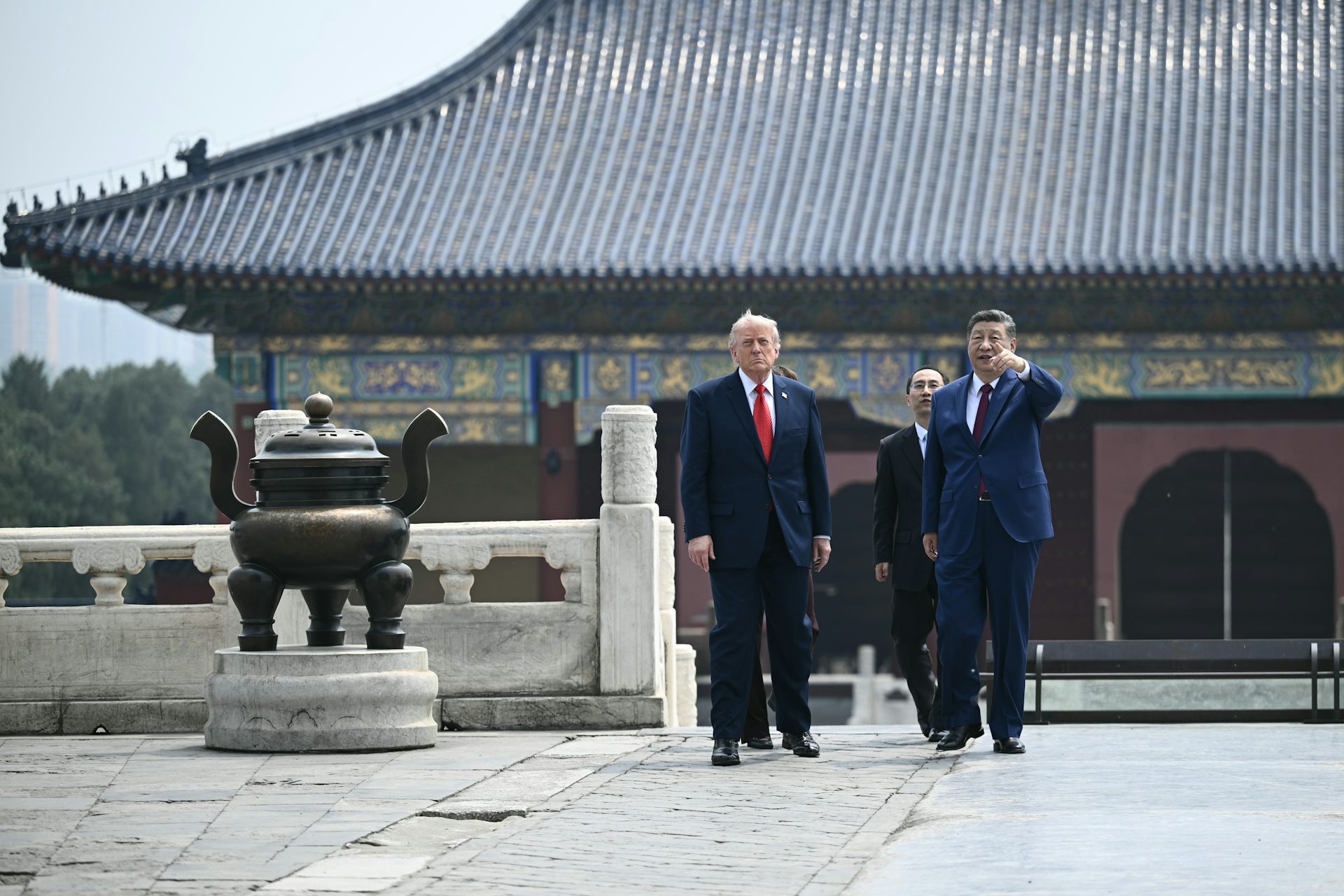
After their two-hour bilateral meeting, Trump and Xi paid a cultural visit to the Temple of Heaven in Southern Beijing. Built in the early 15th century, the temple is China’s most complete surviving imperial religious complex. For nearly five centuries, emperors of the Ming and Qing dynasties came here to worship Heaven and pray for good harvests.
Após sua reunião bilateral de duas horas, Trump e Xi fizeram uma visita cultural ao Templo do Céu, no sul de Pequim. Construído no início do século XV, o templo é o complexo religioso imperial sobrevivente mais completo da China. Por quase cinco séculos, imperadores das dinastias Ming e Qing vieram aqui para adorar o Céu e rezar por boas colheitas.
Its most recognizable structure, the Hall of Prayer for Good Harvests, rises in three tiers of blue-glazed tiles above a marble platform, its circular form and crimson columns translating cosmology into architecture. UNESCO inscribed the site as a World Heritage Site in 1998, recognizing it as “a masterpiece of architecture and landscape design.”
Sua estrutura mais reconhecível, o Salão de Orações por Boas Colheitas, eleva-se em três níveis de azulejos azul-esmaltados sobre uma plataforma de mármore, sua forma circular e colunas carmesim traduzindo a cosmologia em arquitetura. A UNESCO inscreveu o local como Patrimônio Mundial em 1998, reconhecendo-o como “uma obra-prima de arquitetura e paisagismo.”
When Trump and Xi posed for photographs, they were standing in a place long associated with cosmic order and the welfare of the people. To bring a foreign leader there is to invite a particular reading of the relationship: not simply as a bargain between states, but as a relationship that Beijing hopes to associate with order, abundance and peace.
Quando Trump e Xi posaram para fotos, estavam em um lugar há muito associado à ordem cósmica e ao bem-estar do povo. Levar um líder estrangeiro até lá é convidar uma leitura particular do relacionamento: não simplesmente como um acordo entre estados, mas como um relacionamento que Pequim espera associar à ordem, abundância e paz.
There was also a more practical layer to this symbolism. The Temple of Heaven links political authority to agricultural abundance. Emperors came here to pray not for abstract harmony but for grain. That made it a pointed setting for a visit in which American agricultural exports — soybeans, grains and beef among them — were expected to matter.
Havia também uma camada mais prática a esse simbolismo. O Templo do Céu liga a autoridade política à abundância agrícola. Os imperadores vinham aqui para rezar não por harmonia abstrata, mas por grãos. Isso fez dele um cenário estratégico para uma visita na qual as exportações agrícolas americanas — soja, grãos e carne bovina, entre eles — deveriam ser importantes.
For Trump, any Chinese commitment to buy more U.S. farm goods would have clear domestic political value. For Xi, the setting allowed a hard bargaining issue — farm purchases — to be translated into an older symbolic language of harvest that spoke to both domestic and international audiences.
Para Trump, qualquer compromisso chinês de comprar mais produtos agrícolas dos EUA teria um claro valor político interno. Para Xi, o cenário permitiu que uma questão de negociação difícil — as compras agrícolas — fosse traduzida em uma linguagem simbólica mais antiga de colheita que falava tanto para o público interno quanto para o internacional.
Before Trump, Kissinger
Antes de Trump, Kissinger
Trump was not the first American statesman to be brought to the Temple of Heaven.
Trump não foi o primeiro estadista americano a ser levado ao Templo da Harmonia.
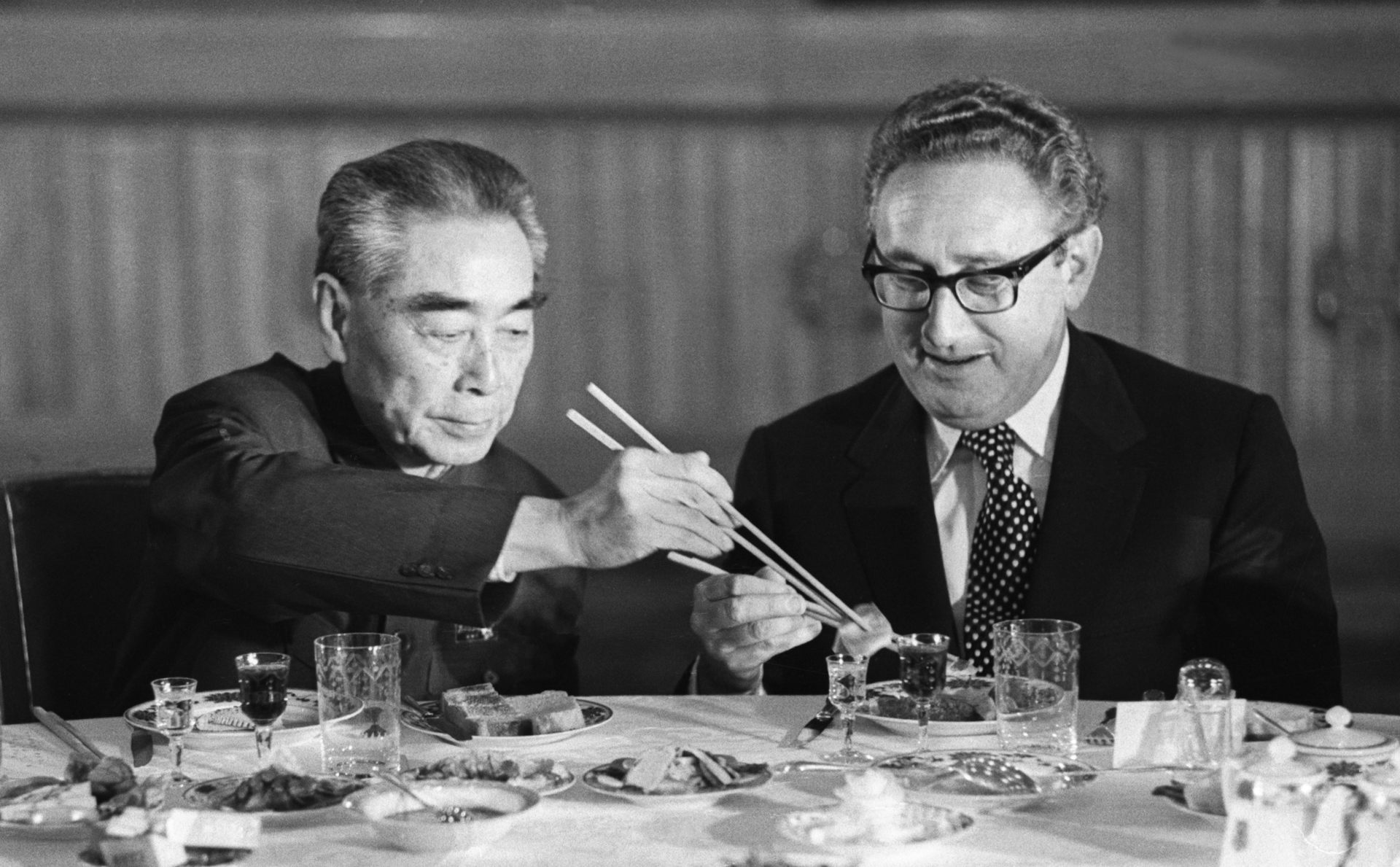
In July 1971, Henry Kissinger, then national security adviser to President Richard Nixon, arrived in Beijing on his famous secret mission — the back-channel visit that helped re-open the door between two countries that had little direct contact for more than two decades. Between tense negotiations with Chinese premier Zhou Enlai, Kissinger made time to visit the temple.
Em julho de 1971, Henry Kissinger, então conselheiro de segurança nacional do presidente Richard Nixon, chegou a Pequim em sua famosa missão secreta — a visita de bastidores que ajudou a reabrir as portas entre dois países que tinham pouco contato direto por mais de duas décadas. Entre negociações tensas com o primeiro-ministro chinês Zhou Enlai, Kissinger encontrou tempo para visitar o templo.
There, standing amid the old cypress groves, he was said to have been deeply moved by the timeless atmosphere of the hall and its surroundings.
Lá, em pé entre os antigos bosques de ciprestes, ele teria sido profundamente emocionado pela atmosfera atemporal do salão e de seus arredores.
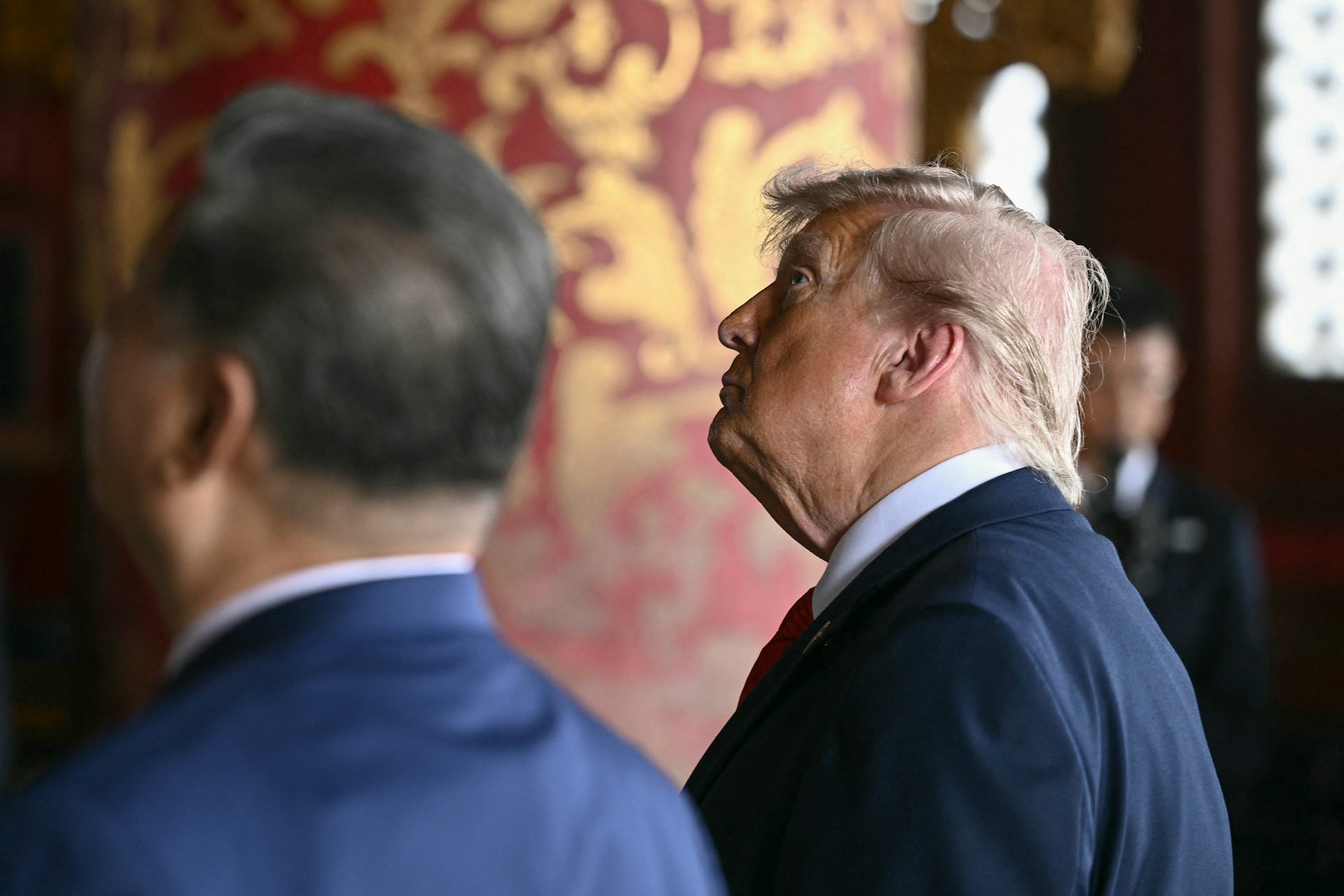
The motif of old trees and deep time returned on May 15, when Xi gave Trump a rare walk through Zhongnanhai, the walled compound that now houses the core of China’s party-state leadership. Reuters reported that a hot mic captured Xi drawing Trump’s attention to the age of the trees around them — some centuries old, some said to be more than a thousand years old. When Trump asked whether Xi had taken other presidents on similar walks, Xi replied that he had only rarely.
O motivo das árvores antigas e do tempo profundo retornou em 15 de maio, quando Xi deu a Trump um raro passeio por Zhongnanhai, o complexo murado que hoje abriga o núcleo da liderança do partido-estado chinês. A Reuters relatou que um microfone aberto capturou Xi chamando a atenção de Trump para a idade das árvores ao redor — algumas com séculos, outras supostamente com mais de mil anos. Quando Trump perguntou se Xi já havia levado outros presidentes em passeios semelhantes, Xi respondeu que havia feito isso raramente.
Together, the Kissinger anecdote and the Zhongnanhai walk reveal a recurring logic in Chinese-American diplomacy: America’s fast-moving economy is invited to look at China’s sense of tradition. Xi has used this tactic with other leaders, too. When French President Emmanuel Macron visited China in 2023, he attended a guqin performance invoking the classical idea of the zhiyin — the rare listener who truly understands one’s music.
Juntas, a anedota de Kissinger e o passeio por Zhongnanhai revelam uma lógica recorrente na diplomacia sino-americana: a economia em rápida mudança da América é convidada a observar o senso de tradição da China. Xi usou essa tática com outros líderes também. Quando o presidente francês Emmanuel Macron visitou a China em 2023, ele compareceu a uma apresentação de guqin que evocava a ideia clássica de zhiyin — o ouvinte raro que realmente entende a música de alguém.
Basketball and roast duck
Basquete e pato assado
Trump’s visit was not staged only through imperial grandeur, however. It also moved into a more familiar register: food, sports and popular culture.
A visita de Trump não foi encenada apenas com grandiosidade imperial, no entanto. Ela também se moveu para um registro mais familiar: comida, esportes e cultura popular.
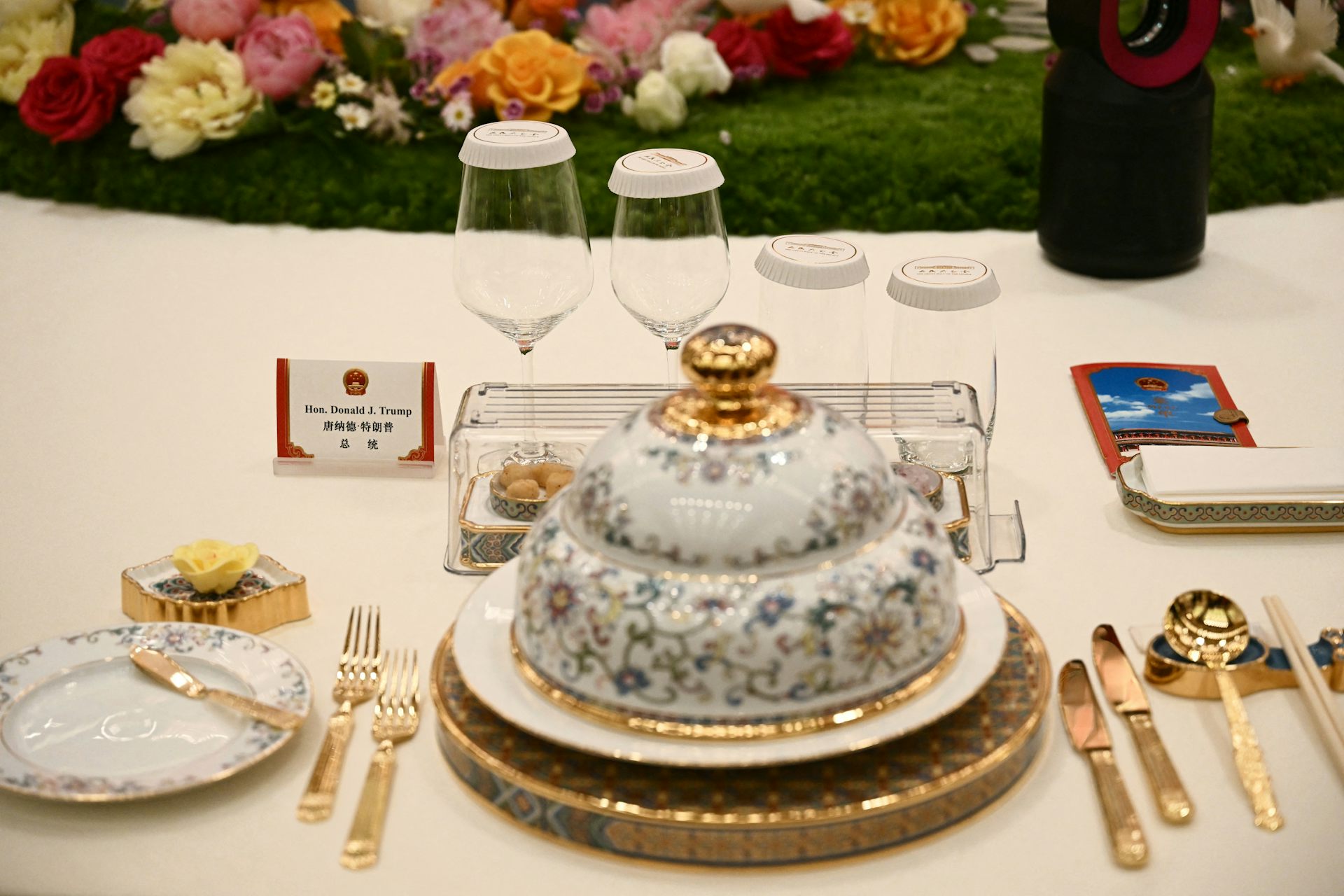
The state dinner on May 14 was another study in careful hospitality. Chefs designed the menu to honor both Chinese culinary prestige and Americans’ — and Trump’s — known preferences: Peking roast duck, crispy beef ribs, pan-fried pork bun, tiramisu and fruit and ice cream.
O jantar de estado em 14 de maio foi outro estudo em hospitalidade cuidadosa. Os chefs elaboraram o menu para homenagear tanto o prestígio culinário chinês quanto as preferências conhecidas dos americanos — e de Trump: pato assado estilo Pequim, costelas de boi crocantes, pão de porco frito, tiramisu e frutas com sorvete.
Trump thanked Xi for a “magnificent welcome like none other,” then replied in a language more recognizably his own. He spoke not only of power politics but of people-to-people ties: Chinese workers who helped build America’s railroads, Chinese enthusiasm for basketball and blue jeans and the sheer presence of Chinese restaurants across the U.S.
Trump agradeceu a Xi por uma “magnífico recepção como nenhuma outra”, e então respondeu em uma linguagem mais reconhecidamente sua. Ele falou não apenas de política de poder, mas de laços entre pessoas: trabalhadores chineses que ajudaram a construir os ferrovias da América, o entusiasmo chinês por basquete e jeans e a mera presença de restaurantes chineses por todo os EUA.
The examples were characteristically Trumpian — simple, vivid and easy to grasp. But they pointed to something important. U.S.–China relations have never been made only by presidents, diplomats and official communiques. They have also been shaped by athletes, musicians, restaurant owners, students and tourists.
Os exemplos foram caracteristicamente trumvianos — simples, vívidos e fáceis de entender. Mas eles apontavam para algo importante. As relações EUA-China nunca foram feitas apenas por presidentes, diplomatas e comunicados oficiais. Elas também foram moldadas por atletas, músicos, donos de restaurantes, estudantes e turistas.
The basketball reference was especially resonant. Sports have long offered a softer language for U.S.–China relations. In April 2026, just weeks before Trump’s visit, China and the U.S. marked the 55th anniversary of ping-pong diplomacy — the famous 1971 exchange in which a “little ball” helped move the “big ball” of world politics.
A referência ao basquete foi especialmente ressonante. Os esportes sempre ofereceram uma linguagem mais suave para as relações EUA-China. Em abril de 2026, poucas semanas antes da visita de Trump, China e EUA marcaram o 55º aniversário da diplomacia do ping-pong — a famosa troca de 1971 na qual uma “bolinha” ajudou a mover a “bola grande” da política mundial.
Basketball now plays a similar role. For many Chinese fans, the NBA is a deeply familiar world of players, teams and memories that represents the spirit of America: Michael Jordan, Kobe Bryant, LeBron James and Yao Ming. That reservoir of affection has survived even periods of political tension. Trump, in invoking it, was drawing on something real.
O basquete agora desempenha um papel semelhante. Para muitos fãs chineses, a NBA é um mundo profundamente familiar de jogadores, times e memórias que representa o espírito da América: Michael Jordan, Kobe Bryant, LeBron James e Yao Ming. Esse reservatório de afeto sobreviveu até mesmo a períodos de tensão política. Trump, ao invocá-lo, estava se baseando em algo real.
A second act in the US?
Um segundo ato nos EUA?
The main lesson of all this symbolism is that, in U.S.–China relations, atmosphere has never been secondary.
A principal lição de todo esse simbolismo é que, nos relacionamentos EUA-China, a atmosfera nunca foi secundária.
Diplomatic theater cannot settle disputes over technology or Taiwan, or determine the future of the global order. But it can shape the mood in which rivalries are managed, and the stories that leaders tell their public about what the relationship means.
O teatro diplomático não pode resolver disputas sobre tecnologia ou Taiwan, nem determinar o futuro da ordem global. Mas pode moldar o clima em que as rivalidades são gerenciadas, e as histórias que os líderes contam ao público sobre o que o relacionamento significa.
And on that front, the summit worked on several levels. To the Chinese audience, it presented their leaders as confident and capable of managing a tense relationship with the U.S. on China’s own cultural terms.
E nesse aspecto, a cúpula trabalhou em vários níveis. Para o público chinês, apresentou seus líderes como confiantes e capazes de gerenciar um relacionamento tenso com os EUA nos próprios termos culturais da China.
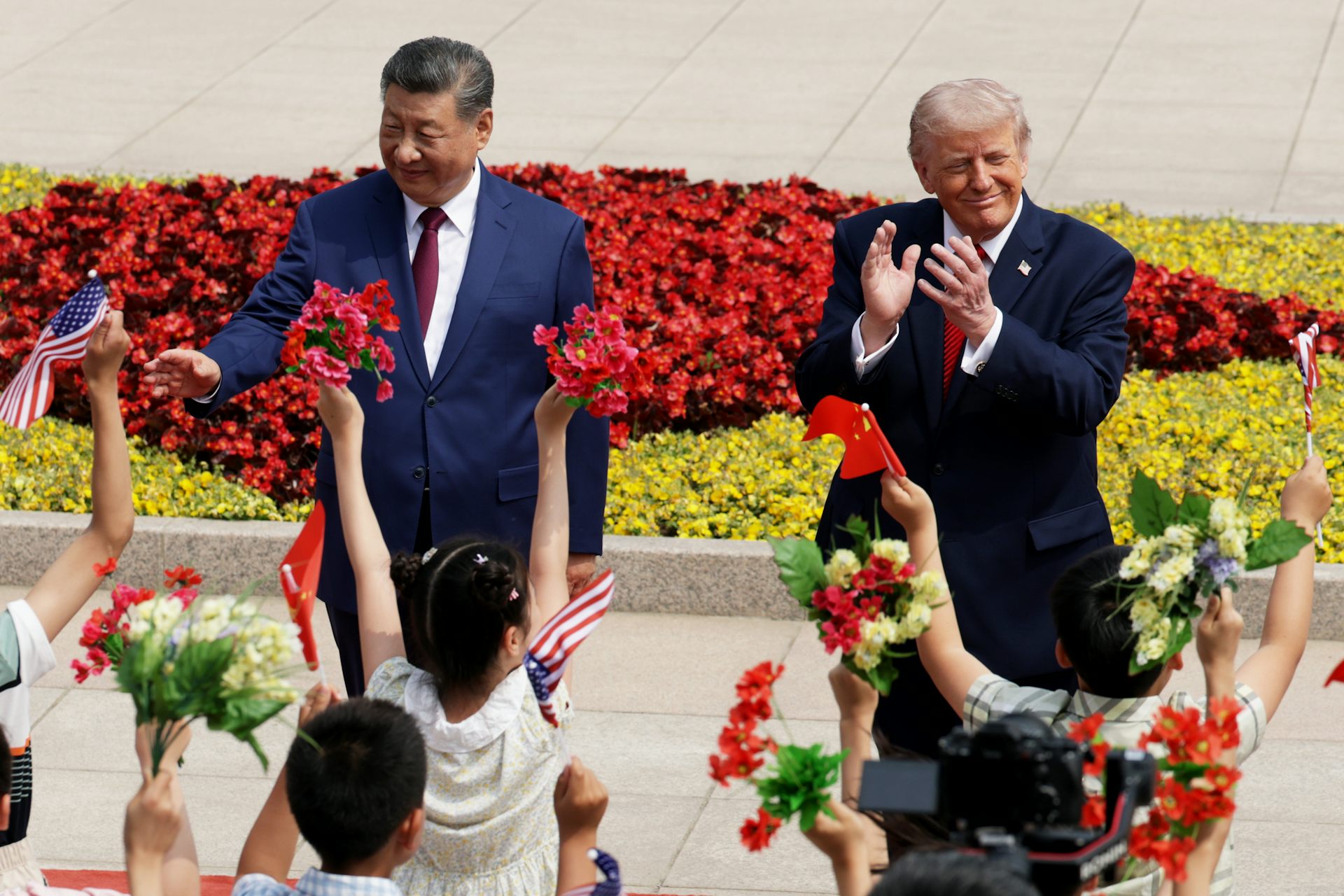
For Trump and the American delegation, it offered a lesson in Chinese traditions and culture that promotes deeper understanding across political divides. And for both societies, the references for food, sports and popular culture created a more neutral ground on which connection could still be imagined.
Para Trump e a delegação americana, ofereceu uma lição sobre tradições e cultura chinesas que promove um entendimento mais profundo através das divisões políticas. E para ambas as sociedades, as referências a comida, esportes e cultura popular criaram um terreno mais neutro no qual a conexão ainda poderia ser imaginada.
From the 1970s opening to Trump’s 2017 visit to the Forbidden City, and from the Temple of Heaven photo-op to the walk among old trees at Zhongnanhai in 2026, cultural staging remains central to how China presents itself to America — and how America is invited to imagine China. It was announced on May 15 that Xi will pay a state visit to the U.S. in September at the invitation of Trump. If that happens, the theater of diplomacy will move to American soil, and the question will be how Washington chooses to stage China in return.
Desde a abertura nos anos 70 até a visita de Trump à Cidade Proibida em 2017, e do ensaio fotográfico no Templo do Céu ao passeio entre árvores antigas em Zhongnanhai em 2026, o cenário cultural permanece central na forma como a China se apresenta à América — e como a América é convidada a imaginar a China. Foi anunciado em 15 de maio que Xi fará uma visita de Estado aos EUA em setembro a convite de Trump. Se isso acontecer, o teatro da diplomacia se mudará para solo americano, e a questão será como Washington escolhe encenar a China em resposta.
Xianda Huang does not work for, consult, own shares in or receive funding from any company or organization that would benefit from this article, and has disclosed no relevant affiliations beyond their academic appointment.
Xianda Huang não trabalha, não consulta, não possui ações nem recebe financiamento de nenhuma empresa ou organização que se beneficiaria deste artigo, e não divulgou afiliações relevantes além de seu cargo acadêmico.
Read more
-
Paquistão, Turquia, Egito e Arábia Saudita emergem como um novo bloco de poder regional em meio à guerra do Irã
Pakistan, Turkey, Egypt and Saudi Arabia emerge as a new regional power bloc amid Iran war
-
Jeremy Clarkson tem câncer de próstata agressivo. Mas o que torna alguns cânceres mais agressivos do que outros?
Jeremy Clarkson has aggressive prostate cancer. But what makes some cancers more aggressive than others?