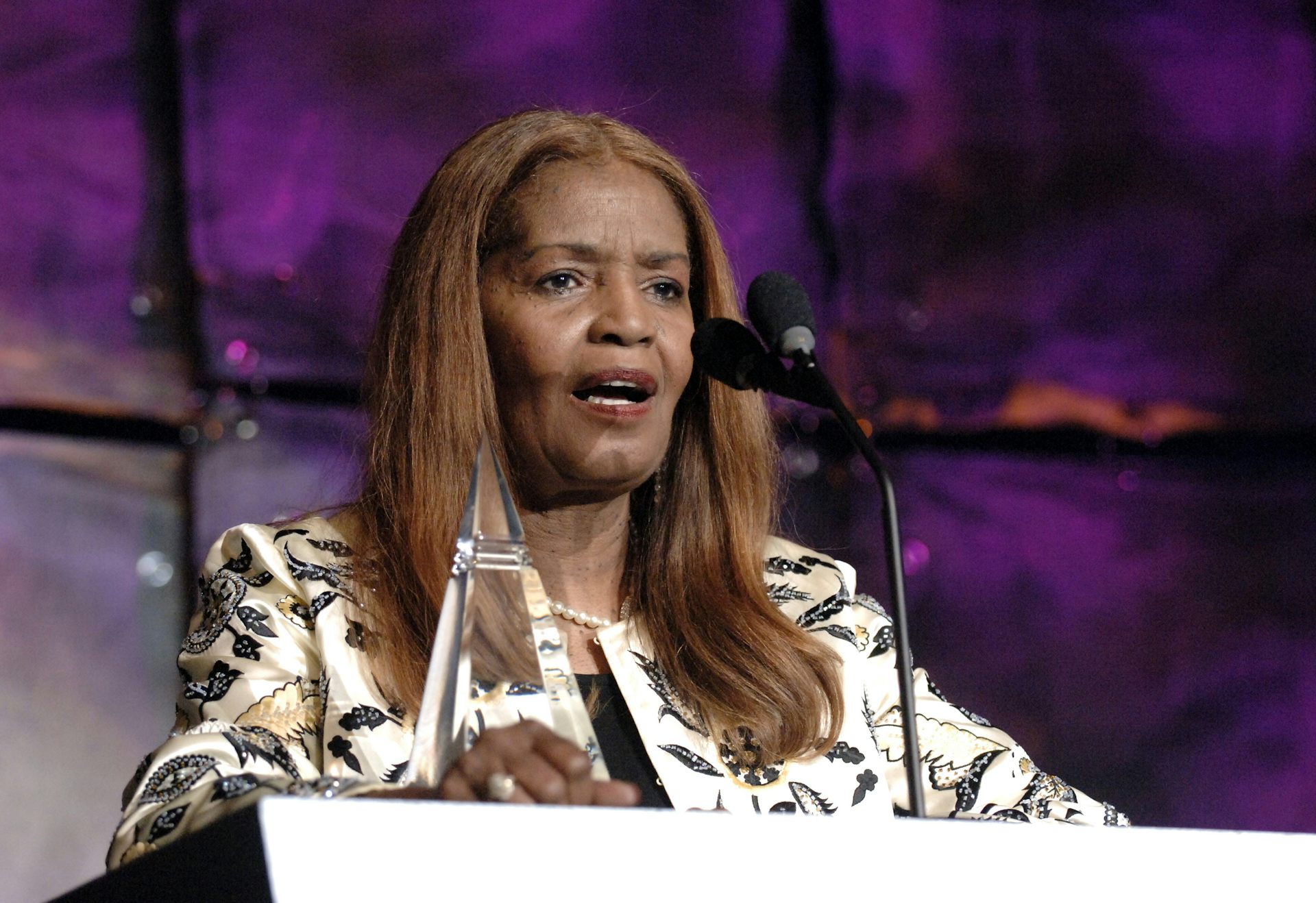
Les auteures-compositrices et productrices noires de Motown étaient les architectes invisibles derrière le mastodonte de la musique pop.
Motown’s Black women songwriters and producers were the invisible architects behind the pop music juggernaut
Few people probably know the female songwriters featured in this article, yet Motown relied heavily upon their contributions to cement its place in music history.
Peu de gens connaissent probablement les auteures-compositrices présentées dans cet article, pourtant Motown s’est fortement appuyé sur leurs contributions pour cimenter sa place dans l’histoire de la musique.
During the 1960s, in a country divided by racial strife, the music of Berry Gordy Jr.’s Motown Records helped bring people together.
Durant les années 1960, dans un pays divisé par les tensions raciales, la musique des Motown Records de Berry Gordy Jr. a aidé à rassembler les gens.
Motown was noted for star performers like Mary Wells, The Miracles, The Supremes, The Temptations, Martha Reeves and the Vandellas, Marvin Gaye and Stevie Wonder. But, behind the scenes, a talented group of lesser known women were driving the hits in Hitsville U.S.A.
Motown était réputé pour des artistes vedettes comme Mary Wells, The Miracles, The Supremes, The Temptations, Martha Reeves and the Vandellas, Marvin Gaye et Stevie Wonder. Mais, en coulisses, un groupe talentueux de femmes moins connues était à l’origine des succès à Hitsville U.S.A.
I’m a scholar of popular culture and author of the biography “It’s No Wonder: The Life and Times of Motown’s Legendary Songwriter Sylvia Moy.” Researching my book inspired me to find other women who contributed to the Detroit label’s era of chart dominance and helped change the music industry, despite going largely unrecognized for their efforts.
Je suis spécialiste de la culture populaire et auteur de la biographie « It’s No Wonder: The Life and Times of Motown’s Legendary Songwriter Sylvia Moy ». La recherche pour mon livre m’a inspiré de découvrir d’autres femmes qui ont contribué à l’ère de la domination des palmarès du label de Détroit et qui ont aidé à changer l’industrie musicale, malgré le fait que leurs efforts soient restés largement méconnus.
I listened to Motown growing up, but it wasn’t until 2021, while sitting at home during the pandemic, that I discovered Moy’s history as the lyricist for Stevie Wonder and how she helped revive his early career.
J’écoutais Motown quand j’étais enfant, mais ce n’est que jusqu’en 2021, en restant chez moi pendant la pandémie, que j’ai découvert l’histoire de Moy en tant que paroliste de Stevie Wonder et comment elle a aidé à relancer sa carrière naissante.
Because Moy died in 2017, I wasn’t able to speak with her for the book. Instead I researched her life by reading countless interviews she gave, along with talking to her former colleagues at Motown, family and ethnomusicologists, who are scholars that study music through the lens of culture.
Comme Moy est décédée en 2017, je n’ai pas pu lui parler pour le livre. Au lieu de cela, j’ai fait des recherches sur sa vie en lisant d’innombrables interviews qu’elle a données, en plus de parler avec ses anciens collègues de Motown, sa famille et des ethnomusicologues, qui sont des universitaires qui étudient la musique à travers le prisme de la culture.
Architect of the early sound
Architecte du son naissant
When Gordy was organizing his company, Janie Bradford was one of the original five founding members who arrived in 1958. She was the label’s first secretary and its first female songwriter after co-writing, with Gordy, the song “Money (That’s What I Want) .” That song was released on Tamla Records in 1959 and performed by Barrett Strong. When Motown was incorporated the following year, the song became the label’s first hit record on the R&B chart and Billboard Hot 100.
Lorsque Gordy organisait sa compagnie, Janie Bradford était l’une des cinq membres fondatrices originales arrivées en 1958. Elle fut la première secrétaire du label et sa première auteure-compositrice de sexe féminin après avoir coécrit, avec Gordy, la chanson « Money (That’s What I Want) ». Cette chanson fut sortie sur Tamla Records en 1959 et interprétée par Barrett Strong. Lorsque Motown fut constituée l’année suivante, la chanson devint le premier tube du label sur les palmarès R&B et Billboard Hot 100.
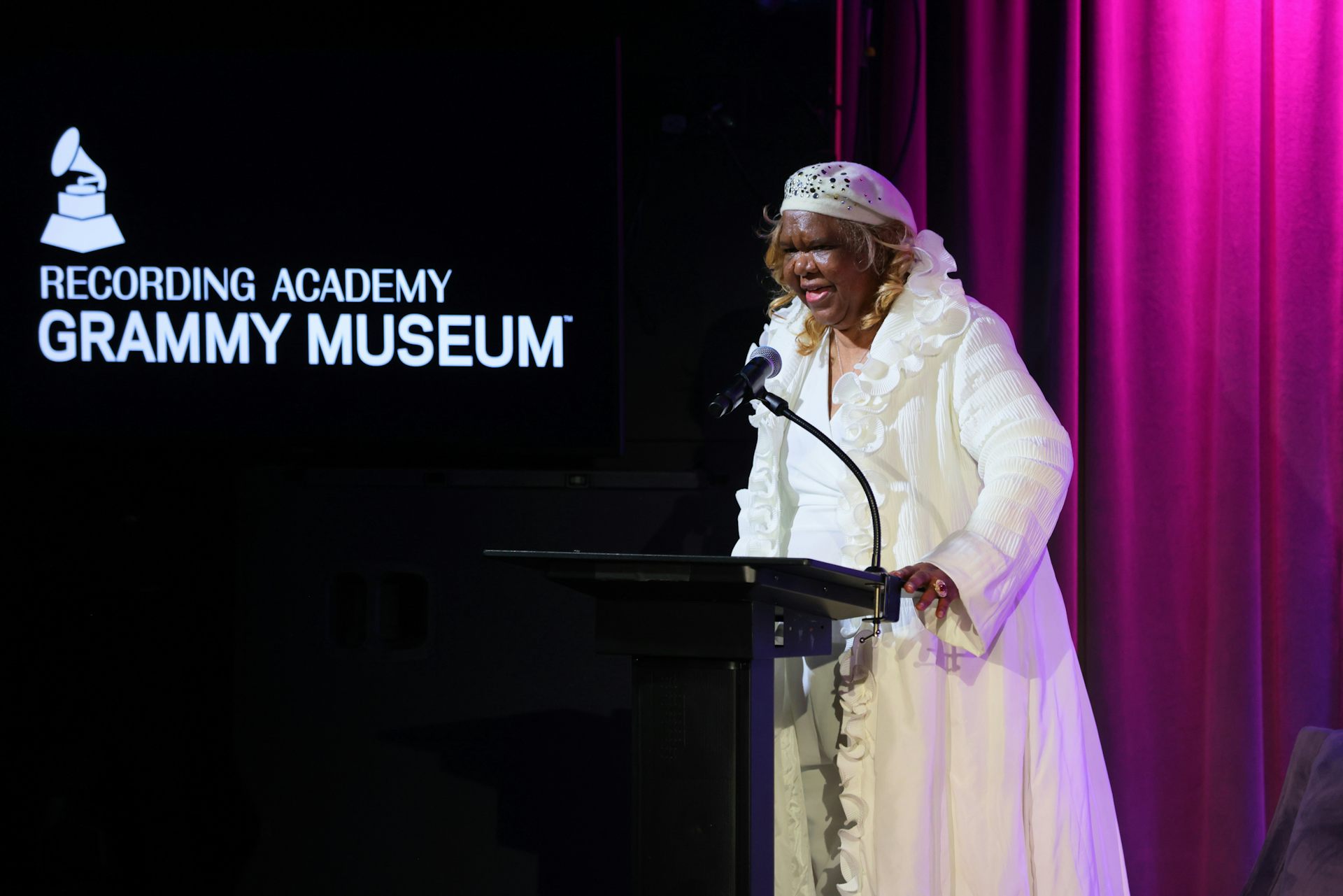
Later, Bradford co-wrote “Contract on Love” for Wonder and “Too Busy Thinking About My Baby,” first recorded by The Temptations and later, Marvin Gaye. Bradford, who later became Motown’s director of writer’s relations, teamed up with pianist Richard “Popcorn” Wylie in the early 1960s to form Janard, a small production company.
Plus tard, Bradford coécrivit « Contract on Love » pour Wonder et « Too Busy Thinking About My Baby », premièrement enregistrée par The Temptations puis par Marvin Gaye. Bradford, qui devint plus tard la directrice des relations avec les auteurs de Motown, s’associa au pianiste Richard « Popcorn » Wylie au début des années 1960 pour former Janard, une petite société de production.
Bradford’s collection of poetry is what captured Gordy’s attention, so he encouraged her to be a songwriter. Her witty lyrics told stories about situations that most anyone could relate to – namely, money and love – blended with up-tempo, thumping beats.
La collection de poésie de Bradford capta l’attention de Gordy, qui l’encouragea alors à devenir auteure-compositrice. Ses paroles pleines d’esprit racontaient des histoires sur des situations auxquelles la plupart des gens pouvaient s’identifier – notamment l’argent et l’amour – mêlées à des rythmes entraînants et percutants.
Laying the foundation as a producer
Laying the foundation en tant que productrice
Another key figure who paved the way with the Motown sound was Raynoma Gordy Singleton, who was married to Berry Gordy Jr. from 1960 to 1964. She organized Motown during its beginnings by completing the necessary paperwork to incorporate the business. Known as “Miss Ray” to some and “Mother Motown” to others, she located the legendary house at 2648 West Grand Boulevard that became the Motown headquarters and, decades later, the Motown Museum.
Une autre figure clé qui a ouvert la voie avec le son Motown fut Raynoma Gordy Singleton, mariée à Berry Gordy Jr. de 1960 à 1964. Elle a organisé Motown au début en accomplissant les formalités nécessaires pour incorporer l’entreprise. Connue sous le nom de « Miss Ray » par certains et de « Mother Motown » par d’autres, elle a localisé la légendaire maison au 2648 West Grand Boulevard qui est devenue le siège de Motown et, des décennies plus tard, le Motown Museum.
In her role as the label’s first executive vice president, she established a tape library. A piano virtuoso and singer, the Cass Technical High School graduate wrote that she was able to play all string and wind instruments. As a result, she became the company’s first female arranger and producer by putting together its first backup vocal group, the Rayber Voices, in 1958.
Dans son rôle de première vice-présidente exécutive du label, elle a établi une bibliothèque de bandes. Virtuose au piano et chanteuse, la diplômée du Cass Technical High School a écrit qu’elle était capable de jouer tous les instruments à cordes et à vent. Par conséquent, elle est devenue la première arrangeuse et productrice de l’entreprise en créant son premier groupe de chœurs de soutien, les Rayber Voices, en 1958.
“Producing records was where the action was controlled – and where the money was to be made,” she wrote in her memoir, “The Untold Story: Berry, Me, and Motown,” which aimed to reclaim her place in the Motown echelon.
« Produire des disques était là que l’action était contrôlée – et là que l’argent devait être fait », a-t-elle écrit dans ses mémoires, « The Untold Story: Berry, Me, and Motown », qui visaient à récupérer sa place dans l’échelon de Motown.
During the 1960s, women weren’t considered producers because of broader biases and norms in the male-dominated music industry. Even so, Miss Ray got credit for producing Jimmy Ruffin’s song “Don’t Feel Sorry for Me” in 1961.
Durant les années 1960, les femmes n’étaient pas considérées comme des productrices en raison de biais et de normes plus larges dans l’industrie musicale dominée par les hommes. Même ainsi, Miss Ray a reçu le crédit de productrice pour la chanson « Don’t Feel Sorry for Me » de Jimmy Ruffin en 1961.
Earning a producer’s credit was a sign of legitimacy. Most producers received a songwriting credit and determined who received credit in the liner notes for their contribution to the recording.
Obtenir le crédit de productrice était un signe de légitimité. La plupart des producteurs recevaient un crédit de parolier et déterminaient qui recevait le crédit dans les notes de garde pour leur contribution à l’enregistrement.
While women mostly worked in administrative roles at Motown, there still weren’t any female full-time, in-house songwriters and producers. Like the rest of the music industry back then, Motown’s internal structure was patriarchal with those positions.
Bien que les femmes travaillaient principalement dans des rôles administratifs chez Motown, il n’y avait toujours pas de parolières et de productrices internes à temps plein. Comme le reste de l’industrie musicale à cette époque, la structure interne de Motown était patriarcale concernant ces postes.
The first certified female songwriter and producer
La première auteure-compositrice et productrice certifiée
Yet this imbalanced gender dynamic at Motown didn’t stop Sylvia Moy.
Pourtant, cette dynamique de genre déséquilibrée chez Motown n’a pas arrêté Sylvia Moy.
There hadn’t been any women producers behind significant, popular songs at Motown until Moy arrived, according to interviews I conducted for her biography.
Il n’y avait eu aucune productrice derrière des chansons populaires et importantes chez Motown avant l’arrivée de Moy, selon les entretiens que j’ai menés pour sa biographie.
Motown was at its peak in 1964. Demand for new songs was intense. When the label’s executives realized how skillfully the two audition songs Moy performed were composed, they decided that her future was in songwriting instead of singing.
Motown était à son apogée en 1964. La demande de nouvelles chansons était intense. Lorsque les dirigeants du label ont réalisé avec quelle habileté les deux chansons d’audition interprétées par Moy étaient composées, ils ont décidé que son avenir était dans l’écriture de chansons plutôt que dans le chant.
Discovered by William “Mickey” Stevenson and Marvin Gaye, Moy was hired as the first female in-house songwriter, competing with eminent colleagues like Smokey Robinson, Norman Whitfield and the songwriting trio Holland-Dozier-Holland who wrote 10 of the Supremes’ chart-topping singles. Moy made more history in 1965 after co-writing and co-producing Stevie Wonder’s “Uptight (Everything’s Alright) .”
Découverte par William « Mickey » Stevenson et Marvin Gaye, Moy a été engagée comme la première auteure-compositrice interne, rivalisant avec des collègues éminents comme Smokey Robinson, Norman Whitfield et le trio d’auteurs Holland-Dozier-Holland, qui ont écrit 10 des singles les plus populaires des Supremes. Moy a fait plus d’histoire en 1965 après avoir co-écrit et co-produit « Uptight (Everything’s Alright) » de Stevie Wonder.
While she received the songwriting credit and helped revive the teenaged Wonder’s career, Moy wasn’t given the producer’s credit, unlike her two male counterparts, Stevenson and Henry “Hank” Cosby.
Bien qu’elle ait reçu le crédit d’auteure et ait aidé à relancer la carrière de Wonder, Moy n’a pas reçu le crédit de productrice, contrairement à ses deux homologues masculins, Stevenson et Henry « Hank » Cosby.
A lack of recognition stymied Moy’s career opportunities. If a songwriter or producer wasn’t credited, their value could not be validated or established, which made it harder for them to find work at other record labels.
Le manque de reconnaissance a entravé les opportunités de carrière de Moy. Si un auteur-compositeur ou un producteur n’était pas crédité, sa valeur ne pouvait être ni validée ni établie, ce qui rendait plus difficile pour elle de trouver du travail chez d’autres labels.
According to my research, Moy revealed that she never got producer credit for any of her work while at Motown. This is why her legacy was buried for so long.
Selon mes recherches, Moy a révélé qu’elle n’a jamais obtenu de crédit de productrice pour aucun de ses travaux chez Motown. C’est pourquoi son héritage a été enterré pendant si longtemps.
Other tunes she wrote for Wonder were “I Was Made to Love Her,” “My Cherie Amour” and “With A Child’s Heart,” co-written with Vicki Basemore. Moy also wrote Marvin Gaye and Kim Weston’s “It Takes Two” and The Isley Brothers’ “This Old Heart of Mine (Is Weak For You) .” Though songwriter Eddie Holland told me he gave her a co-writing credit for “This Old Heart of Mine,” Moy’s name was not listed on the record, only Holland-Dozier-Holland.
D’autres morceaux qu’elle a écrits pour Wonder étaient « I Was Made to Love Her », « My Cherie Amour » et « With A Child’s Heart », coécrits avec Vicki Basemore. Moy a également écrit « It Takes Two » de Marvin Gaye et Kim Weston, et « This Old Heart of Mine (Is Weak For You) » des Isley Brothers. Bien que l’auteur-compositeur Eddie Holland m’ait dit qu’il lui avait donné un crédit de co-écriture pour « This Old Heart of Mine », le nom de Moy n’était pas inscrit sur le disque, seulement Holland-Dozier-Holland.
Interviews I conducted with Moy’s family members and research from an ethnomusicologist suggest she was even an uncredited co-writer for Wonder’s “Signed, Sealed, Delivered (I’m Yours) ,” his first song as a solo producer, and The Temptations’ “Ain’t Too Proud to Beg.”
Les entretiens que j’ai menés avec les membres de la famille de Moy et les recherches d’un ethnomusicologue suggèrent qu’elle était même une co-auteure non créditée de « Signed, Sealed, Delivered (I’m Yours) » de Wonder, son premier titre en tant que producteur solo, et de « Ain’t Too Proud to Beg » des Temptations.
However, Holland denied this claim in an interview with me, though he also admitted that the song’s late co-writer and producer, Norman Whitfield, presented him with the lyrics, and he wasn’t sure where they came from.
Cependant, Holland a nié cette affirmation lors d’un entretien avec moi, bien qu’il ait également admis que le co-auteur et producteur tardif de la chanson, Norman Whitfield, lui avait présenté les paroles, et qu’il n’était pas sûr de leur provenance.
Full credit along with creative control
Crédit total ainsi que contrôle créatif
In 1968, Valerie Simpson became Motown’s first female songwriter to also receive a producer credit. This possibly happened because her songwriting partner was her husband, Nickolas Ashford.
En 1968, Valerie Simpson est devenue la première auteure-compositrice de Motown à recevoir également un crédit de productrice. Cela est peut-être dû au fait que son partenaire d’écriture était son mari, Nickolas Ashford.
Other famous female songwriters like Carole King, Ellie Greenwich and Cynthia Weil also had a prominent husband in the music industry. Sylvia Moy did not, which made what she did unprecedented.
D’autres auteures-compositrices célèbres comme Carole King, Ellie Greenwich et Cynthia Weil avaient également un mari éminent dans l’industrie musicale. Sylvia Moy ne l’avait pas, ce qui a rendu ce qu’elle a fait sans précédent.
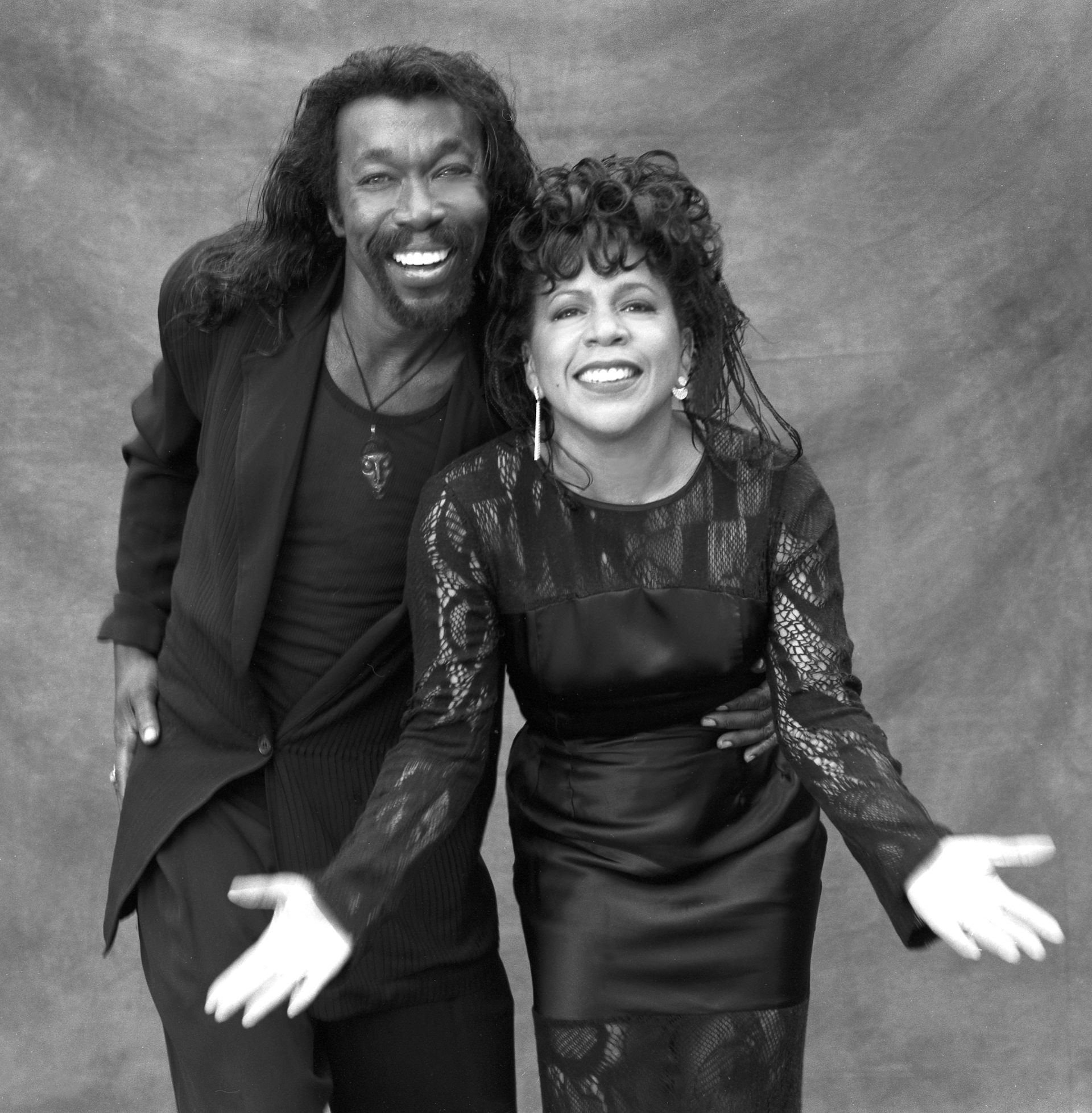
Simpson told Billboard in 2023 that the credit was difficult to attain because so few women were producers back then. It finally happened with the Tammi Terrell and Marvin Gaye song “Ain’t Nothing Like The Real Thing,” with Simpson getting credit for co-writing, co-producing and performing background vocals along with Ashford.
Simpson a déclaré à Billboard en 2023 que ce crédit était difficile à obtenir car si peu de femmes étaient productrices à cette époque. Cela s’est finalement produit avec la chanson « Ain’t Nothing Like The Real Thing » de Tammi Terrell et Marvin Gaye, Simpson obtenant ainsi le crédit de co-écriture, de co-production et d’interprétation des chœurs avec Ashford.
This was their third hit tune by Terrell and Gaye, who also recorded “Ain’t No Mountain High Enough” and “Your Precious Love,” in 1967. The following year, they had another hit with “You’re All I Need to Get By,” which Ashford and Simpson also co-wrote, co-produced and did background vocals on.
Il s’agissait de leur troisième tube de Terrell et Gaye, qui avaient également enregistré « Ain’t No Mountain High Enough » et « Your Precious Love », en 1967. L’année suivante, ils ont eu un autre succès avec « You’re All I Need to Get By », que Ashford et Simpson ont également co-écrit, co-produit et interprété en chœurs.
Simpson became the first Black woman to be inducted into the Songwriters Hall of Fame in 2002. Moy became the second in 2006.
Simpson est devenue la première femme noire à être intronisée au Songwriters Hall of Fame en 2002. Moy est devenue la deuxième en 2006.
Though female songwriters and producers continue the fight for inclusion in the recording studio, the doors were opened by the tenacious women of Motown. It is because of them that future generations of female creatives know what is possible.
Bien que les auteures-compositrices et productrices continuent de se battre pour leur inclusion dans le studio d’enregistrement, les portes ont été ouvertes par les femmes tenaces de Motown. C’est grâce à elles que les futures générations de créatrices savent ce qui est possible.
Margena A. Christian does not work for, consult, own shares in or receive funding from any company or organization that would benefit from this article, and has disclosed no relevant affiliations beyond their academic appointment.
Margena A. Christian ne travaille pour, ne consulte pas, ne détient pas d’actions ni ne reçoit de financement de la part d’aucune entreprise ou organisation qui bénéficierait de cet article, et n’a divulgué aucune affiliation pertinente au-delà de sa nomination universitaire.
Read more
-

Ebola, hantavirus, diphtérie : comment la méfiance envers les soins de santé alimente de multiples épidémies à travers le monde
Ebola, hantavirus, diphtheria: how distrust in health care is fuelling multiple outbreaks across the globe
-
Pourquoi le Royaume-Uni change-t-il maintenant de premier ministre tous les quelques années ?
Why is the UK now changing prime minister every few years?