南非人对移民的容忍度远不如从前——热点、驱动因素与解决方案
South Africans are far less tolerant of migrants than b…
Data show that South Africans have become more hostile towards immigrants.
数据显示,南非人对移民的态度变得更加敌对。
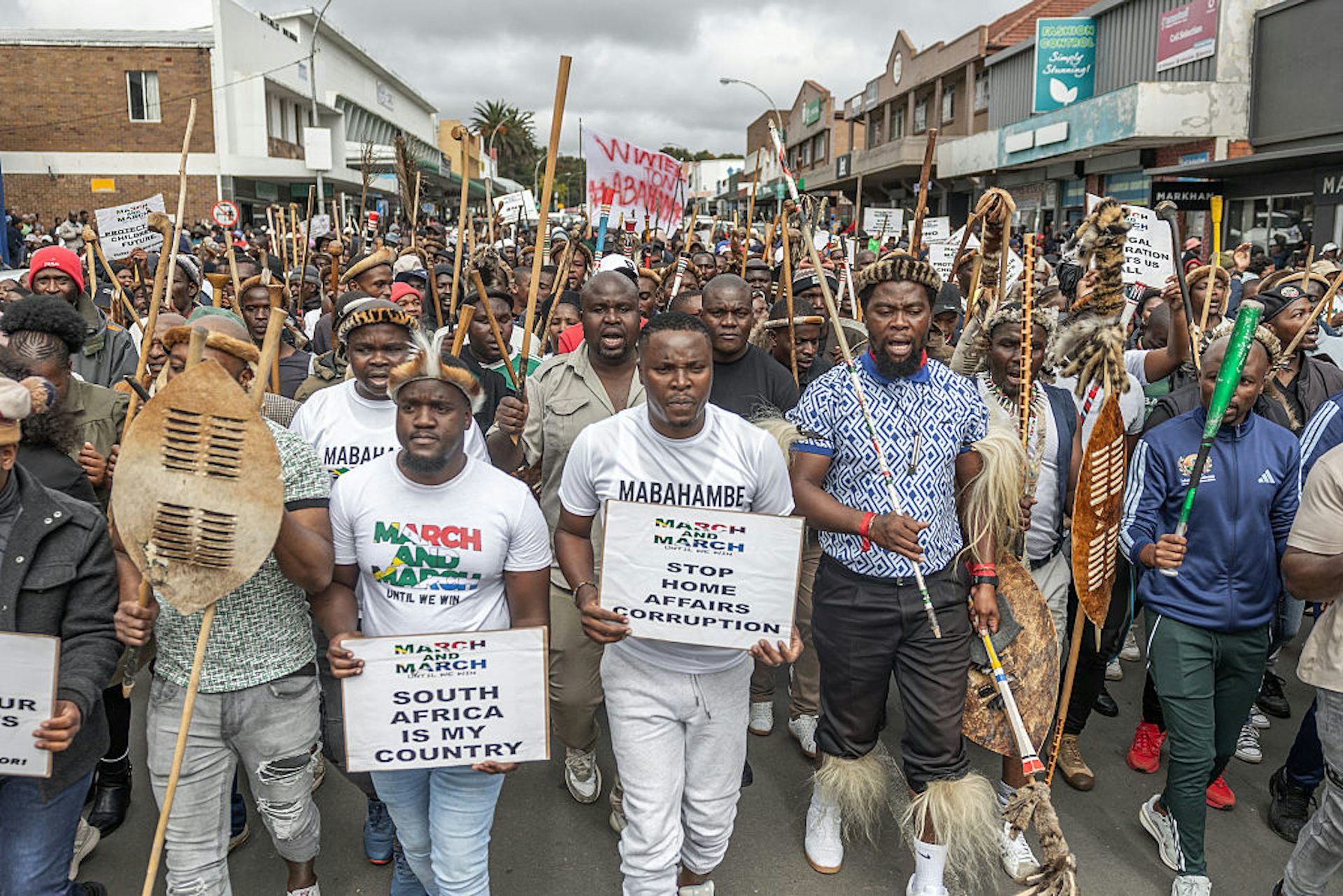
Anti-immigrant marches in several major South African cities (such as Tshwane and Johannesburg) in early May 2026 once again led to questions being asked about xenophobia in post-apartheid South Africa.
2026年5月初,在南非多个主要城市(如茨瓦内和约翰内斯堡)发生的反移民游行,再次引发了人们对后种族隔离南非异族恐惧症的质疑。
In the wake of the protests President Cyril Ramaphosa called on South Africans to embrace solidarity with their African neighbours. For their part, foreign governments lodged their protests while police sought to curtail violence.
在抗议活动之后,总统西里尔·拉马福萨呼吁南非人民与非洲邻国保持团结。与此同时,外国政府也发表了抗议声明,而警方则努力平息暴力。
The tension in the country was palpable.
全国的紧张气氛显而易见。
Are the recent outbreaks of anti-immigrant activism a harbinger of a wider uptick in anti-migrant sentiment amongst South Africans? Recent public opinion data from the Human Sciences Research Council (HSRC) suggests that this might be the case.
近期反移民激进主义的爆发,是否预示着南非人反移民情绪的更广泛上升?人文学科研究委员会(HSRC)的最新民意数据显示,这可能是事实。
The HSRC’s South African Social Attitudes Survey is an important source of information on what ordinary South Africans think about international migration. The survey series consists of nationally representative, repeated cross-sectional surveys that have been conducted annually by the HSRC since 2003.
HSRC的南非社会态度调查是了解普通南非人对国际移民看法的重要信息来源。该调查系列自2003年以来,由HSRC每年进行,包含具有全国代表性的重复横截面调查。
The latest data, from the 2025 survey, show that South Africans are more hostile towards immigrants than at any other time before since the survey began in 2003. An important dimension of the change has been an attitudinal shift and hardening of attitudes towards migrants among poorer and working-class adults. In addition, the recent growth of anti-immigrant sentiment has been geographically concentrated in four provinces: Mpumalanga, Gauteng, Limpopo and KwaZulu-Natal.
来自2025年调查的最新数据显示,南非人对移民的敌意程度超过了自2003年以来任何其他时间点。变化的一个重要维度是,贫困和工薪阶层成年人对移民的态度发生了转变和加剧。此外,近期反移民情绪的增长在四个省份:姆普马兰加、豪登和林波波和夸祖鲁-纳塔尔地区具有地理集中性。
The rise in anti-immigrant sentiment is particularly concerning given that the country is due to hold local government elections on 4 November 2026. Aspirant political parties, in an attempt to maintain or gain power, may seek to exploit anti-immigrant sentiment for their own ends. In this way elections can provide a potential accelerant for xenophobia.
鉴于该国定于2026年11月4日举行地方政府选举,反移民情绪的上升尤其令人担忧。各竞选政党为维持或获取权力,可能会试图利用反移民情绪为自身目的服务。从这种方式看,选举可能会为异族恐惧症提供潜在的助燃剂。
Growing hostility may even provoke xenophobic violence in a country that has a long history of collective anti-immigrant hate crime. and is home to more than two million international migrants.
日益增长的敌意甚至可能在一个拥有长期集体反移民仇恨犯罪历史、并且拥有超过二百万国际移民的国家,引发异族恐惧暴力。
Declining Hospitality
下降的友好度
South African Social Attitudes Survey has included the following in its questionnaire since 2003:
南非社会态度调查自2003年以来在其问卷中包含以下内容:
Please indicate which of the following statements applies to you? I generally welcome to South Africa… (i) All immigrants; (ii) Some immigrants; (iii) No immigrants; and (iv) Uncertain.
请指出以下哪项陈述适用于您?我一般欢迎南非的… (i) 所有移民; (ii) 部分移民; (iii) 没有移民;和 (iv) 不确定。
In 2003 about a third (34%) of the South African adult population said that they would welcome all immigrants. The remainder indicated that they would accept either none (32%) or some (35%) .
2003年,约三分之一(34%)的南非成年人口表示他们欢迎所有移民。其余人表示他们接受的要么是零(32%),要么是部分(35%)。
The proportion of the public that would be prepared to welcome foreigners tended to fluctuate within a narrow band over the 2003-2017 period.
在2003年至2017年期间,愿意欢迎外国人的公众比例倾向于在一个狭窄的范围内波动。
But around the time of the COVID-19 pandemic in early 2020, the research data began to show an upswing in anti-immigrant sentiment.
但在2020年初的COVID-19疫情期间,研究数据显示反移民情绪开始上升。
About a quarter (26%) of those surveyed said that they would welcome all immigrants during the 2021 survey round. This was similar to figures in the mid-2010s.
在2021年调查轮次中,约四分之一(26%)的受访者表示他们欢迎所有移民。这与2010年代中期的数据相似。
But the share that held this hospitable attitude fell in subsequent survey rounds. In 2025 15% of adults said that they would welcome all foreigners.
但在随后的调查轮次中,持有这种友好态度的比例有所下降。2025年,15%的成年人表示他们欢迎所有外国人。
Conversely, the proportion of the public adopting a hostile position (in other words ‘welcome no immigrants’) increased from 30% in 2021 to 42% in 2025.
相反,采取敌对立场(换句话说,‘不欢迎任何移民’)的公众比例从2021年的30%增加到2025年的42%。
Geography and class
地理与阶层
The provinces with the highest growth in anti-immigrant sentiment – Mpumalanga, Gauteng, Limpopo and KwaZulu-Natal – are ones through which most immigrants travel and often settle.
反移民情绪增长最高的省份——姆普马兰加、豪登省、林波波和夸祖纳塔尔——是大多数移民旅行和定居的地区。
The situation has become particularly delicate in KwaZulu-Natal. The share of adults in the province who said that they would welcome no immigrants grew from 23% in 2021 to 45% in 2023 and then again to 60% in 2025.
夸祖纳塔尔的情况尤其微妙。该省成年人中表示不欢迎移民的比例从2021年的23%增长到2023年的45%,随后又增至2025年的60%。
The upsurge in hostility in KwaZulu-Natal could be linked to growing popular anger against the current economic and political status quo. A staggering 88% of provincial residents are unhappy with present economic conditions, and an equal proportion expect conditions to worsen over the next five years.
夸祖纳塔尔敌意的激增可能与民众对当前经济和政治现状日益增长的愤怒有关。惊人的88%的省民对当前的经济状况感到不满,且等比例的人预计未来五年情况会恶化。
The notable attitudinal shift among poor people is also concerning.
贫困人群显著的态度转变也令人担忧。
South Africa is a highly unequal nation characterised by stark economic divisions. Most citizens can be found on the wrong side of these divides and could be classified as economically disadvantaged.
南非是一个高度不平等的国家,其特点是经济分化严重。大多数公民都处于这些分歧的“错误”一侧,可以被归类为经济处于不利地位。
Historically, as research has shown, anti-immigrant sentiment in the country tended to cut across class divisions. But in the years following the COVID-19 pandemic, something changed.
历史上,研究表明,该国反移民情绪往往跨越阶层分歧。但在新冠疫情后的几年里,情况发生了变化。
Before the pandemic, South African Social Attitudes Survey data showed a linear relationship between economic disadvantage and anti-immigrant sentiment. In the years following the pandemic, however, a clear pattern emerged. As the lockdowns ended and the post-pandemic recovery began, most socioeconomic groups in South Africa became more and more hostile towards immigrants. But antipathy grew at a much more aggressive rate for the low and lower middle socioeconomic groups.
疫情前,南非社会态度调查数据显示,经济劣势与反移民情绪之间存在线性关系。然而,在疫情后的几年里,出现了一个清晰的模式。随着封锁的结束和后疫情时代的复苏开始,南非大多数社会经济群体对移民越来越敌视。但这种敌意在低收入和低中等收入的社会经济群体中增长得更快、更剧烈。
During the 2025 survey round, adults in these groups were much more hostile towards foreigners than those in the upper middle and high socio-economic groups.
在2025年的调查轮次中,这些群体的成年人对外国人的敌意程度远高于中上和高社会经济群体的成年人。
The drivers
驱动因素
What could have caused the economically disadvantaged to become more antagonistic towards immigrants over the last five years or so?
过去大约五年间,是什么导致了经济处于劣势的群体对移民的态度变得更加敌对?
It could be argued that the poor have become more likely to scapegoat foreigners for the failures and inequalities of the post-pandemic economic recovery. Poor people have been badly affected by a cost of living crisis and persistent deindustrialisation. They need someone to blame and foreigners have long provided a handy scapegoat.
可以认为,贫困人群越来越倾向于将外国人的过错,归咎于后疫情经济复苏的失败和不平等。贫困人口深受生活成本危机和持续去工业化带来的影响。他们需要一个替罪羊,而外国人长期以来一直提供了方便的替罪羊。
The South African economy has struggled in the last few years, dealing with doggedly high unemployment. The country also has notoriously high crime rates. Such problems, as experts have argued again and again, cannot be directly laid at the feet of immigrants living in the country. But it would appear that they are getting blamed anyway.
南非经济在过去几年一直挣扎,面临着居高不下的失业率。该国还以极高的犯罪率而闻名。专家们一次又一次地指出,这些问题不能直接归咎于居住在当地的移民。但看起来,无论如何,他们还是成了替罪羊。
What should be done?
应该怎么做?
The South African government has a National Action Plan to Combat Racism, Racial Discrimination, Xenophobia and Related Intolerance.
南非政府制定了《反种族主义、反种族歧视、反仇外和相关不容忍行为的国家行动计划》。
Implemented in March 2019, one of its goals was to reduce public hostility towards migrants. Clearly, whether because of a lack of resources or government coordination, the plan has not succeeded.
该计划于2019年3月实施,其目标之一是减少公众对移民的敌意。显然,无论是由于资源缺乏还是政府协调不力,该计划都没有取得成功。
The country needs to reinvigorate it and its associated processes. What’s needed is political, civic and community leaders to address legitimate socio-economic grievances without allowing immigrants to become scapegoats for deeper structural failures in society.
该国需要振兴该计划及其相关流程。需要的是政治、公民和社区领导者,在解决合理的社会经济不满情绪的同时,不让移民成为社会更深层次结构性失败的替罪羊。
Efforts to strengthen social cohesion, improve economic inclusion, enhance public trust in governance and promote responsible political leadership are also crucial.
加强社会凝聚力、改善经济包容性、增强公众对治理的信任以及促进负责任的政治领导力,也至关重要。
Well-provisioned and effective anti-xenophobia strategies are urgently required to address the worsening situation. The alternative is to allow hatred to flourish.
迫切需要制定完善且有效的反仇外策略来应对日益恶化的局势。否则,只会让仇恨滋生。
Steven Gordon has received funding from South Africa’s National Research Foundation. He is affiliated with the University of Johannesburg.
史蒂文·戈登(Steven Gordon)获得了南非国家研究基金会的资助。他隶属于约翰内斯堡大学。