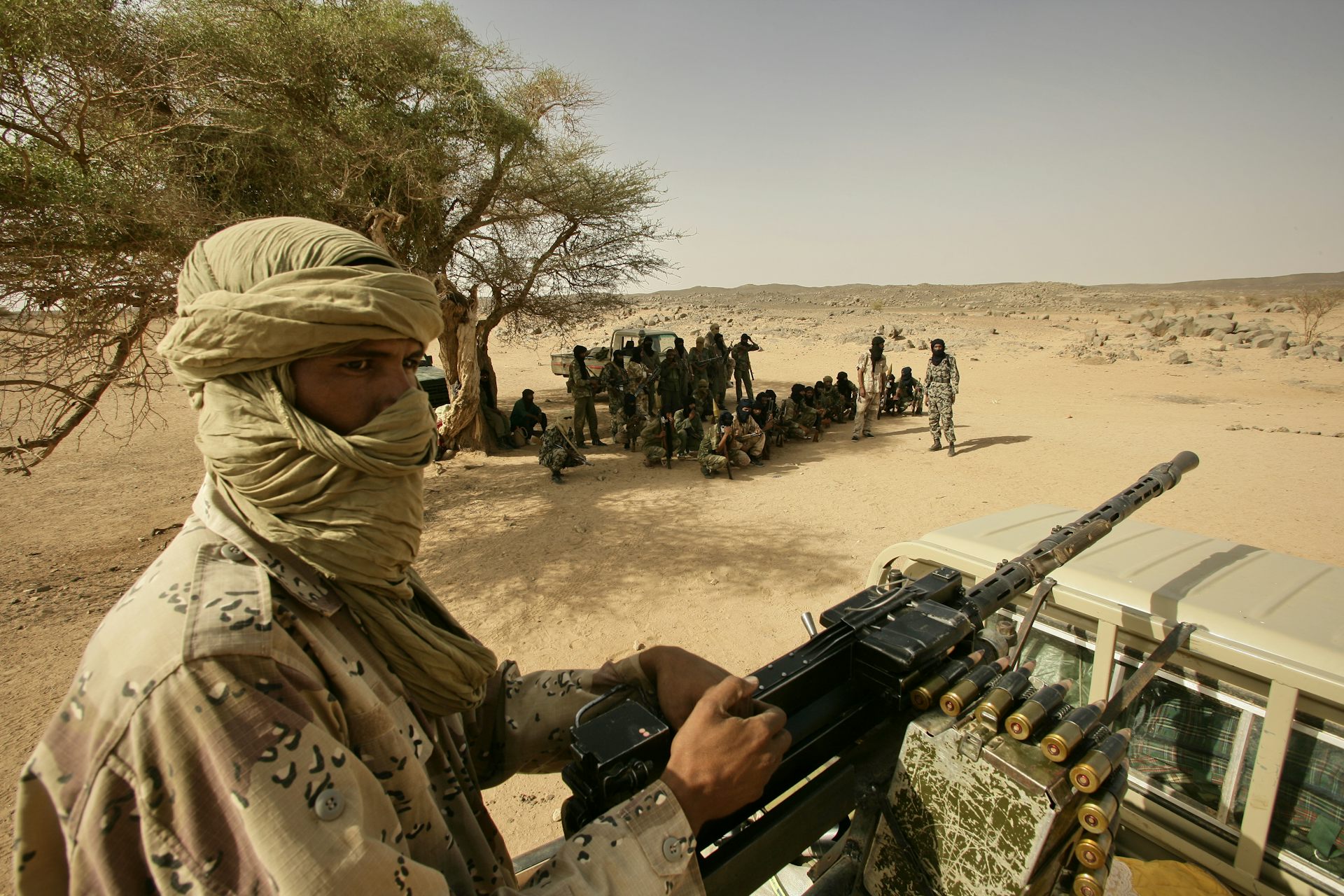
Ataques en Malí: Las quejas tuareg son clave para la paz
Mali attacks: Tuareg grievances hold the key to peace
Mali’s security situation requires resolution of Tuareg grievances, restoration of trust in the state, and political inclusion.
La situación de seguridad de Malí requiere la resolución de las quejas tuareg, la restauración de la confianza en el estado y la inclusión política.
The precarious security situation in Mali took a turn for the worse in late April 2026. Well coordinated attacks targeted several cities and claimed the lives of the defence minister, Sadio Camara, and several Malian soldiers.
La precaria situación de seguridad en Malí empeoró a finales de abril de 2026. Ataques bien coordinados atacaron varias ciudades y cobraron la vida del ministro de defensa, Sadio Camara, y de varios soldados malíes.
The events are a culmination of increased attacks over the past few years on the military and state institutions in Mali.
Los eventos son la culminación de ataques crecientes en los últimos años contra las instituciones militares y estatales de Malí.
We have been researching insecurity and politics in west Africa and the Sahel for over a decade. We believe the recent attacks trace back to grievances expressed by Tuaregs that the current military regime has not addressed. The Tuaregs are nomadic Berber communities in northern Mali.
Hemos estado investigando la inseguridad y la política en África occidental y el Sahel durante más de una década. Creemos que los ataques recientes se remontan a las quejas expresadas por los tuareg que el actual régimen militar no ha abordado. Los tuareg son comunidades bereberes nómadas del norte de Malí.
First is the inability or unwillingness to address Tuareg discontent. Their grievances centre on political autonomy, marginalisation, cultural recognition, resource control, security and perceived state neglect.
Primero es la incapacidad o falta de voluntad para abordar el descontento tuareg. Sus quejas se centran en la autonomía política, la marginación, el reconocimiento cultural, el control de recursos, la seguridad y la percibida negligencia estatal.
Second, the continuous use of force by the military against rebels in the northern regions without regard for the collateral damage. The Tuaregs have long contested the militarisation policies of successive Malian governments.
Segundo, el uso continuo de la fuerza por parte del ejército contra rebeldes en las regiones del norte sin tener en cuenta los daños colaterales. Los tuareg han impugnado durante mucho tiempo las políticas de militarización de los sucesivos gobiernos malíes.
Third, the uneven distribution of resources, which keeps the northern region marginalised. These include northern Mali’s resources such as gold deposits, salt mines, grazing lands, and strategic trade corridors. Revenues from these sources remain controlled by the state’s centre based in the south.
Tercero, la distribución desigual de los recursos, lo que mantiene marginada a la región norte. Estos incluyen los recursos del norte de Malí, como depósitos de oro, minas de sal, tierras de pastoreo y corredores comerciales estratégicos. Los ingresos de estas fuentes siguen siendo controlados por el centro estatal con sede en el sur.
Addressing resource marginalisation could have a number of benefits. It could temper Tuareg grievances, restore trust in the Malian state, and shift conflict incentives away from rebellion towards political inclusion, stability, and sustainable peace in northern Mali.
Abordar la marginación de los recursos podría tener varios beneficios. Podría calmar las quejas tuareg, restaurar la confianza en el estado malí y desviar los incentivos de conflicto de la rebelión hacia la inclusión política, la estabilidad y la paz sostenible en el norte de Malí.
The breakdown
El colapso
In April 2026 the jihadist group Jama’at Nusrat al-Islam wal-Muslimin (JNIM) joined forces with ethnic Tuareg rebels from the northern Azawad Liberation Front (FLA) to attack several cities in the country recently.
En abril de 2026, el grupo yihadista Jama’at Nusrat al-Islam wal-Muslimin (JNIM) se unió a rebeldes tuareg de la Franja de Liberación de Azawad (FLA) del norte para atacar varias ciudades del país recientemente.
This mirrors a similar attack in 2012 when the Tuareg and al-Qaeda-affiliated militants launched an offensive against the state. The Tuareg-dominated National Movement for the Liberation of Azawad (MNLA) attempted to secede and initiated a rebellion.
Esto refleja un ataque similar en 2012, cuando militantes tuareg y afiliados a Al Qaeda lanzaron una ofensiva contra el estado. El Movimiento Nacional para la Liberación de Azawad (MNLA) , dominado por tuareg, intentó secesionarse e inició una rebelión.
The MNLA is a Tuareg‑dominated separatist movement. Founded in 2011, it is mainly composed of ex-Libyan war returnees and northern Malian Tuaregs. The organisation had about 10,000 fighters at its peak in 2012.
El MNLA es un movimiento separatista dominado por tuareg. Fundado en 2011, está compuesto principalmente por retornados de la guerra libia y tuareg del norte de Malí. La organización contaba con unos 10.000 combatientes en su apogeo en 2012.
Despite their numbers, they lacked the military power to hold the territory. As a result they aligned with Islamists Ansar Dine, al-Qaeda in the Islamic Maghreb (AQIM) , and the Movement for Unity and Jihad in West Africa (MUJAO) . Shortly after pushing back Malian forces in late 2012, the alliance disintegrated.
A pesar de sus números, carecían del poder militar para mantener el territorio. Como resultado, se alinearon con islamistas de Ansar Dine, Al Qaeda en el Magreb Islámico (AQIM) y el Movimiento para la Unidad y el Yihad en África Occidental (MUJAO) . Poco después de repeler a las fuerzas malíes a finales de 2012, la alianza se desintegró.
The Islamist groups were better armed and funded. They forced the secular separatists out of major towns like Gao, Timbuktu and Kidal. The intervention of French forces in 2013 helped the Malian government regain most of the lost territories.
Los grupos islamistas estaban mejor armados y financiados. Obligaron a los separatistas seculares a abandonar ciudades importantes como Gao, Tombuctú y Kidal. La intervención de las fuerzas francesas en 2013 ayudó al gobierno maliense a recuperar la mayoría de los territorios perdidos.
AQIM and its allies then moved into the mountains and surrounding desert areas. They shifted to guerrilla tactics, including suicide bombings and landmines.
AQIM y sus aliados se trasladaron luego a las montañas y áreas desérticas circundantes. Adoptaron tácticas de guerrilla, incluidos atentados suicidas y minas terrestres.
The withdrawal of French forces in 2022 seems to have emboldened the Islamist militants. It removed counter‑terrorism pressure, disrupted intelligence and logistics and created a security vacuum amid weak Malian state capacity. This allowed Islamist groups to expand operations, recruit locally and regain territorial influence.
La retirada de las fuerzas francesas en 2022 parece haber envalentonado a los militantes islamistas. Eliminó la presión antiterrorista, interrumpió la inteligencia y la logística y creó un vacío de seguridad en medio de la débil capacidad estatal maliense. Esto permitió a los grupos islamistas expandir sus operaciones, reclutar localmente y recuperar influencia territorial.
Lessons unlearnt
Lecciones no aprendidas
The largely popular military regime of Assimi Goita has failed to address the demands of Tuareg separatists. The Tuaregs have historically complained about exclusion from power by the southern dominated Malian state. Since the country’s independence in 1960, Tuareg leaders have argued that the structure of the Malian state does not reflect their political identity, economic interests and governance traditions. The demand for self-rule or autonomy has been suppressed, often by force.
El régimen militar, en gran parte popular, de Assimi Goïta no ha logrado abordar las demandas de los separatistas tuareg. Los tuareg se han quejado históricamente de la exclusión del poder por parte del estado maliense dominado por el sur. Desde la independencia del país en 1960, los líderes tuareg han argumentado que la estructura del estado maliense no refleja su identidad política, sus intereses económicos ni sus tradiciones de gobernanza. La demanda de autogobierno o autonomía ha sido suprimida, a menudo por la fuerza.
More recently, increased drought, desertification and climate variability has devastated Tuareg pastoral livelihoods. These grievances pre-date Islamic insurgency and are fundamental in understanding the approach of the group.
Más recientemente, el aumento de la sequía, la desertificación y la variabilidad climática han devastado los medios de vida pastoriles tuareg. Estas quejas son anteriores a la insurgencia islámica y son fundamentales para comprender el enfoque del grupo.
The second unaddressed issue is that counterterrorism operations use force which creates collateral damage. Recent analysis shows that counterterrorism operations in northern and central Mali have resulted in large scale civilian harm, displacement and collective punishments. These have included arbitrary arrests and mass killings.
El segundo problema sin abordar es que las operaciones antiterroristas utilizan la fuerza, lo que genera daños colaterales. Análisis recientes muestran que las operaciones antiterroristas en el norte y centro de Malí han resultado en daños civiles a gran escala, desplazamientos y castigos colectivos. Estos han incluido arrestos arbitrarios y masacres.
These factors have created conditions which Islamist groups have exploited for recruitment, territorial control and legitimacy.
Estos factores han creado condiciones que los grupos islamistas han explotado para el reclutamiento, el control territorial y la legitimidad.
The blame for this has been put on successive Malian regimes and previous French operations. This has been a key reason for France’s interventions being labelled as failures.
La culpa de esto se ha atribuido a sucesivos regímenes malenses y a operaciones francesas anteriores. Esta ha sido una razón clave para que las intervenciones de Francia fueran etiquetadas como fracasos.
The third major driver of violence in Mali relates to the uneven distribution of resources. Since independence, public investment, infrastructure, social services and political attention have been heavily concentrated in the southern parts of the country.
El tercer motor principal de la violencia en Malí está relacionado con la distribución desigual de los recursos. Desde la independencia, la inversión pública, la infraestructura, los servicios sociales y la atención política se han concentrado en gran medida en las partes sur del país.
Previous peace agreements have promised decentralisation, funding and integration of northern elites and ex-combatants. But implementation have been slow or nonexistent.
Acuerdos de paz anteriores han prometido la descentralización, la financiación y la integración de las élites y excombatientes del norte. Pero su implementación ha sido lenta o inexistente.
Is there a way forward?
¿Hay un camino a seguir?
The Tuareg question must be answered to reduce the tension between the regions of the country. It can be argued that Tuareg actors have twice miscalculated by entering arrangements with jihadist groups. But this does not diminish the need to address the structural inequalities and long-standing grievances underpinning Tuareg demands.
La cuestión tuareg debe ser resuelta para reducir la tensión entre las regiones del país. Se puede argumentar que los actores tuareg han calculado mal dos veces al establecer acuerdos con grupos yihadistas. Pero esto no disminuye la necesidad de abordar las desigualdades estructurales y las quejas de larga data que sustentan las demandas tuareg.
To achieve this, the Malian regime can copy the blueprint of former president Mahamadou Issoufou of Niger. Prior to his presidency, the Nigerien Tuaregs were similarly aggrieved. When he became president in 2011, he:
Para lograr esto, el régimen maliense puede copiar el modelo del ex presidente de Níger, Mahamadou Issoufou. Antes de su presidencia, los tuareg de Níger se sentían igualmente agraviados. Cuando se convirtió en presidente en 2011, él:
integrated Tuareg elites and former rebels into state institutions
integró a las élites tuareg y a los ex rebeldes en las instituciones estatales
decentralised state authority by allowing administrative and budgetary control at the regional level
descentralizó la autoridad estatal al permitir el control administrativo y presupuestario a nivel regional
introduced disarmament, demobilisation and reintegration programmes.
introdujo programas de desarmamento, desmovilización y reintegración.
Issoufou also invested in infrastructural development in the areas that directly affected the Tuaregs. This included pastoralism, education and livelihood support. Water access in arid pastoral areas was improved. And connectivity and road safety was expanded.
Issoufou también invirtió en el desarrollo de infraestructura en las áreas que afectaban directamente a los tuareg. Esto incluyó el pastoreo, la educación y el apoyo a los medios de vida. Se mejoró el acceso al agua en las zonas pastoriles áridas. Y se expandió la conectividad y la seguridad vial.
Addressing the Tuareg agitations would reduce tensions in Mali.
Abordar las agitaciones tuareg reduciría las tensiones en Malí.
The authors do not work for, consult, own shares in or receive funding from any company or organisation that would benefit from this article, and have disclosed no relevant affiliations beyond their academic appointment.
Los autores no trabajan para, no asesoran, no poseen acciones ni reciben financiación de ninguna empresa u organización que se beneficiaría de este artículo, y no han revelado afiliaciones relevantes más allá de su nombramiento académico.
Read more
-
¿Volverán los precios del petróleo realmente a la ‘normalidad’?
Will oil prices ever truly go back to ‘normal’?
-
Onda de calor marino masiva hizo que los arrecifes de coral del Caribe colapsaran mucho más rápido de lo previsto: nueva investigación
Massive marine heatwave caused Caribbean coral reefs to collapse much faster than predicted – new research