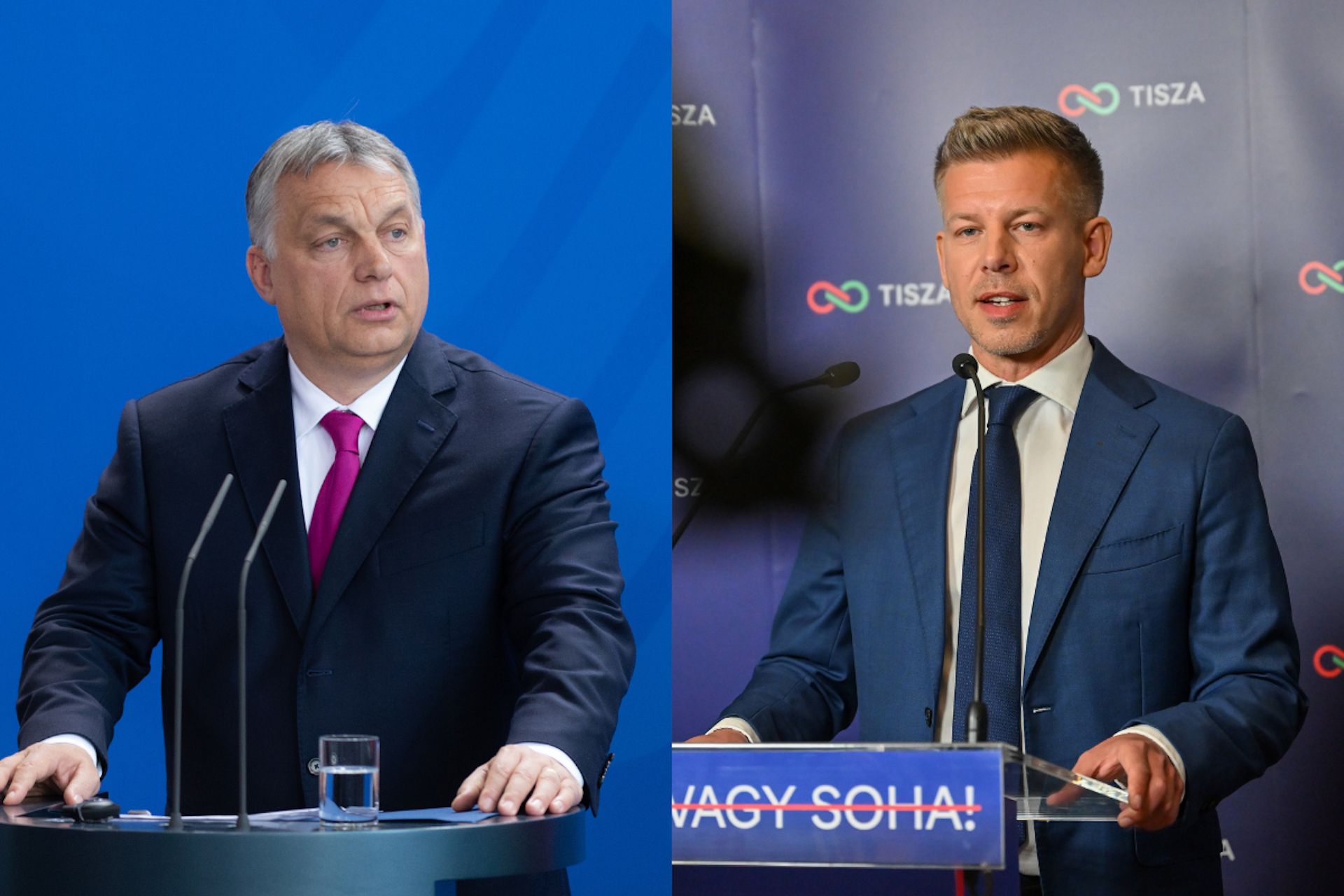
A derrota eleitoral de Viktor Orbán mostra os limites de sua máquina de propaganda
Viktor Orbán’s election loss shows the limits of his propaganda machine
Even controlling 80% of the media wasn’t enough in the face of a well-organised opposition.
Mesmo controlando 80% da mídia não foi suficiente diante de uma oposição bem organizada.
Hungarian voters have overwhelmingly rejected the 16-year rule of authoritarian strongman Viktor Orbán, electing his one-time political ally, Péter Magyar, to replace him. Magyar’s Tisza party has secured a two-thirds majority in parliament and therefore a supermajority. This will allow the new government to roll back some of the illiberal measures introduced Orbán governments over the years. Magyar has said that he intends to work for a “free, European” Hungary, which would reverse his predecessor’s rejection of Brussels.
Os eleitores húngaros rejeitaram esmagadoramente o mandato de 16 anos do ditador Viktor Orbán, elegindo seu antigo aliado político, Péter Magyar, para substituí-lo. O partido Tisza de Magyar garantiu uma maioria de dois terços no parlamento e, portanto, uma supermaioria. Isso permitirá que o novo governo reverta algumas das medidas iliberais introduzidas pelos governos de Orbán ao longo dos anos. Magyar disse que pretende trabalhar por uma Hungria “livre e europeia”, o que reverteria a rejeição de Bruxelas feita por seu antecessor.
One of Magyar’s key election promises was to restore press freedom, and reform state-run media, which, under Orbán, had become a powerful tool for distributing disinformation.
Uma das principais promessas eleitorais de Magyar foi restaurar a liberdade de imprensa e reformar a mídia estatal, que, sob Orbán, havia se tornado uma poderosa ferramenta para distribuir desinformação.
This huge win for Tisza followed a campaign marred by what many foreign monitors claimed were unprecedented levels of disinformation, foreign interference and government propaganda. In fact, the result may come as a surprise to those who believe that in information autocracies such as Hungary, where access to news and political discussion is controlled by what have been dubbed “spin dictators”, election results can easily be controlled by the ruling party.
Esta grande vitória para o Tisza ocorreu após uma campanha marcada pelo que muitos observadores estrangeiros alegaram serem níveis sem precedentes de desinformação, interferência estrangeira e propaganda governamental. Na verdade, o resultado pode ser uma surpresa para aqueles que acreditam que em autocracias informacionais como a Hungria, onde o acesso às notícias e ao debate político é controlado pelo que foram apelidados de “ditadores do spin”, os resultados eleitorais podem ser facilmente controlados pelo partido no poder.
Orbán is a textbook example of an information autocrat. The propaganda arsenal deployed by his ruling Fidesz party in this campaign was as formidable as ever. Pro-government election billboards blanketed the country, financed not just by Fidesz but by the government itself and by powerful publicly owned agencies such as the state energy conglomerate MVM, by the Magyar Nemzeti Bank (MNB) – Hungary’s central bank – and by a host of government-aligned NGOs.
Orbán é um exemplo clássico de autocrata informacional. O arsenal de propaganda empregado pelo seu partido no poder, o Fidesz, nesta campanha foi tão formidável quanto sempre. Outdoors eleitorais pró-governo cobriram o país, financiados não apenas pelo Fidesz, mas também pelo próprio governo e por poderosas agências de propriedade pública, como o conglomerado estatal de energia MVM, pelo Banco Nacional da Hungria (MNB) – o banco central da Hungria – e por uma série de ONGs alinhadas com o governo.
State communication channels were repurposed wholesale for partisan messaging. Pro-government media and troll networks amplified existential warnings about the opposition.
Os canais de comunicação estatais foram totalmente reaproveitados para mensagens partidárias. Mídia pró-governo e redes de trolls amplificaram alertas existenciais sobre a oposição.
But Fidesz’s tactics went further than messaging. Elaborate theatrics were deployed to scare or influence voters. A bomb was allegedly defused in Serbia that had supposedly targeted Hungarian election infrastructure. Ukrainian cash and gold assets were seized on spurious grounds concerning some shadowy threat from Ukraine’s “war mafia”. Each spectacle seemed designed to lend weight to Fidesz’s warnings about external interference.
Mas as táticas do Fidesz foram além da mensagem. Elaborados teatros foram usados para assustar ou influenciar os eleitores. Uma bomba foi supostamente desarmada na Sérvia que teria visado a infraestrutura eleitoral húngara. Ativos em dinheiro e ouro ucranianos foram apreendidos por motivos espúrios relacionados a alguma ameaça sombria da “mafia da guerra” ucraniana. Cada espetáculo parecia projetado para dar peso aos avisos do Fidesz sobre interferência externa.
Fidesz attempted to fire up its electoral base by framing the election as an existential struggle for Hungary itself. Since it was first elected in 2010, Fidesz has relied almost exclusively on this strategy, painting its challenger as a danger to the country, and turning elections into a matter of life and death.
O Fidesz tentou animar sua base eleitoral enquadrando a eleição como uma luta existencial pela própria Hungria. Desde que foi eleito em 2010, o Fidesz dependeu quase exclusivamente desta estratégia, pintando seu desafiante como um perigo para o país, e transformando as eleições em uma questão de vida ou morte.
But this time around, Fidesz has learned to its cost that it was insufficient to stick to the playbook that has kept it in power for 16 years. Things have changed – most notably the Hungarian economy, which has essentially flatlined since 2022, with near-zero real GDP growth compounded by the highest inflation in the EU. The second big shift has been political – the consolidation of the opposition behind a single credible challenger to Orbán. Previously, Fidesz had been able easily defeat the fragmented and ineffective coalitions it had previously faced.
Mas desta vez, o Fidesz aprendeu, a seu custo, que não era suficiente se ater ao manual que o manteve no poder por 16 anos. As coisas mudaram – mais notavelmente a economia húngara, que essencialmente estagnou desde 2022, com um crescimento do PIB real próximo de zero agravado pela maior inflação da UE. A segunda grande mudança foi política – a consolidação da oposição por trás de um único desafiante credível para Orbán. Anteriormente, o Fidesz havia sido capaz de derrotar facilmente as coalizões fragmentadas e ineficazes que havia enfrentado.
Orbán’s failing appeal
O apelo falhado de Orbán
Despite Orbán’s considerable arsenal of information manipulation tools, his election pitch appears to have been broadly rejected. This appears to have been a failure of strategy, unexpected from such a wily political veteran. In his annual “state of the nation” address in February, Orbán promised more of the same, to protect Hungary from change and outside threats such as from Brussels.
Apesar do considerável arsenal de ferramentas de manipulação de informação de Orbán, o seu discurso eleitoral parece ter sido amplamente rejeitado. Isto parece ter sido um fracasso de estratégia, inesperado de um veterano político tão astuto. No seu discurso anual sobre o “estado da nação” em fevereiro, Orbán prometeu mais do mesmo, para proteger a Hungria de mudanças e de ameaças externas, como as de Bruxelas.
But that’s a pitch to true believers, not to the wavering or undecided. There was no attempt to build bridges to new groups or attempt to extend his electoral coalition.
Mas esse é um discurso para os crentes convictos, não para os indecisos ou hesitantes. Não houve tentativa de construir pontes para novos grupos ou de tentar estender a sua coligação eleitoral.
Having watched Fidesz govern all this time, I believe the answer is that the voter manipulation system the party built built over the years is poorly suited for this purpose. Persuading new voters to come round to your side is hard and requires credibility, good arguments and strong messages, none of which the government has any more. Much easier to focus on fear caused by slander, misinformation and the moral panic button.
Tendo acompanhado o governo do Fidesz durante todo este tempo, acredito que a resposta é que o sistema de manipulação do eleitorado que o partido construiu ao longo dos anos é mal adequado para este propósito. Persuadir novos eleitores a mudar de lado é difícil e requer credibilidade, bons argumentos e mensagens fortes, nada disso o governo tem mais. É muito mais fácil focar-se no medo causado pela difamação, desinformação e o botão do pânico moral.
This clearly didn’t work. In February, a survey found that only 23% of Hungarians believed the government’s central claim that victory for Magyar and his Tisza party would result in Hungary being dragged into a foreign war, a theme hammered on by Orbán in his state of the nation speech. Even among Fidesz voters, nearly half – 43% – said they didn’t believe this.
Isto claramente não funcionou. Em fevereiro, uma pesquisa revelou que apenas 23% dos húngaros acreditavam na afirmação central do governo de que a vitória de Magyar e do seu partido Tisza resultaria em Hungria ser arrastada para uma guerra estrangeira, um tema insistido por Orbán no seu discurso sobre o estado da nação. Mesmo entre os eleitores do Fidesz, quase metade – 43% – disse que não acreditava nisso.
Political science literature is clear on the risks of negative campaigning. Attack messages can attract attention – but their effectiveness hinges on whether voters find them credible. Dishonest attacks can boomerang, eroding trust in the attacker rather than the target. And this clearly happened in Hungary in this election campaign.
A literatura de ciência política é clara sobre os riscos do campanha negativa. As mensagens de ataque podem atrair atenção – mas a sua eficácia depende de os eleitores considerá-las credíveis. Ataques desonestos podem voltar contra o atacante, erodindo a confiança no atacante em vez do alvo. E isto claramente aconteceu na Hungria nesta campanha eleitoral.
All of which points to a broader lesson about information control in illiberal regimes: it can easily be overstated. Hungary’s 2026 election has revealed that an information autocracy can have its limits. And in the face of a faltering economy and a united and credible opposition, Orbán’s campaign reached those limits – and failed as a result.
Tudo isto aponta para uma lição mais ampla sobre o controlo da informação em regimes iliberais: pode ser facilmente exagerado. As eleições húngaras de 2026 revelaram que uma autocracia da informação pode ter os seus limites. E face a uma economia vacilante e uma oposição unida e credível, a campanha de Orbán atingiu esses limites – e falhou como resultado.
Alexander Bor receives funding from European Union’s Horizon 2020 research and innovation programme.
Alexander Bor recebe financiamento do programa de pesquisa e inovação Horizon 2020 da União Europeia.
Read more
-
As elites políticas do Líbano estão usando o deslocamento e a crise humanitária para adiar as eleições novamente
Lebanon’s political elites are using displacement and humanitarian crisis to delay elections again
-

Podemos considerar ‘brincar’ uma religião? Bluey certamente pensa assim.
Can we consider ‘play’ to be a religion? Bluey certainly thinks so