Por que Israel continua a atacar o Líbano, apesar do cessar-fogo? Perguntas e Respostas de Especialista
Why is Israel continuing to attack Lebanon, despite the ceasefire? Expert Q&A
Israel has upped the intensity of its campaign in Lebanon, despite the signing of a ceasefire in the Middle East.
Israel aumentou a intensidade de sua campanha no Líbano, apesar da assinatura de um cessar-fogo no Oriente Médio.
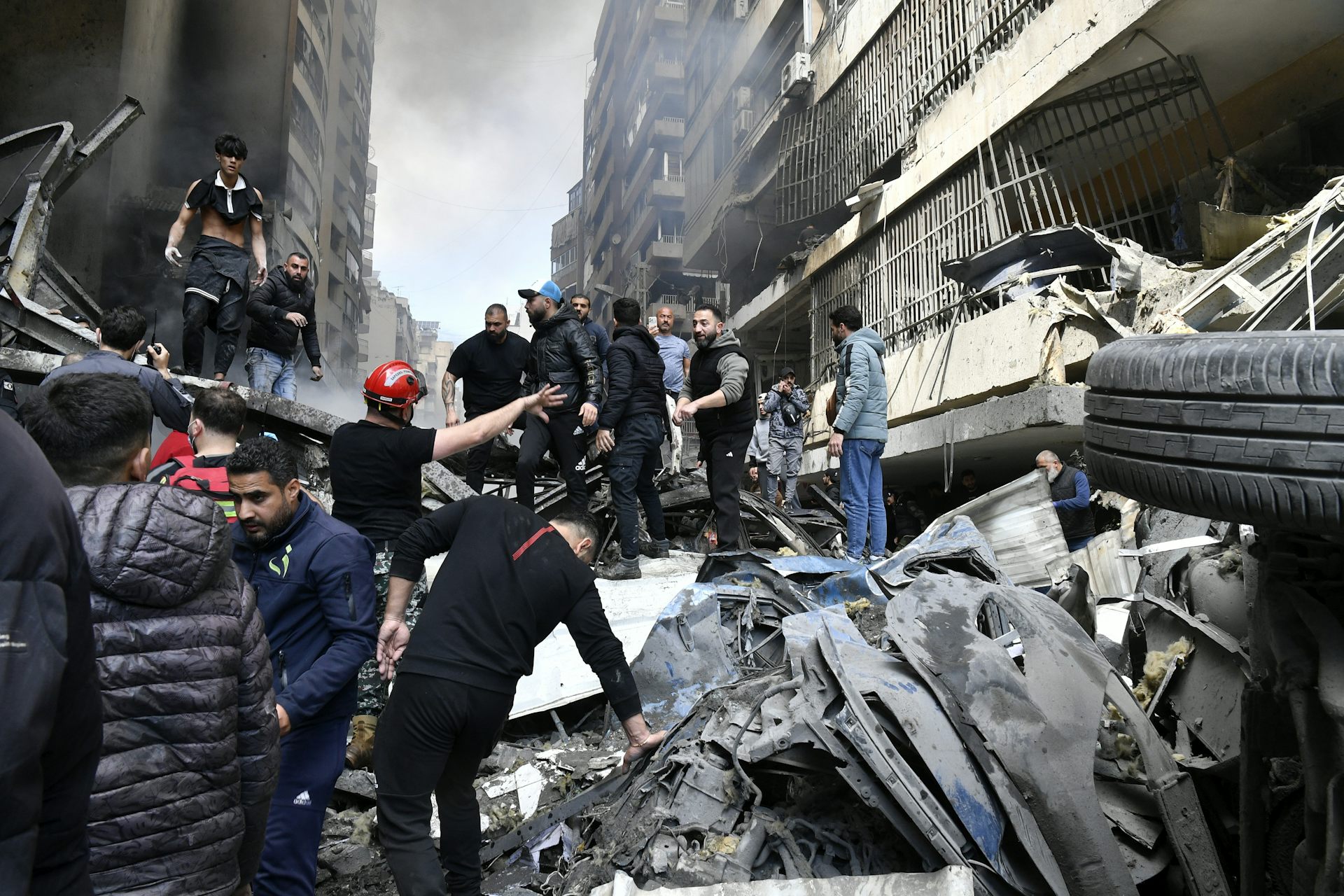
The ceasefire in the Middle East is on shaky ground. Israel continued its bombardment of Lebanon on Wednesday, claiming its activities there are not part of the deal with Iran. These attacks killed at least 254 people across Lebanon and injured over 800 more in what was Israel’s largest offensive of the war so far.
O cessar-fogo no Oriente Médio está em terreno instável. Israel continuou seu bombardeio do Líbano na quarta-feira, alegando que suas atividades lá não fazem parte do acordo com o Irã. Esses ataques mataram pelo menos 254 pessoas em todo o Líbano e feriram mais de 800, em o que foi a maior ofensiva de Israel na guerra até agora.
Iran responded by closing the Strait of Hormuz again and threatened a “regret-inducing response” if the strikes continue. Donald Trump subsequently warned that US strikes on Iran would resume if it did not comply with the ceasefire. We spoke to Scott Lucas, an expert in Middle East politics at University College Dublin, who addresses several key issues.
O Irã respondeu fechando novamente o Estreito de Ormuz e ameaçou uma “resposta que causaria arrependimento” se os ataques continuassem. Donald Trump subsequentemente alertou que os ataques dos EUA ao Irã recomeçariam se este não cumprisse o cessar-fogo. Conversamos com Scott Lucas, um especialista em política do Oriente Médio do University College Dublin, que aborda várias questões importantes.
Why is there confusion about whether Lebanon was included in the ceasefire?
Por que há confusão sobre se o Líbano foi incluído no cessar-fogo?
Part of the problem is the nature of diplomacy in 2026. The Trump camp and Pakistan’s prime minister, Shahbaz Sharif, who has been a key mediator between the US and Iran since the start of the war, both issued statements on social media instead of coordinating the release of an agreed text.
Parte do problema é a natureza da diplomacia em 2026. O acampamento de Trump e o primeiro-ministro do Paquistão, Shahbaz Sharif, que tem sido um mediador chave entre os EUA e o Irã desde o início da guerra, emitiram declarações nas redes sociais em vez de coordenar a divulgação de um texto acordado.
That said, there should be no confusion. Sharif’s social media post made clear that the ceasefire also applies to Israel’s campaign in Lebanon. He wrote: “I am pleased to announce that the Islamic Republic of Iran and the United States of America, along with their allies, have agreed to an immediate ceasefire everywhere including Lebanon and elsewhere, EFFECTIVE IMMEDIATELY.”
Dito isto, não deve haver confusão. A publicação de Sharif nas redes sociais deixou claro que o cessar-fogo também se aplica à campanha de Israel no Líbano. Ele escreveu: “Tenho o prazer de anunciar que a República Islâmica do Irã e os Estados Unidos da América, juntamente com seus aliados, concordaram com um cessar-fogo imediato em todos os lugares, incluindo o Líbano e outros, COM EFEITO IMEDIATO.”
Trump also accepted that later peace talks in Pakistan would be based on Iran’s ten-point plan, which he described as a “workable basis on which to negotiate”. One of Iran’s demands is for “an end to attacks on Iran and its allies”. This includes the Israeli strikes against Hezbollah in Lebanon.
Trump também aceitou que as futuras negociações de paz no Paquistão seriam baseadas no plano de dez pontos do Irã, que ele descreveu como uma “base viável para negociação”. Uma das exigências do Irã é “o fim dos ataques contra o Irã e seus aliados”. Isso inclui os ataques israelenses contra o Hezbollah no Líbano.
Why then is Israel still attacking Lebanon?
Por que Israel ainda está atacando o Líbano?
Israel’s prime minister, Benjamin Netanyahu, does not have an interest in ending the war until he establishes something he can claim as a “victory”. Israel’s objective in Iran is regime change. At the start of the war, Netanyahu announced that the “goal of the operation is to put an end to the threat from the Ayatollah regime in Iran”.
O primeiro-ministro de Israel, Benjamin Netanyahu, não tem interesse em acabar com a guerra até que estabeleça algo que possa reivindicar como uma “vitória”. O objetivo de Israel no Irã é a mudança de regime. No início da guerra, Netanyahu anunciou que “o objetivo da operação é pôr fim à ameaça do regime dos Ayatolá no Irã”.
Trump’s goals in Iran are less clear. He entered the war pledging to prevent Iran from obtaining a nuclear weapon, destroy its missile capability, break its regional proxies, eliminate its navy and create an opening for regime change. But Iran’s regime is still in place and the Trump camp now appears willing to enter into negotiations with it.
Os objetivos de Trump no Irã são menos claros. Ele entrou na guerra prometendo impedir que o Irã obtivesse uma arma nuclear, destruir sua capacidade de mísseis, quebrar seus proxies regionais, eliminar sua marinha e criar uma abertura para a mudança de regime. Mas o regime do Irã ainda está em vigor e o acampamento de Trump agora parece disposto a entrar em negociações com ele.
So Netanyahu’s focus shifts to Lebanon and expansion of the Israeli occupation in the south of the country. Attacks will continue until that is achieved. The situation is similar to Gaza, where Israel now occupies 53% of the territory after its two years of attacks.
Assim, o foco de Netanyahu muda para o Líbano e para a expansão da ocupação israelense no sul do país. Os ataques continuarão até que isso seja alcançado. A situação é semelhante a Gaza, onde Israel ocupa agora 53% do território após seus dois anos de ataques.
By presenting a victory over the threat of Hezbollah, pushing the group further from the Israeli border, Netanyahu can try to bolster his support at home despite any disappointment over the inconclusive outcome of the war in Iran.
Ao apresentar uma vitória sobre a ameaça do Hezbollah, empurrando o grupo mais para longe da fronteira israelense, Netanyahu pode tentar reforçar seu apoio em casa, apesar de qualquer desapontamento com o resultado inconclusivo da guerra no Irã.
Will Israel’s actions push the Gulf states closer to Iran?
As ações de Israel levarão os estados do Golfo mais perto do Irã?
For the first time since the start of the US and Israel’s war on February 28, the Iranian and Saudi Arabian foreign ministers have spoken by phone. In a statement following the call on April 9, the Saudi foreign ministry said the two men “reviewed the latest developments and discussed ways to reduce tensions to restore security and stability in the region”.
Pela primeira vez desde o início da guerra entre os EUA e Israel em 28 de fevereiro, os ministros das Relações Exteriores do Irã e da Arábia Saudita falaram por telefone. Em um comunicado após a ligação em 9 de abril, o ministério das Relações Exteriores da Arábia Saudita disse que os dois homens “analisaram os últimos desenvolvimentos e discutiram maneiras de reduzir tensões para restaurar a segurança e a estabilidade na região”.
However, this is only a tentative beginning to repair the damage of the past six weeks. Gulf states are unhappy that the US exposed them to Iran’s retaliation by embarking upon the war, but that does not erase their anger with Tehran over the extent of the damage Iranian attacks have caused to energy infrastructure in the region.
No entanto, este é apenas um começo tentativo para reparar os danos das últimas seis semanas. Os estados do Golfo estão insatisfeitos porque os EUA os expuseram à retaliação do Irã ao iniciar a guerra, mas isso não apaga sua raiva de Teerã sobre a extensão dos danos que os ataques iranianos causaram à infraestrutura energética na região.
Reports suggest that Saudi Arabia and the United Arab Emirates have in recent weeks even been pressing the Trump camp to “finish the job” in Iran with ground operations to vanquish the regime. That option appears to have been paused for now. However, it is not off the table if the US-Iran negotiations collapse.
Relatos sugerem que a Arábia Saudita e os Emirados Árabes Unidos têm pressionado o acampamento de Trump nas últimas semanas para “terminar o trabalho” no Irã com operações terrestres para derrotar o regime. Essa opção parece ter sido suspensa por enquanto. No entanto, não está descartada se as negociações EUA-Irã colapsarem.
Where does all of this leave Donald Trump?
Onde isso deixa Donald Trump?
Angry, frustrated and uncertain what to do next. Trump’s bluster on April 7, in which he said “a whole civilization will die tonight” unless Iran reached a deal, was always an expression of weakness rather than strength. The plan A for regime surrender, with the killing of the Iranian supreme leader Ali Khamenei and dozens of commanders and officials, did not have a plan B for when the remaining leaders refused to concede and instead struck back.
Irritado, frustrado e incerto sobre o que fazer em seguida. O alarde de Trump em 7 de abril, no qual ele disse que “toda uma civilização morrerá esta noite” a menos que o Irã chegasse a um acordo, foi sempre uma expressão de fraqueza em vez de força. O plano A para a rendição do regime, com o assassinato do líder supremo iraniano Ali Khamenei e de dezenas de comandantes e oficiais, não tinha um plano B para quando os líderes restantes se recusaram a ceder e, em vez disso, revidaram.
With Iran controlling the Strait of Hormuz and choking off Gulf shipping, including of oil and gas, the Trump camp was reduced to either ground operations or talks. Trump snatched at the latter amid military advice of the difficulties of a ground assault and domestic opinion that is largely opposed to further escalation.
Com o Irã controlando o Estreito de Ormuz e sufocando o tráfego marítimo do Golfo, incluindo petróleo e gás, o acampamento de Trump foi reduzido a operações terrestres ou negociações. Trump agarrou-se a estas últimas em meio a conselhos militares sobre as dificuldades de um ataque terrestre e a uma opinião doméstica que é amplamente contrária a uma escalada adicional.
But he did so by handing Iran the diplomatic initiative. Now the White House is trying to pull it back, including by giving Israel the green light to continue its assault in Lebanon. The US is now denying that Lebanon was ever included in the ceasefire deal, with Trump calling it a “separate skirmish”.
Mas ele o fez ao entregar a iniciativa diplomática ao Irã. Agora, a Casa Branca está tentando reverter isso, incluindo dando luz verde a Israel para continuar seu ataque no Líbano. Os EUA estão agora negando que o Líbano tenha sido incluído no acordo de cessar-fogo, com Trump chamando-o de “escaramuça separada”.
The situation in the Middle East thus remains extremely volatile as delegates from the US and Iran head to the Pakistani capital of Islamabad for crunch talks on April 10.
A situação no Oriente Médio, portanto, permanece extremamente volátil, pois delegados dos EUA e do Irã se dirigem à capital paquistanesa, Islamabad, para negociações cruciais em 10 de abril.
Scott Lucas does not work for, consult, own shares in or receive funding from any company or organisation that would benefit from this article, and has disclosed no relevant affiliations beyond their academic appointment.
Scott Lucas não trabalha, não consulta, não possui ações nem recebe financiamento de nenhuma empresa ou organização que se beneficiaria deste artigo, e não divulgou afiliações relevantes além de seu cargo acadêmico.
Read more
-
A economia de Moçambique está em colapso: as difíceis escolhas políticas que precisam ser feitas com urgência
Mozambique’s economy is failing: the tough policy choices that need to be made urgently
-
370 bilhões de grilos são criados para alimentação todos os anos. Cientistas descobriram que eles podem sentir dor
370 billion crickets are farmed for food every year. Scientists have discovered they may feel pain