Mali’s security situation requires resolution of Tuareg grievances, restoration of trust in the state, and political inclusion.
马里的安全局势需要解决图阿雷格人的诉求,重建对国家的信任,并实现政治包容。
The precarious security situation in Mali took a turn for the worse in late April 2026. Well coordinated attacks targeted several cities and claimed the lives of the defence minister, Sadio Camara, and several Malian soldiers.
马里不稳定的安全局势在2026年4月下旬进一步恶化。有组织的袭击袭击了数个城市,造成了国防部长萨迪奥·卡马拉(Sadio Camara)和数名马里士兵的死亡。
The events are a culmination of increased attacks over the past few years on the military and state institutions in Mali.
这些事件是近年来针对马里军事和国家机构日益增加的袭击的积累。
We have been researching insecurity and politics in west Africa and the Sahel for over a decade. We believe the recent attacks trace back to grievances expressed by Tuaregs that the current military regime has not addressed. The Tuaregs are nomadic Berber communities in northern Mali.
我们研究了西非和萨赫勒地区的治安和政治问题十多年。我们认为,最近的袭击可追溯到图阿雷格人表达的不满,而这些不满尚未得到当前军事政权解决。图阿雷格人是马里北部游牧的柏柏尔社区。
First is the inability or unwillingness to address Tuareg discontent. Their grievances centre on political autonomy, marginalisation, cultural recognition, resource control, security and perceived state neglect.
首先是无能或不愿解决图阿雷格人的不满。他们的诉求集中在政治自主权、边缘化、文化承认、资源控制、安全以及感觉到的国家忽视等方面。
Second, the continuous use of force by the military against rebels in the northern regions without regard for the collateral damage. The Tuaregs have long contested the militarisation policies of successive Malian governments.
其次是军事力量持续使用武力对抗北部地区的叛军,而没有顾及附带损害。图阿雷格人长期以来一直质疑连续的马里政府的军事化政策。
Third, the uneven distribution of resources, which keeps the northern region marginalised. These include northern Mali’s resources such as gold deposits, salt mines, grazing lands, and strategic trade corridors. Revenues from these sources remain controlled by the state’s centre based in the south.
第三是资源分配不均,这使得北部地区持续处于边缘化状态。这些资源包括马里北部的金矿、盐矿、牧场和战略贸易走廊。这些来源的收入仍然由位于南部的中央政府控制。
Addressing resource marginalisation could have a number of benefits. It could temper Tuareg grievances, restore trust in the Malian state, and shift conflict incentives away from rebellion towards political inclusion, stability, and sustainable peace in northern Mali.
解决资源边缘化问题可以带来诸多益处。它可以平息图阿雷格人的不满,恢复对马里国家的信任,并将冲突的动力从叛乱转移到北部地区的政治包容、稳定和可持续和平上来。
The breakdown
局势分析
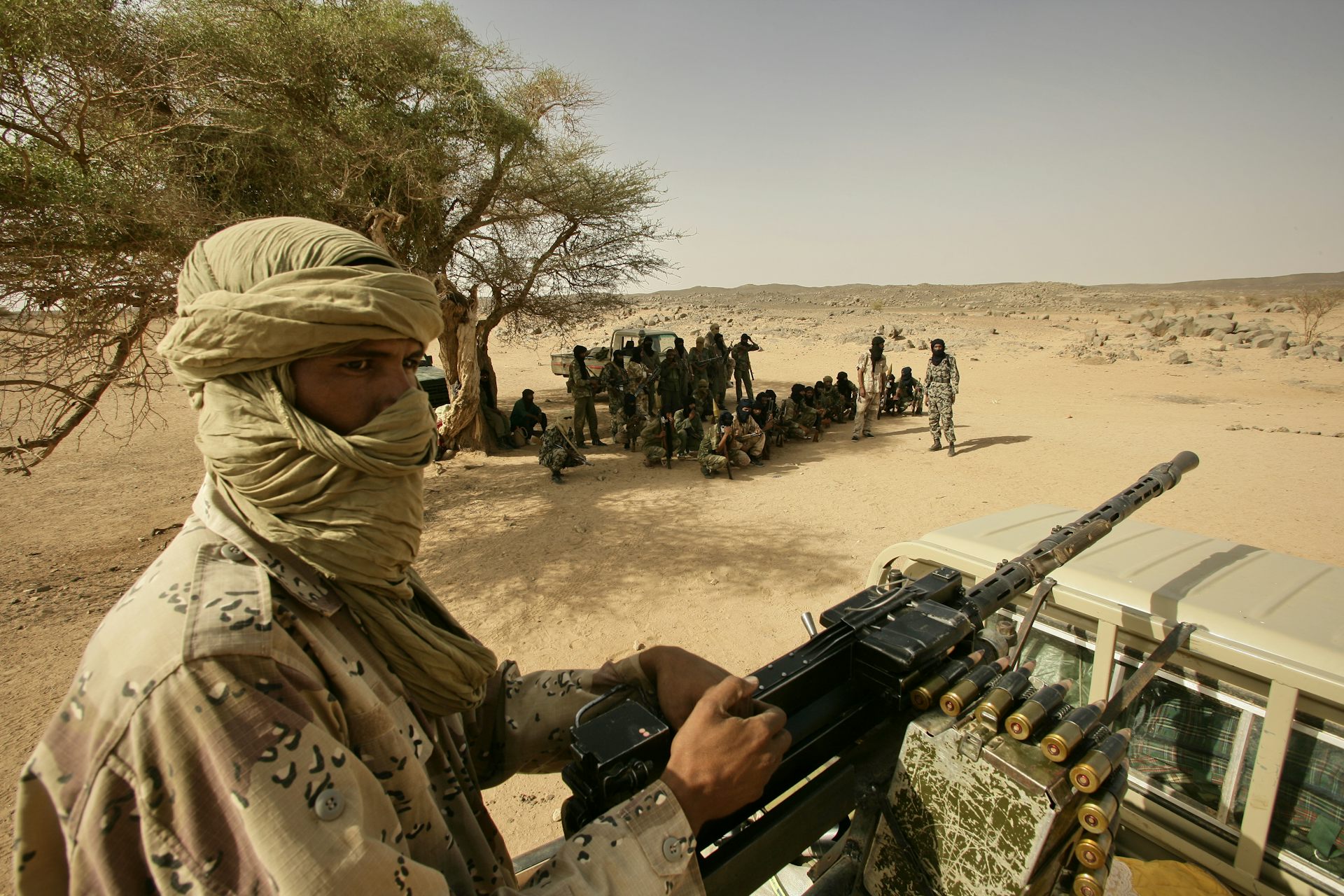
In April 2026 the jihadist group Jama’at Nusrat al-Islam wal-Muslimin (JNIM) joined forces with ethnic Tuareg rebels from the northern Azawad Liberation Front (FLA) to attack several cities in the country recently.
2026年4月,圣战组织“伊斯兰与穆斯林援助组织”(JNIM)与来自北部阿扎瓦德解放阵线(FLA)的图阿雷格族叛军联手,最近袭击了该国的数个城市。
This mirrors a similar attack in 2012 when the Tuareg and al-Qaeda-affiliated militants launched an offensive against the state. The Tuareg-dominated National Movement for the Liberation of Azawad (MNLA) attempted to secede and initiated a rebellion.
这与2012年发生的一次类似袭击相似,当时图阿雷格族和与基地组织有关联的武装分子对国家发动了进攻。以图阿雷格族为主的阿扎瓦德解放国家运动(MNLA)试图脱离国家并引发了叛乱。
The MNLA is a Tuareg‑dominated separatist movement. Founded in 2011, it is mainly composed of ex-Libyan war returnees and northern Malian Tuaregs. The organisation had about 10,000 fighters at its peak in 2012.
MNLA是一个以图阿雷格族为主的分裂主义运动。它成立于2011年,主要由前利比亚战区归来的人员和马里北部图阿雷格族人组成。该组织在2012年达到顶峰时拥有约1万名武装人员。
Despite their numbers, they lacked the military power to hold the territory. As a result they aligned with Islamists Ansar Dine, al-Qaeda in the Islamic Maghreb (AQIM) , and the Movement for Unity and Jihad in West Africa (MUJAO) . Shortly after pushing back Malian forces in late 2012, the alliance disintegrated.
尽管人数众多,但他们缺乏维持领土的军事力量。因此,他们与伊斯兰主义团体“安萨尔真主(Ansar Dine)”、“伊斯兰马格里布基地组织”(AQIM)和“西非统一与圣战运动”(MUJAO)结盟。在2012年末击退马里军队后不久,这一联盟便瓦解了。
The Islamist groups were better armed and funded. They forced the secular separatists out of major towns like Gao, Timbuktu and Kidal. The intervention of French forces in 2013 helped the Malian government regain most of the lost territories.
伊斯兰主义团体装备和资金更充足。他们迫使世俗的分裂主义者离开了加奥、廷巴克图和基达尔等主要城镇。2013年法国军队的介入帮助马里政府收复了大部分失地。
AQIM and its allies then moved into the mountains and surrounding desert areas. They shifted to guerrilla tactics, including suicide bombings and landmines.
随后,AQIM及其盟友进入了山区和周围的沙漠地区。他们转向了游击战术,包括自杀式炸弹和地雷。
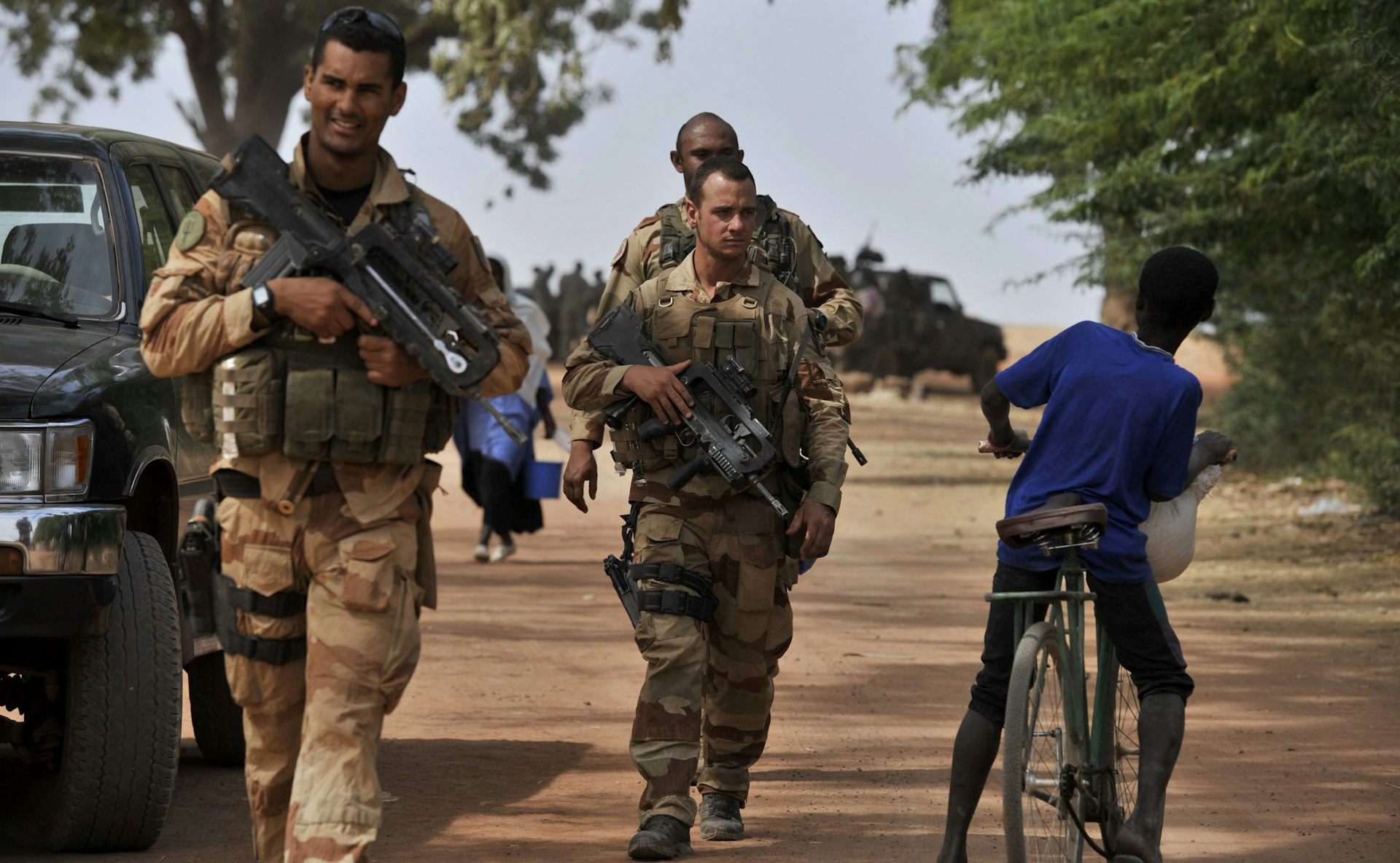
The withdrawal of French forces in 2022 seems to have emboldened the Islamist militants. It removed counter‑terrorism pressure, disrupted intelligence and logistics and created a security vacuum amid weak Malian state capacity. This allowed Islamist groups to expand operations, recruit locally and regain territorial influence.
2022年法国军队的撤离似乎鼓舞了伊斯兰武装分子。这消除了反恐压力,扰乱了情报和后勤,并在马里国家能力薄弱的情况下造成了安全真空。这使得伊斯兰团体得以扩大行动、当地招募人员并重新获得领土影响力。
Lessons unlearnt
尚未吸取的教训
The largely popular military regime of Assimi Goita has failed to address the demands of Tuareg separatists. The Tuaregs have historically complained about exclusion from power by the southern dominated Malian state. Since the country’s independence in 1960, Tuareg leaders have argued that the structure of the Malian state does not reflect their political identity, economic interests and governance traditions. The demand for self-rule or autonomy has been suppressed, often by force.
阿西米·戈伊塔(Assimi Goita)的军事政权虽然广受欢迎,但未能满足图阿雷格分离主义者的要求。图阿雷格人历史上一直抱怨马里这个由南部主导的国家排斥他们参与权力分配。自1960年马里独立以来,图阿雷格领导人一直认为马里国家的结构未能反映他们的政治身份、经济利益和治理传统。他们要求自治或自决的诉求,往往遭到镇压,甚至使用武力。
More recently, increased drought, desertification and climate variability has devastated Tuareg pastoral livelihoods. These grievances pre-date Islamic insurgency and are fundamental in understanding the approach of the group.
近年来,日益严重的干旱、荒漠化和气候变化,已经摧毁了图阿雷格的牧民生计。这些不满情绪早于伊斯兰叛乱,对于理解该团体的诉求至关重要。
The second unaddressed issue is that counterterrorism operations use force which creates collateral damage. Recent analysis shows that counterterrorism operations in northern and central Mali have resulted in large scale civilian harm, displacement and collective punishments. These have included arbitrary arrests and mass killings.
第二个未解决的问题是反恐行动使用武力,从而造成了附带损害。最近的分析显示,在马里北部和中部进行的反恐行动造成了大规模的平民伤害、流离失所和集体惩罚。这些包括任意逮捕和大规模杀戮。
These factors have created conditions which Islamist groups have exploited for recruitment, territorial control and legitimacy.
这些因素为伊斯兰团体创造了条件,使其得以进行招募、控制领土和获取合法性。
The blame for this has been put on successive Malian regimes and previous French operations. This has been a key reason for France’s interventions being labelled as failures.
责任被归咎于马里连续的政权以及此前的法国行动。这也是法国干预行动被贴上“失败”标签的关键原因。
The third major driver of violence in Mali relates to the uneven distribution of resources. Since independence, public investment, infrastructure, social services and political attention have been heavily concentrated in the southern parts of the country.
马里暴力冲突的第三个主要驱动因素与资源分配不均有关。自独立以来,公共投资、基础设施、社会服务和政治关注都高度集中在国家南部地区。
Previous peace agreements have promised decentralisation, funding and integration of northern elites and ex-combatants. But implementation have been slow or nonexistent.
此前的和平协议曾承诺对北部精英和前战斗人员进行权力下放、资金支持和整合。但其实施一直缓慢或根本不存在。
Is there a way forward?
前进的道路在哪里?
The Tuareg question must be answered to reduce the tension between the regions of the country. It can be argued that Tuareg actors have twice miscalculated by entering arrangements with jihadist groups. But this does not diminish the need to address the structural inequalities and long-standing grievances underpinning Tuareg demands.
为了减轻国家各地区之间的紧张局势,必须解决图阿雷格问题。有人认为,图阿雷格参与者与圣战组织达成协议,已经犯了两次错误。但这并不能减轻解决支撑图阿雷格诉求的结构性不平等和长期不满的必要性。
To achieve this, the Malian regime can copy the blueprint of former president Mahamadou Issoufou of Niger. Prior to his presidency, the Nigerien Tuaregs were similarly aggrieved. When he became president in 2011, he:
为实现这一目标,马里政权可以借鉴尼日尔前总统马哈马杜·伊斯福的蓝图。在他当选总统之前,尼日尔的图阿雷格人也曾遭受过类似的困苦。当他于2011年当选总统时,他:
integrated Tuareg elites and former rebels into state institutions
* 将图阿雷格精英和前叛军纳入国家机构
decentralised state authority by allowing administrative and budgetary control at the regional level
* 通过允许在地区层面进行行政和预算控制,实现国家权力的去中心化
introduced disarmament, demobilisation and reintegration programmes.
* 引入了解除武装、撤军和重返社会计划。
Issoufou also invested in infrastructural development in the areas that directly affected the Tuaregs. This included pastoralism, education and livelihood support. Water access in arid pastoral areas was improved. And connectivity and road safety was expanded.
伊斯福还投资于直接影响图阿雷格生活的地区的基础设施发展。这包括牧业、教育和生计支持。干旱牧区的水资源得到了改善。连接性和道路安全也得到了扩展。
Addressing the Tuareg agitations would reduce tensions in Mali.
解决图阿雷格的动荡局势将减轻马里的紧张局势。
The authors do not work for, consult, own shares in or receive funding from any company or organisation that would benefit from this article, and have disclosed no relevant affiliations beyond their academic appointment.
作者不为任何受益于本文的公司或组织工作、提供咨询、拥有股份或接受资金,并且除了其学术任命之外,未披露任何相关隶属关系。