阿耳忒弥斯二号宇航员在再入大气层时将承受3,000°C的高温。一位高超音速专家解释了他们将如何幸存
Artemis II crew will endure 3,000°C on re-entry. A hype…
The high-speed, hypersonic and extremely hot re-entry is the last challenge the Artemis II crew will have to endure on their epic 10-day mission.
这种高速、高超音速且极热的再入大气层,是阿耳忒弥斯二号宇航员在为期10天的史诗任务中必须经历的最后挑战。
After successfully completing their mission to the Moon, the Artemis II crew is about to return to Earth.
在成功完成月球任务后,Artemis II 宇航员即将返回地球。
The four astronauts set a new record for how far humans have travelled from Earth, reaching a maximum distance of 406,771 kilometres from our home planet.
这四名宇航员创造了人类从地球旅行的最远距离记录,达到了距离我们母星 406,771 公里的最大距离。
Their journey back will culminate in a high-speed, hypersonic and extremely hot re-entry into Earth’s atmosphere before their spacecraft splashes down in the Pacific Ocean off the coast of California at roughly 8pm April 10 local time.
他们返回的旅程将以高速、高超音速且极热的再入地球大气层为高潮,随后其飞船将在当地时间 4 月 10 日晚上 8 点左右,在加州海岸附近的太平洋溅落。
The re-entry will be the last challenge the crew will have to endure on their epic ten-day mission. It comes with many dangers – but their spacecraft is equipped with an array of technology to keep them safe.
再入大气层将是宇航员在为期十天的史诗任务中必须忍受的最后挑战。它伴随着许多危险——但他们的飞船配备了各种技术来确保他们的安全。
A speedy re-entry
一次快速再入
The Orion capsule carrying the Artemis II astronauts will be travelling at more than 11 km/s (40,000 km/h) when it reaches Earth’s atmosphere. This is 40 times faster than a passenger jet travels.
携带阿尔忒弥斯二号宇航员的猎户座飞船,在到达地球大气层时,其速度将超过11公里/秒(4万公里/小时)。这比客机飞行的速度快了40倍。
If we instead consider kinetic energy, which is the energy an object possesses due to its motion, upon re-entry the Orion capsule will have almost 2,000 times as much kinetic energy per kilogram of vehicle as a passenger jet.
如果我们考虑动能——即物体由于运动而拥有的能量——那么在再入时,猎户座飞船每公斤所拥有的动能几乎是客机的2000倍。
Like any spacecraft returning home, it will have to slow down and reduce its kinetic energy to almost zero so parachutes can be deployed and it can land safely on Earth.
像任何返回地球的航天器一样,它必须减速,将其动能降低到接近零,这样才能展开降落伞,并安全着陆到地球。
Spacecraft reduce their kinetic energy by performing a controlled re-entry through Earth’s upper atmosphere, where they use aerodynamic drag against the atmosphere as a brake to decelerate.
航天器通过受控再入地球上层大气来降低其动能,并在那里利用空气动力阻力作为制动器来减速。
Unlike an aeroplane, which is generally designed to be aerodynamic and minimise drag forces to reduce fuel consumption, re-entering spacecraft do the opposite. They are designed to be as un-aerodynamic as possible to maximise drag and help them slow down.
与通常设计为空气动力学并最小化阻力以减少燃料消耗的飞机不同,再入的航天器恰恰相反。它们的设计目标是尽可能地不具备空气动力学特性,以最大化阻力,帮助它们减速。
This deceleration during re-entry can be extremely harsh.
再入过程中这种减速可能极其剧烈。
Deceleration and acceleration are generally discussed in g-forces – or “g’s” for short. This is the deceleration or acceleration force divided by the standard acceleration we all feel from Earth’s gravity. A Formula One driver will experience over 5 g’s while cornering, which is close to the maximum g-forces a human can sustain without passing out.
减速和加速度通常用g力来衡量,简称“g值”。它等于减速或加速度力除以我们从地球重力感受到的标准加速度。一名一级方程式赛车手在转弯时会经历超过5g的力,这接近人类在不晕倒的情况下能承受的最大g力。
Small, uncrewed re-entry capsules such as NASA’s OSIRIS-REx capsule which brought back samples from asteroid Bennu, just barrel into the atmosphere and rapidly decelerate. These entries occur very quickly, in less than a minute. But g-forces in that case can be upwards of 100 – fine for robotic vehicles, but not for humans.
像NASA的OSIRIS-REx飞船这样携带回了来自Bennu小行星样本的小型无人再入飞船,会直接冲入大气层并快速减速。这些再入过程非常快,不到一分钟。但在这种情况下,g力可能高达100g——这对机器人车辆来说没问题,但对人类来说不行。
Crewed vehicles such as NASA’s Orion capsule use lift forces to slow the entry down in time. This lowers the g-forces down to more manageable levels that humans can survive and makes re-entry last for several minutes.
像NASA的猎户座飞船这样的载人飞船,利用升力来及时减缓再入速度。这会将g力降低到人类可以承受的水平,并使再入过程持续数分钟。
A very hot re-entry
极热再入
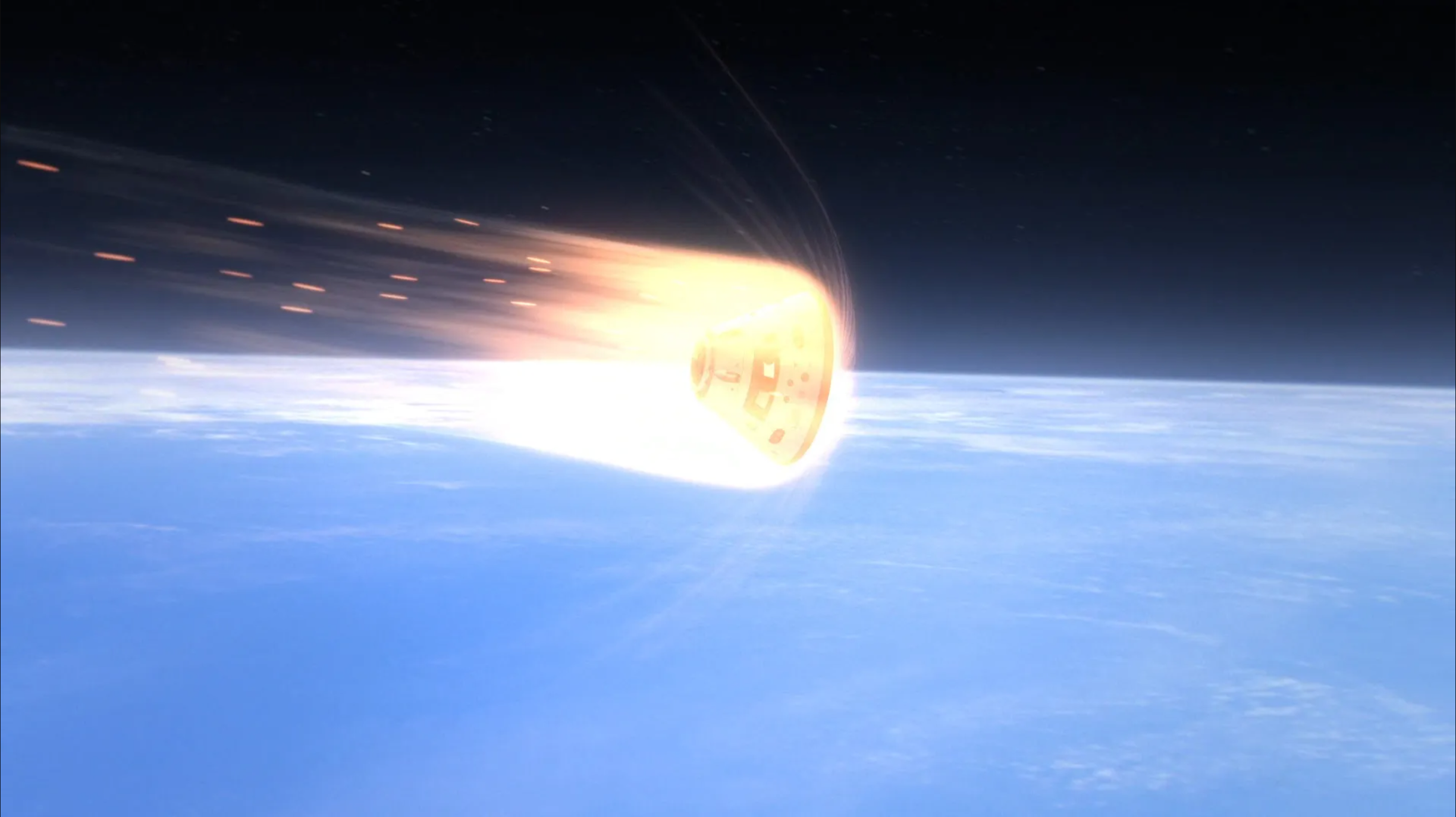
The Orion capsule will re-enter the atmosphere moving at more than 30 times the speed of sound.
“猎户座”飞船将以超过音速30倍的速度重新进入大气层。
A shock wave will envelop the spacecraft, creating air temperatures of 10,000°C or more – about twice the temperature of the surface of the Sun.
激波将包裹飞船,产生10,000°C或更高的空气温度——大约是太阳表面温度的两倍。
The extreme heat turns the air that crosses over the shock wave into an electrically charged plasma. This temporarily blocks radio signals, so the astronauts will be unable to communicate during the harshest parts of their descent.
极高的热量将穿过激波的空气转化为带电等离子体。这会暂时阻断无线电信号,因此宇航员在下降最剧烈的阶段将无法进行通讯。
Making sure it’s a safe re-entry
确保安全再入
Spacecraft survive the extremely harsh re-entry environment through careful design of their trajectories to minimise heating as much as they can.
航天器通过精心设计其轨迹,最大限度地减少加热,从而在极其恶劣的再入环境中幸存下来。
The craft also carries a thermal protection system. It’s effectively an insulating blanket which protects the spacecraft and its crew or cargo from the harsh hypersonic flow occurring outside.
该器载还携带了隔热保护系统。它本质上是一层绝缘毯,保护航天器及其船员或货物免受外部发生的恶劣高超音速气流的影响。
The thermal protection system is tailored precisely for the vehicle and its mission. Materials that can take more heat are put on the surfaces where the environment is expected to be harshest, and thicknesses are precisely adjusted too.
隔热保护系统是根据载具及其任务精确定制的。在预计环境最恶劣的表面上会使用能承受更多热量的材料,并且厚度也经过精确调整。
These materials are designed to glow red hot and degrade during the entry – but they will survive. The red-hot glow also radiates heat back out to the atmosphere instead of allowing it to be absorbed by the spacecraft.
这些材料被设计成在进入过程中发出红热并降解——但它们会幸存下来。红热光芒还会向大气中辐射热量,而不是让热量被航天器吸收。
This precise design is how Artemis is to able to pass through air at 10,000°C while maintaining a maximum heat shield surface temperature of only around 3,000°C.
正是这种精确的设计,使得“阿尔忒弥斯”能够在保持最大隔热罩表面温度仅约3000°C的情况下,穿过10,000°C的空气。
Most spacecraft are protected by materials called ablatives. These are generally made out of carbon fibre and a type of glue known as phenolic resin.
大多数航天器都由一种称为烧蚀材料的材料保护。这些材料通常由碳纤维和一种称为酚醛树脂的胶水制成。
These ablative heat shields absorb energy and inject a relatively cool gas into the flow along the surface of the vehicle, helping to cool everything down.
这些烧蚀隔热罩吸收能量,并将相对低温的气体注入到沿载具表面的气流中,帮助冷却一切。
The ablative heat shield material used on the Orion capsule is called AVCOAT. It is a version of the material which protected the Apollo capsule when it returned from the Moon in the late 1960s and early 1970s.
用于“猎户座”飞船胶囊的烧蚀隔热材料称为AVCOAT。它是用于保护“阿波罗”飞船在20世纪60年代末和70年代初从月球返回时的材料版本。
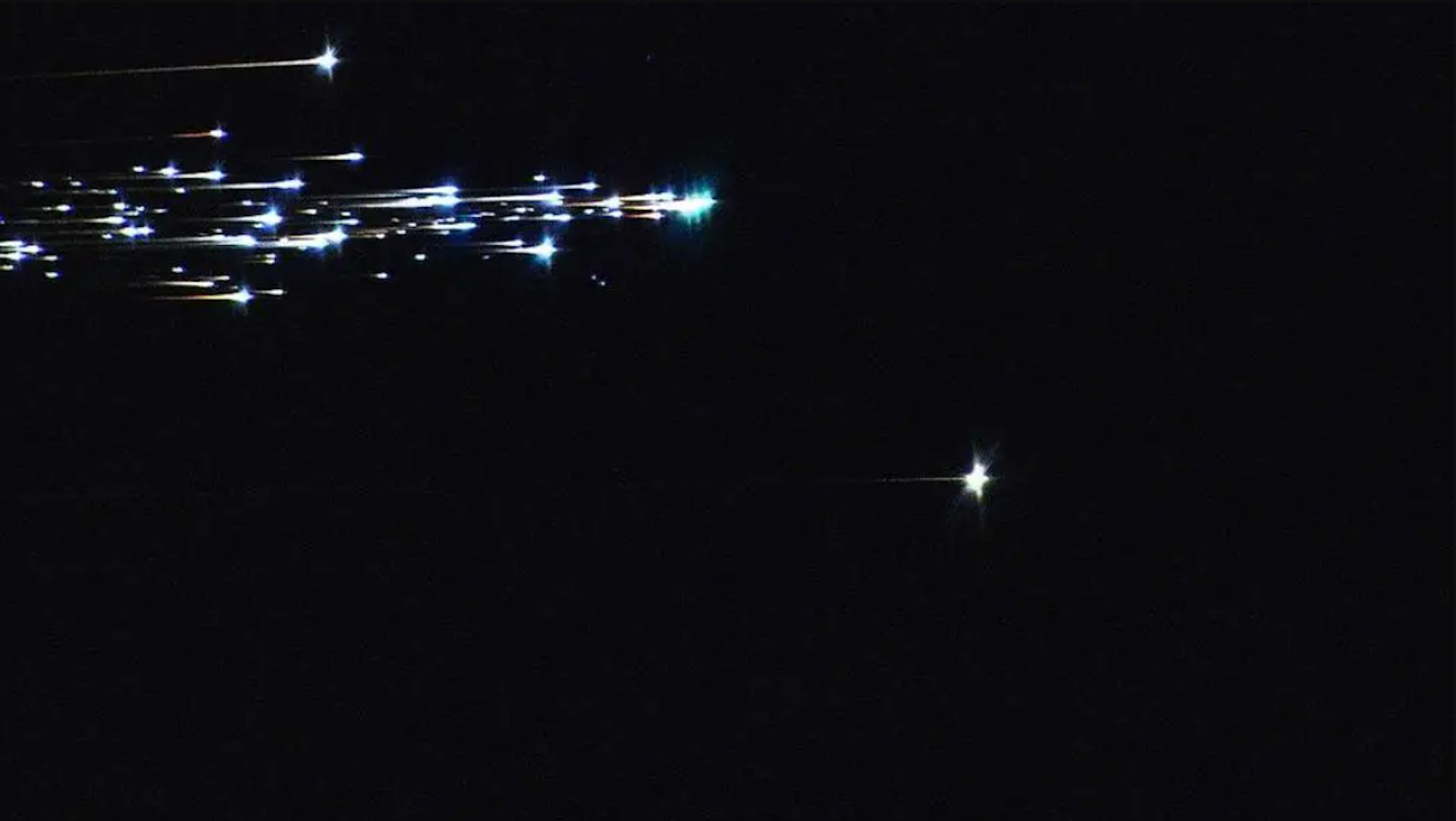
While the Artemis I mission – an uncrewed test flight – was a great success, the heat shield ablation during re-entry was much larger than expected. Large chunks of material separated from the heat shield in some places.
虽然“阿尔忒弥斯一号”任务——一次无人测试飞行——取得了巨大成功,但再入过程中隔热罩的烧蚀量远超预期。在某些地方,大块材料从隔热罩上脱落。
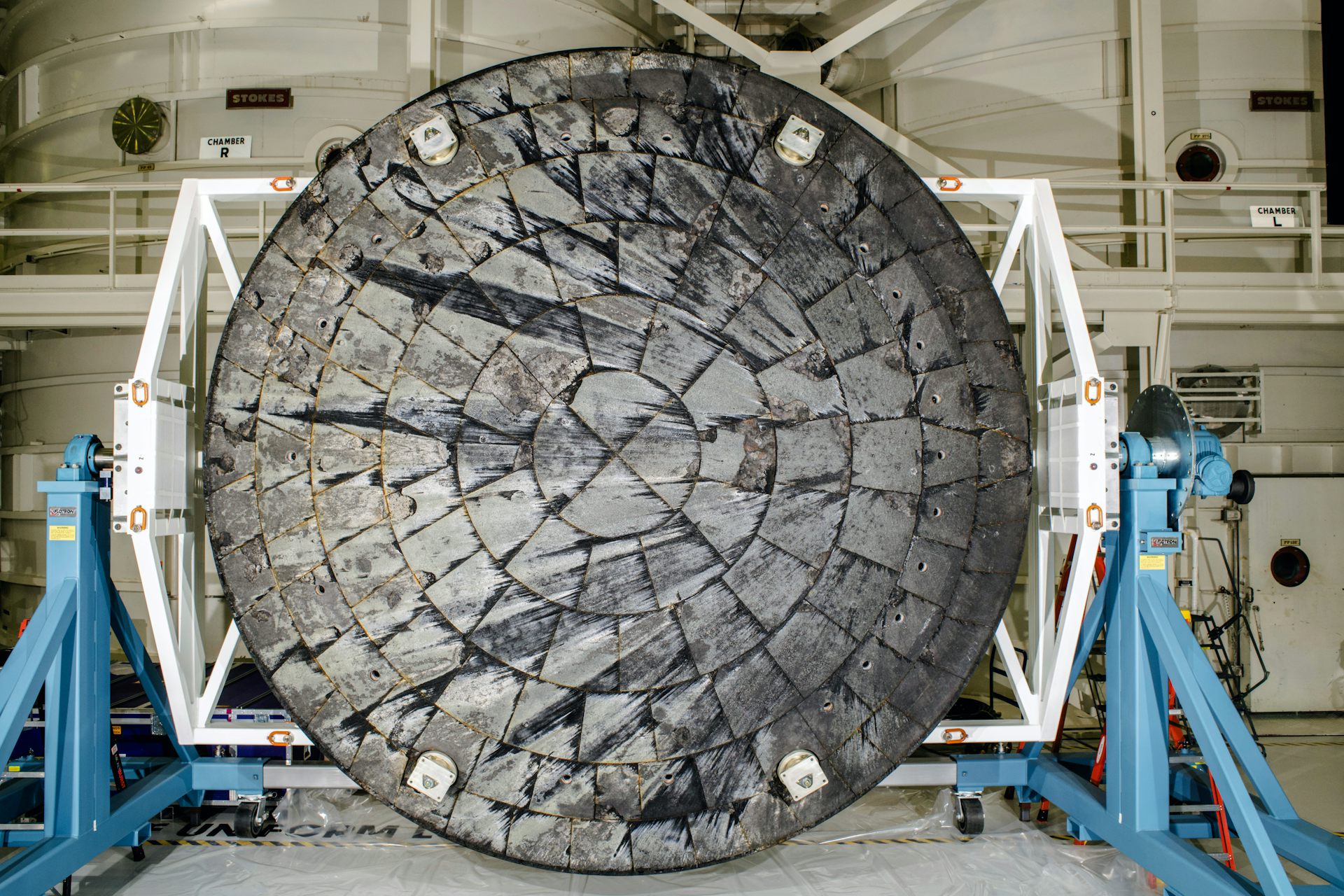
After lengthy inspections and analysis, engineers did decide to go ahead with the same type of heat shield on the Artemis II mission.
经过长时间的检查和分析,工程师们决定在“阿尔忒弥斯二号”任务中继续使用相同类型的隔热罩。
They believe Artemis I lost chunks of its heat shield due to a pressure buildup inside the material during the “skip” part of its entry, where the spacecraft exited the atmosphere to cool down before performing a second entry where it landed.
他们认为,“阿尔忒弥斯一号”在进入的“跳跃”阶段,由于材料内部压力积聚而损失了隔热罩的碎片,在此阶段航天器会离开大气层降温,然后再进行第二次着陆进入。
For Artemis II, the engineers have instead decided to modify the trajectory slightly to still use lift, but include a less defined “skip”.
对于“阿尔忒弥斯二号”,工程师们反而决定略微修改轨迹,仍然利用升力,但包含一个不那么明确的“跳跃”。
It is amazing to see what NASA and the astronauts have achieved on this mission so far. But like many others, I’ll be relieved when I see them welcomed safely home on Earth.
看到NASA和宇航员迄今为止在本次任务中所取得的成就令人惊叹。但和许多人一样,当我看到他们安全回到地球时,我都会感到欣慰。
Chris James receives funding from the Australian Research Council, the Commonwealth Defence Science and Technology Group, the US Office of Naval Research, and the US Air Force Office of Scientific Research.
克里斯·詹姆斯(Chris James)的资金来自澳大利亚研究理事会、英联邦国防科学和技术集团、美国海军研究办公室和美国空军科学研究办公室。