A tripulação da Artemis II suportará 3.000°C na reentrada. Um especialista em hipersonia explica como sobreviverão
Artemis II crew will endure 3,000°C on re-entry. A hypersonics expert explains how they will survive
The high-speed, hypersonic and extremely hot re-entry is the last challenge the Artemis II crew will have to endure on their epic 10-day mission.
A reentrada de alta velocidade, hipersônica e extremamente quente é o último desafio que a tripulação da Artemis II terá que suportar em sua épica missão de 10 dias.
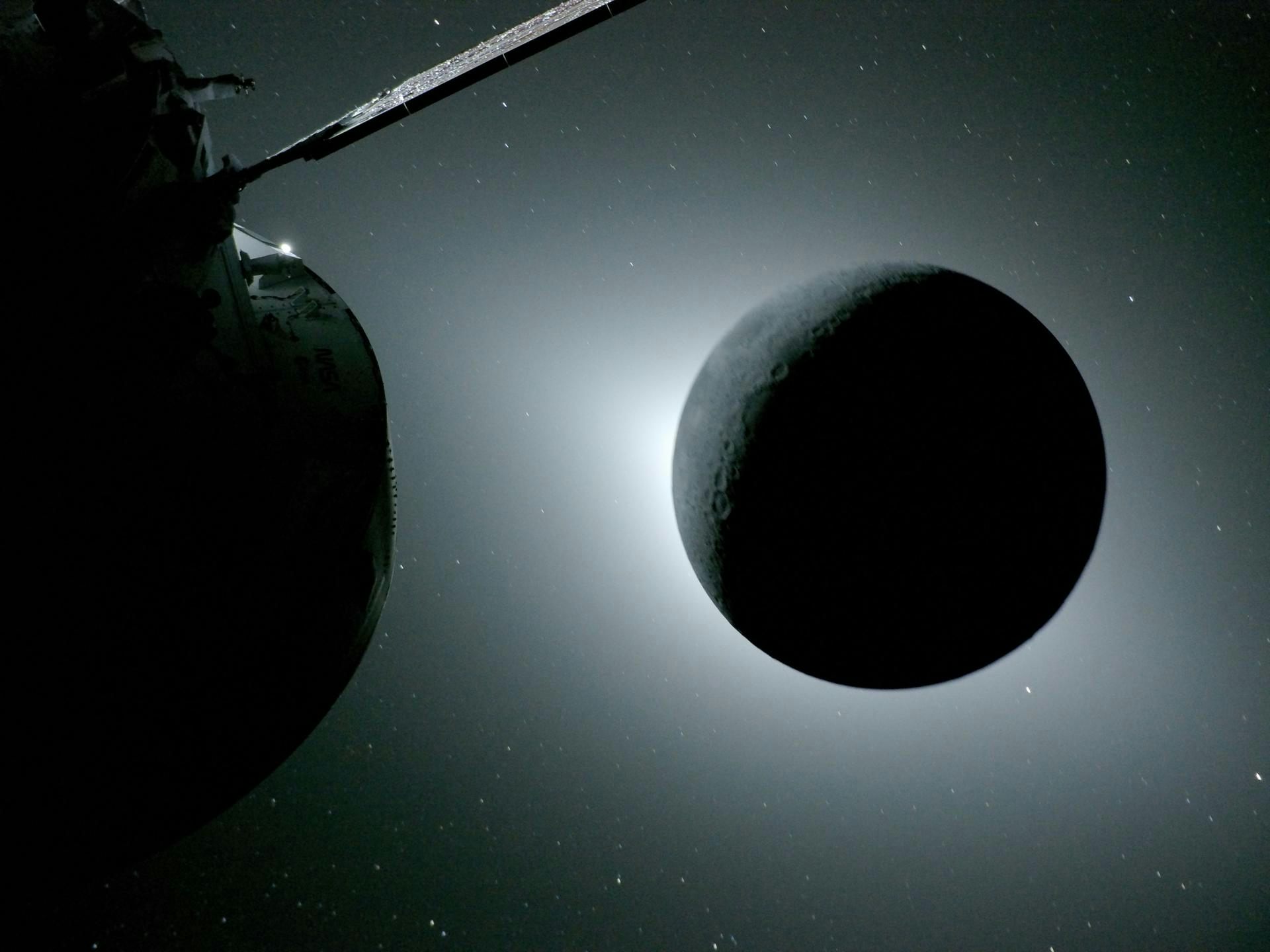
After successfully completing their mission to the Moon, the Artemis II crew is about to return to Earth.
Após completar com sucesso sua missão à Lua, a tripulação Artemis II está prestes a retornar à Terra.
The four astronauts set a new record for how far humans have travelled from Earth, reaching a maximum distance of 406,771 kilometres from our home planet.
Os quatro astronautas estabeleceram um novo recorde de quão longe os humanos viajaram da Terra, atingindo uma distância máxima de 406.771 quilômetros do nosso planeta natal.
Their journey back will culminate in a high-speed, hypersonic and extremely hot re-entry into Earth’s atmosphere before their spacecraft splashes down in the Pacific Ocean off the coast of California at roughly 8pm April 10 local time.
Sua jornada de volta culminará em uma reentrada na atmosfera da Terra de alta velocidade, hipersônica e extremamente quente, antes que sua nave espacial faça um pouso no Oceano Pacífico, na costa da Califórnia, por volta das 20h do dia 10 de abril, horário local.
The re-entry will be the last challenge the crew will have to endure on their epic ten-day mission. It comes with many dangers – but their spacecraft is equipped with an array of technology to keep them safe.
A reentrada será o último desafio que a tripulação terá que suportar em sua épica missão de dez dias. Ela vem com muitos perigos – mas sua nave espacial está equipada com uma série de tecnologia para mantê-los seguros.
A speedy re-entry
Uma reentrada rápida
The Orion capsule carrying the Artemis II astronauts will be travelling at more than 11 km/s (40,000 km/h) when it reaches Earth’s atmosphere. This is 40 times faster than a passenger jet travels.
A cápsula Orion, que transporta os astronautas da Artemis II, viajará a mais de 11 km/s (40.000 km/h) quando atingir a atmosfera da Terra. Isso é 40 vezes mais rápido do que um avião de passageiros viaja.
If we instead consider kinetic energy, which is the energy an object possesses due to its motion, upon re-entry the Orion capsule will have almost 2,000 times as much kinetic energy per kilogram of vehicle as a passenger jet.
Se considerarmos a energia cinética, que é a energia que um objeto possui devido ao seu movimento, durante a reentrada a cápsula Orion terá quase 2.000 vezes mais energia cinética por quilograma de veículo do que um avião de passageiros.
Like any spacecraft returning home, it will have to slow down and reduce its kinetic energy to almost zero so parachutes can be deployed and it can land safely on Earth.
Como qualquer espaçonave que retorna para casa, terá que diminuir a velocidade e reduzir sua energia cinética para quase zero para que os paraquedas possam ser acionados e ela possa pousar com segurança na Terra.
Spacecraft reduce their kinetic energy by performing a controlled re-entry through Earth’s upper atmosphere, where they use aerodynamic drag against the atmosphere as a brake to decelerate.
As espaçonaves reduzem sua energia cinética realizando uma reentrada controlada através da atmosfera superior da Terra, onde usam o arrasto aerodinâmico contra a atmosfera como um freio para desacelerar.
Unlike an aeroplane, which is generally designed to be aerodynamic and minimise drag forces to reduce fuel consumption, re-entering spacecraft do the opposite. They are designed to be as un-aerodynamic as possible to maximise drag and help them slow down.
Ao contrário de um aeroplano, que é geralmente projetado para ser aerodinâmico e minimizar as forças de arrasto para reduzir o consumo de combustível, as espaçonaves em reentrada fazem o oposto. Elas são projetadas para serem o menos aerodinâmicas possível para maximizar o arrasto e ajudá-las a desacelerar.
This deceleration during re-entry can be extremely harsh.
Essa desaceleração durante a reentrada pode ser extremamente severa.
Deceleration and acceleration are generally discussed in g-forces – or “g’s” for short. This is the deceleration or acceleration force divided by the standard acceleration we all feel from Earth’s gravity. A Formula One driver will experience over 5 g’s while cornering, which is close to the maximum g-forces a human can sustain without passing out.
Desaceleração e aceleração são geralmente discutidas em forças G – ou “g” para abreviar. Esta é a força de desaceleração ou aceleração dividida pela aceleração padrão que todos sentimos da gravidade da Terra. Um piloto de Fórmula Um experimentará mais de 5 g ao fazer curvas, o que está próximo das forças G máximas que um humano pode suportar sem desmaiar.
Small, uncrewed re-entry capsules such as NASA’s OSIRIS-REx capsule which brought back samples from asteroid Bennu, just barrel into the atmosphere and rapidly decelerate. These entries occur very quickly, in less than a minute. But g-forces in that case can be upwards of 100 – fine for robotic vehicles, but not for humans.
Pequenas cápsulas de reentrada não tripuladas, como a cápsula OSIRIS-REx da NASA, que trouxe amostras do asteroide Bennu, simplesmente avançam pela atmosfera e desaceleram rapidamente. Essas entradas ocorrem muito rapidamente, em menos de um minuto. Mas as forças G nesse caso podem ser superiores a 100 – bom para veículos robóticos, mas não para humanos.
Crewed vehicles such as NASA’s Orion capsule use lift forces to slow the entry down in time. This lowers the g-forces down to more manageable levels that humans can survive and makes re-entry last for several minutes.
Veículos tripulados, como a cápsula Orion da NASA, usam forças de sustentação para diminuir a entrada a tempo. Isso reduz as forças G para níveis mais gerenciáveis que os humanos podem sobreviver e faz com que a reentrada dure vários minutos.
A very hot re-entry
Uma reentrada muito quente
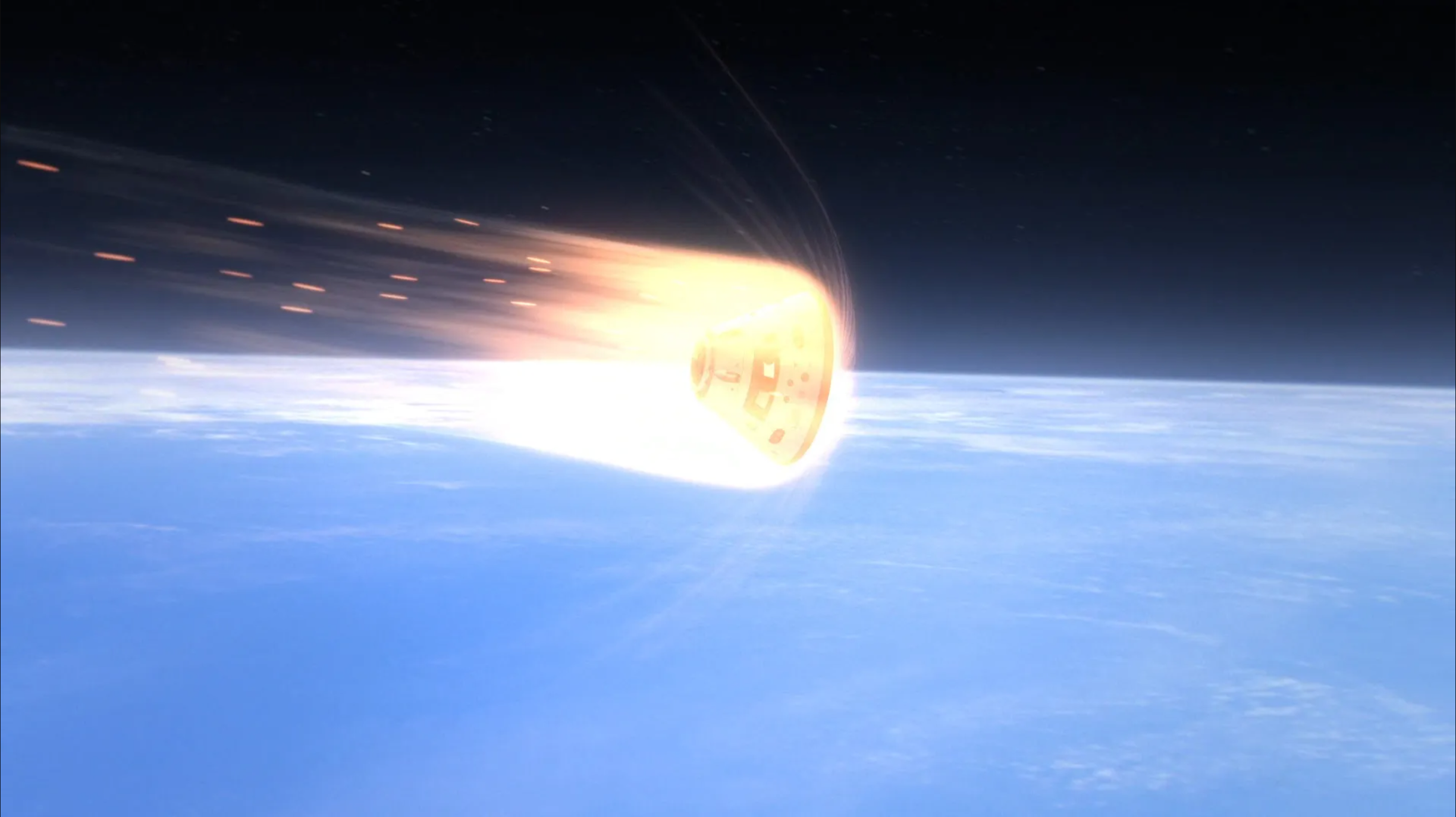
The Orion capsule will re-enter the atmosphere moving at more than 30 times the speed of sound.
A cápsula Orion reentrará na atmosfera movendo-se a mais de 30 vezes a velocidade do som.
A shock wave will envelop the spacecraft, creating air temperatures of 10,000°C or more – about twice the temperature of the surface of the Sun.
Uma onda de choque envolverá a nave espacial, criando temperaturas do ar de 10.000°C ou mais – cerca de duas vezes a temperatura da superfície do Sol.
The extreme heat turns the air that crosses over the shock wave into an electrically charged plasma. This temporarily blocks radio signals, so the astronauts will be unable to communicate during the harshest parts of their descent.
O calor extremo transforma o ar que atravessa a onda de choque em um plasma eletricamente carregado. Isso bloqueia temporariamente os sinais de rádio, de modo que os astronautas não conseguirão se comunicar durante as partes mais duras de sua descida.
Making sure it’s a safe re-entry
Garantindo que seja uma reentrada segura
Spacecraft survive the extremely harsh re-entry environment through careful design of their trajectories to minimise heating as much as they can.
As espaçonaves sobrevivem ao ambiente de reentrada extremamente rigoroso através do cuidadoso projeto de suas trajetórias para minimizar o aquecimento tanto quanto possível.
The craft also carries a thermal protection system. It’s effectively an insulating blanket which protects the spacecraft and its crew or cargo from the harsh hypersonic flow occurring outside.
A nave também carrega um sistema de proteção térmica. É efetivamente um cobertor isolante que protege a espaçonave, sua tripulação ou carga do rigoroso fluxo hipersônico que ocorre no exterior.
The thermal protection system is tailored precisely for the vehicle and its mission. Materials that can take more heat are put on the surfaces where the environment is expected to be harshest, and thicknesses are precisely adjusted too.
O sistema de proteção térmica é adaptado precisamente para o veículo e sua missão. Materiais que podem suportar mais calor são colocados nas superfícies onde se espera que o ambiente seja mais rigoroso, e as espessuras também são ajustadas com precisão.
These materials are designed to glow red hot and degrade during the entry – but they will survive. The red-hot glow also radiates heat back out to the atmosphere instead of allowing it to be absorbed by the spacecraft.
Estes materiais são projetados para brilhar em vermelho incandescente e degradar-se durante a entrada – mas eles sobreviverão. O brilho vermelho também irradia calor de volta para a atmosfera em vez de permitir que seja absorvido pela espaçonave.
This precise design is how Artemis is to able to pass through air at 10,000°C while maintaining a maximum heat shield surface temperature of only around 3,000°C.
Este projeto preciso é como a Artemis consegue passar pelo ar a 10.000°C enquanto mantém uma temperatura máxima da superfície do escudo térmico de apenas cerca de 3.000°C.
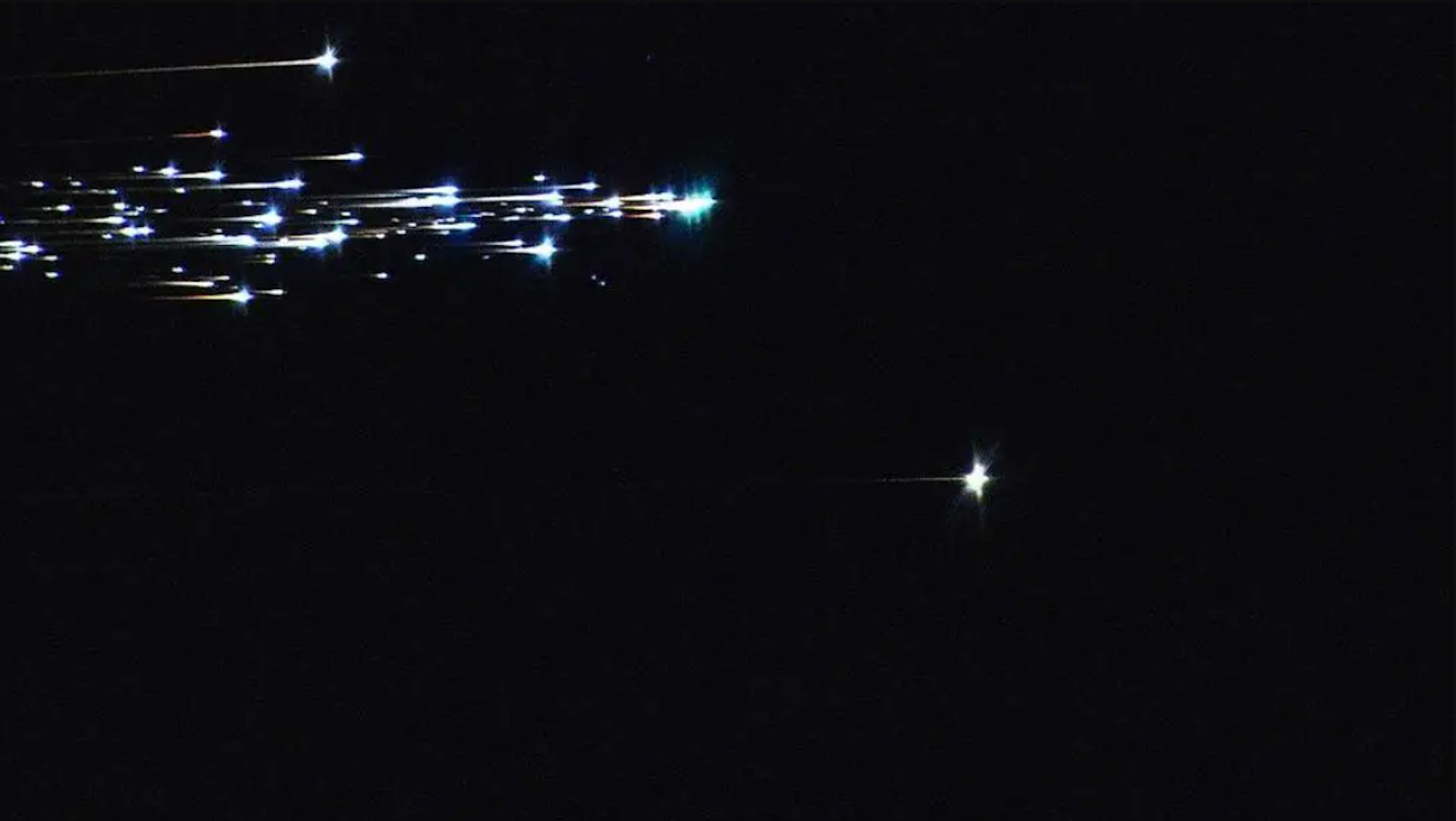
Most spacecraft are protected by materials called ablatives. These are generally made out of carbon fibre and a type of glue known as phenolic resin.
A maioria das espaçonaves é protegida por materiais chamados ablativos. Estes são geralmente feitos de fibra de carbono e um tipo de cola conhecido como resina fenólica.
These ablative heat shields absorb energy and inject a relatively cool gas into the flow along the surface of the vehicle, helping to cool everything down.
Estes escudos térmicos ablativos absorvem energia e injetam um gás relativamente frio no fluxo ao longo da superfície do veículo, ajudando a resfriar tudo.
The ablative heat shield material used on the Orion capsule is called AVCOAT. It is a version of the material which protected the Apollo capsule when it returned from the Moon in the late 1960s and early 1970s.
O material de escudo térmico ablativo usado na cápsula Orion é chamado AVCOAT. É uma versão do material que protegeu a cápsula Apollo quando retornou da Lua no final dos anos 1960 e início dos anos 1970.
While the Artemis I mission – an uncrewed test flight – was a great success, the heat shield ablation during re-entry was much larger than expected. Large chunks of material separated from the heat shield in some places.
Embora a missão Artemis I – um voo de teste sem tripulação – tenha sido um grande sucesso, a ablação do escudo térmico durante a reentrada foi muito maior do que o esperado. Grandes pedaços de material se separaram do escudo térmico em alguns locais.
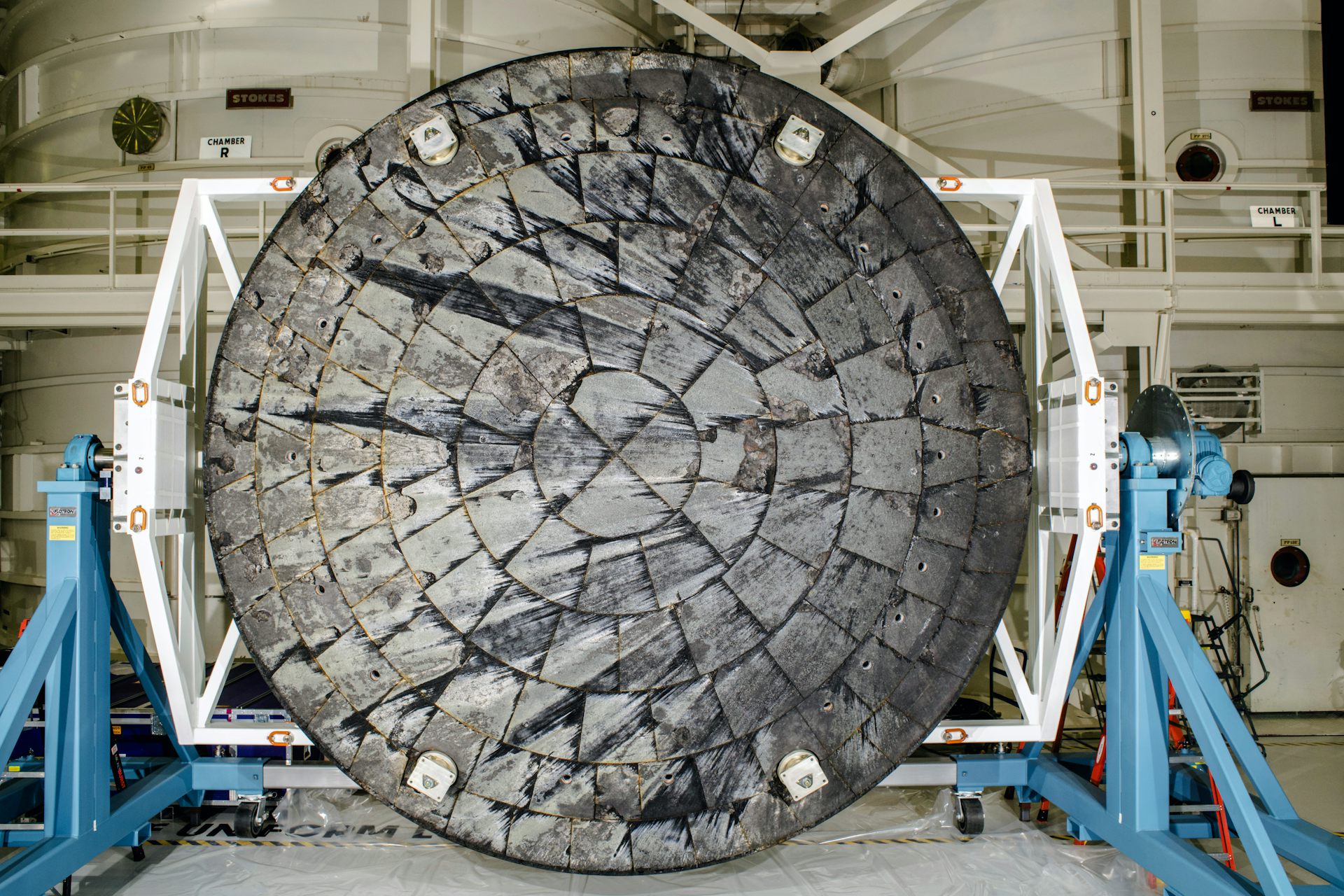
After lengthy inspections and analysis, engineers did decide to go ahead with the same type of heat shield on the Artemis II mission.
Após longas inspeções e análises, os engenheiros decidiram seguir com o mesmo tipo de escudo térmico na missão Artemis II.
They believe Artemis I lost chunks of its heat shield due to a pressure buildup inside the material during the “skip” part of its entry, where the spacecraft exited the atmosphere to cool down before performing a second entry where it landed.
Eles acreditam que a Artemis I perdeu pedaços de seu escudo térmico devido ao acúmulo de pressão dentro do material durante a parte de “salto” de sua entrada, onde a espaçonave saiu da atmosfera para esfriar antes de realizar uma segunda entrada onde pousou.
For Artemis II, the engineers have instead decided to modify the trajectory slightly to still use lift, but include a less defined “skip”.
Para a Artemis II, os engenheiros decidiram, em vez disso, modificar ligeiramente a trajetória para ainda usar sustentação, mas incluir um “salto” menos definido.
It is amazing to see what NASA and the astronauts have achieved on this mission so far. But like many others, I’ll be relieved when I see them welcomed safely home on Earth.
É incrível ver o que a NASA e os astronautas alcançaram nesta missão até agora. Mas, como muitos outros, ficarei aliviado quando os virem saudavelmente em casa na Terra.
Chris James receives funding from the Australian Research Council, the Commonwealth Defence Science and Technology Group, the US Office of Naval Research, and the US Air Force Office of Scientific Research.
Chris James recebe financiamento do Australian Research Council, do Commonwealth Defence Science and Technology Group, do US Office of Naval Research e do US Air Force Office of Scientific Research.
Read more
-
Para a diáspora iraniana, um dilema na Copa do Mundo: apoiar a seleção nacional ou protestar – ou os dois?
For Iran’s diaspora, a tough World Cup call: To support the national team or protest – or both?
-
Estreito de Ormuz: Por que os EUA e o Irã navegam em águas legais muito diferentes
Strait of Hormuz: Why the US and Iran are sailing in very different legal waters