阿富汗的妇女权利危机是一场持续的人道主义灾难
The women’s rights crisis in Afghanistan is an ongoing …
What’s happening in Afghanistan is not simply gender discrimination; rather, it’s pushing an entire gender out of public systems altogether in a policy of gender apartheid by the ruling Taliban.
阿富汗发生的事情不仅仅是性别歧视;相反,这是统治塔利班实施的性别种族隔离政策,将一个完整的性别完全排除在公共系统之外。
Where is one of worst places to be a woman? Afghanistan.
一个人女性最糟糕的地方是哪里?阿富汗。
That’s what most people think when it comes to the topic of the women’s rights crisis under the ruling Taliban in Afghanistan. But this only tells part of the story.
当人们谈论阿富汗统治下的塔利班政府的妇女权利危机时,大多数人会这么认为。但这只是故事的一部分。
Focusing on the word “rights” hides something more serious underneath: how people live and survive in this situation. What’s unfolding in Afghanistan is not just a women’s rights crisis, but a humanitarian disaster.
聚焦于“权利”一词掩盖了更严重的东西:人们在这种情况下如何生活和生存。阿富汗正在发生的不只是妇女权利危机,更是一场人道主义灾难。
It affects how people access health care, education, food systems and basic supports and whether these system can function at all when half the population has been systematically removed from them. It forces families to deal with women’s limited access to work and services, often pushing households into deeper economic and social vulnerability.
这影响了人们获取医疗保健、教育、粮食系统和基本支持的方式,以及当一半人口被系统性地从这些系统中移除时,这些系统是否还能运作。它迫使家庭应对妇女有限的就业和服务的机会,常常将家庭推向更深的经济和社会脆弱性。
The Taliban has steadily removed women from public spaces including work, health care and education. Recently, for example, female health-care workers were stopped at the gates of a United Nations office and banned from entering the facility by Taliban authorities.
塔利班一直在稳步将妇女从公共空间中移除,包括工作、医疗保健和教育。最近,例如,女医护人员被塔利班当局阻止进入联合国办公室大门,并被禁止进入该设施。
These ongoing removals are incrementally creating a system that determines who has the right to exist, to provide assistance and to receive assistance.
这些持续的移除正在逐步创造一个决定谁有权存在、提供援助和接受援助的系统。
What’s happening in Afghanistan is not simply gender discrimination; rather, it’s pushing an entire gender out of public systems altogether. The predicament of Afghan women is less a social problem and more a structural crisis that shapes institutions and everyday life.
阿富汗发生的事情不仅仅是性别歧视;相反,它正在将整个性别从公共系统中彻底排除。阿富汗妇女的困境与其说是一个社会问题,不如说是一个塑造制度和日常生活的结构性危机。
Gender apartheid
性别种族隔离
This is why the situation in Afghanistan is increasingly referred to as a form of gender apartheid rather than a women’s rights crisis. The exclusion of women reveals how institutions are built and will be maintained in the future.
这就是为什么阿富汗的局势越来越多地被称作一种性别种族隔离,而不是妇女权利危机。女性的排斥揭示了机构是如何建立以及将来将如何维持的。
Gender apartheid refers to a situation in which people are banned from certain spaces or activities based on their gender identity.
性别种族隔离指的是人们根据其性别身份被禁止进入某些空间或从事某些活动的情况。
This discriminatory and violent practice in Afghanistan has been widely documented and heavily reported on, but the situation continues to deteriorate daily.
这种在阿富汗的歧视和暴力行为已被广泛记录和大量报道,但局势仍在每天恶化。
Its effects are also accumulative, with each restriction reinforcing others and deepening the overall crisis. These systemic rights violations would be increasingly difficult to reverse even if political bodies and the ruling government changed tomorrow.
其影响也是累积性的,每一次限制都在加强其他限制,加深了整体危机。即使政治机构和执政政府明天发生变化,这些系统性的权利侵犯也将变得越来越难以扭转。
That’s because removing women from professional spaces leads to schools losing teachers, hospitals losing trained staff and aid networks losing access to half the population. And this loss isn’t temporary; it limits how systems can respond to the growing needs around them.
这是因为将女性从专业领域中移除会导致学校失去教师,医院失去受过培训的员工,援助网络失去对一半人口的接触。而且这种损失不是暂时的;它限制了系统如何应对周围日益增长的需求。
When women get barred from institutions, the problem isn’t just that these organizations suffer in their service delivery and performance. It also results in the loss of institutional memory — the skills, professional knowledge and experience that is no longer transferred to future generations.
当女性被禁止进入机构时,问题不仅仅是这些组织在服务提供和绩效方面遭受的痛苦。它还导致了机构记忆的丧失——那些不再传递给后代的技能、专业知识和经验。
Over time, institutions also scale down or suspend certain services due to a shortage of female workers. As services shrink, significant gaps appear in the networks of care and support leaving entire groups of people without consistent access to support.
随着时间的推移,由于女性劳动力的短缺,机构还会缩减或暂停某些服务。随着服务的缩小,护理和支持网络中出现了明显的差距,使整群人没有持续获得支持。
Blocking aid and support
阻碍援助和支持
The Taliban refusal to allow female workers into UN and UNICEF offices is one of many examples happening today in Afghanistan that ban qualified women from entering places where they can deliver urgent care and assistance.
塔利班拒绝允许女性工人进入联合国和联合国儿童基金组织的办公室,是今天在阿富汗发生的许多事件之一,这些事件禁止合格的女性进入可以提供紧急护理和援助的场所。
This effective crackdown on women’s rights is blocking aid and support in a society where it’s desperately needed.
这种对女性权利的有效镇压,阻碍了在一个迫切需要这些权利的社会中对援助和支持的提供。
Male workers are also limited in the ways they can assist female patients due to Taliban gender norms and restrictions, so support for women cannot be simply reassigned to them. This affects several aspects of humanitarian aid including health care, food distribution and protection systems.
由于塔利班的性别规范和限制,男性工人也受到限制,无法以他们能提供的方式协助女性患者,因此对女性的支持不能简单地转交给他们。这影响了人道主义援助的几个方面,包括医疗保健、粮食分配和保护系统。
It also delegates the burden of these unmet needs into households where women must provide unpaid labour and care-giving responsibilities.
它还将这些未满足的需求的负担转嫁到家庭,要求女性提供无偿的劳动和照料责任。
Taliban rule consequently delays or prevents life-saving interventions for women and children, a violation of the human right to survive.
塔利班的统治因此延迟或阻止了对妇女和儿童的救命干预,侵犯了生存的人权。
It’s not just UN and UNICEF offices where women workers are banned from entry: they’re being turned away at other aid organizations, hospitals, schools and various public institutions in a widespread erosion of human rights. The Taliban has put in place a network of human rights violations across the entire humanitarian system.
女性工人被禁止进入的不仅仅是联合国和联合国儿童基金组织的办公室:在人权被广泛侵蚀的背景下,她们在其他援助组织、医院、学校和各种公共机构中也被拒绝进入。塔利班在整个人道主义体系中建立了一整套人权侵犯网络。
Humanitarian aid also depends on access to information and correct data: who is hungry, who is unsafe and who needs protection. In Afghanistan, where women are limited in who they can interact with and where female staff are largely absent from outreach, surveys and home visits, this information becomes incomplete.
人道主义援助还依赖于信息和正确数据的获取:谁是饥饿的,谁处于危险之中,谁需要保护。在阿富汗,由于女性在可以交往的人方面临限制,以及女性工作人员在外展、调查和上门拜访中大多缺席,这些信息变得不完整。
Poor data leads to incomplete distribution of assistance and mismatched allocation of aid. As a result, the most vulnerable populations can remain invisible in official assessments.
不良数据导致援助分配不完整和援助分配不匹配。结果,最脆弱的人口在官方评估中可能仍然隐形。
This invisibility especially affects households headed by women and those living in remote or rural areas with already limited access.
这种隐形尤其影响那些由女性领导的家庭以及那些已经获取资源有限的偏远或农村地区的居民。
Normalizing crises
危机正常化
The impact of Aghanistan’s gender apartheid might not be visible to many outside the country, but in the near future, humanitarian systems will break down.
阿富汗的性别种族隔离对许多国外的人来说可能不可见,但在不久的将来,人道主义体系将会崩溃。
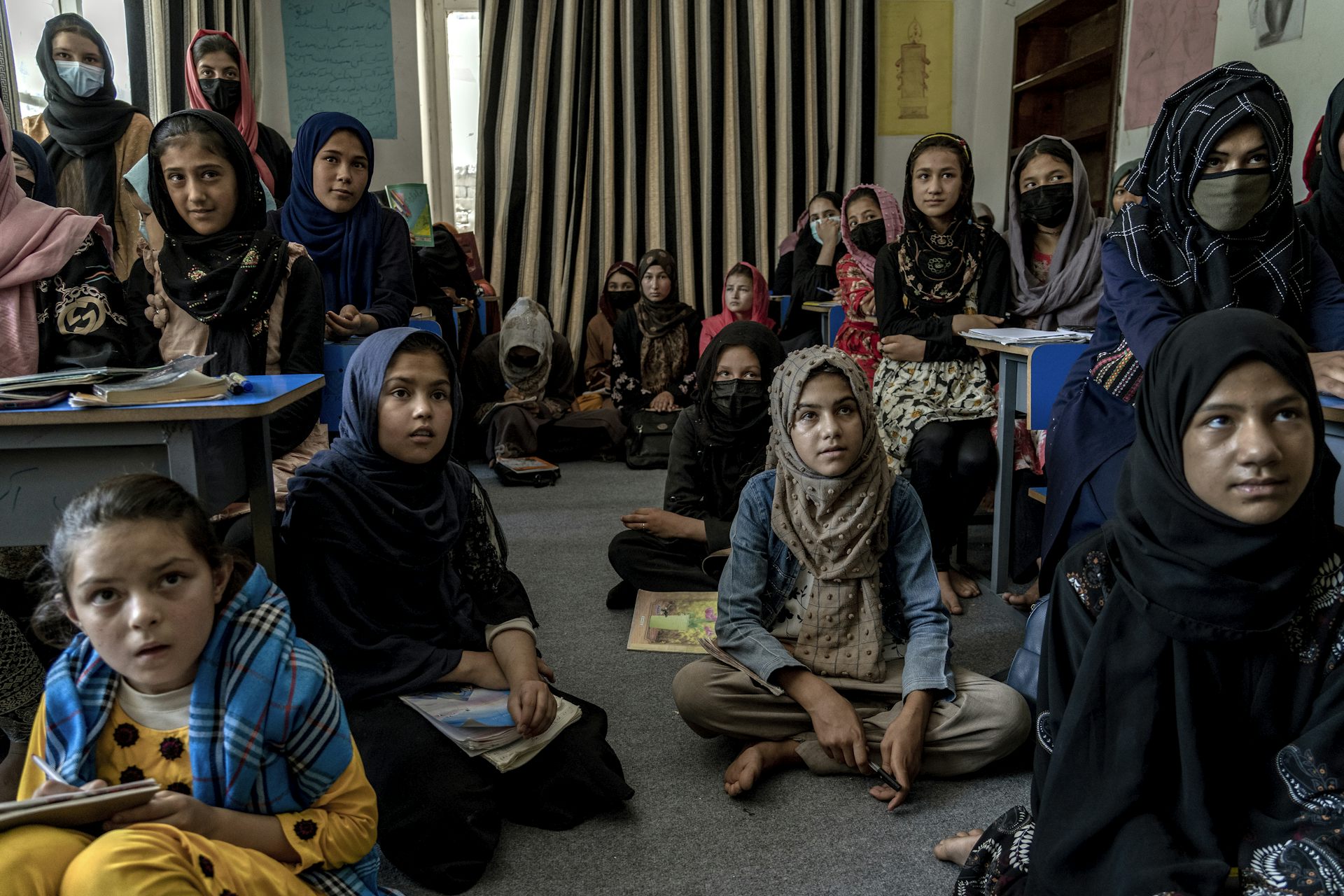
Future generations of female professionals have already been eliminated by the Taliban’s ban of girls from schools.
塔利班禁止女孩上学的行为已经消除了未来一代女性专业人士的生存空间。
UNICEF estimates the ban could cost Afghanistan 25,000 teachers and health-care workers. In a country where women are prohibited from receiving care from male providers, banning women from both education and health-care work creates a profound medical emergency.
联合国儿童基金会估计,这项禁令可能导致阿富汗损失25,000名教师和医护人员。在一个女性被禁止从男性提供者那里接受护理的国家,禁止女性从事教育和医疗工作,造成了一场严重的医疗紧急状态。
Over time, systems will be redesigned without women as providers even as they remain central as recipients. As gender restrictions disrupt the flow of resources, knowledge and care, the capacity to deliver services is declining every day despite high demand. Many women are also pushed into informal or hidden work that is insecure and vulnerable to exploitation and abuse.
随着时间的推移,系统将重新设计,不再以女性作为提供者,尽管她们仍然是主要接受者。由于性别限制破坏了资源、知识和护理的流动,尽管需求很高,但提供服务的能力仍在每天下降。许多女性也被推向非正式或隐秘的工作,这些工作缺乏安全保障,容易遭受剥削和虐待。
Gender apartheid in Afghanistan will not end through recognition alone. Naming systemic terror does not stop it and, without action, repeated exposure to crisis can instead normalize it through compassion fatigue. Humanitarian organizations now face a stark choice: operate under restrictive conditions and risk legitimizing them, or withdraw and leave people without support.
阿富汗的性别种族隔离不会仅仅通过承认就能结束。命名系统性的恐怖并不能阻止它,而且,如果没有行动,反复暴露于危机中反而可能通过同情疲劳将其正常化。人道主义组织现在面临着一个严峻的选择:在限制条件下运作并冒着使这些限制合法化的风险,还是撤离,让人们失去支持。
The longer the situation persists, the more the exclusion of women in Afghanistan risks becoming a normalized structure rather than an emergency. The question is no longer only how to restore what’s been lost, but whether systems once dependent on women’s participation can be rebuilt at all.
情况持续的时间越长,阿富汗女性的排斥就有可能成为一种正常化的结构,而不是一种紧急状态。问题不再仅仅是如何恢复失去的东西,而是系统是否能重建曾经依赖女性参与的体系。
Sepita Hatami does not work for, consult, own shares in or receive funding from any company or organisation that would benefit from this article, and has disclosed no relevant affiliations beyond their academic appointment.
Sepita Hatami 不为任何可能从本文中受益的公司或组织工作、咨询、拥有股份或接收资金,并且除了其学术职位之外,未披露任何相关隶属关系。