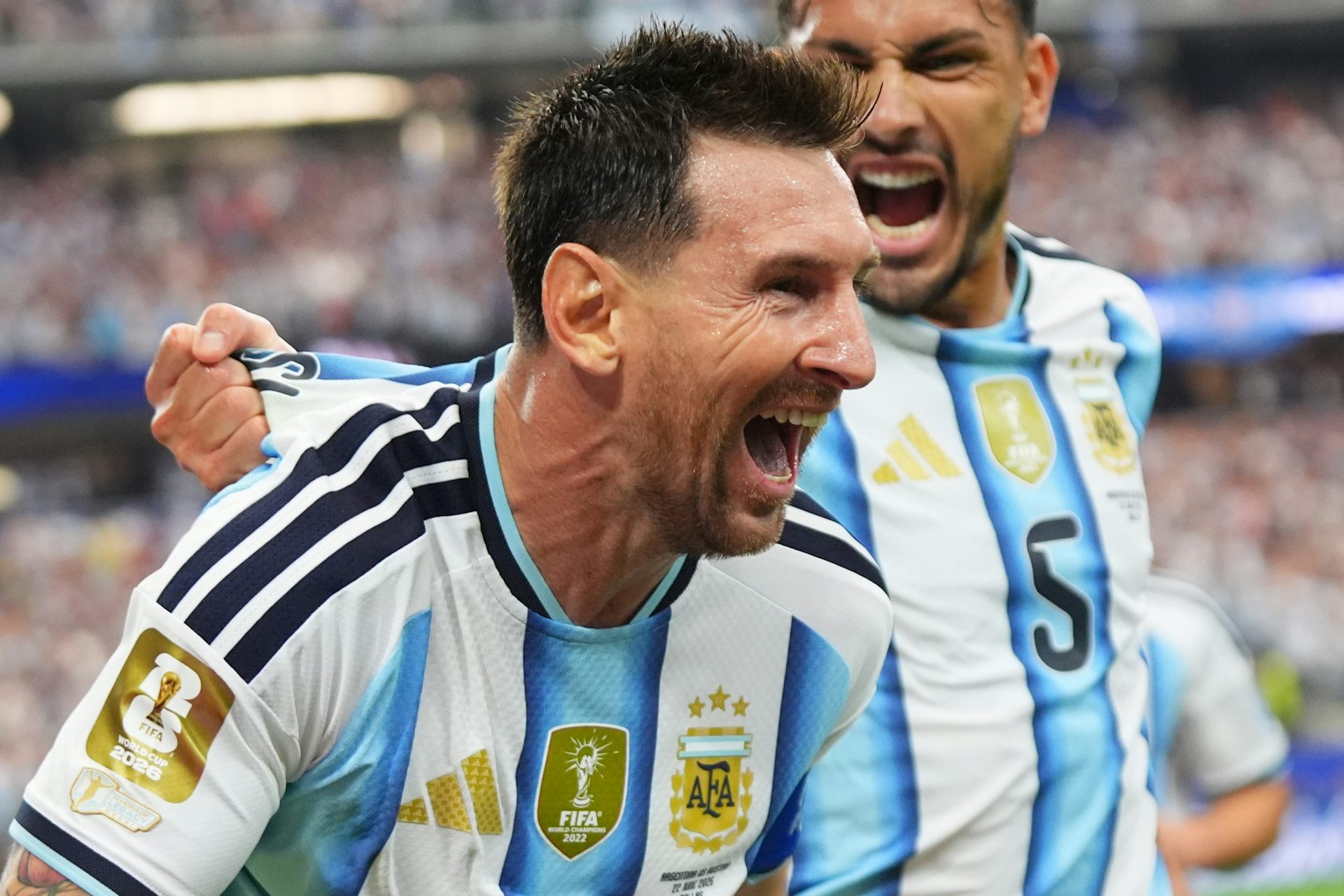
Lionel Messi’s shorter, slower, ageing body is a handicap he overcomes through a mental process called scanning.
莱昂内尔·梅西身材更矮、速度更慢、年事渐高,这对他来说是一个劣势,但他通过一种称为“扫描”的心理过程克服了它。
Lionel Messi is 39 years old. He is 1.70 metres tall – shorter than almost every defender he plays against. He was never astoundingly quick, and he is slower now.
利奥内尔·梅西今年39岁。他身高1.70米,比他对抗的几乎所有后卫都要矮。他从未有过惊人的速度,现在也更慢了。
And yet, watching this World Cup, you would be hard pressed to name a player doing more damage: he has scored the equal most goals so far (six) , alongside France’s Kylian Mbappé.
然而,在观看这次世界杯时,你很难说出哪个球员的破坏力更强:他目前(六球)与法国队的基利安·姆巴佩并列,都是进球最多的球员。
How can someone with so little of what we might call athleticism (relative to his peers, at least) still be the best player on the pitch?
一个拥有如此少我们所说的运动能力(至少与他的同龄人相比)的人,如何能仍然是球场上最好的球员呢?
Does athleticism really matter?
运动能力真的重要吗?
Maybe the puzzle is the wrong way round. Many are surprised by Messi only because we have been told a story about what makes an athlete great, and the story is mostly about the body: speed, height, strength, fitness.
也许谜题本身的方向错了。许多人对梅西感到惊讶,仅仅是因为我们被告知了一个关于什么能让运动员伟大的故事,而这个故事主要围绕着身体:速度、身高、力量、体能。
Measured against that story, Messi looks like an exception.
如果以这个故事作为衡量标准,梅西看起来像是一个例外。
But what if the story itself is the problem? What if soccer was never a contest of physical attributes?
但如果故事本身才是问题呢?如果足球从来都不是一场体能属性的较量呢?
Johan Cruyff, the great Dutch player, manager, commentator and soccer philosopher, saw this clearly half a century ago. He said:
约翰·克鲁伊夫,这位伟大的荷兰球员、教练、评论员和足球哲学家,在半个世纪前就看清了这一点。他说:
What is speed? The sports press often confuses speed with insight. If I start running slightly earlier than someone else, I seem faster.
什么是速度?体育媒体经常将速度与洞察力混淆。如果我比别人稍微早一点开始跑,我就显得更快。
It is a remark that sounds like a riddle, but a fast player is often not the one with quicker legs. They are often the ones who set off sooner and arrive first. What looks like speed is very often a head start bought by perception.
这是一个听起来像谜语的论断,但快速的球员往往不是腿脚最快的那个。他们通常是那些起步更早、到达更先的人。看起来像速度的东西,很多时候只是通过感知获得的领先优势。
Cruyff understood this. What we have been able to do more recently is measure it.
克鲁伊夫理解了这一点。我们最近能够做到的就是衡量它。
The importance of scanning
扫描的重要性
Consider what happens in the seconds before Messi receives a pass. Watch him for 30 seconds when the ball is nowhere near him: his head rarely stays still. One glance over the left shoulder, another to the right, then back to the player on the ball.
想想在梅西接球前的几秒钟发生了什么。观察他30秒,当球离他很远时:他的头很少保持静止。左肩会扫视一眼,右肩也会扫视一下,然后又回到持球的球员身上。
None of it looks remarkable until you realise he has already gathered information others are yet to find, or at least are less adept at finding.
直到你意识到他已经收集了别人尚未发现、或者至少不太擅长发现的信息,这一切看起来都不显得特别。
By the time the ball reaches him, he already knows where the defenders and teammates are, and where the gaps will open. The control, the turn, the pass that splits the defence: all of that is the easy part. The hard part happens before he had even touched the ball.
当球到达他身边时,他已经知道防守队员和队友的位置,以及空档会在哪里出现。控制、转身、撕裂防线的传球:这些都是容易的部分。困难的部分发生在球甚至没有触碰到他之前。
This is something we can measure.
这是我们可以衡量的东西。
For more than a decade, we have been studying how soccer players gather information before receiving the ball. Working with athletes from youth academies up to senior professionals, we fitted small motion sensors to the backs of their heads, and recorded how often and how widely they turned to look around during a match.
十多年来,我们一直在研究足球运动员在接球前如何收集信息。我们与从青年学院到高级职业球员的运动员合作,在他们头后安装了小型运动传感器,记录他们在比赛中转头观察周围的频率和范围。
We were measuring what we call visual exploration – or, more plainly, scanning.
我们测量的是所谓的视觉探索——或者说,更通俗地讲,就是扫描。
We were asking a simple question: how much do players look around before the ball reaches them, and does it matter?
我们提出的问题很简单:球员在球到达之前会观察多少环境,这重要吗?
The finding was consistent and clear. Players who scanned more frequently in the seconds before receiving the ball were faster to release their next pass, more likely to turn with the ball rather than play it safely backwards, and more likely to play a forward pass that actually threatened the opposition.
研究结果是一致且明确的。在接球前的几秒钟内扫描次数更多的球员,释放下一次传球的速度更快,更有可能带球转身而不是安全地回传,也更有可能做出真正威胁对手的前场传球。
The information they gathered before the ball arrived shaped what they were able to do once it did. Scanning is how a player gets that information in the first place.
他们在球到达之前收集到的信息塑造了他们一旦获得球后能做什么。扫描是球员最初获取这些信息的方式。
Our work separates two purposes of scanning. The first is orientation: looking around to discover what the whole field is offering, which options exist, where the danger is and what might become available.
我们的工作将扫描的两个目的分开了。第一个是定向:环顾四周以发现整个场地提供了什么、哪些选择存在、危险在哪里以及什么可能会可用。
The second is specification: the finer, later looking that guides the execution of a pass.
第二个是精确定位:更细致、更晚期的观察,它指导着传球的执行。
Orientation comes first and it is the one we tend to neglect, in research and in coaching alike, because it happens away from the ball, when nothing dramatic appears to be going on. Yet it is the foundation. You cannot aim a pass you never saw was there. Cruyff put it like this:
定向优先,而这是我们在研究和训练中都倾向于忽略的部分,因为它发生在远离球的地方,当时似乎没有任何戏剧性的事情发生。然而,它是基础。你无法瞄准一个从未出现过的传球路线。克鲁伊夫曾这样说:
There is only one moment in which you can arrive in time. If you are not there, you are either too early or too late.
只有在某个时刻,你才能及时到达。如果你不在那里,你就太早或太晚了。
This is where Messi stops being an anomaly and becomes the clearest example imaginable of what the sport rewards. He has never beaten opponents primarily with his body. He beats them with time, and he wins it by seeing sooner.
这就是梅西不再是一个异常现象,而是成为体育运动奖励的最清晰的例证。他从未主要依靠身体击败过对手。他是用时间战胜他们,并通过更早地看到来赢得胜利。
If he is slower, it does not matter, because he is not racing anyone – he has arranged, through earlier and better perception, never to need to. The shorter, slower, ageing body is not a handicap he overcomes through genius. It is a sign that the body was never the main event.
即使他的速度较慢,也无所谓,因为他不是在和任何人赛跑——通过更早、更好的感知力,他安排自己根本不需要这样做。这个体型偏小、速度较慢、正在衰老的身体,并不是一个他靠天才克服的障碍。它只是表明,身体从未是主要的焦点。
The skill you can build
你可培养的技能
Of course, scanning is not the whole story. Technique, experience and team tactics all matter. But without timely information, those qualities rarely have the chance to express themselves.
当然,观察并非全部。技术、经验和团队战术都很重要。但如果没有及时的信息,这些素质很少有机会发挥出来。
There is a lesson in this: perception is something we can develop, deliberately, in players who will never be the quickest or the tallest.
这里有一个教训:感知力是我们可以在球员身上培养的,这种能力是刻意培养的,尤其是在那些永远不会是最快或最高的球员身上。
Coaches already sense this when they shout “check your shoulder” at a player about to turn into trouble or lose track of an opposing player.
教练们在看到某个球员即将犯错或失去对对手的追踪时,就会喊“注意你的肩膀”,已经能察觉到这一点。
Our data suggest the habit of scanning the field before the ball arrives can be trained from a young age.
我们的数据显示,在球到达之前进行全场扫视的习惯可以从幼年时期开始训练。
Where greatness really lives
真正的伟大存在于何处
We have spent a century building athletes in the gym, but far less time building the thing Messi does in abundance.
我们花了整个世纪在健身房里培养运动员,但花的时间却远少于培养梅西所擅长的这种东西。
So the next time someone wonders how a 39-year-old, standing just 1.70m tall, is still dominating a World Cup, watch their head, not their feet.
所以,下次当有人疑惑一个39岁、身高仅1.70米的人是如何在世界杯上仍然占据主导地位时,请看他的头部,而不是他的脚部。
Greatness was never hiding in the body. It was always in the looking.
伟大从未隐藏在身体里。它一直存在于“观察”之中。
Gert-Jan Pepping receives funding from the Queensland Academy of Sport and the NHMRC.
Gert-Jan Pepping获得了昆士兰运动学院和国家医疗研究委员会的资助。
Thomas McGuckian does not work for, consult, own shares in or receive funding from any company or organisation that would benefit from this article, and has disclosed no relevant affiliations beyond their academic appointment.
Thomas McGuckian不为任何受益于本文的公司或组织工作、提供咨询、拥有股份或接受资金,并且除了其学术任命之外,未披露任何相关隶属关系。