德国提议缓解与中国的贸易紧张关系,未能在北京获得好评
Germany’s proposal to ease trade tensions with China ha…
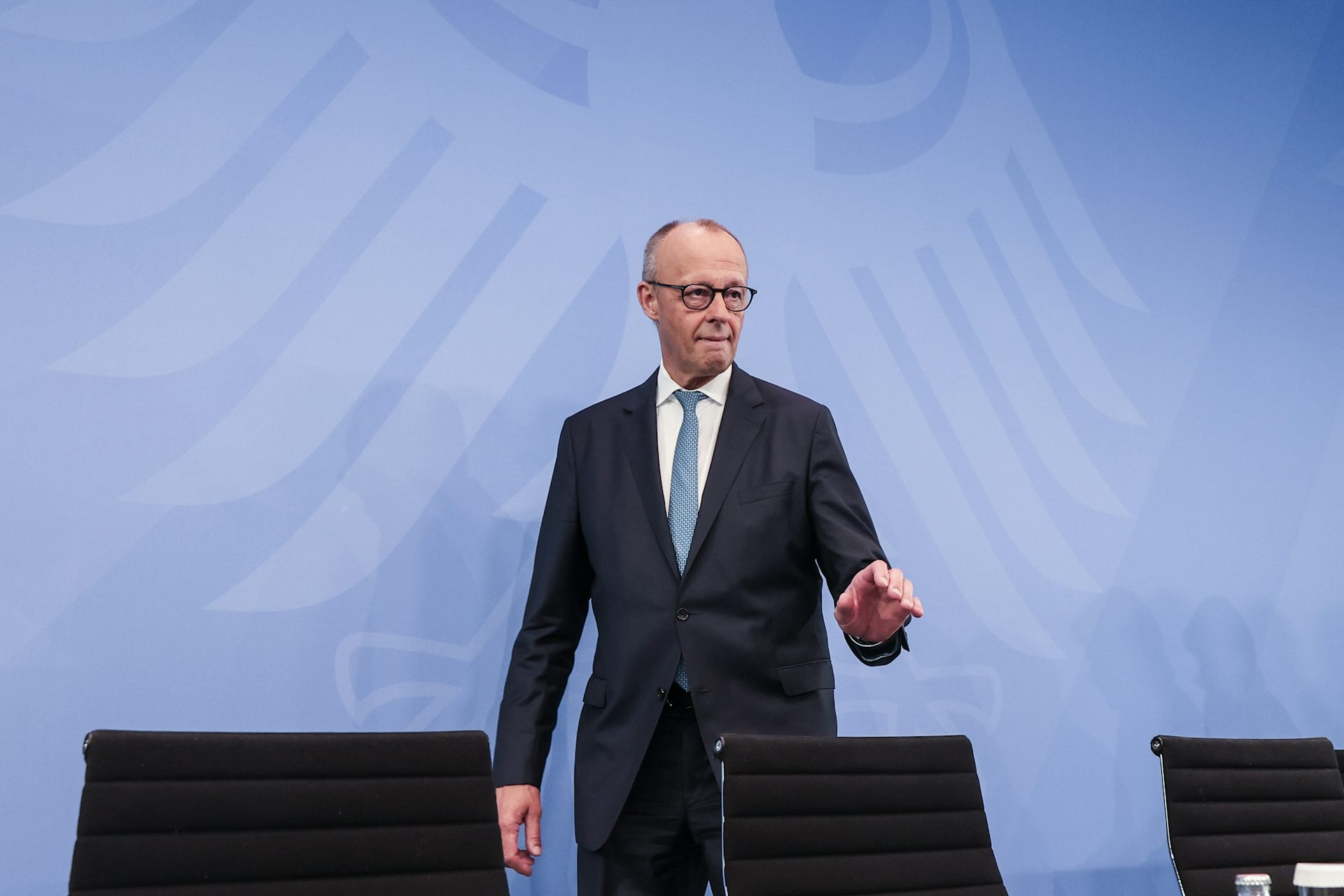
The German chancellor, Friedrich Merz, has called for a new Plaza accord to address what he sees as China’s unfair trade practices.
德国总理弗里德里希·梅尔茨呼吁达成新的“广场协议”,以解决他认为的中国不公平贸易行为。
Trade tensions between the EU and China are deepening. On June 16, the EU’s trade chief, Maroš Šefčovič, said the bloc’s unbalanced trade relationship with China “had reached a point that requires a reset”. The German chancellor, Friedrich Merz, then criticised Beijing days later for what he claimed were its unfair trade practices.
欧盟与中国之间的贸易紧张局势正在加深。6月16日,欧盟贸易专员马罗斯·谢夫乔维奇表示,该集团与中国的失衡贸易关系“已达到需要重置的临界点”。随后几天,德国总理弗里德里希·梅尔茨批评北京,称其存在不公平的贸易行为。
In comments made in Brussels after a European Council meeting, Merz accused China of “flooding markets” through the use of “high subsidies”. He also said China’s currency was undervalued by 30%, making its goods artificially cheaper in global markets. Merz pointed to the Plaza accord as an example of how this issue could be addressed.
梅尔茨在布鲁塞尔参加欧洲理事会会议后发表评论时,指责中国通过使用“高额补贴”来“充盈市场”。他还说,中国的货币被低估了30%,使得其商品在全球市场上被人为地定价过低。梅尔茨以《广场协议》为例,说明了解决这一问题的方法。
Signed in 1985 between the US, Japan, Britain, Germany and France, the Plaza accord was an agreement which saw Japan agree to appreciate the value of its currency, the yen, against the US dollar. The five signatory nations also collectively agreed to intervene in currency markets to weaken the US dollar, which had appreciated massively in the early 1980s, reducing the global competitiveness of US goods.
《广场协议》于1985年由美国、日本、英国、德国和法国签署,是一项要求日本同意使其日元对美元升值的协议。这五个签约国还集体同意干预货币市场,削弱当时大幅升值的美元,从而降低了美国商品的全球竞争力。
The yen’s value quickly increased following the Plaza accord, appreciating by around 46% against the US dollar by 1986. In doing so, the imposition of protectionist measures against Japan was avoided. However, the yen’s appreciation had some severe consequences for Japan, which is something Chinese policymakers are seemingly very aware of.
在《广场协议》之后,日元的价值迅速上涨,到1986年,其兑美元的汇率升值了约46%。通过这一举措,避免了对日本实施保护主义措施。然而,日元的大幅升值给日本带来了某些严重后果,这一点似乎是中国政策制定者非常清楚的。
For example, the yen’s appreciation was widely seen as being a major contributor to the Japanese asset price bubble in the late 1980s. The implosion of this bubble led to Japan’s so-called “lost decades” of economic stagnation, which has characterised the Japanese economy since then.
例如,人们普遍认为,日元的升值是上世纪80年代末日本资产价格泡沫的主要推手。这个泡沫的破裂导致了日本所谓的“失去的几十年”,并使日本经济自那时起一直处于停滞状态。
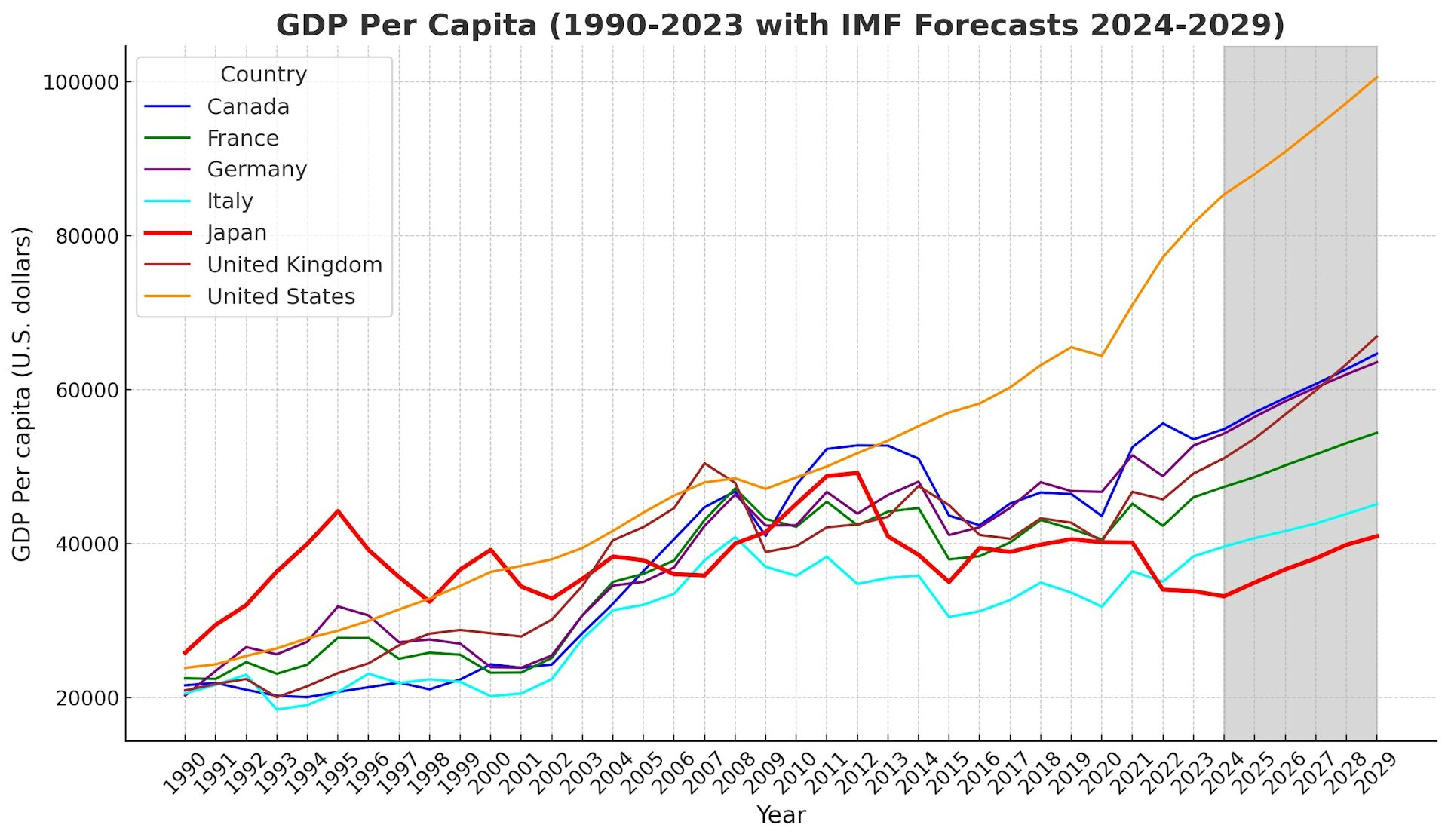
For Chinese policymakers, the current trade tensions between Beijing and the west are reminiscent of the contentious relationship between the US and Japan decades ago. Many of the complaints made about China’s growth model and economic practices are similar to the gripes about Japan at that time.
对于中国政策制定者而言,当前北京与西方之间的贸易紧张局势让人联想起几十年前美国和日本之间充满争议的关系。许多关于中国发展模式和经济实践的抱怨,与当时针对日本的指责非常相似。
Those complaints primarily concerned Japan’s significant trade deficit with the US, as well as its alleged unfair trade practices that disadvantaged American manufacturers. Among other things, the US claimed that Japanese semiconductor and electronics manufacturers were flooding the US market with products priced below the cost of production.
这些抱怨主要集中在日本对美国的巨大贸易逆差,以及其涉嫌的不公平贸易行为损害了美国制造商的利益。此外,美国还声称日本半导体和电子产品制造商正在以低于生产成本的价格向美国市场倾销产品。
Consequently, China views the Plaza accord not as a mutually beneficial agreement. It instead sees the accord as a US-led attempt to cripple Japan’s economy that spelled the beginning of the end for the competitiveness of Japanese manufacturing. This is a stance that has regularly been conveyed by Chinese state media.
因此,中国并未将《广场协议》视为一项互利共赢的协议。相反,它认为该协议是美国试图削弱日本经济、并标志着日本制造业竞争力走向终结的一次尝试。这是中国官方媒体定期传达的一种立场。
In 2018, China’s state-run Xinhua news agency described the Plaza accord as the cause of Japan’s economic woes. This line was also present in a recent editorial in the Global Times, a tabloid under the direction of the Chinese Communist party’s flagship newspaper, the People’s Daily. The editorial argued the accord was a historical example of western economic coercion and political pressure, rather than a model for international cooperation.
2018年,中国的国有新闻机构新华社曾将《广场协议》描述为导致日本经济困境的原因。这一论调也出现在了《环球时报》的一篇近期社论中,《环球时报》是中共旗舰报纸《人民日报》旗下的一个旁系媒体。该社论认为,该协议是西方经济胁迫和政治压力的历史例证,而非国际合作的典范。
Coming to blows
动手打架
Merz’s message may not have been intended as a suggestion that the EU should seek to curtail the Chinese economy. But, given the wariness among Chinese policymakers of the negative effect of the Plaza accord on Japan, it is likely to be interpreted as such by Beijing.
梅尔茨的言论可能并非建议欧盟应该寻求限制中国经济。但考虑到中国政策制定者对广场协议对日本负面影响的警惕,北京可能会将其解读为如此。
In recent years, China has reacted forcefully to what it perceives as external attempts to limit its economic competitiveness. It has taken proactive measures against the US in response to the imposition of tariffs and other restrictions on Chinese goods and Donald Trump’s proposed Mar-a-Lago accord, through which he hopes to lower the value of the US dollar to boost American exports.
近年来,中国对外部试图限制其经济竞争力的行为做出了强烈的反应。它针对美国对中国商品征收的关税和其他限制措施,以及唐纳德·特朗普提议的“马拉湖协议”(Mar-a-Lago accord)——该协议旨在降低美元价值以促进美国出口——采取了积极主动的行动。
On June 22, for example, China added an additional ten US firms to its rare-earths export control list in response to US restrictions on Chinese firms such as electric vehicle manufacturer BYD. The Chinese commerce ministry said the measures were a response to the “US government’s malicious practice”, adding they were taken to safeguard national security and interests.
例如,6月22日,中国在回应美国对包括电动汽车制造商比亚迪等中国企业实施的限制后,又将其额外将十家美国公司加入了稀土出口管制清单。中国商务部表示,这些措施是对“美国政府恶意行为”的回应,并补充说,此举是为了维护国家安全和利益。
Merz’s comments leave Europe open to similar measures. These measures perhaps most notably include tighter restriction on European access to Chinese rare earths, which are key components in many modern military technologies. Such a move would hamper the EU’s push to rearm itself in the face of Russian aggression.
梅尔茨的评论使欧洲面临类似的措施。这些措施可能最显著地包括限制欧洲获取中国稀土,而这些稀土是许多现代军事技术的核心组成部分。此举将阻碍欧盟在面对俄罗斯侵略时进行武装的努力。
However, unlike Washington, Brussels has been hesitant to start an open trade conflict with Beijing. As a result, China’s most likely response to trade tensions with Europe will be to follow its established pattern of dealing with individual states bilaterally rather than the EU as a whole. Beijing has used this approach to overcome previous efforts by the EU to forge a unified line regarding China.
然而,与华盛顿不同,布鲁塞尔在发起与北京的公开贸易冲突方面一直持犹豫态度。因此,中国最有可能对与欧洲的贸易紧张局势的回应是,遵循其处理单个国家双边关系的既定模式,而不是将欧盟作为一个整体来对待。北京利用了这种方法,克服了欧盟此前试图就中国制定统一立场的努力。
What is clear is that the relationship between the EU and China is entering a contentious stage. Their differences are set to intensify as China seeks to maintain its global dominance in manufacturing and make strides in key technologies that were once the preserve of advanced European economies.
显而易见的是,欧盟和中国之间的关系正进入一个充满争议的阶段。随着中国力求维持其在全球制造业的主导地位,并在关键技术领域取得进展——这些技术曾是发达欧洲经济体的专属领域——双方的分歧预计将进一步加剧。
Tom Harper does not work for, consult, own shares in or receive funding from any company or organisation that would benefit from this article, and has disclosed no relevant affiliations beyond their academic appointment.
Tom Harper 不为任何从本文受益的公司或组织工作、提供咨询、拥有股份或接受资金支持,并且除了其学术职位之外,未披露任何相关的隶属关系。