在蚁群中,女王并不说了算。那么,谁说了算呢?
In an ant colony, the queen isn’t in charge. So who is?
In humans, social complexity usually involves clear governance hierarchies, with leaders and middle managers directing our activities. But ants don’t work that way.
在人类社会中,社会复杂性通常涉及清晰的治理层级,领导者和中层管理者指导着我们的活动。但蚂蚁并不按这种方式运作。
Imagine trying to build a house without a blueprint, find a shortcut through an unfamiliar city without a map, or govern a large organisation with no leaders and no meetings.
想象一下,在没有蓝图的情况下建造一座房子,在没有地图的情况下穿过一个陌生的城市寻找捷径,或者在没有领导者和会议的情况下管理一个大型组织。
It sounds impossible. Yet tiny-brained ants, working without leaders or blueprints, have been solving problems like these for millions of years – and no, the queen isn’t the boss telling them what to do.
这听起来是不可能的。然而,那些小小的蚂蚁,在没有领导者或蓝图的情况下工作,已经解决了这些问题数百万年了——不,蚁后并不是告诉它们该做什么的老板。
By almost any measure, ants are a wildly successful group of animals – there’s an estimated 20 quadrillion of them on Earth and they thrive on every continent but Antarctica.
以几乎任何衡量标准来看,蚂蚁是一群极其成功的动物——据估计,地球上有20万亿只蚂蚁,它们在南极以外的每一个大陆上都蓬勃发展。
How have these minuscule animals managed to take over the world (and our kitchens) ? The answer is teamwork.
这些微小的动物是如何统治世界(以及我们的厨房)的?答案是团队合作。
Bustling colonies
熙熙攘攘的群体
Ants are social animals that live in colonies ranging from a few individuals to vast continent-spanning supercolonies containing billions of ants.
蚂蚁是社会性动物,它们生活在从少数个体到包含数十亿蚂蚁的广阔大陆范围的超级群体中。
Bustling ant colonies display many of the features we associate with human societies, including:
熙熙攘攘的蚁群展示了我们与人类社会相关的许多特征,包括:
transportation networks
交通网络
collective care of the young
对幼体的集体照料
food systems (including agriculture in some species)
食物系统(一些物种中的农业)
health care for injured nestmates.
对受伤同伴的医疗保健。
In humans, this level of social complexity usually involves clear governance hierarchies, with leaders and middle managers directing our activities.
在人类中,这种社会复杂性通常涉及清晰的治理层级,领导者和中层管理者指导着我们的活动。
But ants don’t work that way. So who is in charge in an ant colony?
但蚂蚁并非如此运作。那么,蚁群中谁是掌权者呢?
The answer is simple: no one.
答案很简单:没有人。
The queen isn’t in charge
女王不负责任
Ant colonies are a classic example of a self-organised system, where complex behaviour emerges from the combined actions of many ants. Each follow relatively simple rules while communicating and interacting with each other.
蚁群是自组织系统的经典例子,复杂的行为源于许多蚂蚁的共同行动。它们在交流和相互互动时遵循相对简单的规则。
The human brain works in a similar way: individual neurons have simple behaviours and cannot think on their own, but together they give rise to the full range of human thought and behaviour.
人脑的工作方式也类似:单个神经元表现出简单的行为,不能独立思考,但它们结合起来产生了人类思想和行为的全部范围。
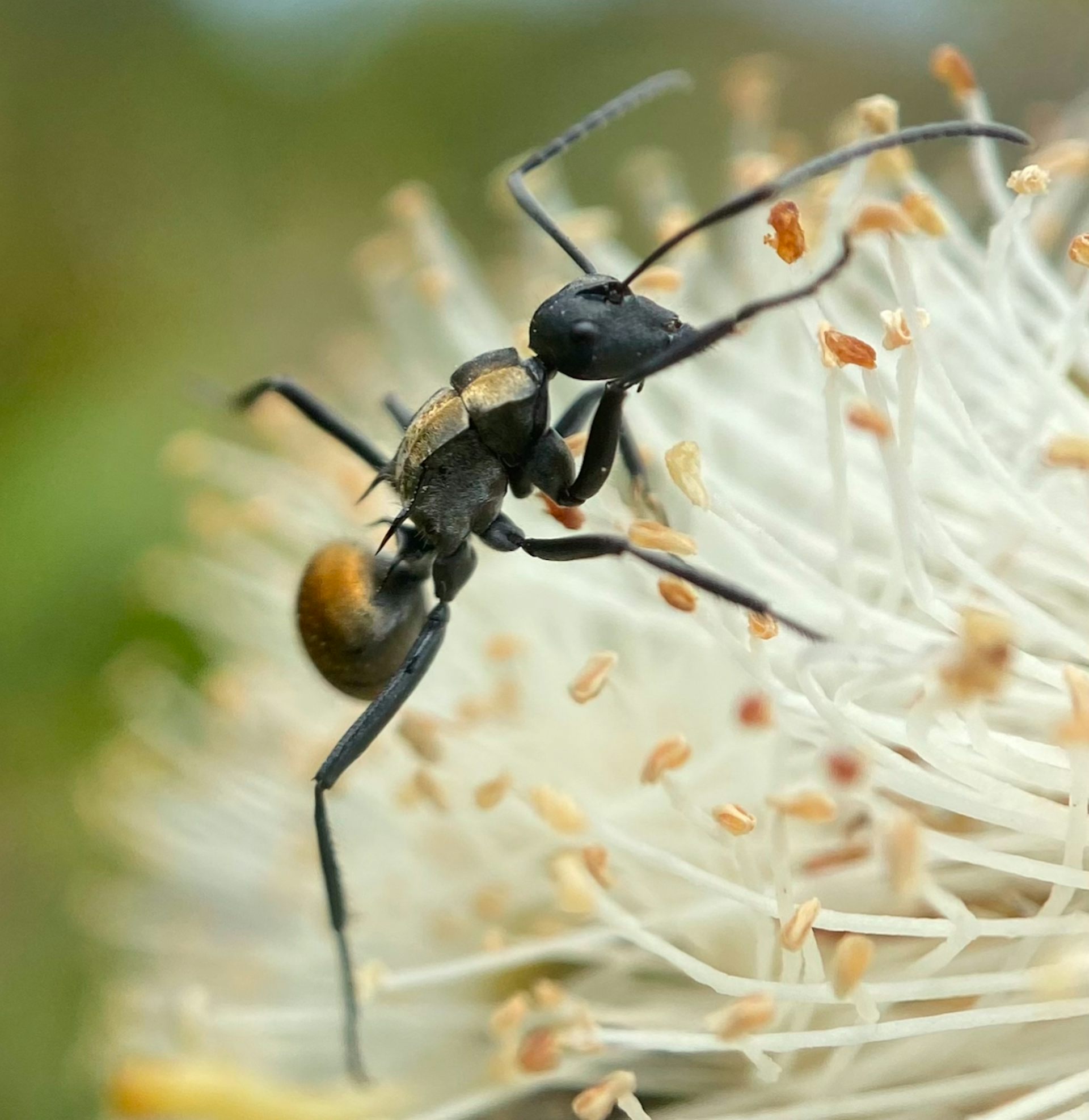
The queen, whom many people assume is in charge, has little involvement in decision-making or leadership.
许多人认为负责任的女王在决策或领导方面参与甚少。
Instead, her role is to maintain the colony’s workforce by producing new ants.
相反,她的作用是通过产出新的蚂蚁来维持蚁群的劳动力。
In some ant species, workers will even kill their queens under particular conditions, such as declining productivity!
在某些蚂蚁物种中,在某些条件下(例如生产力下降!),工蚁甚至会杀死它们的后代!
By working together, ant colonies are capable of complex behaviours and problem-solving skills far exceeding the abilities of an individual ant.
通过共同合作,蚁群能够展现出远超单个蚂蚁能力的复杂行为和解决问题的能力。
For example, some ant species run sophisticated transportation networks linking their colony to many food sources.
例如,一些蚂蚁物种会建立复杂的运输网络,将蚁群与许多食物来源联系起来。
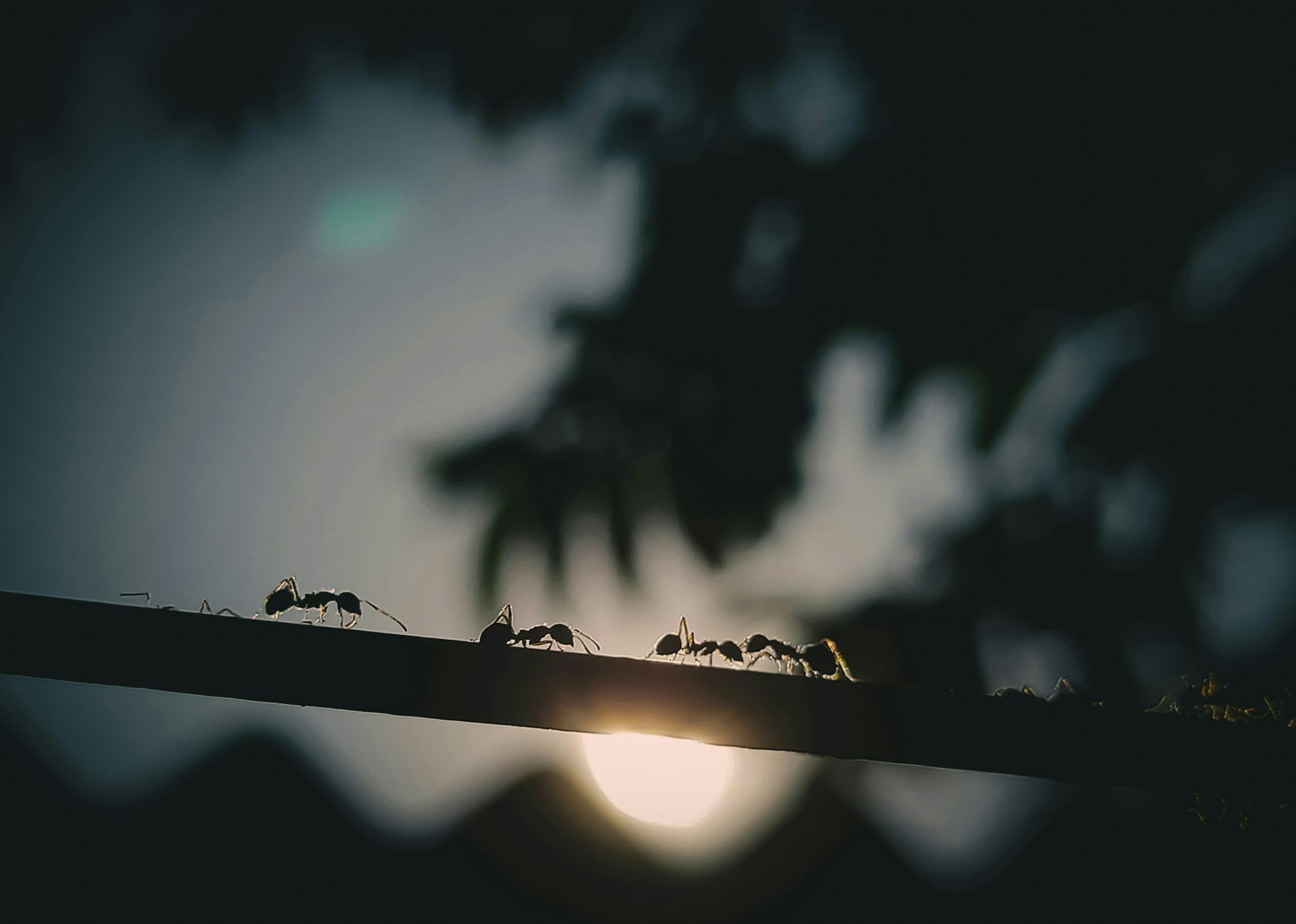
When a foraging worker finds a good source of food, such as some crumbs in your kitchen, she lays down drops of attractive chemicals called “pheromones” as she walks home.
当觅食的工蚁发现一个好的食物来源,比如你厨房里的一些面包屑时,它会沿着回家路线留下叫做“信息素”的吸引性化学物质的滴落。
Other ants in the colony are attracted to the trail, reinforcing it with more pheromones as they go. As a result, the colony can rapidly deploy large numbers of workers to quickly collect food.
蚁群中的其他蚂蚁会被这条踪迹吸引,随着它们的移动,会用更多的信息素来加强它。结果,蚁群可以迅速部署大量工蚁来快速收集食物。
While an individual ant is only aware of the foods she herself has visited, the trail network allows the colony as a whole to be “aware” of many foods.
虽然单个蚂蚁只知道它自己访问过的食物,但这条踪迹网络使整个蚁群能够“感知”到许多食物。
Should a food source disappear or decline in quality, the colony can quickly refocus its efforts.
如果一个食物来源消失或质量下降,蚁群可以迅速重新集中努力。
Ants can also optimise their trail networks by finding shortcuts.
蚂蚁还可以通过寻找捷径来优化它们的踪迹网络。
Since pheromone trails evaporate over time, shorter paths that are traversed more quickly get reinforced more often. Longer paths, by contrast, receive less traffic and get reinforced less often, which in turn causes the pheromone trail to fade and become less attractive.
由于信息素踪迹会随着时间蒸发,那些被更快穿越的较短路径会更频繁地得到加强。相比之下,较长的路径接收到的交通较少,得到加强的次数也较少,这反过来又导致信息素踪迹褪色并变得不那么有吸引力。
This simple feedback loop allows the colony to “discover” shorter routes that take less time to traverse while eliminating longer routes.
这个简单的反馈循环使蚁群能够“发现”更短的路线,从而节省了更短的行程时间,同时消除了更长的路线。
The resulting transportation network can be remarkably efficient.
由此产生的运输网络可以非常高效。
Remarkable architects
惊人的建筑师
Nest construction is another impressive example of the power of self-organisation.
巢穴的建造是自我组织的另一种令人印象深刻的例证。
Ant nests can be vast and intricately structured, with chambers for raising the young, food storage, and waste.
蚂蚁的巢穴可以非常广阔且结构复杂,设有育幼室、食物储存和废物处理的区域。
Yet no ant has a blueprint for the final nest design, nor is a boss ant in charge of directing construction activities.
然而,没有任何蚂蚁拥有最终巢穴设计的蓝图,也没有一只领头蚂蚁负责指导建造活动。
Instead, ants use simple rules to create their remarkable nest architecture.
相反,蚂蚁利用简单的规则来创造它们非凡的巢穴结构。
For example, in the black garden ant Lasius niger, nest building ants excavate soil and form it into small pellets.
例如,在黑花园蚂蚁(Lasius niger)中,筑巢的蚂蚁挖掘土壤并将其形成成小颗粒。
These pellets carry chemical cues making other ants more likely to deposit their own pellets nearby.
这些颗粒携带化学信号,使其他蚂蚁更有可能在附近沉积自己的颗粒。
Over time, this leads to the formation of structures such as pillars, walls, and eventually roofs, without any ant understanding the overall design.
随着时间的推移,这导致了柱子、墙壁和最终屋顶等结构的形成,而没有任何蚂蚁理解整体设计。
This process, where individuals respond to cues left behind by other individuals, is called “stigmergy” and it underpins the construction of other insect-built structures such as termite mounds and honeycomb.
这种个体对其他个体留下的信号做出反应的过程被称为“趋化性”(stigmergy),它支撑着白蚁丘和蜂巢等其他昆虫建造结构的构建。
More humans, more problems – but not so for ants
人类越多,问题越多——但对蚂蚁来说则不然
The use of simple behavioural rules enables ants to coordinate remarkably effectively as a group.
使用简单的行为规则使蚂蚁作为一个群体能够极其有效地协调。
In a study where groups were tasked with moving a T-shaped object through a tight space, human performance did not improve with group size.
在一项研究中,各群体被要求将一个T形物体移动到一个狭窄的空间中,人类的表现并未随着群体规模的增加而提高。
When participants were instructed not to speak, performance actually declined as groups got bigger.
当参与者被指示不要说话时,随着群体的增大,表现实际上有所下降。
Similarly, it has long been known that as human group size increases, the performance of individual team members tends to decrease, a phenomenon known as the Ringelmann effect.
同样,人们长期以来就知道,随着人类群体规模的增加,个体团队成员的表现往往会下降,这种现象被称为林格曼效应。
Ants, by contrast, showed the opposite pattern: as group size increased, their performance actually improved.
相比之下,蚂蚁表现出了相反的模式:随着群体规模的增加,它们的表现实际上有所提高。
So next time you see a line of ants marching around your house, resist the urge to spray or whack them away.
所以下次你看到一队蚂蚁在你的房子里行进时,请抵抗喷洒或拍打它们的冲动。
Instead, take a moment to appreciate these tiny masters of teamwork.
相反,花点时间欣赏这些微小的团队合作大师。
Tanya Latty co-founded and volunteers for conservation organisation Invertebrates Australia, is former president of the Australasian Society for the Study of Animal Behaviour and is on the Education committee for the Australian Entomological Society. She receives funding from the Australian Research Council, NSW Saving our Species, and Agrifutures Australia.
坦亚·拉蒂(Tanya Latty)共同创立并为保护组织“澳大利亚无脊椎动物”(Invertebrates Australia)做志愿者,是“澳大动物行为研究学会”(Australasian Society for the Study of Animal Behaviour)的前主席,并担任“澳大利亚昆虫学会”(Australian Entomological Society)教育委员会的一员。她从澳大利亚研究理事会(Australian Research Council)、NSW 拯救我们的物种(NSW Saving our Species)和澳大利亚农业未来(Agrifutures Australia)获得资助。