
休·杰克曼饰演的罗宾汉邪恶——这是对穷人英雄形象时机不当的演绎。
Hugh Jackman plays Robin Hood as wicked – it’s a badly …
Who was the ‘real’ Robin Hood – community champion or violent criminal? Those in power and the people who shared his tales in pubs have long disagreed.
“真正的”罗宾汉是谁——社区英雄还是暴力罪犯?掌权者和那些在酒吧里分享他故事的人一直对此意见不合。
Robin Hood plays should be banned, wrote an advisor to King Henry VIII in 1536 – they were, he argued, teaching the public how to defy the king’s officers. It was basically the medieval equivalent of claiming video games make kids violent, part of a longstanding movement to ban performances and tales of Robin Hood. This hero was really a villain, these medieval campaigners complained.
1536年,一位写给亨利八世国王的顾问曾撰文称,罗宾汉的表演应该被禁止——他辩称,这些表演正在教导公众如何反抗国王的官员。这基本上相当于中世纪时期人声称电子游戏让孩子暴力,是长期以来旨在禁止罗宾汉故事和表演的一部分运动。这些中世纪活动家抱怨说,这位英雄实际上是一个恶棍。
A new film out tomorrow, The Death of Robin Hood, echoes this claim. Set in the far north of England in the year 1247, the film sees a wounded Robin Hood (Hugh Jackman) , a “wicked and murderous bandit”, reflect on his life of crime. “He was no hero,” claims the film’s tagline.
明天上映的新电影《罗宾汉之死》呼应了这一说法。影片设定在1247年的英格兰北部,讲述了一位受伤的罗宾汉(休·杰克曼),一个“邪恶而杀人精的匪徒”,反思他犯罪的一生。“他不是英雄,”这是电影的标语所宣称的。
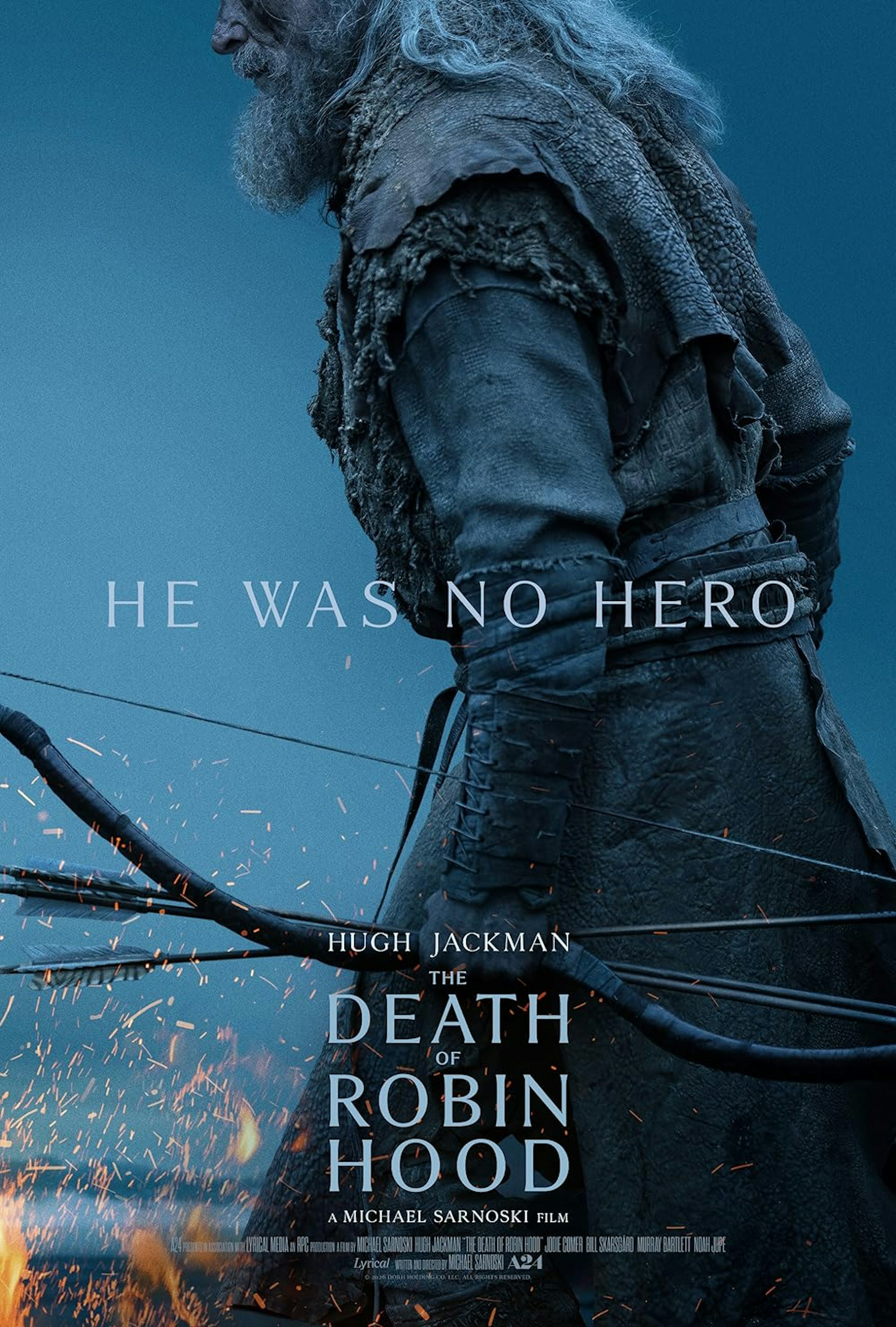
But in our time of cost-of-living crises and rising authoritarianism, do we need a villainous Robin Hood? One Reddit comment summed it up nicely: “Not sure I love the idea of tearing down a folk hero who fought against wealth inequality and greed from upper classes in the current era we’re in. Feels pretty tone deaf.”
但在我们这个生活成本危机和威权主义上升的时代,我们需要一位恶棍罗宾汉吗?一条Reddit评论很好地总结了这个问题:“我不确定我喜欢拆毁一位曾反对财富不平等和上层阶级贪婪的民间英雄的想法,尤其是在我们所处的时代。感觉相当脱节。”
The optics aren’t great. This hero-to-villain recasting comes in the wake of Jackman’s performance at Rupert Murdoch’s 95th birthday earlier this year, attended by members of the Trump family.
这种“英雄变恶棍”的重新塑造在时机上并不理想。它发生在杰克曼今年早些时候出席鲁珀特·默多克的95岁生日派对之后,该派对上有特朗普家族成员出席。
But do the film’s claims about Robin Hood’s villainous origins even stack up? What is the truth behind the legend?
但电影关于罗宾汉邪恶起源的主张真的站得住脚吗?这个传说背后的真相是什么?
The history of Robin Hood
罗宾汉的历史
We first see literary references to Robin Hood in the 1370s, when poet William Langland wrote that rhymes and romances of Robin Hood were shared in taverns. Soon after, around 1405, a literary commentary on the Ten Commandments, framed as a conversation between a rich man and a poor man, complained that people would rather go to the pub to hear a tale of Robin Hood than attend church services.
我们最早在1370年代看到文学作品中关于罗宾汉的记载,当时诗人威廉·朗兰德写道,罗宾汉的韵文和浪漫故事曾在酒馆流传。不久之后,大约在1405年,一篇关于《十诫》的文学评论(以富人和穷人之间的对话形式呈现)抱怨说,人们宁愿去酒吧听罗宾汉的故事,也不愿意参加教堂礼拜。
The earliest known Robin Hood narrative survives within a critical source that rubbishes Robin’s popular appeal: Scotichronicon, compiled in the 1440s by Scottish abbot Walter Bower. The chronicle was a rejection of English claims over Scottish sovereignty. Bower emphasised both the piety of the Scottish church and the periods of violence regularly breaking out across the border.
最早已知的罗宾汉叙事流传于一份批判性的资料中,这份资料贬低了罗宾汉的流行吸引力:《苏格兰编年史》(Scotichronicon),由爱尔兰修道士沃尔特·鲍尔(Walter Bower)于15世纪40年代汇编。这部编年史是对英国人声称拥有苏格兰主权的拒绝。鲍尔强调了苏格兰教会的虔诚,以及经常在边境爆发的暴力时期。
He estimated that the Robin Hood myth originated during the Second Barons’ War (1264-67) , in which the forces of Henry III and Simon de Montfort, Earl of Leicester, battled for control over England. Bower imagined Robin was one of the many disinherited soldiers who ravished the country following de Montfort’s defeat in 1265, placing him among those who stole crops and looted churches to make their living:
他估计罗宾汉的神话起源于第二次男爵战争(1264-67年),当时亨利三世和莱斯特伯爵西蒙·德·蒙福特(Simon de Montfort)的军队为控制英格兰而进行战斗。鲍尔想象,罗宾是许多被剥夺继承权的士兵之一,他们在1265年德·蒙福特战败后掠夺了国家,将他置于那些偷窃庄稼、抢劫教堂以谋生的人群之中:
At this time there arose from among the disinherited and outlaws and raised his head that most famous armed robber Robert Hood, along with Little John and their accomplices. The foolish common folk eagerly celebrate the deeds of these men with gawping enthusiasm in comedies and tragedies.
此时,在这些失去财产和流氓中,最著名的武装强盗罗伯特·胡德(Robert Hood)与小约翰(Little John)及其同伙崛起。愚昧的平民们在喜剧和悲剧中热切地庆祝这些人的功绩,表现出惊奇的热情。
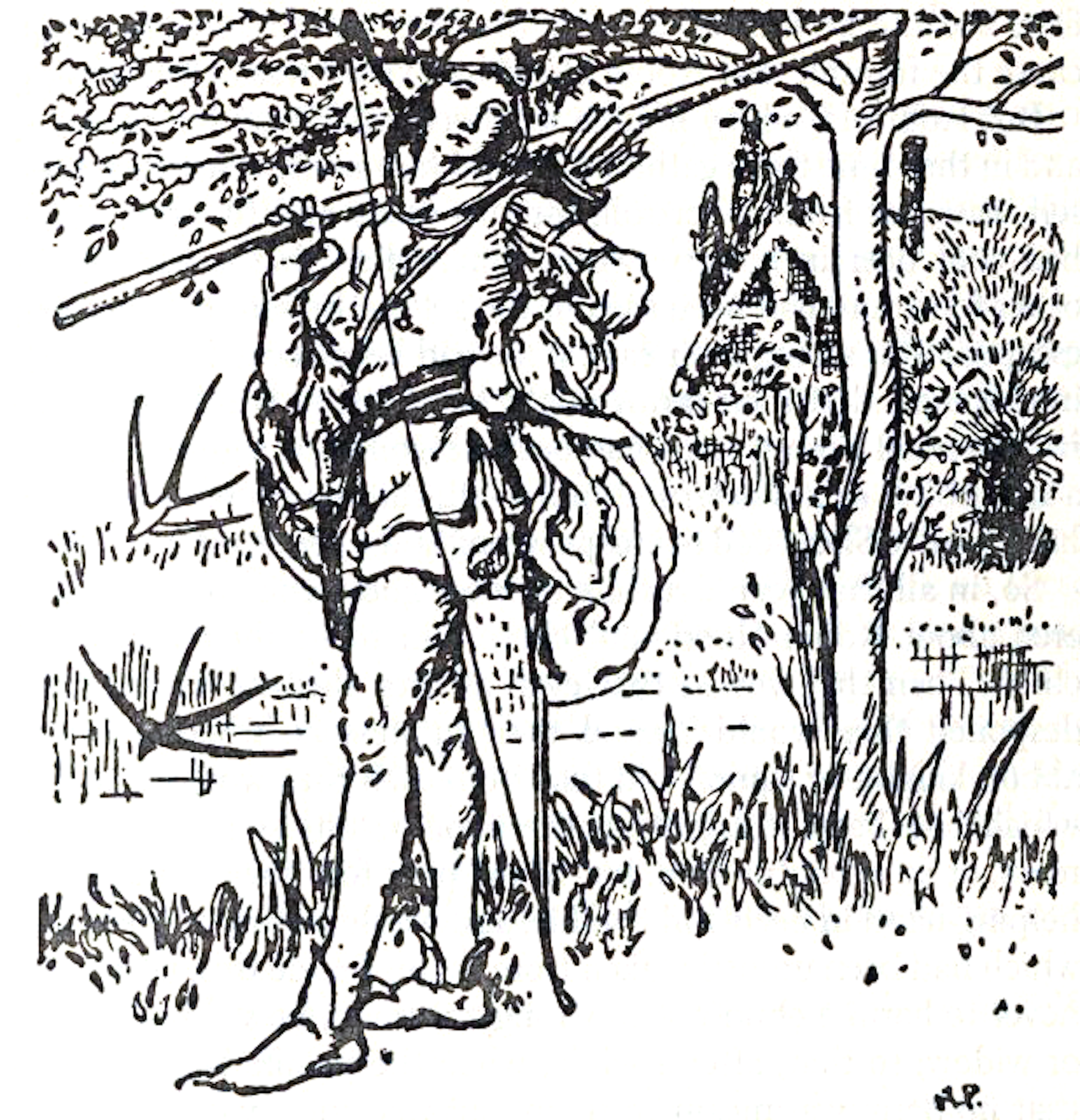
This is the very source that inspired director Michael Sarnoski’s 2026 vision.
这正是启发了导演迈克尔·萨诺斯基(Michael Sarnoski)2026年设想的原始资料。
Yet Bower also admits that some of Robin’s exploits are commendable. In the very next sentence, he paraphrases a circulating tale where Robin is attacked by a viscount, while diligently holding a Mass in his forest hideout. Despite the danger, and the pleas of his men to flee, his spiritual strength ensures he is the victor.
然而,鲍尔也承认罗宾的一些功绩是值得称赞的。在接下来的句子中,他转述了一个流传的故事:罗宾在他的森林藏身处举行弥撒时遭到了一位子爵的攻击。尽管面临危险,尽管他的手下恳求他逃跑,但他的精神力量确保了他最终获胜。
This Robin is the one most visible in the later Middle Ages: not a violent bandit, but a star of action adventure stories that upheld the sanctity of the church and emphasised community values.
这个罗宾汉是在后期的中世纪最为可见的形象:他不是一个暴力的匪徒,而是动作冒险故事中的明星,他维护了教会的神圣性,并强调了社区价值观。
Robin Hood as medieval superhero
罗宾汉作为中世纪超级英雄
The most common way everyday people engaged with the Robin Hood tradition was through play-games – a mix of costumed roleplays with genuine sporting competitions – which were held in spring and summer. Evidence for these community performances date to the mid 1420s, where players in Exeter were paid 20 pence for playing a Robin Hood game for the mayor.
普通人参与罗宾汉传统最常见的方式是通过游戏——这是一种结合了角色扮演和真实体育竞赛的混合形式——这些活动在春季和夏季举行。有证据表明,这些社区表演可以追溯到1420年代中期,当时埃克塞特(Exeter)的玩家为市长进行罗宾汉游戏获得了20便士的报酬。
Men would dress as Robin Hood and Little John and raise funds for community projects. These appearances were essentially the equivalent of superheroes at shopping malls today, but Robin’s presence in medieval communities was not just about fun: it signalled things in the community needed fixing. Whether a church needing repairs, or a social rent needing to be reconciled, if Robin Hood was in your town, he was there to help.
人们会扮演罗宾汉和小约翰,为社区项目筹集资金。这些表演本质上相当于当今购物中心里的超级英雄,但罗宾在中古社区的存在不仅仅是为了娱乐:它标志着社区中有些地方需要修复。无论是需要修缮的教堂,还是需要协调的社会租金,如果罗宾汉出现在你的城镇,他就是来帮忙的。
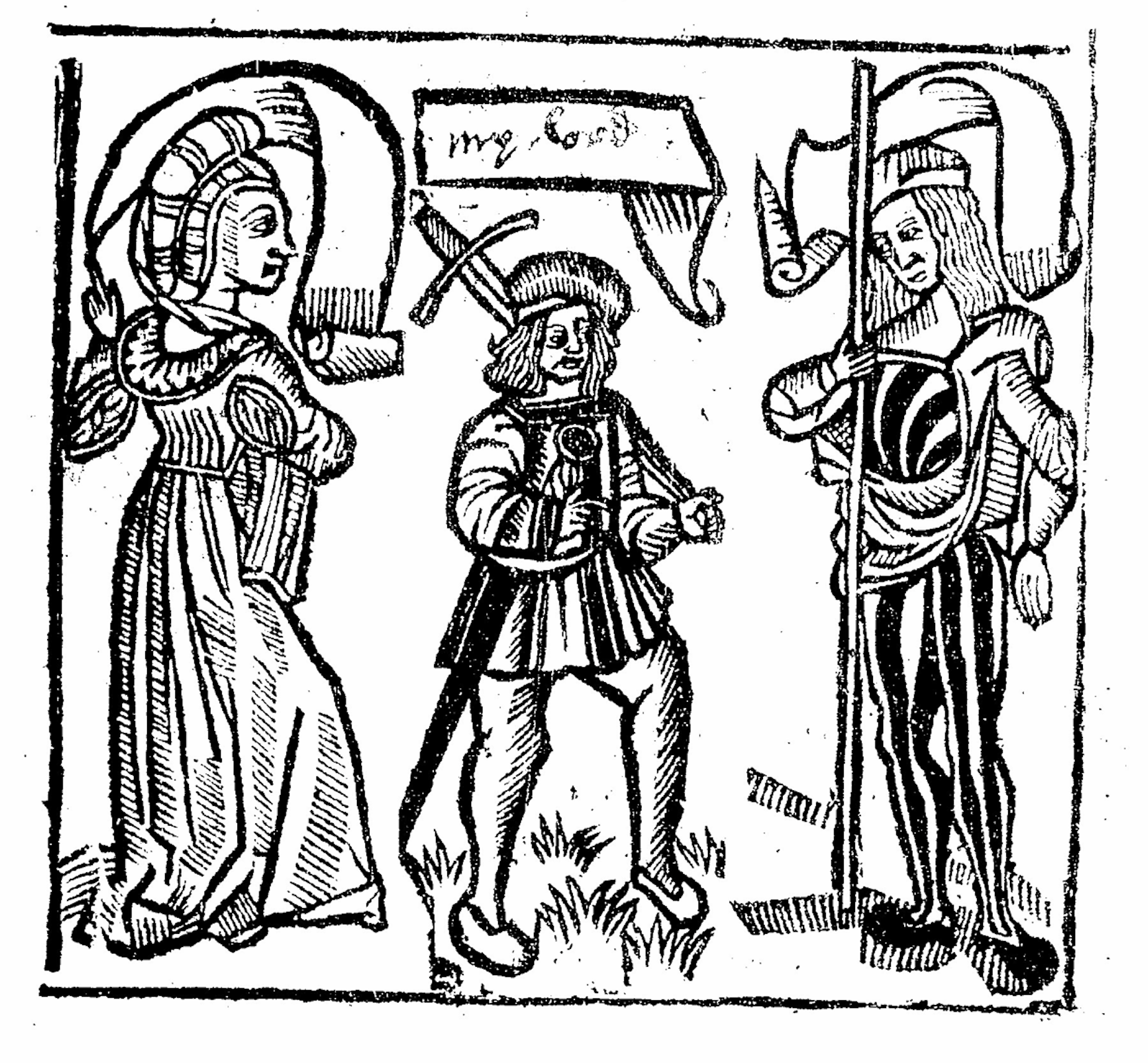
Those who refused to serve the community became Robin’s enemies. In the literary tradition, this is the Sheriff of Nottingham and the greedy bishops of the church. Robin was not strictly anti-authority, but anti- corrupt authority.
那些拒绝为社区服务的人成了罗宾的敌人。在文学传统中,这些人就是诺丁汉治安官和贪婪的主教们。罗宾并非严格的反权威,而是反腐败的权力。
He was staunchly loyal to the king, but challenged corrupt civic officials. He observed Mass three times a day, but harassed the greedy clerics of the church. This reflected Robin’s fundraising role, encouraging all to do their part and chastising those who did not.
他对国王忠心耿耿,但挑战腐败的市政官员。他每天三次参加弥撒,却骚扰着教会中贪婪的神职人员。这反映了罗宾筹款的角色,鼓励所有人尽自己的一份力,并惩戒那些没有做到的人。
The famous “rob the rich to give to the poor” mantra is a 16th-century simplification of this altruistic spirit. Far from being a bloodthirsty criminal, the original Robin had a communal mindset – not an individualistic one.
著名的“抢富济贫”口号,是对这种利他精神在16世纪的简化。原始的罗宾远非一个嗜血的罪犯,而拥有的是一种集体意识——而非个人主义的意识。
Violence as an outlaw’s last resort
暴力作为流浪汉的最后手段
Jackman has said that in the 15th-century poem A Gest of Robyn Hode, the outlaw is depicted as a violent cutthroat – but “from these grim beginnings emerged a hero”.
杰克曼说,在15世纪的诗歌《罗宾·霍德的轶事》(A Gest of Robyn Hode)中,流浪汉被描绘成一个暴力的杀人犯——但“从这些阴郁的开端中诞生了一位英雄”。
Yet the Gest famously features the first glimpses of a gentrified Robin, depicted as the gracious host of feasts. This is not a softening of some earlier, violent version of the outlaw, but a simple reflection of his role as the host of the feasts of his communal games.
然而,《轶事》著名的之处在于首次展现了一位“文明化”的罗宾形象,他被描绘为盛宴的优雅主人。这并非是对流浪汉早期暴力版本的软化,而是简单地反映了他作为社区游戏盛宴主人的角色。
While some tales contain violent episodes, they were not hidden, but were celebrated by communities. The oldest surviving Robin Hood play, circa 1475, features the beheading of a knight – a moment intended to elicit a cheer from the audience at the defeat of an enemy.
虽然一些故事包含暴力情节,但这些情节并未隐藏,而是得到了社区的颂扬。《最古老的幸存罗宾·霍德剧目》(约1475年)中描绘了斩首骑士的情节——这是一个旨在让观众在敌人战败时欢呼的时刻。
The early Robin Hood tales featured violence, but they were not inherently violent stories: no more than Superman is violent because he fights his enemy Lex Luthor. Reading violence into the medieval literary tradition goes against the grain of their context as cautionary tales, which also contain comedy, friendship and love.
早期的罗宾·霍德故事确实包含暴力,但它们本身并非是暴力的故事:这就像超人之所以“暴力”,只是因为他与敌人莱克斯·卢瑟战斗一样。将暴力解读为中世纪文学传统,违背了其作为警示故事的背景,这些故事也包含了喜剧、友谊和爱情。
Robin does not harm the poor or the innocent – only those who are selfish, or isolated from society. Violence is a last resort for this outlaw. His primary weapon is guilt and shame. He is someone who demands better from his audience and leads by example.
罗宾不会伤害穷人或无辜者——只会攻击那些自私或与社会隔绝的人。对这位流浪汉来说,暴力是最后的手段。他主要的武器是内疚和羞耻感。他是一个要求观众做得更好并以身作则的人。
It is therefore pretty telling that those who complained about Robin’s popularity were often the kinds of people the outlaw would attack. If you had a guilty conscience, you had something to hide – priests and public officials complaining the outlaw was being too hard on them is quite the tell.
因此,令人深思的是,那些抱怨罗宾受欢迎程度的人,往往正是流浪汉会攻击的那类人。如果你有罪恶的良心,你就藏着什么东西——教会人士和公职人员抱怨流浪汉对他们太严厉,这本身就是一种泄密。
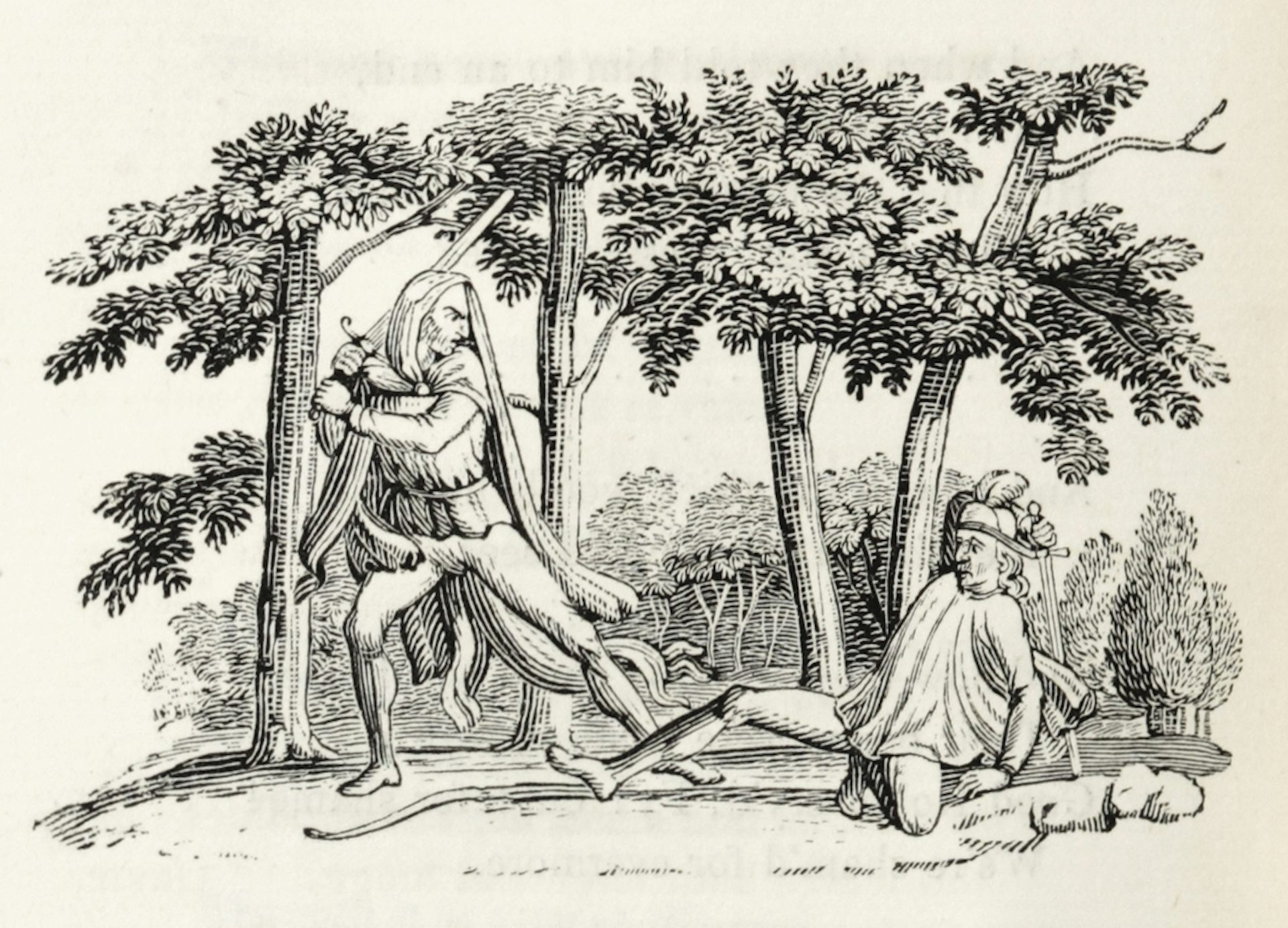
Robin’s real criminal origins
罗宾的真实犯罪起源
To what extent, then, does The Death of Robin Hood’s portrait of Robin as a violent criminal ring true?
那么,《罗宾侠肖像画的死亡》所描绘的,将罗宾塑造成一个暴力罪犯的说法,在多大程度上是属实的呢?
The earliest traces of the Robin Hood tradition is a nickname for criminals, dated to 1262. A Berkshire fugitive had his name changed by a London clerk, from William le Fevere to William Robinhood (“Robehod”) . Records show a short string of such aliases likely imposed by clerks: to be a Robin Hood was to be a violent criminal.
罗宾侠传统的最早痕迹是一个针对罪犯的绰号,可追溯到1262年。一位伯克郡的逃犯被一名伦敦书记员改名,从威廉·勒费维(William le Fevere)改为威廉·罗宾胡德(William Robinhood)(“Robehod”)。记录显示,这类化名是一连串的,很可能是由书记员强加的:成为一个罗宾侠,就意味着是一个暴力罪犯。
There was no character yet – only the name. By the end of the 13th century, “Robin Hood” begins to appear as a surname for both individuals and families, without any criminal implications. These were tax-paying people, law-abiding citizens, yet they named themselves after Robin Hood. Perhaps someone didn’t like being called a Robin Hood and they decided to own it, like reclaiming a slur?
当时还没有这个角色——只有这个名字。到了13世纪末,“罗宾侠”(Robin Hood)开始作为个人和家族的姓氏出现,没有任何犯罪含义。这些人是纳税人、遵守法律的公民,但他们却以“罗宾侠”命名自己。也许有人不喜欢被称为“罗宾侠”,于是决定拥有这个名字,就像是在收回一个污名一样?
By the mid-14th century, we begin to see the green-clad outlaw of Sherwood Forest emerge as a hero against the grain of the typical outlaw story, not fighting for his own freedom but for the rights of the community at large. Robin Hood was not modelled on the criminals of the 13th century, but on the spirit of those who challenged a label they refused to wear.
到了14世纪中叶,我们开始看到来自舍伍德森林(Sherwood Forest)的绿色流浪者,他作为一个英雄形象出现,与典型的流浪汉故事不同——他不是为自己的自由而战,而是为了整个社区的权利。罗宾侠并非取材于13世纪的罪犯,而是取材于那些挑战了一个他们拒绝佩戴的标签的精神。
So, flipping the script on a violent Robin Hood is not so new after all.
因此,颠覆一个暴力的罗宾侠的故事,其实一点也不新鲜了。
William Hoff does not work for, consult, own shares in or receive funding from any company or organisation that would benefit from this article, and has disclosed no relevant affiliations beyond their academic appointment.
William Hoff 不受任何公司或组织(包括持有股份、提供咨询或资金支持)的影响,本篇文章的内容不会使这些机构受益,并且除了其学术任职外,没有披露任何相关的关联。