从《Fleabag》到《Vladimir》:为什么打破第四面墙变得如此普遍?
From Fleabag to Vladimir: why has breaking the fourth w…
The fourth wall break is a 100-year-old screen staple – and film and TV creators can’t seem to get enough.
打破第四面墙是一个拥有百年历史的银幕经典——而电影和电视的创作者们似乎永远也满足不了。
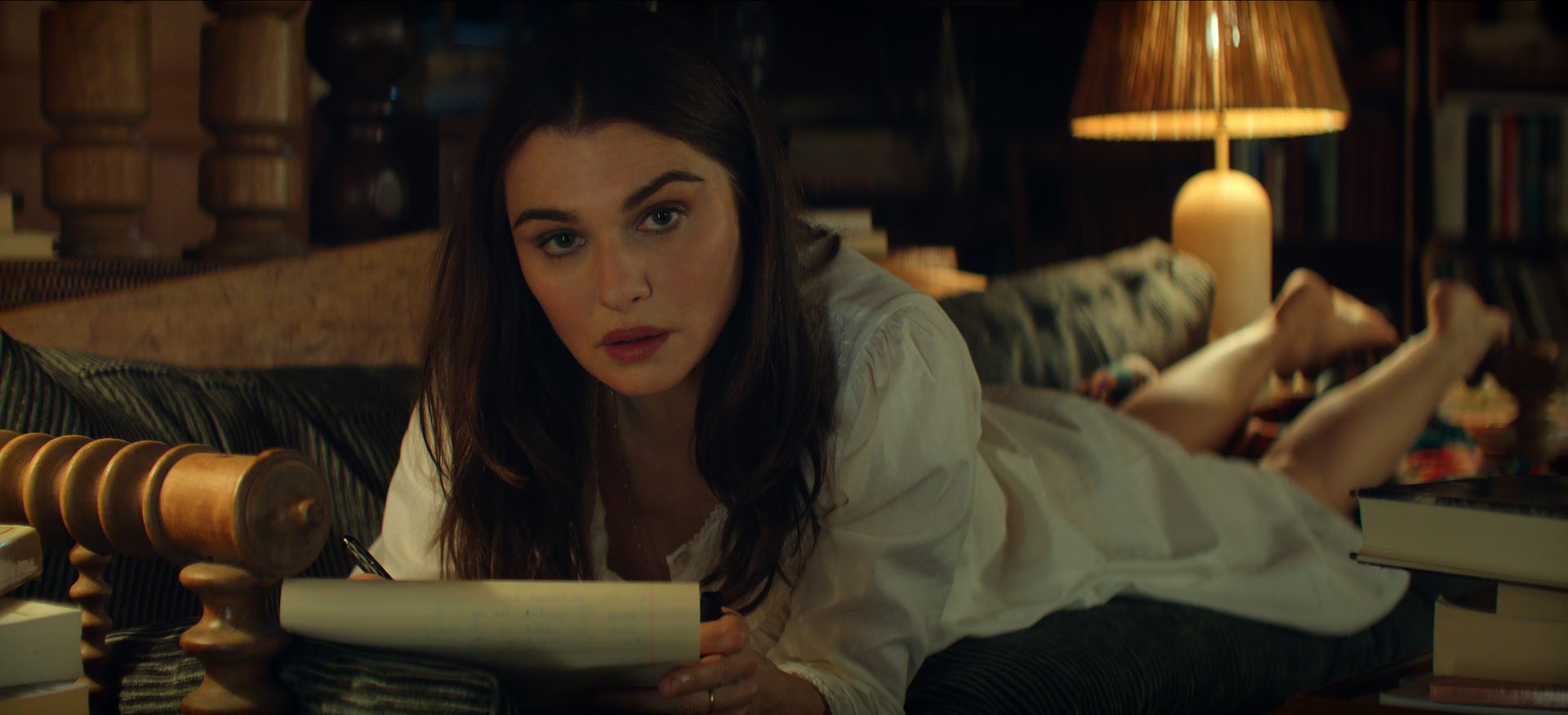
In the opening moments of Vladimir, Netflix’s new erotic drama series, the protagonist M (Rachel Weisz) is sprawled on a couch in her negligee, writing in her notepad. She leans towards the camera, then stares into the lens to address you, the viewer, on your couch.
在Netflix的新情色剧情剧集《弗拉迪米尔》的开场时刻,主角M(瑞秋·韦斯)穿着睡袍,瘫在一张沙发上,在笔记本上写字。她身体前倾,然后直视镜头,仿佛在对你——观众——在你的沙发上讲话。
In film and television, this is called “breaking the fourth wall”. It is a ploy of metafiction: a kind of self-aware mode of storytelling.
在电影和电视中,这被称为“打破第四面墙”。这是一种元小说手法:一种自我意识的叙事模式。
The fourth wall is the invisible plane through which the camera observes the action. To break the fourth wall is to play with – or sever – audiences’ suspension of disbelief, and abandon the norms of screen narration.
第四面墙是摄像机观察动作的无形平面。打破第四面墙就是玩弄——或切断——观众的“相信的暂停”,并抛弃屏幕叙事的规范。
The history of breaking the fourth wall is almost as long as the history of cinema itself. Edwin S. Porter’s film The Great Train Robbery ends with an outlaw firing his gun directly towards the camera. Back in 1903, audiences ducked for cover.
打破第四面墙的历史几乎和电影本身的历史一样悠久。埃德温·S·波特(Edwin S. Porter)的电影《大列车劫案》的结尾,一名亡命之徒将枪口直接对准了镜头。回溯到1903年,观众们纷纷躲避掩护。
Nearly a century later, director Martin Scorsese paid homage to Porter in Goodfellas (1990) in a scene where Mobster Tommy DeVito (Jo Pesci) fires his gun directly at the screen. Here, the fourth wall break is used in an existential moment for Henry Hill (Ray Liotta) – rather than for pure shock.
近个世纪后,导演马丁·斯科塞斯在《好家伙》(Goodfellas,1990)中致敬了波特,在一个黑帮分子汤米·德维托(Jo Pesci)将枪口直接对准屏幕的场景。在这里,打破第四面墙是为亨利·希尔(Ray Liotta)营造一个存在主义时刻——而不是为了纯粹的冲击感。
In fact, the shock value of the technique has depleted over time, as audiences have become more media literate.
事实上,随着观众媒体素养的提高,这种技巧的冲击力也随着时间推移而减弱了。
Making the invisible visible
让无形可见
The fourth wall breaks from early cinema fast disappeared with the industrialisation of the medium. The rise of the American studio system privileged some film techniques over others.
第四面墙从早期电影中迅速消失,随着媒介的工业化进程。美国制片厂系统的兴起,使得某些电影技术比其他技术更受青睐。
The “Classical Hollywood” style – think Casablanca (1942) – was built on a premise of invisibility, from the carefully directed eye-lines of actors, to “continuity” editing that stitched together different camera angles.
“经典好莱坞”风格——想想《卡萨布兰卡》(1942年)——建立在一种无形的前提之上,从演员精心设计的眼神交汇,到将不同镜头角度缝合在一起的“连续性”剪辑。
In Breathless (À bout de souffle, 1959) Jean-Luc Godard opted for jump-cuts and “direct address”. This is when a character speaks to, or looks directly at, the viewer.
在《失焦》(À bout de souffle,1959年)中,让-吕克·戈达尔选择了跳切和“直接诉说”。这指的是角色直接对观众说话或看着观众。
Today, direct address is used widely across genres, from Barbie (2023) , to Marvel’s Deadpool films (2016, 2018, 2024) , and Jane Austen adaptations such as Persuasion (2022) .
如今,直接诉说这种手法广泛应用于各种类型片中,从《芭比》(2023年),到漫威的《死侍》系列电影(2016年、2018年、2024年),再到《说服》(2022年)等简·奥斯汀改编作品。
On television, we’ve seen women creators and characters explore the power of direct address in a re-calibration of the “male gaze”.
在电视上,我们看到女性创作者和角色在重新审视“男性凝视”的过程中,探索了直接诉说的力量。
One example is Phoebe Waller-Bridges’ confessions to the camera in Fleabag (2016–19) . Cinematographer Tony Miller notes how creative camera choices work in conjunction with direct address to make viewers “complicit in her [character’s] journey”.
一个例子是菲比·沃勒-布里奇在《邋遢女郎》(Fleabag,2016-2019年)中对摄像机的“忏悔”。摄影指导托尼·米勒指出,富有创意的镜头选择如何与直接诉说结合,使观众“参与到她(角色)的旅程中”。
The direct gaze
直视的目光
A fourth wall break is not always dialogue-driven. In Persona (1966) film auteur Ingmar Bergman directed his actors to stare deep into the abyss of the camera lens, delivering existential malaise.
打破第四面墙的方式并非总是通过对话来驱动。在电影《人格》(Persona,1966)中,电影大师英格玛·伯格曼指导演员们深情凝视镜头深处的深渊,传递出存在主义的忧郁。
This direct gaze has been remediated for streaming programs, including in the intense close-up shots of Carmy (Jeremy Allen-White) in the final season of The Bear (2025) , and knowing glances from the troubled Rue (Zendaya) in Euphoria (2019–26) .
这种直视的目光已被流媒体节目重新运用,例如在《熊》(The Bear,2025)的最后一季中,卡米(Jeremy Allen-White)的强烈特写镜头,以及《极乐迪斯科》(Euphoria,2019–26)中,饱受困扰的鲁(Zendaya)心照不宣的眼神。
Fourth wall breaks can also be graphic. In Pulp Fiction, Mia Wallace (Uma Thurman) traces a square of light on the screen with her finger instead of calling Vincent Vega (John Travolta) a “square”.
打破第四面墙的方式也可以是视觉化的。在《低俗小说》(Pulp Fiction)中,米娅·华莱士(Uma Thurman)用手指在屏幕上描绘出一个光方块,而不是指责文森特·维加(John Travolta)是个“方块”。
And in Michael Haneke’s films Funny Games (1997, 2007) a home invader literally “rewinds” the story when a victim kills his accomplice. These kind of wall breaks call attention to the invisible membrane of the screen.
而在迈克尔·哈内克(Michael Haneke)的电影《欢笑游戏》(Funny Games,1997, 2007)中,一个入室盗贼在受害者杀死他的同谋时,字面意义上“倒带”了故事。这类打破墙壁的手法,都将观众的注意力引向了屏幕上无形的膜。
As filmmaker Mark Cousins attests in The Story of Film: An Odyssey, the medium has advanced over time through innovation and the recycling of techniques such as fourth wall breaks.
正如电影制作人马克·库辛斯(Mark Cousins)在《电影故事:奥德赛》中所证明的,这种媒介随着时间的推移,通过创新和对打破第四面墙等技术的循环利用而不断发展。
Is breaking the fourth wall back in vogue?
打破第四面墙是否又开始流行了?
With the dominance of literary adaptations for the screen (and IP-driven screen stories in general) we’re likely to see more cases of direct address, as screenwriters seek to creatively refashion texts for the screen. Vladimir, for instance, is an adaptation of Julia May Jonas’ 2022 novel of the same name.
鉴于文学改编作品(以及总体上知识产权驱动的屏幕故事)占据主导地位,我们可能会看到更多直接对话的案例,因为编剧们正试图为屏幕创造性地重塑文本。例如,《弗拉迪米尔》(Vladimir)就是改编自朱莉娅·梅·乔纳斯2022年同名小说。
While breaking the fourth wall may have lost its shock value, it remains a bold storytelling device which, if done well, can set apart one screen production from another.
尽管打破第四面墙可能已经失去了其冲击力,但它仍然是一种大胆的叙事手法,如果运用得当,可以使一部影视作品与其他作品脱颖而出。
Actor Matt Damon recently pointed out how streamers such as Netflix are discussing the potential to reiterate “the plot three or four times in the dialogue” of a film, to account for people who scroll on their phone while listening to “background TV”.
演员马特·达蒙最近指出,像Netflix这样的流媒体平台正在讨论一种可能性,即在电影的对话中重复“情节三四次”,以考虑到那些边听“背景电视”边刷手机的观众。
Having a character speak directly to a distracted audience may be one way to return their gaze to the bigger screen.
让角色直接对一个心不在焉的观众说话,可能是将他们的目光重新吸引到大屏幕的一种方式。
Hyper-reality in unscripted TV
非虚构电视中的超现实性
Breaking the fourth wall sits within a wider envelope of “metafictional” storytelling.
打破“第四面墙”处于更广阔的“元小说式”叙事范围之内。
As screen culture becomes increasingly aware of its own machinery, unscripted genres such as reality TV are not merely breaking the fourth wall, but abandoning the conceit of separation entirely. The boundaries between cast, camera, story producers and audience have become increasingly porous.
随着屏幕文化越来越了解自身的运作机制,真人秀等非虚构体裁不仅仅是打破了“第四面墙”,而是彻底放弃了分离的概念。演员、摄影机、故事制作人和观众之间的界限变得越来越模糊。
Alex Baskin, executive producer of the long-running series Vanderpump Rules (2013–25) , describes this as “hyperreality”. In the wake of Scandoval, the cheating scandal of Tom Sandoval, the reality TV cast started to intervene in the producers’ narrative arcs by speaking on camera about audience feedback, and providing meta commentary on their own “edits”.
《万能鸡规则》(Vanderpump Rules,2013-25)的执行制片人亚历克斯·巴斯金(Alex Baskin)将此描述为“超现实性”。在“斯坎多瓦尔”(Scandoval,指汤姆·桑多瓦尔的出轨丑闻)事件之后,真人秀的演员开始通过在镜头前谈论观众反馈,并对自己的“剪辑”提供元评论,从而干预了制作人设定的叙事弧线。
When Ariana Madix (Sandoval’s ex) refused to film with him, it disrupted plans for a neat season finale based on his apology. Madix left the set, effectively ending the entire show. Fellow cast member Tom Schwartz called it a “plot twist”. Unsurprisingly, Scorsese is a fan of the show.
当阿里亚娜·马迪克斯(Madix,桑多瓦尔的前女友)拒绝与他一起拍摄时,这打乱了原本基于他道歉的完美季终集计划。马迪克斯离开了片场,实际上让整个节目宣告结束。其他演员汤姆·施瓦茨(Tom Schwartz)称之为“情节反转”。不出所料,斯科塞斯也是该节目的粉丝。
Meta and hyperreal storytelling will continue to be on the rise as screen creators seek to imbue a point-of-difference in a congested market – serving an ever-distracted audience.
随着屏幕创作者试图在一个拥挤的市场中创造差异点——以服务于一个日益分心的观众——元叙事和超现实叙事将继续兴起。
Alex Munt does not work for, consult, own shares in or receive funding from any company or organisation that would benefit from this article, and has disclosed no relevant affiliations beyond their academic appointment.
Alex Munt 不受任何从本文中受益的公司或组织的雇佣、咨询、拥有股份或获得资金支持,并且除了其学术任职外,未披露任何相关隶属关系。