世界杯上的AI:更聪明的战术、更健康的球员、更安全的观众——但伴随着新的风险
AI at the World Cup: smarter tactics, healthy players, …
This year’s World Cup will be the biggest ever – it also promises to be the most technologically advanced.
今年的世界杯将是史上规模最大的,同时也有望成为科技最先进的盛会。
With 48 teams and 104 games across 16 host cities and three countries (the United States, Canada and Mexico) , this year’s FIFA World Cup is projected to be the biggest sporting event ever in terms of attendance, revenue and global viewership.
随着48支球队和104场比赛在16个主办城市和三个国家(美国、加拿大和墨西哥)举行,今年的国际足联世界杯预计将在出席人数、收入和全球收视率方面成为有史以来最大的体育赛事。
It also promises to be the most technologically advanced, and artificial intelligence (AI) in particular will touch almost all aspects of the tournament.
它还有望成为技术最先进的赛事,特别是人工智能(AI)将触及比赛的几乎所有方面。
This reflects a growing use of AI in soccer and across elite sport, with tools being applied not only to optimise athlete performance but also enhance match officiating, event security and fan experience.
这反映了人工智能在足球和精英体育领域日益增长的应用,相关工具不仅用于优化运动员表现,还用于提升比赛判罚、活动安全和球迷体验。
Let’s look at how AI will be used in the World Cup, who may benefit and what risks could emerge.
让我们来看看人工智能将在世界杯上如何应用,谁可能会受益,以及可能出现哪些风险。
How it will be used on the pitch
在球场上的应用方式
In our review of AI use in soccer we found various ways it can assist on the pitch:
在我们对足球中使用人工智能的综述中,我们发现它可以在球场上提供各种帮助:
tools to support player, team and match evaluation
支持球员、球队和比赛评估的工具
forecasting of match outcomes and in-game events (such as expected goals and assists, corners, passes, opposition tactics)
预测比赛结果和比赛中的事件(例如预期进球和助攻、角球、传球、对手战术)
monitoring athlete workload
监测运动员的工作负荷
injury prediction and detection
伤病预测和检测
talent scouting.
人才选拔。
At the World Cup, coaches will use AI alongside more conventional data to inform how they approach each game, including what opposition strengths they need to negate and what weaknesses they can exploit.
在世界杯上,教练将利用人工智能结合更传统的数据,来制定他们如何应对每场比赛的策略,包括需要抵消哪些对手优势以及可以利用哪些弱点。
Similarly, high performance staff will use AI to monitor player health and wellbeing, and forecast potential injuries.
同样,高水平工作人员将使用人工智能来监测球员的健康和福祉,并预测潜在的伤病。
The dreaded penalty shoot-out is one area where AI will have a direct influence. Teams will use AI to synthesise historical data to provide insights on goalkeepers and penalty takers’ likely strategies.
令人畏惧的点球大战是人工智能将发挥直接影响的领域之一。球队将利用人工智能综合历史数据,为守门员和罚球射手的可能策略提供洞察。
A key benefit is the speed at which these analyses can be undertaken. What used to take days of old-fashioned human legwork can now be done in hours, even for entire squads.
一个关键优势是这些分析的速度。过去需要耗费数天人工走访才能完成的工作,现在可以在数小时内完成,即使是针对整个阵容。
Should a game go to a shootout, AI could very likely influence the winning kick or save.
如果比赛进入点球大战,人工智能很可能会影响决定胜负的射门或扑救。
What about referees?
裁判呢?
Match officials will also be supported by AI.
比赛官员也将得到人工智能的支持。
While semi-automated offside technology was introduced in the 2022 World Cup, it will be enhanced through the addition of AI-enabled 3D avatars of every player. The aim is to improve referees’ decision accuracy through the use of more precise body dimensions of the players involved.
虽然半自动越位技术已在2022年世界杯上引入,但它将通过增加每个球员的AI赋能3D虚拟形象得到增强。其目标是通过使用更精确的球员身体尺寸来提高裁判的判罚准确性。
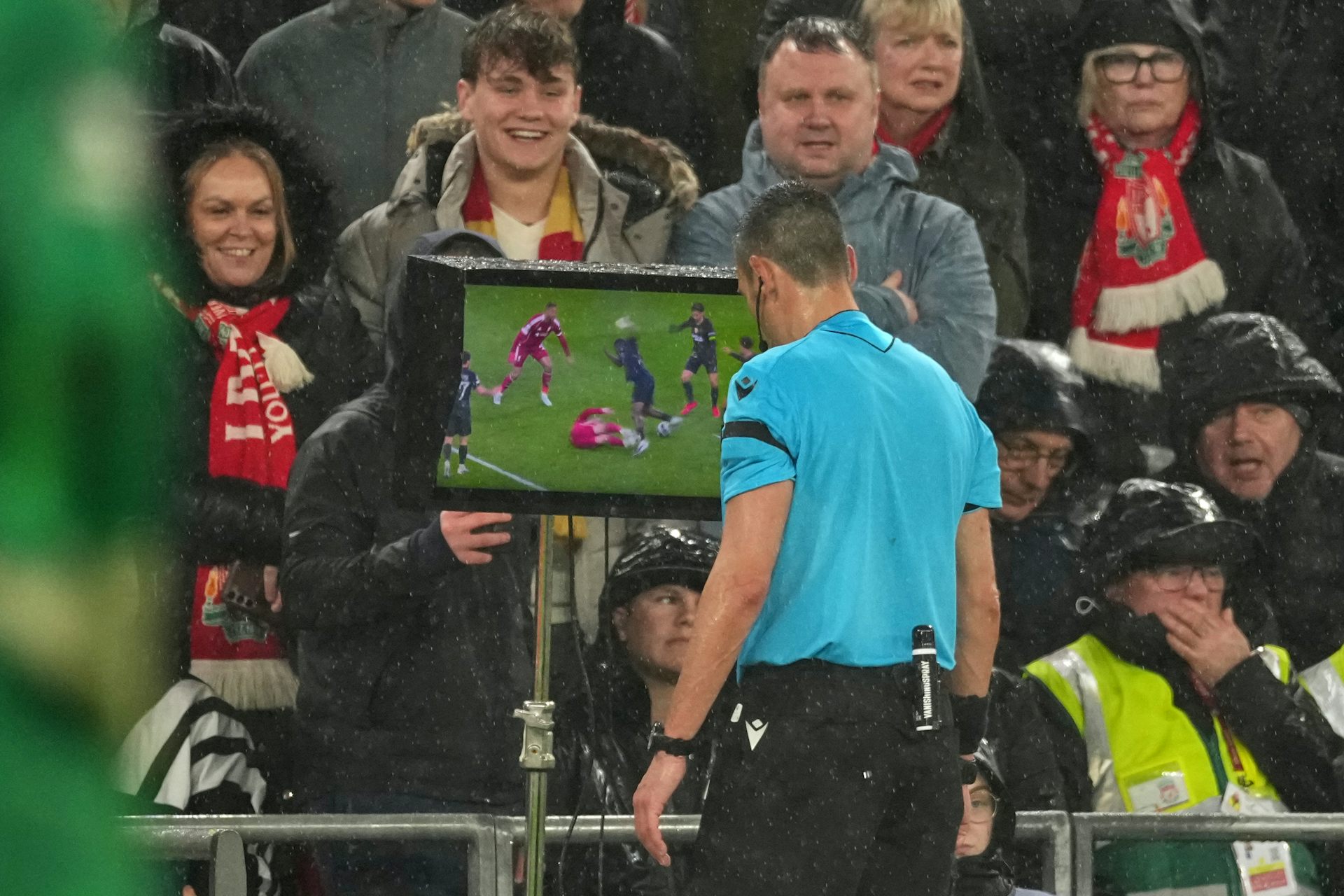
The avatars will also be used to provide more engaging content when Video Assistant Referee (VAR) decisions are shown to fans. Rather than seeing only generic figures, fans will now see realistic avatars incorporating players’ faces, kit and even their hairstyle.
这些虚拟形象还将用于在向球迷展示视频助理裁判(VAR)判决时提供更具吸引力的内容。球迷看到的将不再是泛泛的图形,而是结合了球员面部、球衣甚至发型的逼真虚拟形象。
Another use in match officiating will be referee view technology, which uses body cameras to capture in-game footage from the referee perspective. AI will be used to stabilise images, with the emphasis on enhancing the fans’ immersive experience.
比赛判罚的另一个用途是裁判视角技术,它使用运动相机从裁判的角度捕捉比赛画面。AI将用于稳定图像,重点在于增强球迷的沉浸式体验。
What about off the field?
场外方面如何呢?
Crowd management and logistics are other areas where AI will be deployed.
人群管理和后勤是人工智能将部署的其他领域。
FIFA has built an “Intelligence Command Centre” – which will connect data across matches, venues and broadcasters – as well as digital twin models of stadiums to monitor and forecast crowd behaviour.
国际足联建立了一个“情报指挥中心”,该中心将连接比赛、场馆和广播机构的数据,以及体育场的数字孪生模型,用于监测和预测人群行为。
This will aim to ensure crowd-related issues such as bottlenecks are controlled.
这旨在确保控制人群相关的各种问题,例如瓶颈。
Are there any risks?
有什么风险吗?
While there are many benefits, a broad spectrum of risks will need to be managed.
尽管有很多益处,但需要管理广泛的风险。
Key concerns with AI tools are substandard outputs, and loss of skills and meaningful work for humans. To combat this, teams should ensure AI is only used to support human decision making, not replace it.
AI工具的主要担忧是输出质量不达标,以及人类技能和有意义工作的流失。为应对此,球队应确保AI仅用于支持人类决策,而非取代人类决策。
Data privacy and security will be key concerns, with the possibility of confidential or sensitive information being leaked or accessed by unauthorised or malicious actors. The use of AI in areas such as security and crowd management could also provide the opportunity for highly disruptive cyber attacks.
数据隐私和安全将是关键关注点,存在机密或敏感信息被未经授权或恶意行为者泄露或访问的可能性。在安全和人群管理等领域使用AI,也可能为高度破坏性的网络攻击提供机会。
Equality could be an issue: teams with more financial power may have an advantage through more sophisticated tools.
公平性可能是一个问题:财力更雄厚的球队可能通过更复杂的工具获得优势。
In an attempt to level the playing field, FIFA has introduced Football AI Pro, an AI tool available to all teams. This soccer-specific large language model supports both pre- and post-match analysis and provides access to more than 2,000 metrics.
为努力创造公平竞争环境,国际足联推出了“足球AI专业版”(Football AI Pro),这是一个所有球队都可以使用的AI工具。这款足球专用大型语言模型支持赛前和赛后分析,并提供超过2,000个指标的访问权限。
The aim is to ensure all nations have access to at least some level of AI support. It remains to be seen which nations actually use it.
目标是确保所有国家都能获得一定程度的AI支持。目前尚不清楚哪些国家会实际使用它。
Another potential adverse outcome is tactical homogenisation, where games become predictable because every team follows the same AI-generated game plan.
另一个潜在的负面结果是战术同质化,即由于每支球队都遵循相同的AI生成战术,比赛变得可预测。
Sadly, AI will likely be deployed for nefarious purposes, for example as part of ticketing scams through AI-generated images, deepfakes, websites and phishing emails. Fans should take care at all times.
令人遗憾的是,AI可能会被用于邪恶目的,例如通过AI生成的图片、深度伪造、网站和网络钓鱼邮件进行票务诈骗。球迷应时刻保持警惕。
AI will be everywhere
AI无处不在
AI is fast becoming a key component of high performance sport. It will be leveraged throughout the tournament to support preparation, performance and recovery.
AI正迅速成为高性能运动的关键组成部分。它将在整个锦标赛中得到利用,以支持准备、表现和恢复。
While it could increase the gap between larger and smaller nations, it might also give smaller nations a new edge.
虽然这可能会扩大大国和小国之间的差距,但也可能赋予小国新的优势。
So could 2026 be the year in which AI genuinely contributes to a World Cup win? We won’t see an AI agent scoring a goal, or a robot coach calling the shots (at least not yet) but there is no doubt the winner of the tournament will have relied on AI along the way.
那么,2026年是否会是AI真正助力世界杯夺冠的一年?我们不会看到AI代理进球,或者机器人教练指挥比赛(至少目前不会),但毫无疑问,比赛的获胜者在过程中都依赖了AI。
In terms of who that will be – well, we could always ask AI.
至于会是谁——嗯,我们总可以问问AI。
Paul Salmon receives funding from the Australian Research Council
Paul Salmon获得澳大利亚研究理事会资助
Isaiah Jesse Elstak receives Commonwealth funding through an Australian government research training program scholarship.
Isaiah Jesse Elstak通过澳大利亚政府研究培训项目奖学金获得英联邦资助。
Scott McLean does not work for, consult, own shares in or receive funding from any company or organisation that would benefit from this article, and has disclosed no relevant affiliations beyond their academic appointment.
Scott McLean不为任何受益于本文的公司或组织工作、提供咨询、拥有股份或获得资金,并且除了其学术任命之外,未披露任何相关隶属关系。