国际社会为结束朝鲜核武器计划的努力已经失败。接下来会发生什么?
International efforts to end North Korea’s nuclear weap…
Based on past performance, economic sanctions will never be strong enough to denuclearise North Korea. There’s a better way.
根据过去的表现,经济制裁永远不足以使朝鲜实现无核化。有一种更好的方法。
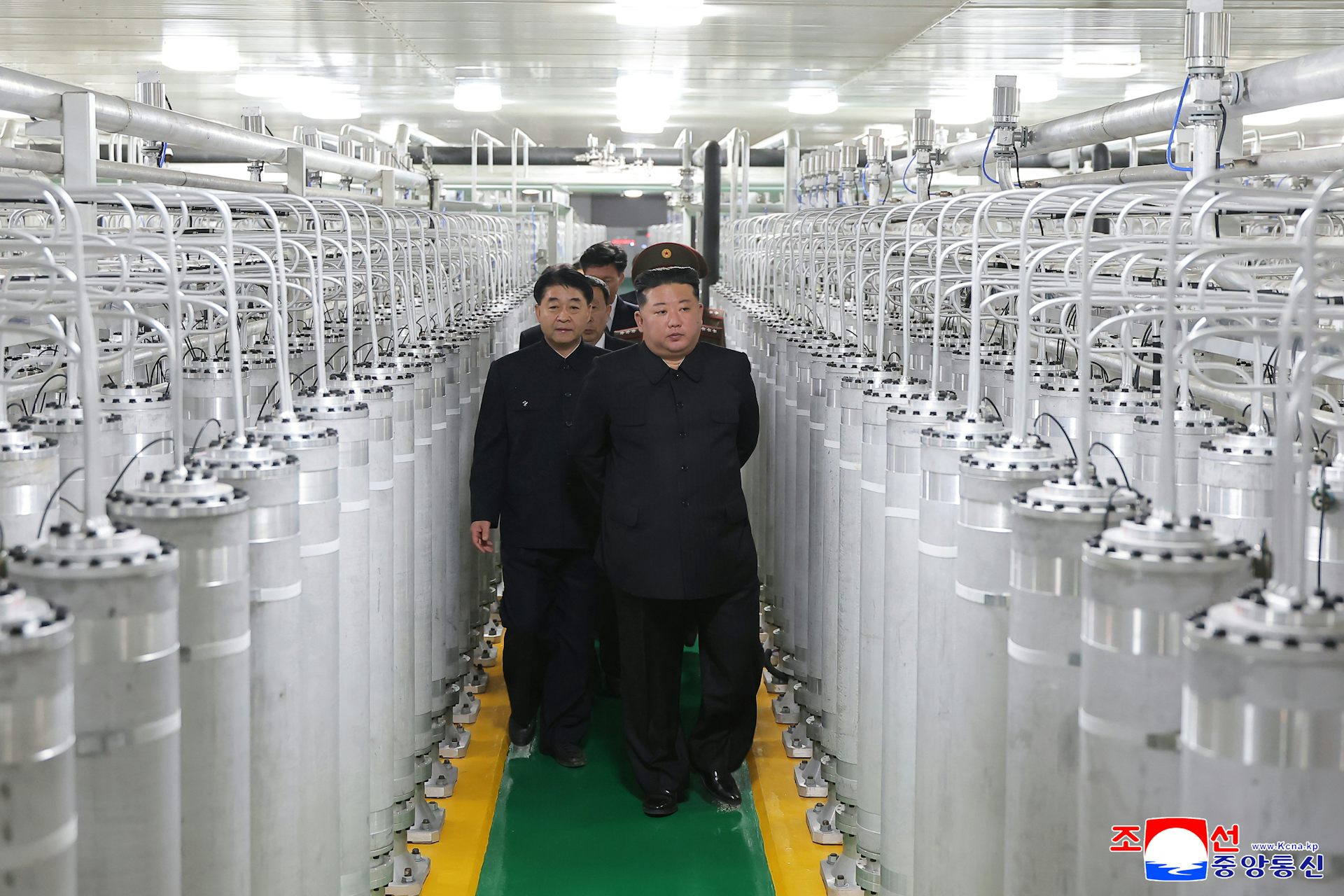
The dust has now settled on the ostentatious summit between Chinese President Xi Jinping and North Korean leader Kim Jong Un in Pyongyang earlier this month. But perhaps the biggest takeaway was what was left unsaid.
本月早些时候,中国国家主席习近平和朝鲜领导人金正恩在平壤举行了这场盛大的峰会。但或许最大的收获是那些没有被说出口的话。
Chinese readouts from the summit conspicuously excluded any mention of denuclearisation in North Korea (meaning North Korea giving up its nuclear weapons) . This signals a shift away from a decades-long policy goal of Beijing.
峰会期间中国发布的材料明显没有提及朝鲜的非核化(即朝鲜放弃其核武器)。这标志着北京正在偏离一个持续数十年的政策目标。
It’s the latest in a long list of setbacks for international efforts to denuclearise North Korea, and my soon-to-be-published research shows experts are widely concerned about the depth of the challenge.
这是国际社会努力实现朝鲜非核化进程中的又一次挫折,而我即将发表的研究显示,专家们普遍对挑战的深度感到担忧。
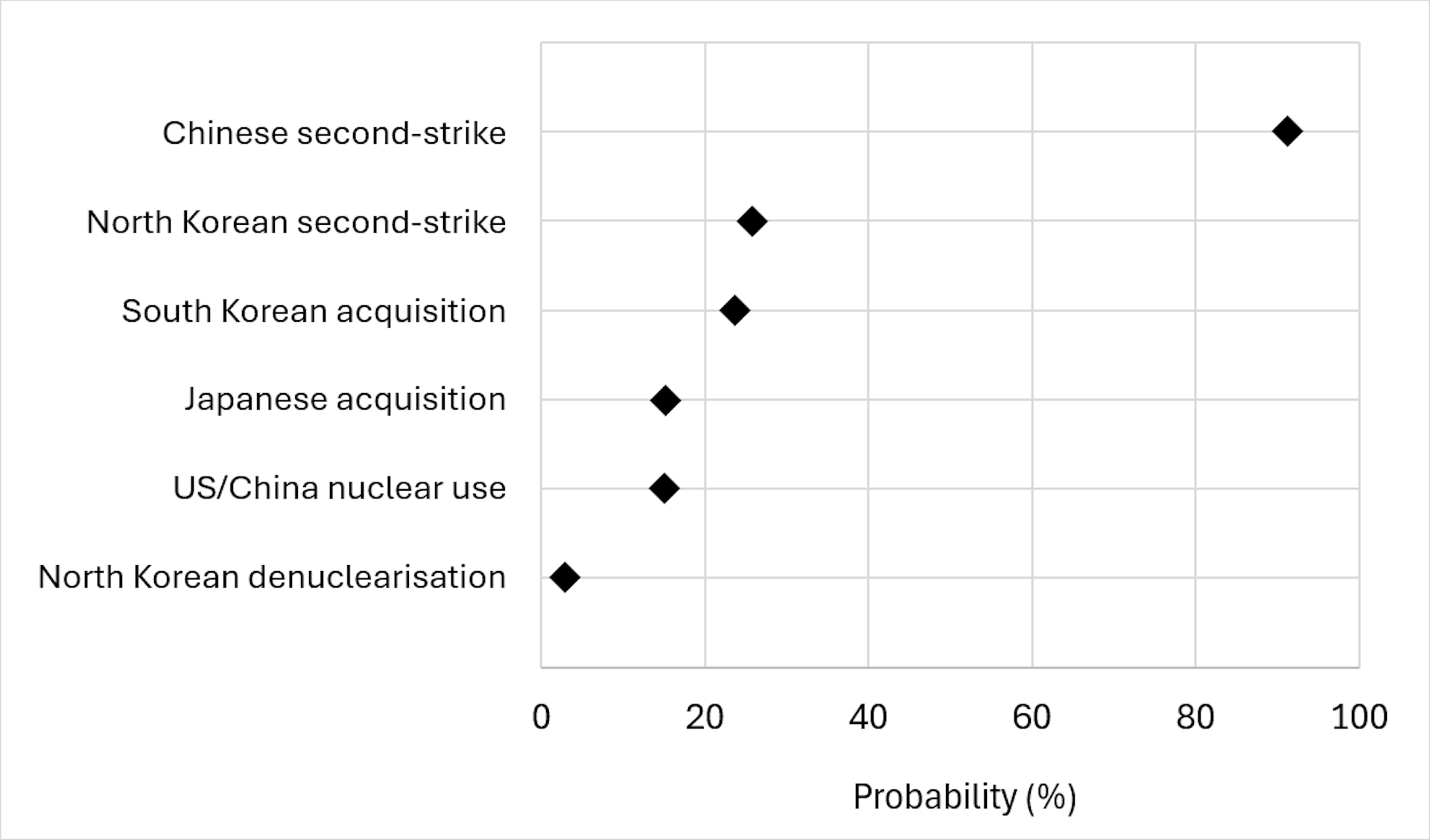
In early 2026 I ran a survey and focus groups involving over 70 international experts in nuclear weapons. I asked them to forecast the probability of six hypothetical nuclear scenarios occurring by 2035:
在2026年初,我组织了一项调查和焦点小组讨论,参与者包括超过70名国际核武器专家。我请他们预测到2035年发生六种假设性核情景的可能性:
that China achieves a nuclear second-strike capability against the United States
中国对美国实现核二次打击能力
that North Korea achieves the same
朝鲜达到相同水平
that Japan acquires nuclear weapons
日本获取核武器
that South Korea acquires nuclear weapons
韩国获取核武器
that North Korea gives up its nuclear weapons
朝鲜放弃其核武器
that the United States or China uses a nuclear weapon.
美国或中国使用核武器。
North Korean denuclearisation came in last, with experts assessing only a 3% probability by 2035.
朝鲜非核化排在最后,专家们评估到2035年的概率仅为3%。
After over 30 years, it seems the international mission to denuclearise North Korea has failed.
经过三十多年,国际社会实现朝鲜非核化的使命似乎已经失败了。
Why? And what does this mean for the region?
为什么?这对该地区意味着什么?
How did we get here?
我们是如何走到这一步的?
North Korea began pursuing nuclear weapons in earnest in the 1990s. This was driven by insecurity from the collapse of its superpower patron (the Soviet Union) . Another factor was the still-unresolved status of the Korean War, which ended without a peace treaty.
朝鲜在20世纪90年代开始认真追求核武器。这主要是由于其超级大国赞助方(苏联)崩溃带来的不安全感所驱动的。另一个因素是朝鲜战争尚未解决的状态,这场战争没有以和平条约结束。
International efforts to denuclearise North Korea initially focused on diplomatic negotiations. However, efforts broke down due to North Korean cheating on interim agreements and major North Korean provocations. This included it withdrawing from the nuclear non-proliferation treaty and a series of nuclear and missile tests.
国际社会最初致力于通过外交谈判来实现朝鲜的非核化。然而,由于朝鲜违反了临时协议和多次挑衅行为,这些努力最终破裂。这包括其退出《不扩散核武器条约》以及一系列核试验和导弹试射。
International denuclearisation efforts then shifted from carrots to sticks, primarily economic sanctions. The aim was to compel North Korea to renounce its nuclear weapons.
随后,国际去核化努力从“胡萝卜”转向了“大棒”,主要采取经济制裁的形式。目标是迫使朝鲜放弃其核武器。
By the 2000s, even North Korea’s erstwhile supporters — Russia and China — got in on the act. They supported an oppressive regime of United Nations sanctions against North Korea’s nuclear weapons and missile programs.
到了21世纪初,甚至连朝鲜以前的支持者——俄罗斯和中国——也参与其中。他们支持联合国对朝鲜的核武器和导弹计划实施严厉的制裁制度。
These efforts ultimately failed. Pyongyang now possesses a diversified missile arsenal theoretically capable of reaching the continental United States as well as an estimated 60 nuclear warheads with a scalable production capability.
这些努力最终失败了。平壤现在拥有了一个多元化的导弹军备库,理论上能够射达到美国本土,并且估计拥有60枚核弹头以及可扩展的生产能力。
What went wrong?
发生了什么错误?
The full coercive potential of economic sanctions was never realised.
经济制裁的全部强制潜力从未实现。
By the late 2010s, Russia and China had withdrawn support for sanctions, using their veto in the Security Council to block new sanctions resolutions.
到了2010年代末,俄罗斯和中国撤回了对制裁的支持,利用其在安全理事会否决权阻止新的制裁决议。
They also provided economic lifelines to North Korea through lax sanctions enforcement in the border region.
它们还通过边境地区宽松的制裁执行,为朝鲜提供了经济生命线。
Russia and China also used their positions on the UN sanctions monitoring committee to obstruct investigations into sanctions violations involving Chinese and Russian entities.
俄罗斯和中国还利用他们在联合国制裁监测委员会的地位,阻碍了涉及中国和俄罗斯实体的制裁违规调查。
Russia even resorted to state-sponsored sanctions violations to procure North Korean arms and soldiers to bolster its position in Ukraine.
俄罗斯甚至诉诸国家支持的制裁违规行为,以获取朝鲜的武器和士兵来巩固其在乌克兰的地位。
When UN sanctions lost their teeth, the US relied on autonomous sanctions to maintain economic pressure against North Korea. US autonomous sanctions cut off US market and financial system access for foreign entities that traded with North Korea or provided it financial services. But these measures, too, were neutered.
当联合国制裁失去牙齿时,美国依靠自主制裁来维持对朝鲜的经济压力。美国的自主制裁切断了与朝鲜进行贸易或为其提供金融服务的外国实体进入美国市场和金融体系的渠道。但这些措施也未能奏效。
The US avoided politically and economically challenging sanctions against Chinese targets. And it scaled back new sanctions designations to facilitate the first Trump administration’s ill-fated diplomatic outreach to Kim Jong Un.
美国避免了对中国目标实施政治和经济上具有挑战性的制裁。并且它缩减了新的制裁指定,以便利特朗普政府首次向金正恩进行的失败的外交接触。
These gaps were ruthlessly exploited by a sophisticated network of North Korean sanctions evaders. They were able to draw upon their merchant fleet, diplomatic corps, overseas workers, and state-sponsored hackers. This was how they moved sanctioned cash, crypto, and commodities despite sanctions.
这些漏洞被一个复杂的朝鲜制裁规避网络无情地利用了。它们能够动用其商船队、外交人员、海外工人以及国家支持的黑客。这就是它们在制裁之下转移受制裁现金、加密货币和商品的手段。
The result was a compromised international economic sanctions regime. North Korea was never pushed to the brink of economic ruin. It was never forced to consider seriously whether the possibility of foreign military intervention (without nuclear weapons to deter it) seemed preferable to the certainty of economic collapse.
结果是国际经济制裁制度受到了损害。朝鲜从未被推向经济崩溃的边缘。它从未被迫认真考虑,是否外国军事干预的可能性(没有核武器威慑)比确定性的经济崩溃更可取。
What’s next?
下一步是什么?
Based on past performance, economic sanctions will never be strong enough to denuclearise North Korea.
根据以往的经验,经济制裁永远不足以使朝鲜实现非核化。
Unconditional engagement is also not viable. The Kim regime has staked too much of its legitimacy on the nuclear enterprise.
无条件的接触也行不通。金氏政权已将过多的合法性建立在其核武产业上。
And the international interventions that toppled Libyan and Iranian leaders (two states that decided against nuclear weaponisation) likely only reinforced perceptions in Pyongyang that nuclear deterrents are crucial.
而推翻利比亚和伊朗领导人(这两个放弃核武化的国家)的国际干预,很可能只是在平壤强化了“核威慑至关重要”的认知。
Now, the only realistic path runs through radical political reform. That means regime change and/or reunification with the south.
现在,唯一可行的道路是通过激进的政治改革。这意味着政权更迭和/或与韩国统一。
One expert told me:
一位专家告诉我:
The only scenario I can imagine in which there are no North Korean nuclear weapons is a world in which there is no North Korea.
我能想象出朝鲜没有核武器的唯一情景,是朝鲜这个国家不存在的世界。
International stakeholders have few good options for driving this; such demand must come from within.
国际利益攸关方在推动这一点上没有太多好的选择;这种需求必须来自内部。
Rather than directly denuclearising North Korea, our focus should now be on buying time while the regime’s vulnerabilities (on succession, elite cohesion, and ideology) fester. This could generate internal demand for radical political reform.
与其直接实现朝鲜非核化,我们现在的重点应该是争取时间,让该政权在(继任、精英凝聚力和意识形态)方面的弱点持续恶化。这可能会产生内部对激进政治改革的需求。
Regional states should continue to support economic sanctions to slow North Korean nuclear weapons and missile development.
区域国家应继续支持经济制裁,以减缓朝鲜的核武器和导弹发展。
This would involve multilateral enforcement activities stopping North Korea from engaging in ship-to-ship transfers of sanctioned goods and remote IT work.
这将涉及多边执法活动,阻止朝鲜进行受制裁商品的船对船转运和远程信息技术工作。
Regional states should publicly maintain a policy of denuclearisation. It is important to deny Pyongyang the propaganda coup of being able to say the international community tolerates its nuclear weapons.
区域国家应公开维持非核化政策。重要的是,要阻止平壤利用“国际社会容忍其核武器”的宣传优势。
And regional states should pursue counterforce options. In particular, ballistic missile defence would help reduce exposure to North Korean nuclear threats.
区域国家还应追求反制力选项。特别是,弹道导弹防御有助于降低朝鲜核威胁带来的风险。
Christopher J. Watterson works at the United States Studies Centre, an independent research centre at the University of Sydney that receives grant funding from ANZ, Babcock, Bechtel, British High Commission in Australia, ConocoPhillips, Embassy of the Republic of Korea in Australia, HII Nuclear, Japan Foundation, Korea Foundation, Lockheed Martin Australia, McKinsey & Company, Microsoft, Minerals Council of Australia, National Endowment for Democracy, Northrop Grumman, Prospect Foundation, Queensland Investment Corporation, Raytheon Australia, Sasakawa Peace Foundation, Smith Richardson Foundation, Taiwan Economic and Cultural Office, Thales Australia, and the US Department of State. The author maintains academic freedom and the views expressed in this article are his own.
Christopher J. Watterson 曾在悉尼大学的美国研究中心工作,该中心接受来自 ANZ、Babcock、Bechtel、澳大利亚英国高级专员公署、ConocoPhillips、驻澳大利亚韩国大使馆、HII Nuclear、日本基金会、韩国基金会、洛克希德·马丁澳大利亚公司、麦肯锡公司、微软、澳大利亚矿产委员会、国家民主基金会、诺斯罗普·格鲁曼、前景基金会、昆士兰投资公司、雷神澳大利亚公司、笹川和平基金会、史密斯理查森基金会、台湾经济文化办事处、泰雷兹澳大利亚和美国国务院的资助。作者保持学术自由,本文所表达的观点属于其个人观点。