世界杯:为什么像梅西这样的左脚球员在足球中如此有价值?
World Cup: why are left-footers like Messi so valuable …
Selectors look not just for fitness, movement and cognitive skills, but also for left-footedness – this trait has enormous strategic value on the pitch.
选拔人员考察的不仅是体能、运动和认知技能,还包括左脚——这种特质在球场上具有巨大的战略价值。
Argentina’s Lionel Messi, England’s Bukayo Saka, Spain’s Lamine Yamal and Egypt’s Mohamed Salah are all highly skilled soccer players in slightly different ways, as is the tall, powerful and technically proficient Norwegian, Erling Haaland.
阿根廷的利奥内尔·梅西、英格兰的布卡约·萨卡、西班牙的拉明·亚马尔和埃及的穆罕默德·萨拉赫都是技艺精湛的足球运动员,方式略有不同;挪威人埃尔林·哈兰德也是如此,他身材高大、力量强劲且技术娴熟。
What unites all these players, however, is a unique advantage that falls squarely at their feet – they are all naturally “left-footed”.
然而,将所有这些球员联系在一起的,是一个独特的优势——他们都是天生的“左脚球员”。
While 14–17% of the global population is left-footed, in international football teams the proportion rises to 23–32% – and even as high as 41% among defenders on youth teams in the Netherlands.
虽然全球约有14%至17%的人是左撇子,但在国际足球队中,这一比例上升到了23%至32%;在荷兰的青训防守球员中,甚至高达41%。
Why? And what are the advantages of being left-footed when it comes to elite soccer?
为什么?在顶尖的足球领域,拥有左脚会有哪些优势呢?
Tactical value
战术价值
Partly it’s because when building teams, selectors look not just for fitness, movement and cognitive skills, but also for left-footedness – this trait has enormous strategic value on the pitch.
部分原因在于,在组建球队时,选拔者考察的不仅是体能、跑动和认知技能,还包括是否左脚——这种特质在球场上具有巨大的战略价值。
One Dutch study found that being left-footed increased the chances of being selected in national youth development teams. (It does not, however, guarantee progression to elite levels; at selection stages these athletes are rare but once in the football system, the prevalence of left-footedness increases significantly, which means greater competition for related positions.)
一项荷兰研究发现,左脚增加了被选中进入国家青年发展队的几率。(但这并不能保证晋升到精英级别;虽然在选拔阶段这类运动员稀少,但一旦进入足球体系,左脚的普遍性会显著增加,这意味着相关位置的竞争更激烈。)
That said, selectors know the tactical value of being left-footed runs deep in football. Teams benefit when players are placed on the side of the field that corresponds with their kicking side preference.
话虽如此,选拔者深知左脚所具备的战术价值在足球领域是根深蒂固的。当球员被安排到与他们踢球偏好侧对应的场地上时,球队就会受益。
Players positioned in these areas, such as the great Australian left-footer Harry Kewell, can very quickly and efficiently execute skilled one-touch plays (passing or shooting the ball with one touch rather than dribbling) .
像澳大利亚伟大的左脚球员哈里·科威尔这样的球员,可以在这些区域非常快速高效地执行技术性的单触配合(用一次触球而不是盘带来传或射球)。
They don’t have to reposition their stance to receive or pass the ball with their favoured foot – they’re already in position.
他们无需调整站姿就能用惯用脚接球或传球——因为他们本来就处于那个位置。
Being left-footed is preferable in left-sided positions because when playing the ball forward you don’t have to bring it onto your right side, which is towards the inside of the pitch and therefore showing more of the ball to opposition players (who are then more likely to tackle) . Similarly, being right-footed is an advantage on the right side of the pitch.
在左侧位置使用左脚更具优势,因为当向前推进球时,你不需要将球带到你的右侧,而右侧靠近场内腹部,因此更容易让对手看到球(从而更有可能进行铲抢)。类似地,在右侧使用右脚也是一种优势。
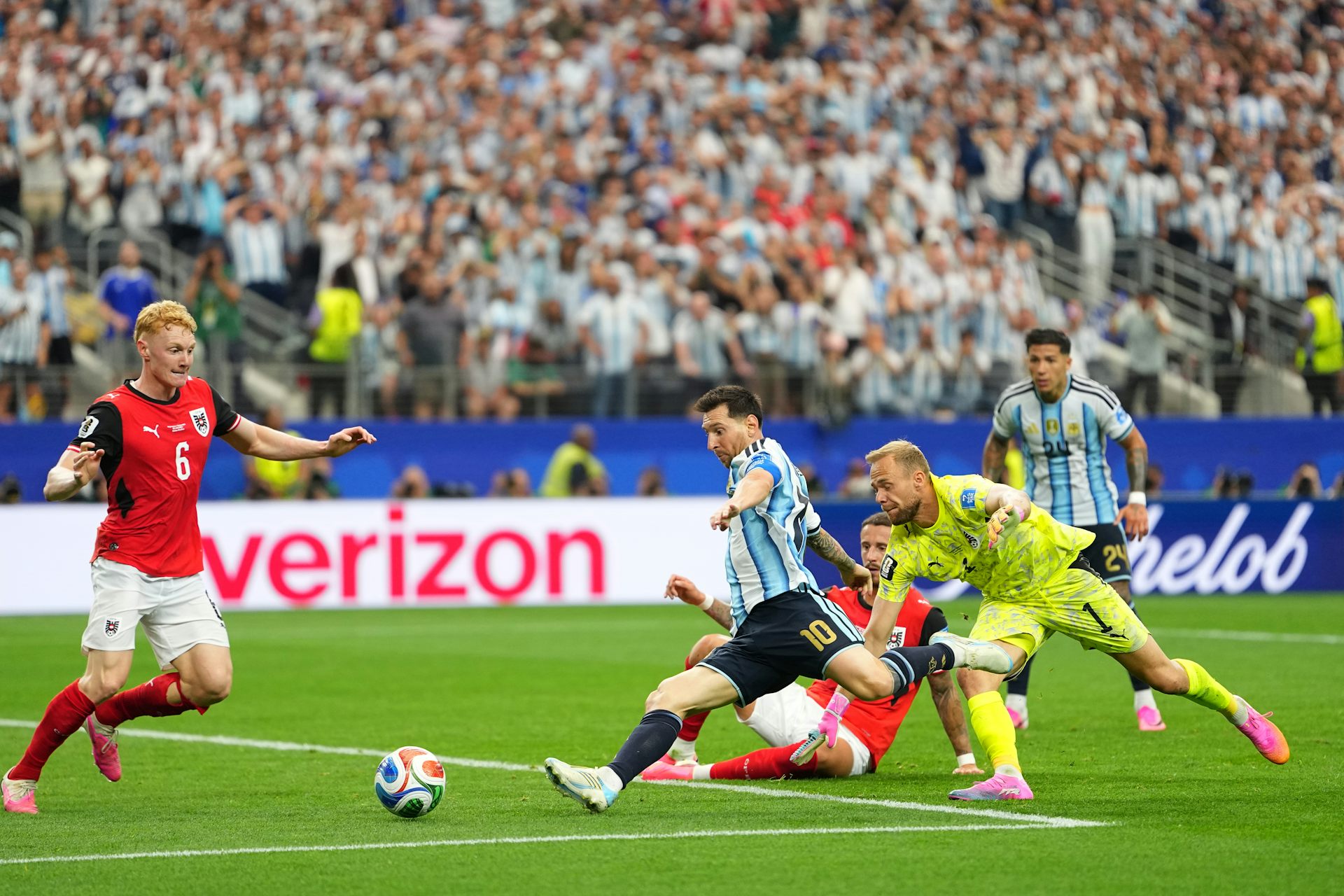
Left-footed superstars such as Messi can also weaponise this innate advantage when positioned on the right flank as an inverted winger (a winger who plays on the opposite side to their dominant foot and can dribble diagonally across the pitch) . Rising Socceroo Cristian Volpato is another example.
像梅西这样的左脚超级巨星,也可以利用这种天生的优势,当他被安排在右翼作为倒三角边锋时(指在与自己惯用脚相反的一侧踢球的边锋,可以斜向盘带过场)。冉升中的澳大利亚球员克里斯蒂安·沃尔帕托就是另一个例子。
Supported by competent right-foot ball handling to keep defenders guessing, they can cut infield onto their dominant foot. This opens up their body stance and expands the player’s field of vision, which creates good angles to pass the ball through to strikers.
通过熟练的右脚控球来迷惑防守者,他们可以切入内线并使用惯用脚进行传球。这扩大了他们的身体姿态和视野范围,从而为将球传给前锋创造了良好的角度。
Disrupting pattern recognition
破坏模式识别
Left-footed opponents can also potentially be hard to play against.
左脚的对手也可能很难对付。
This is because players consciously and subconsciously look for patterns in movements, to help them understand what their opponent will do next.
这是因为球员们会有意识和无意识地寻找动作中的规律,以帮助他们理解对手接下来会做什么。
Whether it’s a slight dip in one shoulder, or a subtle movement of the torso, the way someone moves on the field can signal their intent or the overall structure of playing formation.
无论是肩膀轻微的下沉,还是躯干微妙的移动,一个人在场上的移动方式都可以预示其意图或整体的战术结构。
When these patterns are disrupted due to the less familiar movement patterns of left-footers, opposing players might need additional time to synthesise information, make a decision, then act on it.
当这些模式由于左脚球员不熟悉的运动模式而被打破时,对方球员可能需要额外的几毫秒时间来综合信息、做出决定,然后采取行动。
While elite players will be very experienced at dealing with left-footed as well as right-footed opponents, these crucial milliseconds could be vital at an event like the World Cup.
虽然顶尖球员在应对左脚和右脚对手方面经验非常丰富,但在像世界杯这样的赛事中,这关键的几毫秒可能是至关重要的。
Can you train your left foot?
你能训练左脚吗?
Yes – and everyone should if they want to improve as a player. That said, it does not change your innate preference.
是的——如果想提高作为一名球员,每个人都应该这样做。话虽如此,但这并不能改变你天生的偏好。
Instead, you develop a level of functional ambidexterity (where you train your non-preferred side to be as functional as your preferred side, or close to it) .
相反,你会发展出一定程度的功能性双手灵活性(即训练非惯用手使其功能与惯用手相当,或接近)。
But importantly, players who put in the time and the work to do this are highly valued.
但重要的是,那些投入时间和精力进行这项训练的球员是非常受重视的。
And with some research showing left-handers score slightly better at creative thinking tests – due to years of adapting in a world designed for right-handers – perhaps left-footed players have a similar advantage.
一些研究表明,左撇子在创造性思维测试中得分略高——这归因于多年来适应一个为右撇子设计的世界的经历——也许左脚球员也具有类似的优势。
As you watch your favourite players during the World Cup and admire their fitness, brains and skill, you might also wonder at the magic the left-footers bring to the pitch.
当你观看世界杯上最喜欢的球员并钦佩他们的体能、智慧和技巧时,你可能会好奇左脚球员给球场带来的那种魔力。
Kylie A. Steel does not work for, consult, own shares in or receive funding from any company or organisation that would benefit from this article, and has disclosed no relevant affiliations beyond their academic appointment.
Kylie A. Steel 不受任何公司或组织聘用、咨询、拥有股份或获得资金支持,这些公司或组织不会从本文中受益,并且除了其学术职位外,未披露任何相关关联。