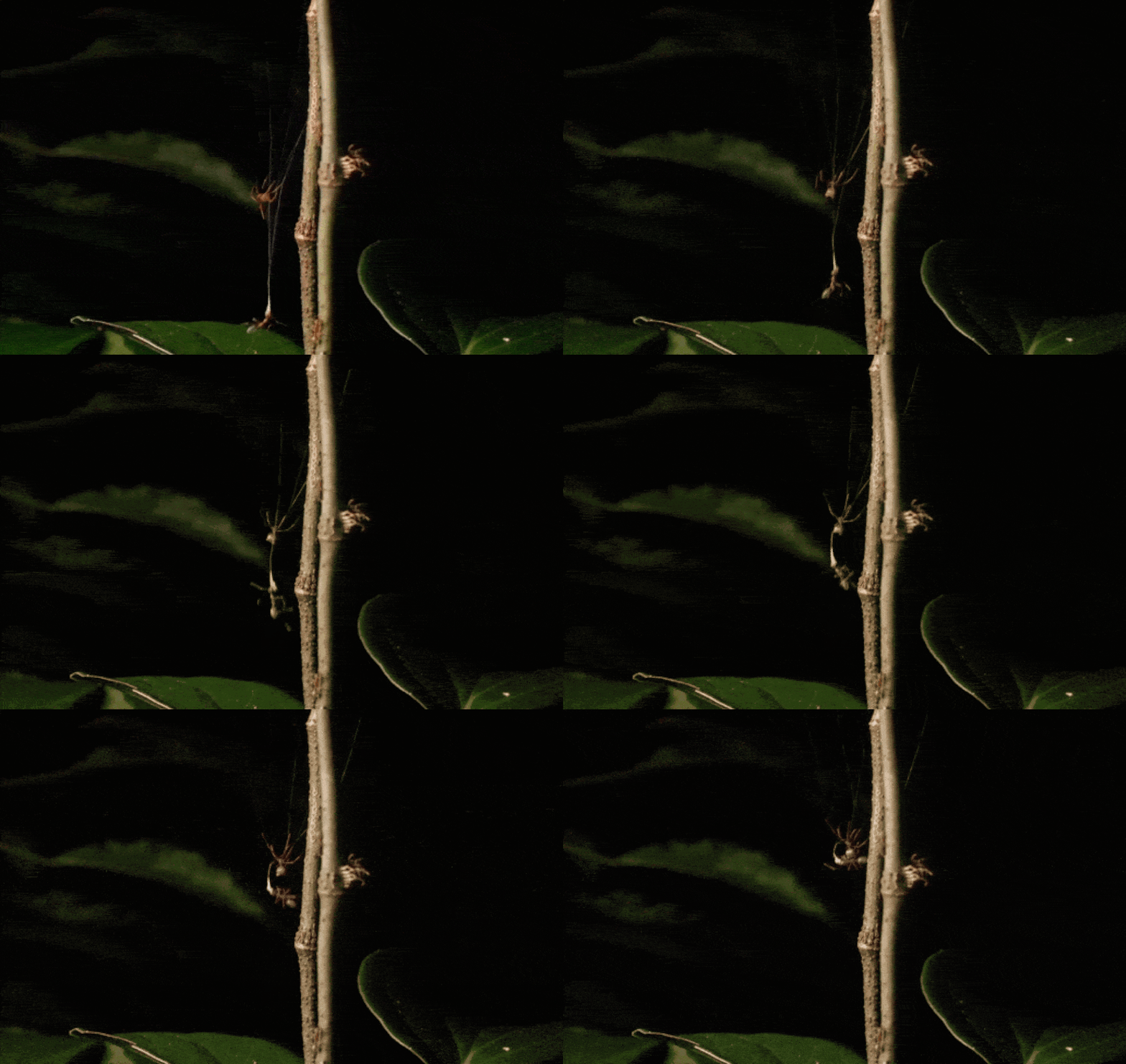
Con nhện Úc nhỏ bé này sử dụng một loại bẫy mạng lưới công suất cao để bắt và ăn kiến hung dữ
This tiny Australian spider uses a high-powered web catapult to trap and eat aggressive ants
The ballista spider only feeds on extremely fierce green tree ants – so it has evolved sophisticated tools to safely catch its prey.
Con nhện ballista chỉ ăn kiến cây xanh cực kỳ hung dữ – vì vậy nó đã tiến hóa các công cụ tinh vi để bắt con mồi một cách an toàn.
There’s more than one way a spider can spin its web. Some construct large vertical orb webs, while others build horizontal sheet webs or tangled cobwebs that ensnare crawling insects.
Nhện có nhiều cách dệt mạng khác nhau. Một số tạo ra các mạng cầu thẳng đứng lớn, trong khi những con khác xây dựng mạng tấm ngang hoặc mạng giăng tơ rối để bẫy các loài côn trùng bò.
There’s also more than one way a spider can catch its dinner. Net-casting spiders throw small silk nets over unsuspecting prey, while slingshot spiders use their conical webs like catapults, launching both themselves and the web toward nearby prey.
Nhện cũng có nhiều cách để bắt bữa ăn của mình. Những con nhện giăng lưới ném các tấm tơ nhỏ lên những con mồi không hề hay biết, trong khi những con nhện cao su sử dụng mạng hình nón của chúng như máy bắn đá, phóng cả bản thân và mạng về phía con mồi gần đó.
In the tropical rainforests of the Cape York Peninsula in Queensland, we discovered a spider with a new hunting strategy: a small nocturnal animal of the genus Propostira which we call the ballista spider.
Tại các khu rừng mưa nhiệt đới của Bán đảo Cape York ở Queensland, chúng tôi đã phát hiện ra một loài nhện với chiến lược săn mồi mới: một loài động vật nhỏ sống về đêm thuộc chi Propostira mà chúng tôi gọi là nhện ballista.
As we describe in a paper published today in Current Biology, it constructs a unique spring-loaded snare triggered only by a single kind of prey: the highly territorial and aggressive green tree ant (Oecophylla smaragdina) .
Như chúng tôi mô tả trong bài báo được xuất bản hôm nay trên Current Biology, nó tạo ra một cái bẫy lò xo độc đáo chỉ được kích hoạt bởi một loại con mồi duy nhất: loài kiến cây xanh cực kỳ lãnh thổ và hung dữ (Oecophylla smaragdina) .
How the ballista spider catches ants
Cách nhện ballista bắt kiến
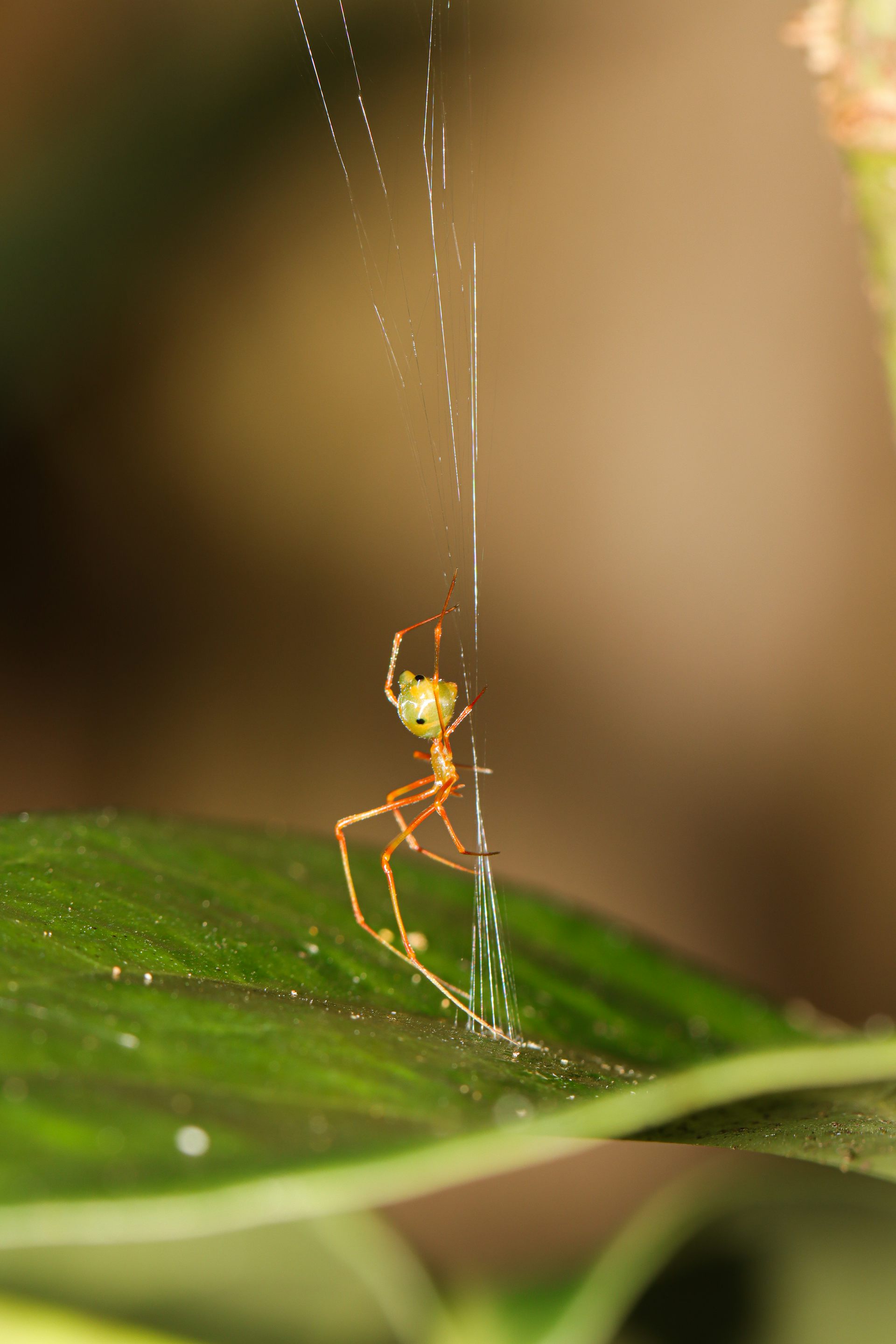
During the day, this spider rests within a silken retreat on the underside of leaves. As the night unfolds, the spider slowly descends on a silk line until it finds a suitable structure on which to lay an anchor point.
Vào ban ngày, con nhện này nghỉ ngơi trong một nơi trú ẩn bằng tơ lụa ở mặt dưới của lá cây. Khi màn đêm buông xuống, con nhện từ từ đi xuống theo một sợi tơ cho đến khi tìm thấy một cấu trúc thích hợp để đặt điểm neo.
Next it returns to the core web, leaving a “tension line” behind it, and repeats the process with incredible precision to build a fan-shaped web of silk tension lines. This gradually leads to the formation of a small conical scaffold which the spider then wraps in a thinner kind of silk before retreating to the core web.
Tiếp theo, nó quay trở lại mạng lưới chính, để lại một “sợi căng” phía sau, và lặp lại quá trình này với độ chính xác đáng kinh ngạc để tạo ra một mạng lưới hình quạt gồm các sợi tơ căng. Điều này dần dẫn đến việc hình thành một giàn giáo nhỏ hình nón mà con nhện sau đó bọc bằng loại tơ mỏng hơn trước khi rút về mạng lưới chính.
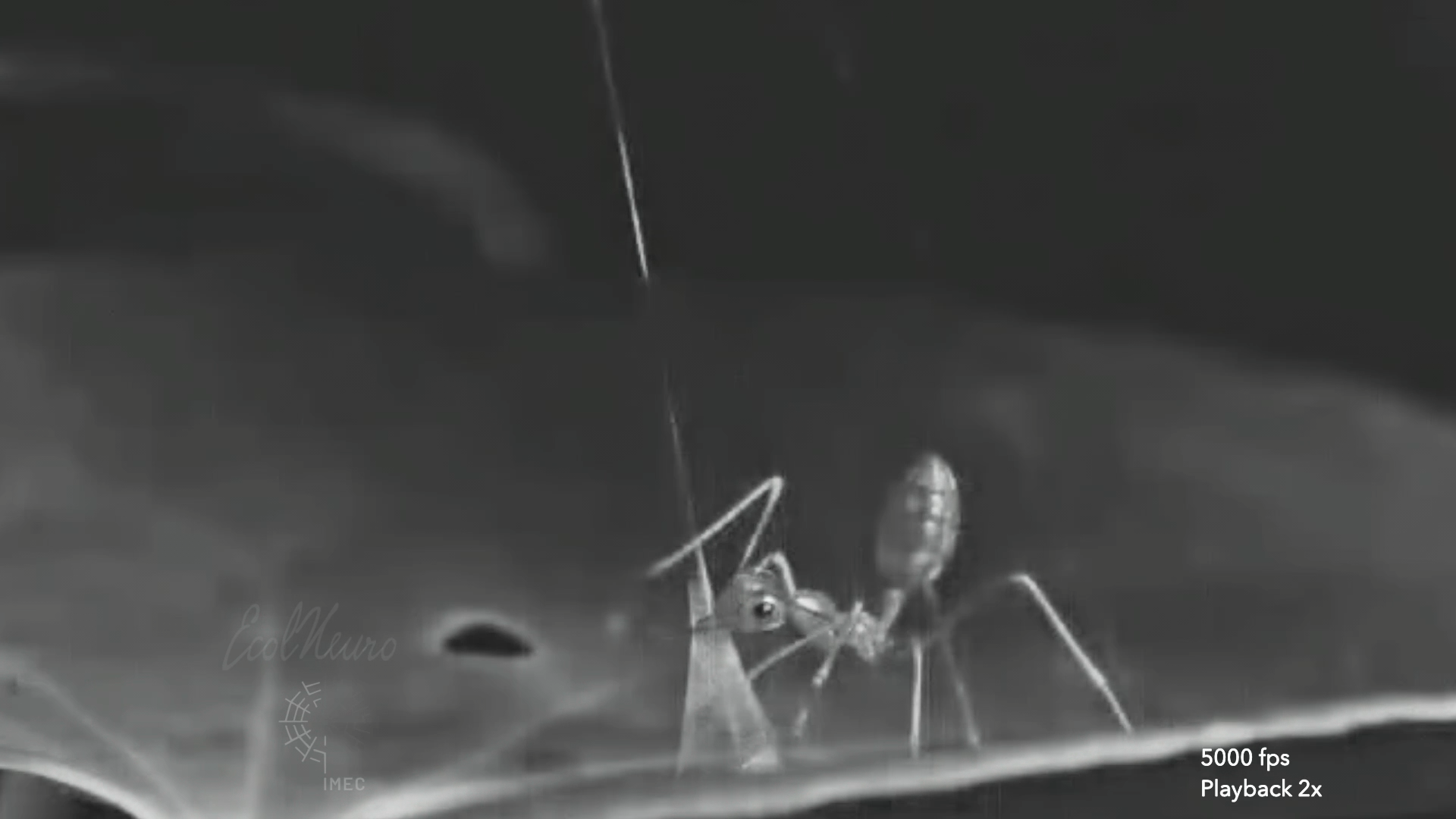
The thinner silk seems to attract ants and provoke an attack response, possibly by means of pheromones. After the thinner silk is laid, worker green tree ants appear in moments. The ants react aggressively, biting the cone.
Loại tơ mỏng dường như thu hút kiến và kích thích phản ứng tấn công, có thể là nhờ pheromone. Sau khi lớp tơ mỏng được giăng ra, những chú kiến xanh trên cây thợ xuất hiện ngay lập tức. Những con kiến phản ứng hung hãn bằng cách cắn vào cái nón.
The bite detaches the cone from the surface, and the ant is pulled up and propelled into the core web in a fraction of a second. The ant is hauled off at accelerations of up to 1,367 metres per second squared – that’s roughly 140 times the acceleration due to gravity, or 15 times the most extreme g-forces experienced by jet pilots.
Cú cắn làm tách cái nón khỏi bề mặt, và con kiến bị kéo lên rồi phóng vào mạng lưới chính chỉ trong tích tắc. Con kiến được đưa đi với gia tốc lên tới 1.367 mét trên giây bình phương – tương đương khoảng 140 lần gia tốc trọng trường, hay gấp 15 lần lực G cực đại mà phi công máy bay phản lực trải qua.
The spider waits for the ant to be fully entangled in its web. When it’s safe to approach, the spider wraps the ant in silk until it is ready to eat.
Con nhện chờ cho đến khi con kiến bị mắc kẹt hoàn toàn trong mạng lưới của nó. Khi an toàn để tiếp cận, con nhện sẽ bọc con kiến bằng tơ lụa cho đến khi nó sẵn sàng ăn.
A superior system
Một hệ thống vượt trội
The ballista spider’s snare exhibits superior energy performance compared with other silk-based catapult systems.
Cái bẫy của nhện balista thể hiện hiệu suất năng lượng vượt trội so với các hệ thống phóng bằng tơ khác.
Gram for gram, the webs store more energy and exert more power than any known biological catapult. A kilogram of the web would store 78.17 kilojoules of kinetic energy and very briefly exert 11.73 megawatts of power.
Từng gram, mạng nhện lưu trữ nhiều năng lượng và tạo ra công suất lớn hơn bất kỳ loại máy phóng sinh học nào được biết đến. Một kilôgam mạng nhện sẽ lưu trữ 78,17 kilojoule năng lượng động học và trong thời gian rất ngắn có thể tạo ra công suất 11,73 megawatt.
The exceptionally high power of the ballista spider’s snare has likely evolved to rapidly yank ants away from the vicinity of their nests and trail, where fellow ants might come to their defence.
Công suất cực cao của cái bẫy nhện balista có lẽ đã tiến hóa để nhanh chóng kéo kiến ra khỏi khu vực tổ và đường mòn của chúng, nơi những con kiến khác có thể đến bảo vệ.
Extreme specialisation
Chuyên biệt hóa cực độ
There are two more unusual things about the ballista spider.
Có hai điều bất thường khác về con nhện ballista.
First is its extreme specialisation to a single prey species. This suggests the spiders may add specific pheromones to the thin wrapping silk on their snares to attract green tree ants.
Thứ nhất là sự chuyên biệt hóa cực độ của nó đối với một loài con mồi duy nhất. Điều này cho thấy những con nhện có thể thêm các pheromone cụ thể vào tơ bao bọc mỏng trên bẫy của chúng để thu hút kiến cây xanh.
Second is that the snare is triggered by the prey itself, rather than the more common situation in which the predator senses the prey and triggers the snare.
Thứ hai là cái bẫy được kích hoạt bởi chính con mồi, thay vì tình huống phổ biến hơn là kẻ săn mồi cảm nhận con mồi và kích hoạt cái bẫy.
The ballista spider demonstrates how extreme prey specialisation can drive the evolution of exceptional biomechanical performance.
Con nhện ballista minh họa cách sự chuyên biệt hóa con mồi cực độ có thể thúc đẩy quá trình tiến hóa của hiệu suất cơ sinh học đặc biệt.
Ajay Narendra receives funding from Australian Research Council and Herman Slade Foundation.
Ajay Narendra nhận tài trợ từ Hội đồng Nghiên cứu Úc và Quỹ Herman Slade.
Read more
-

Các cô gái trong ban nhạc: hai biểu tượng rock thập niên 90 về lãng mạn, sự tàn nhẫn và những người đàn ông nhàm chán
Girls in bands: two 90s rock icons on romance, ruthlessness and boring men
-

Eurovision 2026: chiến thắng của Bulgaria, vị trí thứ tư của Úc, và tranh cãi tiếp diễn đối với các đài truyền hình
Eurovision 2026: a win for Bulgaria, fourth for Australia, and continued controversy for broadcasters