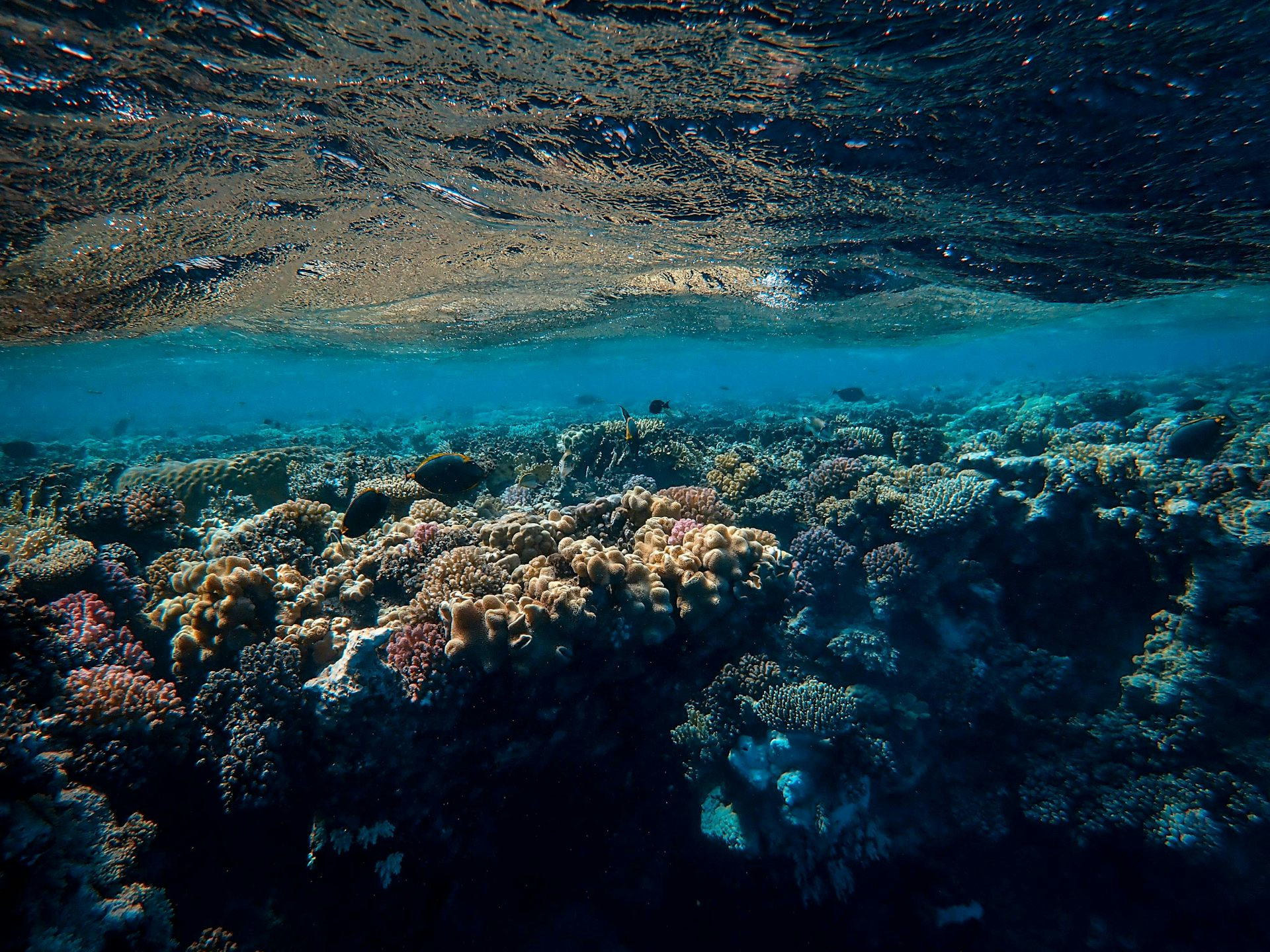
Os recifes de coral estão secretamente conectados através de vastos oceanos – e isso é crucial para a sua sobrevivência
Coral reefs are secretly connected across vast oceans – and that’s crucial for their survival
Connectivity isn’t a nice-to-have for coral reefs – it’s their lifeline. And now scientists know which reefs serve as vital ‘stepping stones’ for coral larvae.
A conectividade não é um luxo para os recifes de coral – é a sua linha de vida. E agora os cientistas sabem quais recifes servem como ‘degraus’ vitais para as larvas de coral.
Lord Howe Island lies in the middle of the ocean, about 700 kilometres northeast of Sydney. It’s covered in lush forest and fringed by the world’s most southerly coral reef ecosystem.
A Ilha Lord Howe está no meio do oceano, a cerca de 700 quilômetros a nordeste de Sydney. É coberta por uma floresta exuberante e margeada pelo ecossistema de recife de coral mais ao sul do mundo.
This reef system isn’t as famous as its northern neighbour, the Great Barrier Reef. Our new research in the Journal of Applied Ecology, shows it plays an outsized role in keeping vast coral regions across the Pacific connected – and alive.
Este sistema de recifes não é tão famoso quanto seu vizinho do norte, a Grande Barreira de Corais. Nossa nova pesquisa no Journal of Applied Ecology mostra que ele desempenha um papel desproporcional na manutenção de vastas regiões de coral em todo o Pacífico conectadas – e vivas.
A small number of other reefs in the region serve a similar function. Knowing which reefs matter most for recovery and adaptation to ocean warming – and protecting them now – could make the difference between regional reef collapse and long-term resilience.
Um pequeno número de outros recifes na região desempenha uma função semelhante. Saber quais recifes são mais importantes para a recuperação e adaptação ao aquecimento dos oceanos – e protegê-los agora – pode fazer a diferença entre o colapso regional dos recifes e a resiliência a longo prazo.
Tiny coral babies in a vast ocean
Bebês de coral minúsculos em um vasto oceano
Coral reefs are in global decline, but this loss is not just about dying corals – it’s about breaking the natural connections that allow reefs to recover after marine heatwaves, cyclones and other threats.
Os recifes de coral estão em declínio global, mas essa perda não se trata apenas de corais morrendo – trata-se de quebrar as conexões naturais que permitem que os recifes se recuperem após ondas de calor marinhas, ciclones e outras ameaças.
Right now, climate change is rapidly reducing the ability of coral larvae to travel between reefs, shrinking their chances of survival by undercutting recovery.
Atualmente, as mudanças climáticas estão reduzindo rapidamente a capacidade das larvas de coral de viajar entre os recifes, diminuindo suas chances de sobrevivência ao comprometer a recuperação.
These tiny coral babies can sometimes spend many weeks in the surface waters of the open ocean, carried by currents across hundreds or even thousands of kilometres before settling and beginning to grow.
Esses bebês de coral minúsculos podem passar várias semanas nas águas superficiais do oceano aberto, carregados pelas correntes por centenas ou até milhares de quilômetros antes de se fixarem e começarem a crescer.
The movement of larvae provides a constant source of replenishment for reefs, both near and far away, which is especially important when reefs are damaged.
O movimento das larvas fornece uma fonte constante de reabastecimento para os recifes, tanto próximos quanto distantes, o que é especialmente importante quando os recifes estão danificados.
Without this constant replenishment, some damaged reefs simply cannot recover. Connectivity isn’t a nice-to-have for coral reefs. It’s their lifeline.
Sem esse reabastecimento constante, alguns recifes danificados simplesmente não conseguem se recuperar. A conectividade não é um luxo para os recifes de coral. É o seu elo vital.
Tracking dispersal across 850 reefs
Rastreando a dispersão em 850 recifes
Our study used ocean circulation models to simulate the trajectories of coral larvae across the southwestern Pacific Ocean from 2011 to 2024, tracking the movement of larvae across 850 reefs.
Nosso estudo utilizou modelos de circulação oceânica para simular as trajetórias de larvas de coral pelo Oceano Pacífico sudoeste de 2011 a 2024, rastreando o movimento das larvas em 850 recifes.
These reefs spanned the Great Barrier Reef, New Caledonia, the Coral Sea and Lord Howe Island.
Esses recifes abrangeram a Grande Barreira de Corais, Nova Caledônia, o Mar de Coral e a Ilha Lord Howe.
We traced how two key coral growth forms (fast-growing branching corals and slower-growing massive corals) move between reefs under current conditions and under projected global climate warming scenarios of 1°C, 2.5°C and 4°C above pre-industrial temperatures.
Rastreamos como duas formas de crescimento coralinas importantes (corais ramificados de rápido crescimento e corais massivos de crescimento mais lento) se movem entre os recifes sob condições atuais e sob cenários projetados de aquecimento climático global de 1°C, 2,5°C e 4°C acima das temperaturas pré-industriais.
We then examined how corals moved between different types of reef, including reefs that were naturally resistant to heat stress, those that recover quickly after disturbance, and those that stay cooler because of local water currents and upwelling that naturally reduce water temperature around the reef.
Em seguida, examinamos como os corais se moviam entre diferentes tipos de recifes, incluindo recifes naturalmente resistentes ao estresse térmico, aqueles que se recuperam rapidamente após perturbações e aqueles que permanecem mais frios devido às correntes de água locais e à ressurgência que reduzem naturalmente a temperatura da água ao redor do recife.
This allowed us to ask not just which reefs are connected, but which kinds of reefs are sending and receiving different types of larvae.
Isso nos permitiu perguntar não apenas quais recifes estão conectados, mas quais tipos de recifes estão enviando e recebendo diferentes tipos de larvas.
A fragile network
Uma rede frágil
We found that only a handful of reefs act as genuine hubs — places where larvae both arrive from distant sources and depart to “seed” reefs far away. Lose these stepping stones, and the entire network begins to fragment.
Descobrimos que apenas um punhado de recifes atuam como centros genuínos — lugares onde as larvas chegam de fontes distantes e partem para “semear” recifes distantes. Perder esses degraus, e toda a rede começa a fragmentar.
The Coral Sea reefs emerged as crucial bridges in this network, linking the southern Great Barrier Reef with New Caledonia and beyond. But perhaps the most striking finding involves Lord Howe Island.
Os recifes do Mar de Coral emergiram como pontes cruciais nesta rede, ligando a Grande Barreira de Corais do sul com a Nova Caledônia e além. Mas talvez a descoberta mais marcante envolva a Ilha Lord Howe.
Our modelling identified Lord Howe as a potential refugium: a place where corals may be able to persist even as warming intensifies, potentially owing to its more temperate, southerly position.
Nossa modelagem identificou Lord Howe como um potencial refúgio: um lugar onde os corais podem ser capazes de persistir mesmo à medida que o aquecimento se intensifica, potencialmente devido à sua posição mais temperada e ao sul.
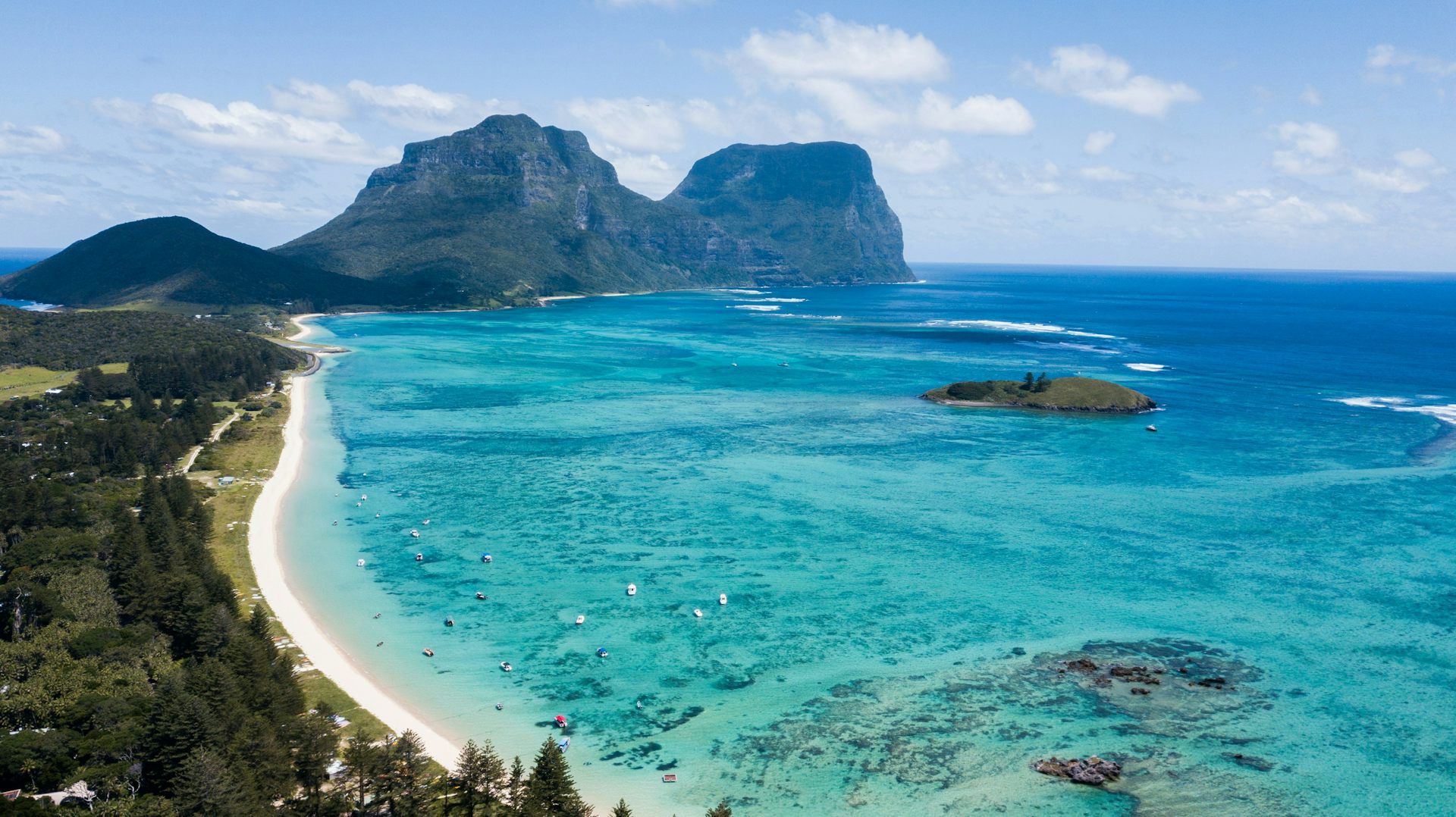
Yet its very isolation – what makes it a likely survivor – also means it has limited natural connectivity with surrounding reefs.
No entanto, seu próprio isolamento – o que o torna um provável sobrevivente – também significa que ele tem conectividade natural limitada com os recifes circundantes.
This situation therefore cuts both ways: while isolation helps protect its coral from extreme heat stress, it also means the reef relies less on new larvae that others could need for recovery. It therefore also means Lord Howe needs protection – not just for itself, but for the entire regional reef system that may one day depend on it.
Esta situação, portanto, é uma faca de dois gumes: enquanto o isolamento ajuda a proteger seus corais do estresse térmico extremo, também significa que o recife depende menos de novas larvas que outros poderiam precisar para se recuperar. Isso também significa que Lord Howe precisa de proteção – não apenas para si mesmo, mas para todo o sistema regional de recifes que um dia pode depender dele.
Another important finding is that the reefs most resistant to heat stress (those classified as naturally resistant) tended to export larvae to a relatively smaller number of reefs within the wider network.
Outro achado importante é que os recifes mais resistentes ao estresse térmico (aqueles classificados como naturalmente resistentes) tendiam a exportar larvas para um número relativamente menor de recifes dentro da rede mais ampla.
But there are techniques that enable the intentional movement of larvae from heat-tolerant reefs to more vulnerable locations. These include assisted gene flow, in which scientists deliberately move warm-adapted adult corals or their offspring to reefs that are more vulnerable to heat stress, helping to spread heat-tolerant genes more quickly across reef networks.
Mas existem técnicas que permitem o movimento intencional de larvas de recifes tolerantes ao calor para locais mais vulneráveis. Estes incluem o fluxo gênico assistido, no qual os cientistas movem deliberadamente corais adultos ou seus descendentes adaptados ao calor para recifes mais vulneráveis ao estresse térmico, ajudando a espalhar genes tolerantes ao calor mais rapidamente por toda as redes de recifes.
Protecting our marine superhighways
Protegendo nossas superestradas marinhas
Our results make clear that marine protected areas should not be managed as isolated reserves but as an interconnected network, with transboundary cooperation between Australia and Pacific Island nations.
Nossos resultados deixam claro que as áreas marinhas protegidas não devem ser gerenciadas como reservas isoladas, mas como uma rede interconectada, com cooperação transfronteiriça entre a Austrália e as nações das Ilhas do Pacífico.
The larval corridors linking the southern Great Barrier Reef, New Caledonia and Lord Howe Island do not fall within national boundaries. Neither can our conservation response.
Os corredores larvais que ligam o sul da Grande Barreira de Corais, Nova Caledônia e Ilha Lord Howe não estão dentro das fronteiras nacionais. Nossa resposta de conservação também não pode.
Reefs are already fighting against warming oceans. The waters of the Lord Howe Rise and South Tasman Sea, the vast oceanic region between Australia and New Zealand through which these larval corridors flow, are under threat from industrial fishing.
Os recifes já estão lutando contra os oceanos em aquecimento. As águas do Lord Howe Rise e do Mar de Tasman do Sul, a vasta região oceânica entre a Austrália e a Nova Zelândia por onde fluem esses corredores larvais, estão ameaçadas pela pesca industrial.
Industrial fishing, pollution and climate change are pushing these ecosystems to the brink, with longlines intersecting surface waters. This cumulative pressure across these newly identified larval transport superhighways adds yet another layer of pressure onto these already stressed ecosystems.
A pesca industrial, a poluição e as mudanças climáticas estão levando esses ecossistemas ao limite, com linhas de pesca longas cruzando as águas superficiais. Essa pressão cumulativa em todas essas superestradas de transporte larval recém-identificadas adiciona mais uma camada de pressão sobre esses ecossistemas já estressados.
Our research adds a new and crucial dimension to high seas protection. Our region sits directly across the larval corridors that connect and sustain coral reef systems. Protecting this ocean is not just about what lives here. It is about what passes through – fundamental for migratory and connected populations.
Nossa pesquisa adiciona uma dimensão nova e crucial à proteção dos altos mares. Nossa região está diretamente sobre os corredores larvais que conectam e sustentam os sistemas de recifes de coral. Proteger este oceano não é apenas sobre o que vive aqui. É sobre o que passa por ele – fundamental para populações migratórias e conectadas.
The least we can do is protect the superhighways through which their future flows – invisibly, at the ocean surface, some larvae no bigger than a grain of rice, carrying the genetic potential to rebuild what we stand to lose.
O mínimo que podemos fazer é proteger as superestradas por onde seu futuro flui – invisivelmente, na superfície do oceano, alguns larvas não maiores que um grão de arroz, carregando o potencial genético para reconstruir o que corremos o risco de perder.
Kate Quigley receives funding from the Australian Research Council and Minderoo Foundation. She is also Principal Research Scientist at Minderoo Founation.
Kate Quigley recebe financiamento do Australian Research Council e da Minderoo Foundation. Ela também é Cientista Principal de Pesquisa na Minderoo Foundation.
Elise Thérèse Gisèle Dehont does not work for, consult, own shares in or receive funding from any company or organisation that would benefit from this article, and has disclosed no relevant affiliations beyond their academic appointment.
Elise Thérèse Gisèle Dehont não trabalha, não é consultora, não possui ações nem recebe financiamento de nenhuma empresa ou organização que se beneficiaria deste artigo, e não divulgou afiliações relevantes além de seu cargo acadêmico.
Read more
-
Ensaio de sexta-feira: Como Vender um Genocídio expõe os padrões duplos na cobertura de Gaza
Friday essay: How to Sell a Genocide exposes the double standards of reporting on Gaza
-
Rachaduras na Estação Espacial Internacional estão causando vazamentos de ar – por quanto tempo mais ela pode permanecer habitável?
Cracks in the International Space Station are causing air leaks – how much longer can it remain habitable?